
What Is a Cordless Polisher and How Does It Work?
FLUID HANDLING EXPERTS

Blog, all our news

What Is a Cordless Polisher and How Does It Work?

A Cordless Polisher is a battery-powered machine designed to refine, restore, and protect painted surfaces. Unlike a hand applicator, it spins or oscillates a backing plate with controlled movement. A polishing pad then spreads compound across the panel. This action helps reduce fine scratches, oxidation, water spots, and dull reflections.

It is more than a portable electric tool. The battery supplies energy to a motor, while the trigger, speed control, and gearbox manage movement. Some models rotate continuously. Others use a dual-action motion that reduces concentrated heat and lowers the risk of uneven finishing. The operator still controls pressure, pad choice, working speed, and panel temperature. Small details matter.

Professional detailing educator Mike Phillips has stated, “The machine is only as good as the person using it.” That warning remains practical. A cordless polisher can reach a vehicle’s roof without dragging a power cable across the paint. It can also work beside a driveway, workshop lift, or narrow garage wall. However, convenience does not replace technique. Battery weight may change balance, and power can drop as the charge decreases. I have found that beginners often focus on maximum speed, although moderate speed and steady movement usually provide better control. The right process begins with clean paint, a test spot, and realistic expectations. This guide explains how a Cordless Polisher works, what its main components do, and where its advantages may end. Some results look impressive under bright lights, yet flaws can reappear after washing. Careful inspection remains essential.
What Is a Cordless Polisher and How Does It Work?

What Is a Cordless Polisher?

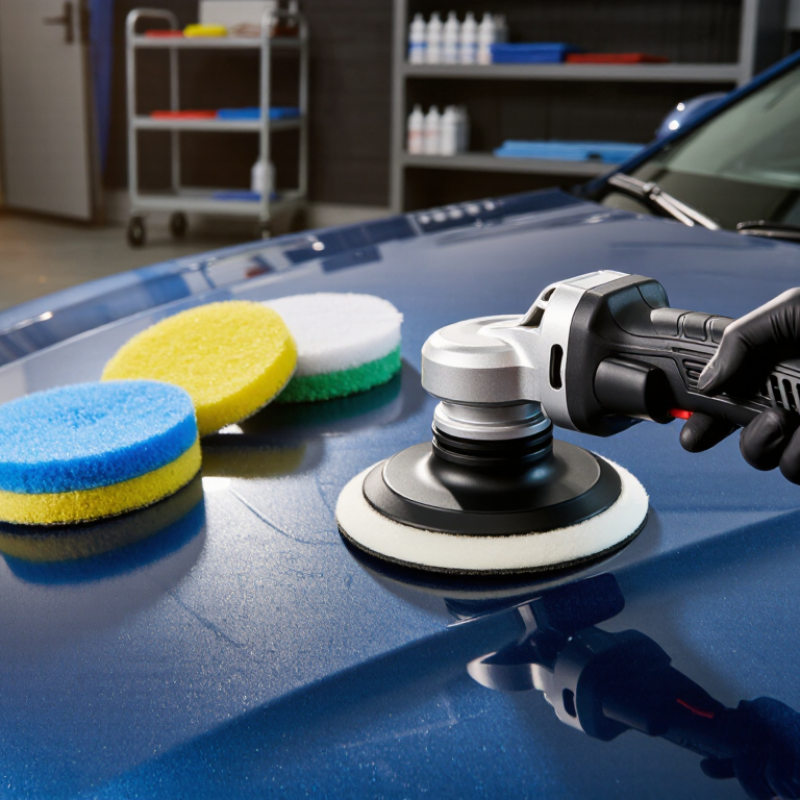
A cordless polisher is a handheld machine that smooths, restores, or brightens a surface without a power cord. It uses a rechargeable battery to drive a motor, which turns or moves a backing plate. A polishing pad attaches to that plate with a secure hook-and-loop fastener. The pad spreads polishing compound across paint, metal, plastic, or other suitable materials.

Most cordless polishers use rotary or dual-action movement. A rotary model spins the pad on one fixed axis. It works quickly but can create heat or uneven marks when used carelessly.

A dual-action model spins and oscillates at the same time. This motion feels more forgiving during paint correction. Variable speed control helps users begin gently, then increase movement when the surface allows it.

In practical use, I inspect the surface, clean the pad, and test a small hidden area. One slow pass often reveals more than aggressive pressure. The battery makes work easier around a vehicle, especially near mirrors and door edges. However, the battery also adds weight, and performance may drop as its charge falls. I still monitor the pad temperature with my hand. That habit is imperfect, but it helps prevent avoidable damage.

A cordless polisher saves movement, not judgment.

How Does a Cordless Polisher Work?

A cordless polisher is a handheld machine that uses battery power to move a polishing pad. Its battery sends electricity to a compact motor inside the housing. The motor turns a spindle through a gearbox, creating controlled pad movement. That movement transfers polishing compound across a surface. It can remove light oxidation, haze, and fine scratches when used correctly.

The pad may spin in one direction or move in a small orbit. A rotary movement delivers stronger cutting power, while an orbital movement spreads heat more evenly. A trigger starts the motor, and a speed controller adjusts its rotation. Lower speeds help spread compound without splashing. Higher speeds can improve correction, but they also create heat quickly. I usually begin with light pressure and short passes. The surface should feel warm, not painfully hot.

Battery voltage affects running time and available power, but it does not guarantee better results. A nearly empty battery may reduce speed during demanding work. Dust, worn pads, and excessive compound can also make the motor struggle. It is not magic. I have sometimes blamed the tool when the real problem was too much pressure. Clean the pad often, keep the polisher moving, and test an unseen area first. Hands-on checking remains essential, because paint hardness and surface condition vary widely.

What Is a Cordless Polisher and How Does It Work?

A cordless polisher uses a rechargeable lithium-ion battery to supply direct current to an electric motor. The motor converts electrical energy into rotary motion, while an electronic speed controller adjusts the rotation for different polishing tasks. The motor then drives a backing plate and polishing pad to remove defects or improve surface gloss.

The chart shows representative operating-speed bands commonly found in cordless polishers. Lower speeds are generally used for spreading compound and finishing, while higher speeds are used for faster correction. Actual speed ranges vary by tool design, battery condition, pad type, and load.

Key Components and Their Functions

A cordless polisher is a handheld tool that rotates a polishing pad without a power cable. Its battery supplies portable energy for vehicle panels, metal surfaces, and other finishes. The battery pack sits near the handle, so its weight affects balance. A heavier pack can provide longer working time, but it may tire your wrist sooner.

Inside, an electric motor converts battery power into rotation. A gearbox controls torque and speed before movement reaches the backing plate. The backing plate holds the pad securely, while the pad spreads polishing compound across the surface. Foam pads usually feel forgiving, whereas firmer pads remove marks more aggressively. The trigger starts the motor, and a speed controller helps match movement to the material. Low speed suits delicate edges. Higher speed increases cutting action, but also creates more heat.

During practical use, I check the pad for loose edges before touching the surface. A damaged pad can wobble and leave uneven marks. Ventilation openings cool the motor, so dust should not block them. Many tools include overload protection, which may stop the motor when pressure becomes excessive. That feature protects the tool, though it can interrupt smooth work. I still tend to press too hard when a scratch resists. That habit needs correction. Light pressure, steady passes, and frequent surface checks usually produce safer, more consistent results. Water exposure remains a serious concern because cordless does not mean waterproof.

How to Use a Cordless Polisher Safely

A cordless polisher is a handheld tool that rotates a polishing pad without a power cable. Its battery supplies energy to a motor, which turns the spindle and pad. The operator guides that movement across a surface. Speed controls help match the tool to paint, metal, wood, or other suitable materials.

Safety begins before the motor starts. Inspect the battery, pad, backing plate, and power switch for damage. Wear safety glasses, hearing protection, and a suitable dust mask when particles may appear. Secure loose clothing and tie back long hair. Keep the work area dry and well ventilated. Do not use the tool near flammable vapors. Check the surface for grit, loose parts, or sharp edges.

Start at the lowest speed. Hold the polisher with both hands and keep the pad flat. Move slowly, using light pressure instead of forcing the machine. Never hold the spinning pad against one spot for long. It can create heat, marks, or surface damage. Stop immediately if the tool vibrates, smells hot, or sounds unusual. I have found that rushing makes control worse, even when the battery feels powerful. That is an easy mistake to repeat. Remove the battery before changing pads or cleaning the tool. Let the motor and battery cool before storage or charging. Be careful.

How to Choose the Right Cordless Polisher

What Is a Cordless Polisher and How Does It Work?

A cordless polisher uses a rechargeable battery to rotate or oscillate a polishing pad. It removes light oxidation, haze, and fine scratches from suitable surfaces. Unlike a corded tool, it gives more freedom around a vehicle, boat, or workshop bench.

Battery power can vary, however. Check the voltage, battery capacity, and charging time before purchase.

Choose the machine by its motion. Random-orbit polishers are more forgiving for beginners because the pad changes direction continuously. Rotary polishers cut faster, but they can create heat marks or uneven finishes.

For occasional detailing, a moderate speed range is usually more useful than maximum power. Adjustable speed matters. A soft-start trigger also improves control near edges and trim.

Pad size affects handling. A smaller pad reaches mirrors, pillars, and tight curves, while a larger pad covers broad panels faster. The tool should feel balanced with one hand.

My first choice focused too much on power. After several minutes, wrist fatigue became the real problem. Weight matters more than expected. Look for overload protection, clear battery indicators, and comfortable grips.

Keep spare batteries available for larger jobs, but remember that extra capacity adds weight. Test the polisher on a hidden area first. Surface hardness, pad type, and compound strength can change the result, so one setting rarely fits every finish.

Copyright 2025 Fluidra S.A. | Created by BCM Marketing Agencia Privacy Policy Legal note | Cookie policy |

Technical cookies are strictly necessary for our website to work and you can navigate through it. These types of cookies are those that, for example, allow us to identify you, give you access to certain restricted parts of the page if necessary, or remember different options or services already selected by you, such as your privacy preferences. Therefore, they are activated by default, your authorization not being necessary in this regard. Through the configuration of your browser, you can block or alert the presence of this type of cookies, although such blocking will affect the proper functioning of the different functionalities of our website.


The analysis cookies allow us to study the navigation of the users of our website in general (for example, which sections of the page are the most visited, which services are used most and if they work correctly, etc.). From the statistical information on navigation on our website, we can improve both the operation of the page itself and the different services it offers. Therefore, these cookies do not have an advertising purpose, but only serve to make our website work better, adapting to our users in general. By activating them you will contribute to this continuous improvement. You can enable or disable these cookies by checking the corresponding box, being disabled by default.


Functionality cookies allow us to remember your preferences, to personalize certain characteristics and general options of our website, every time you access it (for example, the language in which the information is presented to you, the sections marked as favorites, your browser type, etc.) Therefore, this type of cookies does not have an advertising purpose, but by activating them you will improve the functionality of the website (for example, adapting to your type of browser) and the customization of it based on your preferences (for example, by presenting the information in the language that you have chosen in previous occasions), which will contribute to the ease, usability and comfort of our page during your navigation. You can enable or disable these cookies by checking the corresponding box, being disabled by default.


Advertising cookies allow us to manage the advertising spaces included in our website based on criteria such as the content shown or the frequency in which the ads are displayed. For example, if you have been shown the same ad several times on our website, and you have not shown a personal interest by clicking on it, it will not appear again. In summary, by activating this type of cookies, the advertising shown on our website will be more useful and diverse, and less repetitive. You can enable or disable these cookies by checking the corresponding box, being disabled by default.


Behavioral advertising cookies allow us to obtain information based on the observation of your browsing habits and behaviors on the web, in order to show you advertising content that best suits your personal tastes and interests. To understand it in a very simple way, we will give you a fictitious example: if your last searches on the web were related to suspense literature, we would show you advertising about suspense books. Therefore, activating this type of cookies, the advertising that we show you on our website will not be generic, but will be oriented to your searches, tastes and interests, therefore adjusting exclusively to you. You can enable or disable these cookies by checking the corresponding box, being disabled by default.
To understand it in a very simple way, we will give you a fictitious example: if your last searches on the web were related to suspense literature, we would show you advertising about suspense books. Therefore, activating this type of cookies, the advertising that we show you on our website will not be generic, but will be oriented to your searches, tastes and interests, therefore adjusting exclusively to you. You can enable or disable these cookies by checking the corresponding box, being disabled by default.

SAVE

We use our own and third-party cookies to ensure the proper functioning of the website and to analyse our services, improve your experience on our website and show you advertisements related to your interests according to profiling based on your browsing habits (e.g. websites visited). You can accept all cookies by clicking "ACCEPT" or set or reject them by clicking here. If you would like to know more about the use of cookies, please see our COOKIE POLICY.


ACCEPT ALL
Reject no essentials


