
What is a Cnc Knife Grinder and How Does It Work?
FLUID HANDLING EXPERTS

Blog, all our news

What is a Cnc Knife Grinder and How Does It Work?

A Cnc Knife Grinder is a powerful tool in modern manufacturing. It is designed to sharpen and grind blades with precision. The technology allows for automated processes, enhancing speed and efficiency. By using computer numerical control (CNC), operators can achieve accurate angles and finishes that manual methods cannot provide.

The CNC knife grinder integrates advanced software with mechanical components. This combination allows for consistency in production quality. Operators can input specific parameters, ensuring that every blade meets tight tolerances. However, it’s important to note that mastering the CNC knife grinder requires practice and skill.

Some users may struggle initially with the setup. Calibration can be challenging, and novice operators might face a steep learning curve. Experience plays a crucial role in improving efficiency and achieving optimal results. Despite these challenges, the benefits of using a CNC knife grinder are significant for any serious manufacturing facility.
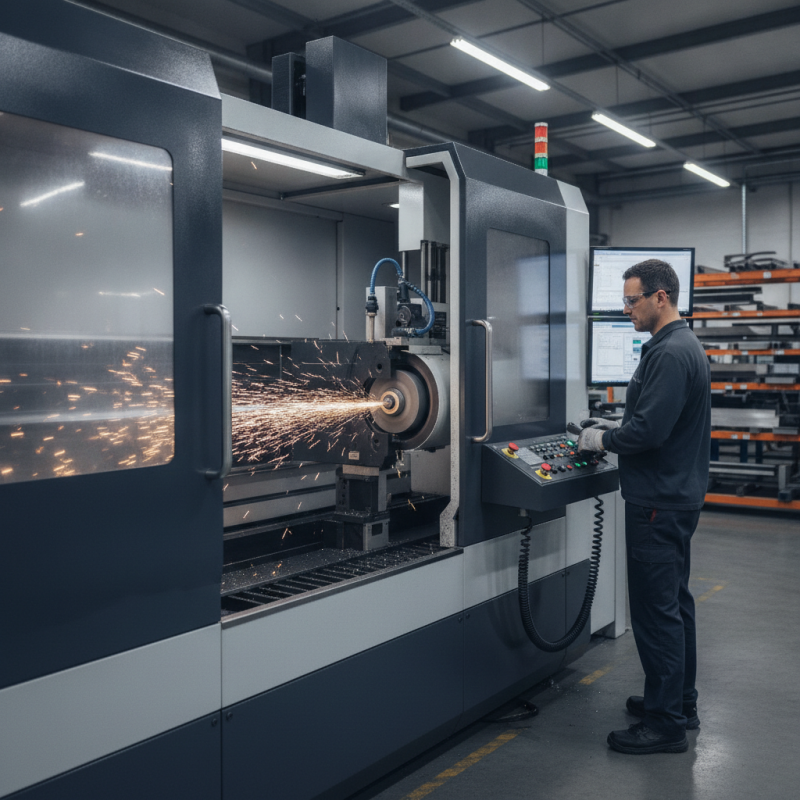
What is a Cnc Knife Grinder and How Does It Work?

What is a CNC Knife Grinder? Definition and Overview

A CNC knife grinder is a specialized machine designed for the precision sharpening of knives used in various industries. It automates the grinding process, enhancing efficiency and accuracy. According to industry reports, the global CNC grinding machine market is projected to reach 5.89 billion USD by 2027, indicating a significant demand for these advanced tools. CNC knife grinders utilize computer numerical control technology, allowing operators to program the desired specifications directly.

These machines provide several advantages over manual sharpening methods. They can achieve consistent results, reducing human error. Reports indicate that manual sharpening can lead to variations in blade quality, affecting productivity. With a CNC knife grinder, users can produce uniform edge profiles tailored for specific applications, whether in culinary arts, manufacturing, or packaging industries.

However, not all operators are familiar with programming and operating these machines, which can lead to a learning curve. Understanding machine settings and maintenance is crucial for optimal performance. Regular calibration and inspection are essential to prevent wear and tear that might compromise blade quality. Industry surveys indicate that improper setup can reduce effectiveness by up to 30%. Investing time in training and proper machine usage is vital for maximizing the benefits of CNC technology.

Key Components of a CNC Knife Grinder: A Breakdown

CNC knife grinders are essential tools in the manufacturing process. These machines offer precision and efficiency, transforming blunt blades into sharp tools. Understanding their components is crucial for proper use.

The heart of a CNC knife grinder is its cutting head. This part rotates rapidly, shaping the knife edge with exactness. Grinding wheels are another key feature. They come in various grits for different finishes. Users must choose the right wheel based on the blade material.

Next, the control unit plays a pivotal role. It allows operators to program specific angles and depths, ensuring consistency. However, errors can occur if settings are incorrect. Lastly, the coolant system helps prevent overheating. This is vital for maintaining the integrity of the blade. Inadequate cooling can lead to warping. Familiarity with these components enhances operation. Understanding their roles fosters better maintenance and lowers chances of mistakes.

How CNC Knife Grinders Operate: Step-by-Step Process

CNC knife grinders are essential tools in manufacturing. They automate the grinding of knives to precise specifications. Understanding their operation can enhance productivity and improve results.

A CNC knife grinder operates through a series of well-defined steps. Initially, the knife's design is input into the CNC software. This digital blueprint guides the grinding process. Next, the knife is securely mounted on the machine. The grinder precisely shapes the knife using an automated wheel. This process produces a sharp edge and consistent finish.

Tip: Regular maintenance of the CNC knife grinder is crucial. Clean the components frequently to ensure optimal performance.

After the grinding, the knife undergoes several quality checks. Technicians examine the edge for sharpness and accuracy. Minor adjustments may be necessary to meet specifications. This meticulous approach helps minimize errors.

Tip: Always keep safety gear on hand. Proper equipment protects operators during the grinding process.

By understanding these steps, operators can work more efficiently. Yet, it’s essential to continually reflect on the process to identify areas for improvement. Regular training and updates can lead to better outcomes.

Advantages of Using CNC Knife Grinders in Manufacturing

CNC knife grinders play a crucial role in modern manufacturing processes. They enhance precision, reduce waste, and improve efficiency. According to a recent industry report, about 30% of manufacturing costs stem from tool wear and maintenance. CNC grinders significantly address this issue by ensuring consistently sharp edges. This accuracy helps decrease material waste and increases product quality.

One of the primary advantages of CNC knife grinders is automation. They minimize human error, as the machines can produce thousands of cuts with consistent results. This automation can lead to a 15-20% increase in production rates, allowing companies to meet growing demands easily. Furthermore, CNC grinders require less manual intervention, freeing skilled workers for more complex tasks.

While CNC knife grinders improve production, their implementation poses challenges. Initial investment costs can be high, and skill gaps in operating advanced machinery can exist. Companies must weigh these aspects as they enhance their manufacturing capabilities. Transitioning to automation can also frustrate employees accustomed to traditional methods. Balancing efficiency with workforce adaptation is essential for successful integration.

Industry Applications of CNC Knife Grinders: A Detailed Review

CNC knife grinders are revolutionizing various industries, providing precision and efficiency. These machines sharpen knives used in manufacturing, food processing, and packaging. According to a report by Industry Research, the global Cnc Knife Grinding Machine market is expected to grow at a CAGR of 4.5% from 2021 to 2026. This growth highlights the increasing demand for high-quality cutting tools, essential for maintaining production standards.

In the food industry, precision is crucial. CNC knife grinders ensure blades are uniformly sharp, which enhances cutting efficiency and reduces waste. A 2022 study indicated that sharp knives can improve food processing efficiency by up to 15%. This efficiency not only affects productivity but also food safety and quality. In woodworking, precision cutting directly influences product quality and cost. Companies are increasingly adopting CNC technology to keep pace with market demands.

However, transitioning to CNC knife grinders can be challenging. Some manufacturers face initial costs and the learning curve in operating this technology. Training staff is vital to fully leverage these machines. A survey revealed that 30% of companies struggled with implementing CNC systems effectively. Reflection on these challenges is essential for leveraging the benefits of CNC knife grinders in today’s competitive landscape.

CNC Knife Grinder Applications by Industry

Copyright 2025 Fluidra S.A. | Created by BCM Marketing Agencia Privacy Policy Legal note | Cookie policy |

Technical cookies are strictly necessary for our website to work and you can navigate through it. These types of cookies are those that, for example, allow us to identify you, give you access to certain restricted parts of the page if necessary, or remember different options or services already selected by you, such as your privacy preferences. Therefore, they are activated by default, your authorization not being necessary in this regard. Through the configuration of your browser, you can block or alert the presence of this type of cookies, although such blocking will affect the proper functioning of the different functionalities of our website.


The analysis cookies allow us to study the navigation of the users of our website in general (for example, which sections of the page are the most visited, which services are used most and if they work correctly, etc.). From the statistical information on navigation on our website, we can improve both the operation of the page itself and the different services it offers. Therefore, these cookies do not have an advertising purpose, but only serve to make our website work better, adapting to our users in general. By activating them you will contribute to this continuous improvement. You can enable or disable these cookies by checking the corresponding box, being disabled by default.


Functionality cookies allow us to remember your preferences, to personalize certain characteristics and general options of our website, every time you access it (for example, the language in which the information is presented to you, the sections marked as favorites, your browser type, etc.) Therefore, this type of cookies does not have an advertising purpose, but by activating them you will improve the functionality of the website (for example, adapting to your type of browser) and the customization of it based on your preferences (for example, by presenting the information in the language that you have chosen in previous occasions), which will contribute to the ease, usability and comfort of our page during your navigation. You can enable or disable these cookies by checking the corresponding box, being disabled by default.


Advertising cookies allow us to manage the advertising spaces included in our website based on criteria such as the content shown or the frequency in which the ads are displayed. For example, if you have been shown the same ad several times on our website, and you have not shown a personal interest by clicking on it, it will not appear again. In summary, by activating this type of cookies, the advertising shown on our website will be more useful and diverse, and less repetitive. You can enable or disable these cookies by checking the corresponding box, being disabled by default.


Behavioral advertising cookies allow us to obtain information based on the observation of your browsing habits and behaviors on the web, in order to show you advertising content that best suits your personal tastes and interests. To understand it in a very simple way, we will give you a fictitious example: if your last searches on the web were related to suspense literature, we would show you advertising about suspense books. Therefore, activating this type of cookies, the advertising that we show you on our website will not be generic, but will be oriented to your searches, tastes and interests, therefore adjusting exclusively to you. You can enable or disable these cookies by checking the corresponding box, being disabled by default.
To understand it in a very simple way, we will give you a fictitious example: if your last searches on the web were related to suspense literature, we would show you advertising about suspense books. Therefore, activating this type of cookies, the advertising that we show you on our website will not be generic, but will be oriented to your searches, tastes and interests, therefore adjusting exclusively to you. You can enable or disable these cookies by checking the corresponding box, being disabled by default.

SAVE

We use our own and third-party cookies to ensure the proper functioning of the website and to analyse our services, improve your experience on our website and show you advertisements related to your interests according to profiling based on your browsing habits (e.g. websites visited). You can accept all cookies by clicking "ACCEPT" or set or reject them by clicking here. If you would like to know more about the use of cookies, please see our COOKIE POLICY.


ACCEPT ALL
Reject no essentials


