
China Top Inverter Transformer Manufacturers How to Choose?
FLUID HANDLING EXPERTS

Blog, all our news

China Top Inverter Transformer Manufacturers How to Choose?

Choosing among China’s top Inverter Transformer manufacturers takes more than comparing prices or polished catalogs. The right supplier must match the electrical design, operating environment, and service expectations of your project. Details matter.

John J. Winders, author of Power Transformers: Principles and Applications, provides a useful engineering perspective. A concise editorial summary of that perspective is: “A transformer must be selected for the system it serves, not by its nameplate alone.” This is a paraphrase, not a verbatim quotation.

For a practical comparison, check rated power, input and output voltage, frequency, insulation class, cooling method, and permitted temperature rise. Ask how the transformer performs under the inverter’s actual waveform and load profile. A unit designed for a steady utility supply may not suit every inverter application. Request drawings, routine test reports, material specifications, and traceable quality records. Ask for proof.

Factory visits, sample inspections, and clear warranty terms can reveal gaps that a brochure will not show. Also confirm production capacity, lead times, spare-parts support, and the process for handling design changes. A low quotation may exclude testing or essential customization. That deserves scrutiny.

This guide outlines how to assess Chinese manufacturers with evidence rather than broad claims. It also considers a limitation buyers sometimes overlook: supplier data may not show long-term performance in your exact installation. Verify critical details with your project engineer before placing an order.
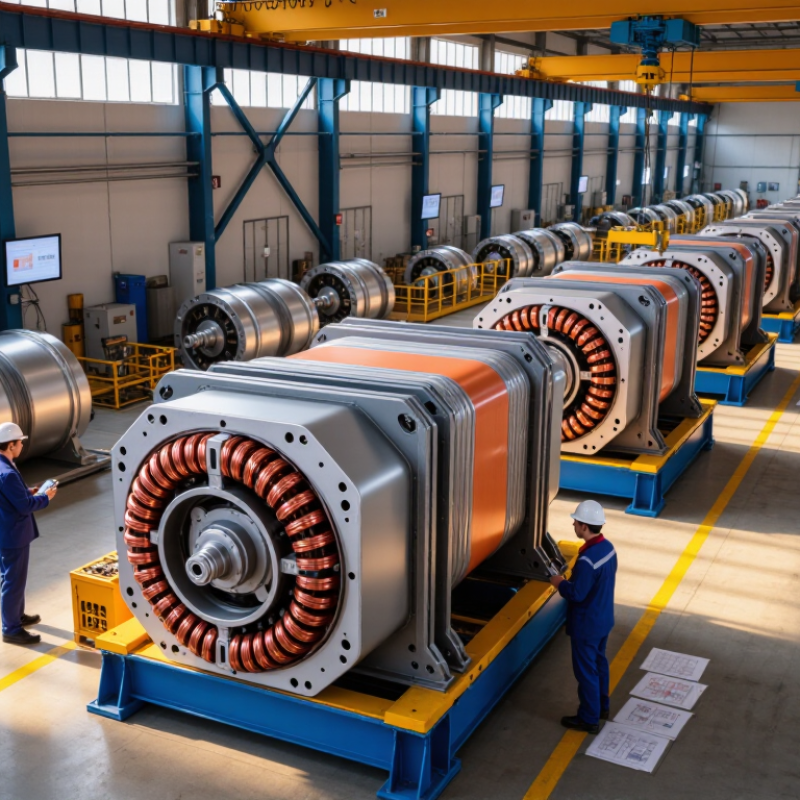
China Top Inverter Transformer Manufacturers How to Choose?

Classify Inverter Transformer Types by 0.4–35 kV Voltage Class and IEC 60076

Classify inverter transformers by the actual voltage at each connection point, not by a supplier’s shorthand. At 0.4 kV, the transformer may connect to an inverter output or low-voltage bus. Medium-voltage designs commonly serve 6–10 kV networks, while 35 kV units suit larger collection systems. These are practical ranges, not universal product categories. Check the project single-line diagram and insulation requirements.

IRENA’s Renewable Capacity Statistics 2024 reports 473 GW of renewable capacity added worldwide in 2023. More inverter-connected generation means transformer selection must account for harmonics, loading cycles, cooling, and site conditions—not just rated power. For example, compare winding temperature rise and impedance, then confirm the inverter’s harmonic data with the transformer designer. A tidy nameplate alone is not enough.

Use IEC 60076 as the technical framework for power-transformer requirements and applicable tests; verify which parts apply to the chosen design. Ask manufacturers for routine test records, temperature-rise results, loss guarantees, and clear voltage ratings on both windings. For 35 kV equipment, also inspect insulation coordination and clearance requirements. This gets detailed. A practical comparison should record voltage class, kVA, cooling method, vector group, impedance, and test evidence. Some project specifications remain incomplete, so flag assumptions before ordering.

Match Rated Power, 50/60 Hz Frequency, Vector Group, and Harmonic Duty

China Top Inverter Transformer Manufacturers: How to Choose?

Start with the inverter’s maximum continuous apparent power, not just its active-power rating. Allow for overload cycles, ambient temperature, altitude, and future capacity changes. A transformer rated too close to operating demand may run hot; excessive oversizing can also affect cost and efficiency. Confirm the nameplate frequency matches the grid: a 50 Hz design should not be assumed suitable for 60 Hz service. Small details matter.

Next, verify the vector group against inverter phase-shift requirements, grounding arrangements, and protection settings. Ask for the winding connection diagram, not just a label. Harmonic duty needs equal attention. IEEE Std 519-2022 sets voltage-distortion limits at the point of common coupling: for systems up to 69 kV, voltage THD is limited to 5%, with individual harmonics generally limited to 3%. These are system voltage limits, not transformer current limits. Request the inverter’s harmonic spectrum and a loss or temperature-rise assessment based on that spectrum. A simple “harmonic-rated” claim is not enough.

Tips: Compare guaranteed losses, impedance, temperature rise, and cooling method on the same operating basis. Ask the manufacturer to state assumptions clearly; otherwise, even a polished datasheet can leave important gaps.

Choosing an Inverter Transformer: Match Rated Power, 50/60 Hz, Vector Group & Harmonic Duty

Illustrative load examples with a 25% planning allowance, rounded to the next shown nameplate rating. Confirm final sizing against the inverter duty cycle, ambient conditions, overload requirements, and applicable standards.

Selection checks: Match the transformer’s rated power to the actual apparent-power demand. Verify that its frequency and voltage ratings suit the inverter and grid (50 or 60 Hz), and confirm the vector group provides the required phase shift and grounding arrangement. For nonlinear loads, assess the harmonic spectrum and resulting additional losses; harmonic duty may require a specially designed transformer or derating, so the illustrative allowance above is not a substitute for that assessment.

Compare Chinese Manufacturers by GB/T 1094 Compliance and Verified Test Records

Choosing an inverter transformer supplier means checking evidence, not just a compliance logo. GB/T 1094 is a standards series, so confirm the applicable parts and editions against the transformer design and purchase specification. The IEA’s 2023 report, Electricity Grids and Secure Energy Transitions, says annual grid investment needs to exceed USD 600 billion by 2030, up from about USD 300 billion. That scale of expansion makes dependable equipment records especially important.

Ask for test reports tied to the quoted model and, where available, the unit’s serial number. Check whether each result is routine, type, or special testing, and compare measured values with the stated limits. Useful records may include winding resistance, voltage ratio, losses, impedance, and insulation-test results, as applicable. Look for test dates, instrument calibration details, signatures, and laboratory accreditation. A scanned certificate alone is thin evidence.

Inverter duty can bring operating conditions that a standard nameplate does not fully describe. Request design-specific evidence for the expected load profile, harmonics, and thermal performance, and clarify which tests were witnessed or independently verified. Paperwork can still miss a production change. A careful buyer should match report identifiers to the actual unit and ask the manufacturer to explain any gaps before approval.

Check Efficiency, Temperature Rise, Insulation, and Short-Circuit Ratings

China Top Inverter Transformer Manufacturers: How to Choose?

When comparing inverter transformers, check efficiency at the loads your system will actually carry. A peak figure alone can be misleading. Review the test conditions and losses at typical operating points, especially if demand changes through the day. Temperature rise matters just as much. Confirm the stated rise, ambient conditions, cooling method, and insulation-system limits. A warm enclosure after several hours of operation is a practical reminder that installation airflow matters too.

Insulation ratings should suit the system voltage and expected electrical stress. Ask for the specified insulation levels and supporting test records, rather than relying on a brief catalogue entry. Short-circuit withstand ratings also deserve careful review. Match the transformer’s stated duration and current capability with the project fault study and protective-device settings. These details can be easy to overlook when a specification sheet appears complete.

Tips: Compare like with like. Check rated load, cooling conditions, test methods, and short-circuit duration across each offer. Request traceable test documentation, and clarify any value that lacks a stated condition. A small inconsistency is worth questioning.

Evaluate Total Cost, Warranty, Lead Time, and Service Coverage in China

Choosing an inverter transformer supplier in China is not just a price comparison. Request an itemized quotation covering the unit, testing, packaging, freight, installation, and commissioning. A low factory price can become costly when special handling or on-site support is excluded. Check whether the quoted design matches your voltage, load profile, cooling needs, and site conditions. Then compare warranty duration, response time, and coverage for parts and labor. Get exclusions in writing. Even a careful spreadsheet can miss costs that appear after delivery.

Lead times should include more than production days. Ask for a schedule showing drawing approval, material procurement, factory testing, shipment, and delivery. Confirm how delays are reported and whether the timeline accounts for public holidays or port congestion. Service coverage matters too. Ask where technicians are based, how quickly they can respond, and whether remote troubleshooting is available. Request a sample service procedure, not just a promise of support. A supplier may have strong production capacity but limited field coverage near your project. That gap is easy to overlook.

Copyright 2025 Fluidra S.A. | Created by BCM Marketing Agencia Privacy Policy Legal note | Cookie policy |

Technical cookies are strictly necessary for our website to work and you can navigate through it. These types of cookies are those that, for example, allow us to identify you, give you access to certain restricted parts of the page if necessary, or remember different options or services already selected by you, such as your privacy preferences. Therefore, they are activated by default, your authorization not being necessary in this regard. Through the configuration of your browser, you can block or alert the presence of this type of cookies, although such blocking will affect the proper functioning of the different functionalities of our website.


The analysis cookies allow us to study the navigation of the users of our website in general (for example, which sections of the page are the most visited, which services are used most and if they work correctly, etc.). From the statistical information on navigation on our website, we can improve both the operation of the page itself and the different services it offers. Therefore, these cookies do not have an advertising purpose, but only serve to make our website work better, adapting to our users in general. By activating them you will contribute to this continuous improvement. You can enable or disable these cookies by checking the corresponding box, being disabled by default.


Functionality cookies allow us to remember your preferences, to personalize certain characteristics and general options of our website, every time you access it (for example, the language in which the information is presented to you, the sections marked as favorites, your browser type, etc.) Therefore, this type of cookies does not have an advertising purpose, but by activating them you will improve the functionality of the website (for example, adapting to your type of browser) and the customization of it based on your preferences (for example, by presenting the information in the language that you have chosen in previous occasions), which will contribute to the ease, usability and comfort of our page during your navigation. You can enable or disable these cookies by checking the corresponding box, being disabled by default.


Advertising cookies allow us to manage the advertising spaces included in our website based on criteria such as the content shown or the frequency in which the ads are displayed. For example, if you have been shown the same ad several times on our website, and you have not shown a personal interest by clicking on it, it will not appear again. In summary, by activating this type of cookies, the advertising shown on our website will be more useful and diverse, and less repetitive. You can enable or disable these cookies by checking the corresponding box, being disabled by default.


Behavioral advertising cookies allow us to obtain information based on the observation of your browsing habits and behaviors on the web, in order to show you advertising content that best suits your personal tastes and interests. To understand it in a very simple way, we will give you a fictitious example: if your last searches on the web were related to suspense literature, we would show you advertising about suspense books. Therefore, activating this type of cookies, the advertising that we show you on our website will not be generic, but will be oriented to your searches, tastes and interests, therefore adjusting exclusively to you. You can enable or disable these cookies by checking the corresponding box, being disabled by default.
To understand it in a very simple way, we will give you a fictitious example: if your last searches on the web were related to suspense literature, we would show you advertising about suspense books. Therefore, activating this type of cookies, the advertising that we show you on our website will not be generic, but will be oriented to your searches, tastes and interests, therefore adjusting exclusively to you. You can enable or disable these cookies by checking the corresponding box, being disabled by default.

SAVE

We use our own and third-party cookies to ensure the proper functioning of the website and to analyse our services, improve your experience on our website and show you advertisements related to your interests according to profiling based on your browsing habits (e.g. websites visited). You can accept all cookies by clicking "ACCEPT" or set or reject them by clicking here. If you would like to know more about the use of cookies, please see our COOKIE POLICY.


ACCEPT ALL
Reject no essentials


