
How to Choose the Right Steel Wire Mesh?
FLUID HANDLING EXPERTS

Blog, all our news

How to Choose the Right Steel Wire Mesh?

Choosing the right Steel Wire Mesh begins with the application, not the catalogue price. A mesh panel may look strong on a warehouse floor, yet fail when exposed to vibration, moisture, or repeated impact. Wire diameter, opening size, material grade, coating, and load direction must work together. Small details matter. Even the edge finish can affect handling, corrosion resistance, and installation time.

The World Steel Association reported approximately 1.892 billion tonnes of crude steel production worldwide in 2023, according to its World Steel in Figures 2024 report. This scale reflects steel’s importance, but it also reveals a challenge: not every steel product offers the same performance. Galvanized, stainless steel, and plain carbon steel meshes behave differently in coastal air, chemical environments, and high-temperature areas. ASTM A1064/A1064M provides requirements for carbon-steel wire and welded wire reinforcement, while ISO 4783 addresses industrial wire screens and related specifications. These standards are useful reference points, not substitutes for engineering judgment.

Start with the real conditions.

A reliable selection process checks mesh opening, wire tolerance, tensile strength, weld quality, and surface protection. It also confirms whether the mesh will be cut, bent, welded, or installed outdoors. Product certificates and batch traceability can support confidence, but paperwork alone cannot reveal every weakness. A supplier’s practical experience matters. So does independent testing.

The cheapest option may appear efficient. It may not remain economical after rust, deformation, or replacement costs appear. This guide compares the main selection factors, highlights common mistakes, and explains where professional advice is necessary. No checklist is perfect. That is worth remembering.
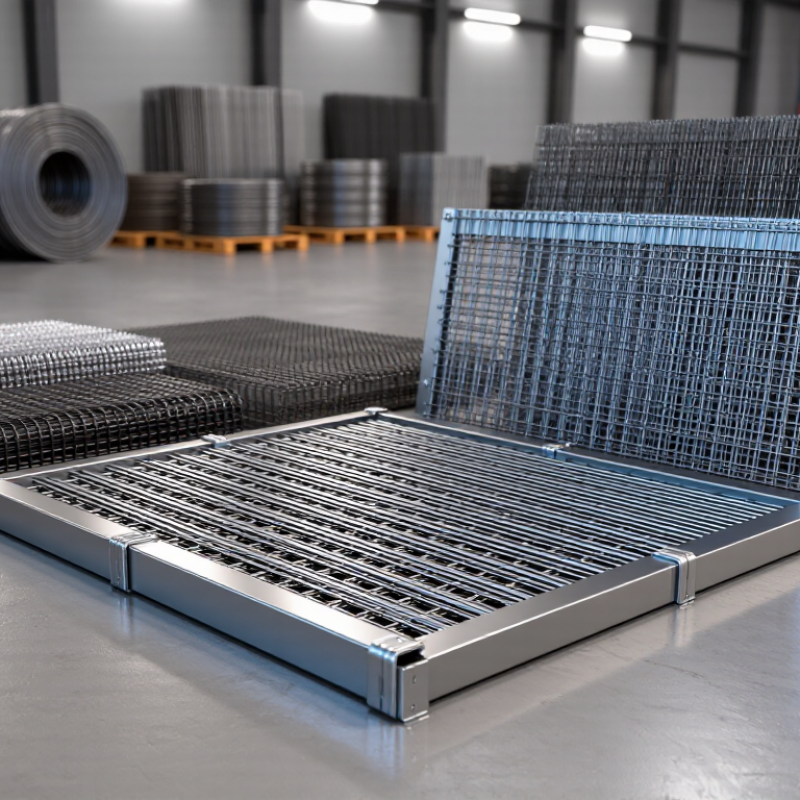
How to Choose the Right Steel Wire Mesh?

Define the Application and Performance Requirements

How to Choose the Right Steel Wire Mesh?

Choosing steel wire mesh starts with the application, not the appearance. Identify what the mesh must do before comparing sizes or finishes. A screen for flour dust needs different performance than a guard around moving equipment.

Measure the opening size carefully. A 10 mm aperture may suit material screening, but it may be unsafe for small parts or fingers. Check the wire diameter, panel strength, and expected load. Consider impact, vibration, airflow, and cleaning methods. Outdoor installations also require protection against moisture and corrosion. Stainless steel may perform well in damp areas, while coated steel can suit less aggressive environments. Always verify temperature limits and relevant safety requirements with a qualified engineer.

In practical projects, I have seen buyers choose mesh by price alone. That decision caused early deformation. I have also underestimated cleaning access before. It was a useful reminder. Performance depends on the whole installation, including frames, fasteners, and support spacing.

Tips: Write down the material size, load, environment, and service temperature. Request test data or technical drawings when performance matters. Compare open area, not aperture size alone. Inspect a sample under realistic conditions before ordering large quantities. Small details matter.

How to Choose the Right Steel Wire Mesh?

Define the application first, then match the mesh material to the required strength, corrosion resistance, flexibility, and service environment.

Higher tensile strength is useful for security barriers, screening, and reinforcement, while stainless steel is generally preferred for corrosion-sensitive applications. The values shown are representative lower-bound tensile-strength figures from ASTM A580/A580M, ASTM A641/A641M, and EN 10270-1; actual mesh performance also depends on wire diameter, aperture size, weave or weld pattern, and surface treatment.

Select the Appropriate Steel Grade and Wire Material

Choosing the right steel wire mesh starts with the wire material, not the opening size. Carbon steel offers strength and lower cost for dry, indoor applications. Galvanized steel adds a zinc coating, helping resist moisture and surface rust. Stainless steel suits kitchens, chemical areas, coastal locations, and frequent washing. Grade 304 is a practical general choice. Grade 316 performs better where chlorides and salt exposure are severe.

The World Steel Association reported approximately 1.89 billion tonnes of crude steel production in 2023. This scale shows steel’s broad industrial value, but production volume does not guarantee suitable mesh performance. The International Stainless Steel Forum reported global stainless steel production of about 58.4 million tonnes in 2023. That figure reflects stainless steel’s continuing role in demanding environments. Still, grade selection needs real site data, including humidity, chemicals, temperature, and cleaning methods. A common mistake is choosing stainless steel only by appearance. It may fail if the environment contains strong chlorides.

Tips: Confirm the material certificate, wire diameter, coating mass, and tensile strength. For stainless mesh, request the exact grade, not simply “stainless steel.” Check applicable standards, such as ASTM A580 for stainless wire or ASTM A641 for zinc-coated carbon steel wire. Test a sample near the installation site when corrosion risk is uncertain. It costs time. Replacement costs more. Even experienced buyers sometimes overlook weld zones, cut edges, and trapped moisture. These small details can shorten service life.

Determine the Mesh Size, Wire Diameter, and Opening Pattern

How to Choose the Right Steel Wire Mesh?

Determine the mesh size, wire diameter, and opening pattern before comparing prices. Mesh size describes the number of openings per linear inch. A 20-mesh screen has smaller openings than a 10-mesh screen. However, mesh count alone can mislead. Wire diameter changes the clear opening and affects flow, filtration, and strength.

Use this relationship: opening size equals pitch minus wire diameter. For example, 20 mesh with 0.016-inch wire provides roughly a 0.034-inch opening. Confirm the result with ISO 9044:2016 tolerances, especially when particle separation matters. Thicker wire improves impact resistance, but it reduces open area. That trade-off is often underestimated.

Pattern matters too. Plain weave suits general screening and stable particle sizing. Twill weave supports finer openings with heavier wire. Welded mesh offers rigid panels, while woven mesh adapts better to curved or vibrating equipment.

The World Steel Association reported 1,888.2 million tonnes of crude steel production in 2023, showing the scale of the material supply behind these products. Yet production volume does not guarantee suitability. Test a sample under real temperature, load, and cleaning conditions.

Small details matter. A drawing may specify 1.00 mm wire, while actual measurements vary within accepted tolerances. That variance can change performance. I would also question whether the selected aperture matches the smallest critical particle, not merely the average size.

Compare Coatings, Finishes, and Environmental Protection

How to Choose the Right Steel Wire Mesh?

Compare Coatings, Finishes, and Environmental Protection

Steel wire mesh should match its environment, not just its opening size. Indoor storage areas may need only a basic galvanized finish. Outdoor fencing faces rain, sunlight, scratches, and changing temperatures. Coastal sites are harsher because salt accelerates corrosion. Small details matter here.

Hot-dip galvanizing usually provides a thicker zinc layer than electro-galvanizing. It suits exposed structures, construction barriers, and agricultural enclosures. However, a thick coating can slightly alter wire dimensions. Check the specified coating mass and wire diameter before ordering. Do not rely on appearance alone.

PVC-coated mesh adds color and another barrier against moisture. It can work well around gardens, playgrounds, and residential boundaries. Yet damaged plastic may hide early rust beneath the surface. Stainless steel offers strong corrosion resistance, especially in wet or chemically demanding areas, but its higher cost may not suit every project. Epoxy finishes can provide a smooth surface indoors, though prolonged sunlight may reduce their performance.

Ask for coating thickness records, material certificates, and relevant test data. Examine cut edges, weld points, and bends, where protection is often weakest. Salt-spray results can help compare products, but they do not perfectly predict field life. Installation quality matters too. A scratched mesh, trapped water, or contact with dissimilar metals can shorten service life. This choice is rarely perfect. Recheck the site conditions before final selection.

How to Choose the Right Steel Wire Mesh? - Compare Coatings, Finishes, and Environmental Protection

Mesh Type / Finish Typical Protective System Corrosion Resistance UV and Weathering Performance Temperature Considerations Maintenance Needs Recommended Environments Key Selection Considerations
Bright Steel Wire Mesh Uncoated carbon-steel wire with a clean, mill-finished surface Limited
Readily rusts when exposed to moisture, salts, or outdoor condensation
Limited
Outdoor exposure can accelerate oxidation and surface deterioration
Suitable for normal indoor temperatures; performance depends strongly on humidity and exposure Requires dry storage, protective paint, oiling, or another suitable treatment Dry indoor screening, temporary fabrication, and applications where later coating is planned Lowest initial protection; avoid for permanent outdoor or wet-service use unless an additional coating system is applied
Electro-Galvanized Steel Wire Mesh Thin zinc coating applied by an electroplating process Moderate
Provides sacrificial zinc protection, but the thinner coating is less suitable for severe exposure
Moderate
Suitable for protected or mildly exposed locations
Generally suitable for ordinary ambient service; avoid assuming high-temperature suitability without supplier data Inspect cut edges, scratches, and fastener interfaces; repair damaged areas when practical Indoor areas, light-duty equipment, dry warehouses, and mildly humid environments Offers a smoother appearance and tighter dimensional control than many hot-dip finishes, but usually has less zinc protection
Hot-Dip Galvanized Steel Wire Mesh Zinc coating applied by immersion in molten zinc; coating may be applied before or after mesh fabrication Very Good
Zinc acts as a barrier and provides sacrificial protection to exposed steel
Very Good
Performs well in many outdoor and atmospheric conditions
Suitable for common outdoor service; prolonged high-temperature exposure can affect zinc-coating performance Low to moderate; check for white rust in damp storage and inspect cut or abraded areas Fencing, guards, agricultural structures, construction sites, and general outdoor applications Choose heavier zinc coating or a relevant standard when exposure includes persistent humidity, industrial pollutants, or deicing salts
PVC-Coated Galvanized Steel Wire Mesh Steel core protected by zinc, plus a bonded polyvinyl chloride outer layer Very Good
Dual protection helps shield the steel from moisture and many common contaminants
Very Good
Use a UV-stabilized formulation for prolonged sunlight exposure
Service temperature is limited by the PVC layer; elevated heat can cause softening, aging, or loss of adhesion Inspect for cuts, peeling, cracking, and damage caused by abrasion or sharp edges Outdoor fencing, landscaping, animal enclosures, safety barriers, and applications needing color or touch comfort Confirm coating thickness, adhesion, UV stabilization, and temperature range; damaged PVC can allow localized corrosion
Polyester-Powder-Coated Steel Mesh Steel mesh, commonly galvanized or pretreated, covered with a cured polyester powder coating Very Good
Strong when pretreatment, coating thickness, and edge coverage are properly controlled
Excellent
Exterior-grade polyester systems generally provide good color and gloss retention
Suitable for normal outdoor temperatures; verify the coating manufacturer’s continuous-use range for heat exposure Low; clean with mild detergent and inspect chips, scratches, and exposed edges Architectural panels, equipment guards, displays, commercial fencing, and visible outdoor installations Provides a clean decorative finish, but coating damage should be repaired promptly to limit under-film corrosion
Epoxy-Coated Steel Mesh Steel mesh coated with an epoxy resin system, often used as a primer or protective barrier Very Good
Excellent barrier properties in controlled environments; exposed epoxy can chalk under sunlight
Moderate
Epoxy is commonly protected with a UV-resistant topcoat for exterior service
Good chemical and heat resistance within the specified system limits; verify compatibility with the process temperature Inspect for impact damage, chalking, and coating breakdown; avoid harsh cleaners unless approved Industrial interiors, chemical-process areas, concrete reinforcement applications, and sheltered service Choose a compatible topcoat when both corrosion protection and long-term outdoor appearance are required
304 Stainless Steel Wire Mesh Chromium-bearing stainless steel with a passive oxide surface; no additional coating normally required Excellent
Strong general resistance to atmospheric corrosion and many indoor chemicals
Excellent
Does not rely on an organic coating for normal UV resistance
Good high-temperature capability relative to coated carbon steel; verify strength and corrosion performance at elevated temperatures Low; periodic cleaning prevents deposits and helps preserve appearance Food and pharmaceutical equipment, architectural uses, general outdoor service, and humid indoor environments Can suffer localized corrosion in chloride-rich conditions; avoid contamination with carbon-steel tools or particles
316 Stainless Steel Wire Mesh Molybdenum-bearing stainless steel with a passive oxide surface; typically uncoated Excellent
Better resistance than 304 stainless steel in many chloride and marine exposures
Excellent
Excellent outdoor durability without dependence on a paint or polymer layer
Suitable for demanding service when the grade, wire condition, and operating temperature are correctly specified Low; rinse salt deposits and clean regularly in marine or polluted atmospheres Marine locations, coastal equipment, chemical-processing areas, cleanable screens, and high-humidity environments Higher material cost is justified when chloride exposure, service life, and reduced maintenance are important

Selection note: Actual service life depends on wire diameter, coating mass or thickness, mesh construction, edge protection, installation details, pollutants, chloride concentration, humidity, and cleaning practices. Always verify the applicable material standard and environmental exposure classification before final selection.

Verify Quality, Standards, Cost, and Supplier Reliability

How to Choose the Right Steel Wire Mesh?

Choosing steel wire mesh starts with evidence, not appearance. Check the wire diameter, opening size, weld strength, surface finish, and dimensional tolerance. A caliper can expose variations that photographs hide. Measure twice. Request a sample from the same production batch. Inspect several intersections for loose welds, uneven spacing, sharp ends, or incomplete coating. These small defects may cause installation delays or early corrosion.

Standards must match the application and destination market. Ask the supplier which material grade, testing method, and coating requirement they follow. Request mill certificates, inspection reports, and batch traceability documents. Do not accept a generic “quality certificate” without test details. It sounds professional, but proves little. I have seen buyers compare prices before confirming mesh specifications; that mistake made the cheaper option more expensive after replacement and labor costs.

Evaluate the full cost, including cutting, forming, packaging, freight, maintenance, and rejected pieces. A reliable supplier should provide clear drawings, realistic lead times, consistent communication, and a written inspection process. Ask how they handle nonconforming material and request recent production photos or a factory inspection when practical. Test the supplier with a small order before committing to a large one. Even then, reliability is not guaranteed. Recheck the first shipment against the approved sample, because assumptions can survive longer than defects.

Copyright 2025 Fluidra S.A. | Created by BCM Marketing Agencia Privacy Policy Legal note | Cookie policy |

Technical cookies are strictly necessary for our website to work and you can navigate through it. These types of cookies are those that, for example, allow us to identify you, give you access to certain restricted parts of the page if necessary, or remember different options or services already selected by you, such as your privacy preferences. Therefore, they are activated by default, your authorization not being necessary in this regard. Through the configuration of your browser, you can block or alert the presence of this type of cookies, although such blocking will affect the proper functioning of the different functionalities of our website.


The analysis cookies allow us to study the navigation of the users of our website in general (for example, which sections of the page are the most visited, which services are used most and if they work correctly, etc.). From the statistical information on navigation on our website, we can improve both the operation of the page itself and the different services it offers. Therefore, these cookies do not have an advertising purpose, but only serve to make our website work better, adapting to our users in general. By activating them you will contribute to this continuous improvement. You can enable or disable these cookies by checking the corresponding box, being disabled by default.


Functionality cookies allow us to remember your preferences, to personalize certain characteristics and general options of our website, every time you access it (for example, the language in which the information is presented to you, the sections marked as favorites, your browser type, etc.) Therefore, this type of cookies does not have an advertising purpose, but by activating them you will improve the functionality of the website (for example, adapting to your type of browser) and the customization of it based on your preferences (for example, by presenting the information in the language that you have chosen in previous occasions), which will contribute to the ease, usability and comfort of our page during your navigation. You can enable or disable these cookies by checking the corresponding box, being disabled by default.


Advertising cookies allow us to manage the advertising spaces included in our website based on criteria such as the content shown or the frequency in which the ads are displayed. For example, if you have been shown the same ad several times on our website, and you have not shown a personal interest by clicking on it, it will not appear again. In summary, by activating this type of cookies, the advertising shown on our website will be more useful and diverse, and less repetitive. You can enable or disable these cookies by checking the corresponding box, being disabled by default.


Behavioral advertising cookies allow us to obtain information based on the observation of your browsing habits and behaviors on the web, in order to show you advertising content that best suits your personal tastes and interests. To understand it in a very simple way, we will give you a fictitious example: if your last searches on the web were related to suspense literature, we would show you advertising about suspense books. Therefore, activating this type of cookies, the advertising that we show you on our website will not be generic, but will be oriented to your searches, tastes and interests, therefore adjusting exclusively to you. You can enable or disable these cookies by checking the corresponding box, being disabled by default.
To understand it in a very simple way, we will give you a fictitious example: if your last searches on the web were related to suspense literature, we would show you advertising about suspense books. Therefore, activating this type of cookies, the advertising that we show you on our website will not be generic, but will be oriented to your searches, tastes and interests, therefore adjusting exclusively to you. You can enable or disable these cookies by checking the corresponding box, being disabled by default.

SAVE

We use our own and third-party cookies to ensure the proper functioning of the website and to analyse our services, improve your experience on our website and show you advertisements related to your interests according to profiling based on your browsing habits (e.g. websites visited). You can accept all cookies by clicking "ACCEPT" or set or reject them by clicking here. If you would like to know more about the use of cookies, please see our COOKIE POLICY.


ACCEPT ALL
Reject no essentials


