
How to Choose a Precision Faucet Lever Handle?
FLUID HANDLING EXPERTS

Blog, all our news

How to Choose a Precision Faucet Lever Handle?

Choosing a Precision Faucet Lever Handle is not merely a matter of matching finishes. It affects daily control, water efficiency, accessibility, and long-term maintenance. A handle should turn smoothly, resist surface wear, and provide clear temperature feedback. Small details matter. Wet hands expose weak designs quickly.

The U.S. Environmental Protection Agency’s WaterSense program sets a useful benchmark for bathroom faucet efficiency, with qualifying models limited to 1.5 gallons per minute. However, flow rate alone cannot prove product quality. The 2024 Houzz U.S. Kitchen Trends Study also highlights homeowners’ continuing investment in updated faucets and practical kitchen features. These findings suggest a wider expectation: attractive hardware must perform reliably. Still, available reports rarely isolate the Precision Faucet Lever Handle as a separate category. That limitation deserves attention.

Human-centered design expert Donald Norman wrote, “Design is really an act of communication.” His principle applies directly here. A well-designed lever communicates on, off, hot, and cold through movement, resistance, and position. In practical testing, compare one-handed operation, cartridge smoothness, mounting stability, and clearance around the spout. Check the handle with dry and wet hands. Better still, test it after repeated use.

The right choice balances engineering, comfort, finish durability, and verified standards. Certification labels help, but they do not replace careful inspection. A beautiful handle can still feel vague or fragile. This guide examines the details that separate a dependable Precision Faucet Lever Handle from a merely attractive option.
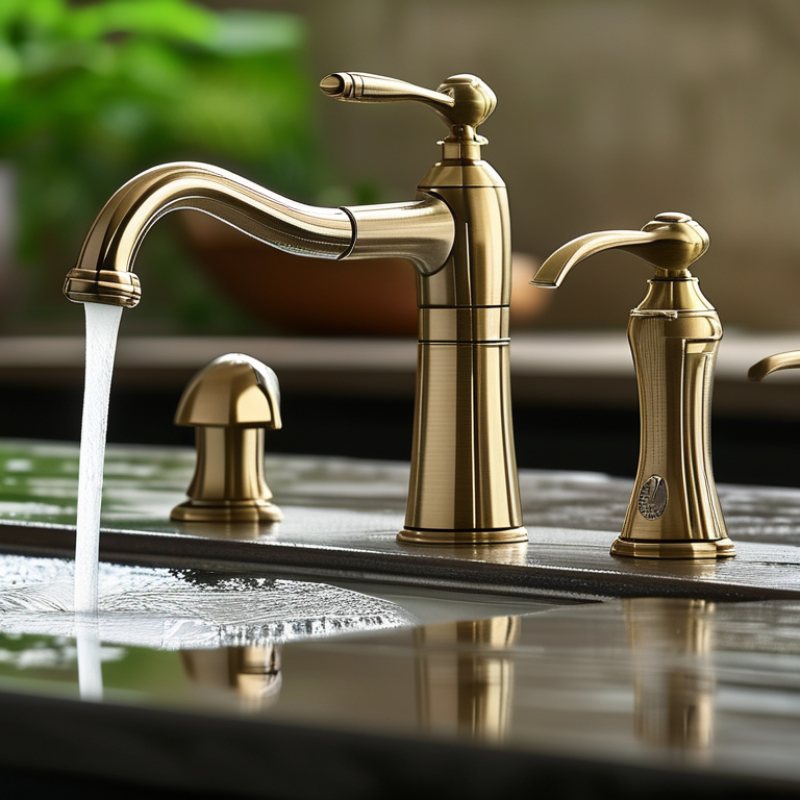
How to Choose a Precision Faucet Lever Handle?

Identify the Faucet Type and Lever Handle Compatibility

Choosing a precision faucet lever handle starts with identifying the faucet mechanism, not its appearance. Compression faucets usually use separate hot and cold stems. Cartridge, ball, and ceramic-disc faucets need different handle depths and mounting points. Check the faucet’s service type, handle count, stem shape, spline count, and retaining-screw position. A D-shaped stem is not automatically compatible with a universal lever.

Measure before ordering. Remove the existing lever, then record the stem diameter, stem height, and distance from the mounting surface to the screw hole. Also check hot-and-cold orientation. A replacement may fit physically but operate backward or scrape the escutcheon. I have seen this mistake during repairs. The handle looked correct, yet its base was too wide.

Industry data supports careful maintenance. The U.S. Environmental Protection Agency’s WaterSense leak guidance reports that household leaks can waste more than 9,400 gallons yearly. It also estimates that leaks waste nearly one trillion gallons nationwide each year. A loose or mismatched lever can worsen that problem. The National Kitchen & Bath Association’s 2024 design trends reporting continues to place fixture replacement among common renovation decisions, increasing the need for verified compatibility. If the faucet type remains uncertain, photograph the stem and cartridge, measure twice, and compare the specifications. Guessing is faster, sometimes. It is rarely cheaper.

Match the Handle to the Faucet’s Valve and Stem Design

How to Choose a Precision Faucet Lever Handle?

A precise faucet lever handle must match the valve and stem design, not just the fixture’s appearance. During repairs, I first identify the valve type. Compression valves usually need handles that turn several times. Cartridge valves often use a short, quarter-turn movement. The handle should support that operating pattern without forcing the mechanism.

Measure the stem before ordering a replacement. Check its shape, diameter, length, and spline count. Some stems are square, while others use splines or a threaded connection. A handle that fits loosely may wobble, damage the stem, or leak through repeated movement. Small differences matter.

I once selected a handle by matching only the visible shape. It looked correct, but the stem connection was too shallow. That mistake taught me to remove the old handle and measure everything. Use a ruler or caliper, if available. Also check the handle’s clearance from the backsplash and nearby fixtures. A beautiful lever is not useful if it strikes the wall.

Installation should feel smooth, never forced. If the handle requires excessive pressure, stop and recheck the valve and adapter. Manufacturers’ technical drawings and plumbing documentation can confirm compatibility, but measurements remain essential. Older faucets can contain uncommon stem patterns. That is where guesswork fails.

Evaluate Material, Finish, Ergonomics, and Operating Comfort

How to Choose a Precision Faucet Lever Handle?

A precision faucet lever handle should feel stable before it looks attractive. I inspect the base, pivot, and fastening point for solid construction. Stainless steel and brass usually provide dependable strength in daily use. However, material labels can mislead when coatings or internal parts are weaker. Ask for clear specifications, not vague claims.

Finish affects appearance, cleaning, and long-term maintenance. Brushed surfaces can hide fingerprints and minor water spots. Polished finishes reflect more light but may show marks quickly. A quality coating should resist peeling under normal bathroom moisture. I still check the care instructions, because harsh cleaners can damage even a durable surface. Test it wet.

Ergonomics matters during every small movement. The lever should offer enough length for controlled pressure without feeling loose. Rounded edges help prevent discomfort when hands are wet or soapy. The operating path should feel smooth, predictable, and neither too stiff nor too light. I once preferred a heavier handle, but repeated use changed my opinion. Excessive resistance can become tiring, especially for children or users with limited hand strength. Before purchase, move the handle repeatedly and listen for scraping, clicking, or uneven travel. A slight flaw may seem harmless in a showroom, yet become annoying after months of daily operation.

How to Choose a Precision Faucet Lever Handle? — Evaluate Material, Finish, Ergonomics, and Operating Comfort
Evaluation Dimension Option or Benchmark Typical Data Performance and Comfort Effect Recommended Selection What to Verify
Handle Material Solid brass Density: approximately 8.4–8.7 g/cm³; high rigidity and good resistance to impact. Provides a stable, substantial feel and helps maintain precise movement. Heavier than aluminum or zinc-based alternatives. Confirm that the handle is solid or adequately reinforced and that exposed surfaces are properly protected.
Handle Material Stainless steel Common grades include corrosion-resistant austenitic stainless steel; density is approximately 7.7–8.1 g/cm³. Offers high surface durability, good corrosion resistance, and a clean, cool touch. Suitable for humid environments. Check the actual steel grade, wall thickness, machining quality, and resistance to pitting or discoloration.
Handle Material Zinc alloy Density: approximately 6.5–6.8 g/cm³; suitable for die-cast shapes and decorative designs. Allows economical production and complex forms, but can be less resistant to corrosion or impact if the protective finish is damaged. Suitable for moderate-use applications with a well-controlled protective coating. Inspect coating coverage, edge protection, internal corrosion resistance, and resistance to repeated tightening.
Handle Material Aluminum alloy Density: approximately 2.6–2.8 g/cm³; considerably lighter than brass or stainless steel. Reduces handle weight and gives a quick, light operating feel. Surface protection is important because bare aluminum can oxidize. Useful when low weight and a modern appearance are required. Verify anodizing or another protective treatment, especially around edges, threads, and contact points.
Surface Finish Polished chrome plating Typical decorative coating thickness varies by process; the surface should be continuous and free from pores, blisters, or exposed base metal. Provides a bright, reflective appearance and is generally easy to clean. Water spots and fingerprints are more visible. Check adhesion, uniformity, coverage at corners, and resistance to household cleaners and salt spray.
Surface Finish Brushed or satin finish Directional surface texture with a low-reflective appearance. Conceals light fingerprints and minor water marks better than a mirror finish while providing a softer visual effect. Confirm that brushing is consistent and that the grain direction matches across visible components.
Surface Finish PVD-treated finish Uses a vacuum-deposited hard coating; durability depends on substrate preparation, coating composition, and process control. Can improve resistance to abrasion, discoloration, and corrosion compared with many conventional decorative finishes. Request test results for abrasion, corrosion, chemical exposure, and coating adhesion.
Lever Length Compact lever Approximately 50–75 mm from pivot to gripping point. Requires less clearance but generally needs more finger force for the same valve torque. Suitable for compact basins or installations with limited side clearance. Check whether the lever can be operated comfortably without contacting a wall, backsplash, or adjacent fitting.
Lever Length Standard lever Approximately 75–110 mm from pivot to gripping point. Offers a useful balance between operating leverage, clearance, and visual proportion. Measure the actual pivot-to-grip distance and confirm the available operating arc.
Lever Geometry Rounded or radiused edges Continuous edge radii without sharp corners; larger radii generally reduce localized pressure. Improves comfort during one-handed operation and reduces the risk of snagging or uncomfortable pressure points. Run a finger along all edges and inspect the underside, end cap, and transition to the handle base.
Grip Surface Textured or lightly knurled grip Fine texture that remains comfortable without sharp projections. Improves traction when hands are wet, so less gripping force is required. Ensure the texture is easy to clean and does not trap excessive soap residue or mineral deposits.
Operating Force Low-effort operation A practical target is approximately 5–15 N at the gripping point, depending on cartridge design and water pressure. Lower force improves comfort and accessibility. Excessive force may indicate poor cartridge alignment, overtightening, or contamination. Test the handle from cold to hot positions and at different flow rates; check for sticking or sudden resistance.
Operating Angle Controlled movement range Many single-lever faucets operate through an arc of approximately 60–120 degrees, depending on the valve design. A controlled arc helps users make precise temperature and flow adjustments without excessive wrist movement. Verify that the full arc is unobstructed and that the lever does not hit nearby surfaces.
Motion Quality Smooth, uniform resistance No grinding, looseness, chatter, or abrupt changes in resistance during the complete operating cycle. Consistent resistance improves perceived precision and reduces accidental temperature or flow changes. Operate the handle repeatedly and check for side play, noise, backlash, and return-position consistency.
Handle Clearance Safe surrounding clearance Leave sufficient space for the user’s fingers and for the complete lever travel; the required clearance depends on the handle geometry. Prevents knuckle contact with walls, backsplashes, spouts, and adjacent controls. Measure the installation area with the handle at both ends of its operating arc.
Maintenance Easy-clean surface Non-porous, continuous finish with minimal deep grooves and accessible underside surfaces. Reduces buildup of soap, limescale, and fingerprints and simplifies routine cleaning. Confirm compatibility with mild soap, water, and a soft cloth; avoid abrasive cleaners unless specifically approved.
Connection and Stability Secure handle-to-cartridge connection Fastener should be fully seated, aligned, and protected from loosening during repeated operation. Prevents wobble, delayed response, and loss of operating precision. Check for lateral play, visible gaps, uneven alignment, and loosening after repeated cycles.

Check Dimensions, Mounting Method, and Replacement Requirements

How to Choose a Precision Faucet Lever Handle?

A precision faucet lever handle should fit the valve, not merely look attractive. Measure the handle’s length, height, and connection opening with calipers when possible. Record everything.

Check the stem diameter, spline count, and stem shape before selecting a replacement. A handle may appear compatible but still sit too high or turn unevenly. Measure the distance from the valve center to the surrounding trim. This prevents the lever from striking the backsplash or nearby handle. Small mismatches matter.

Mounting method is equally important. Most handles use a set screw, threaded cap, or direct-fit connection. Remove the existing handle carefully and inspect its fastener location. Some models require a hex key, while others use a concealed side screw. Do not force a stuck screw. Compare the replacement’s mounting depth with the exposed stem length. A loose connection can cause wobbling, leaks around the valve, or poor temperature control.

Replacement requirements deserve careful attention. Check whether the old handle includes an adapter, retaining ring, or decorative cover. These small parts are easy to overlook. Take clear photos before disassembly. I once assumed two similar handles shared one adapter, and the new lever never aligned correctly. That mistake was avoidable. If the valve body is worn, replacing only the handle may not solve the problem. Keep the original parts until the new handle operates smoothly and securely.

How to Choose a Precision Faucet Lever Handle?

Check dimensions, mounting method, and replacement requirements before ordering.

1. Check Dimensions

Measure the handle base, stem diameter, and exposed stem height. Typical ranges are shown in millimeters; always compare them with the original handle.

2. Identify the Mounting Method

Common connections include a side set screw, a splined stem with an adapter, or a threaded attachment. The connection must match the faucet valve stem.

3. Confirm Replacement Requirements

Check the handle orientation, screw access, included adapter, and whether the existing escutcheon or trim limits the available clearance.

Typical dimensional ranges only. Verify the exact faucet stem and mounting hardware before purchasing a replacement handle.

Compare Quality, Maintenance Needs, and Overall Value

A precision faucet lever handle should feel controlled, not merely attractive.

During a hands-on inspection, turn it slowly and check for resistance, wobble, and uneven movement. A solid metal lever usually tolerates repeated contact better than thin decorative material. However, heavier does not always mean better. Internal cartridge quality matters more than visual weight.

Maintenance affects real value. Look for smooth surfaces without deep grooves around the handle base. Those grooves collect soap film and mineral deposits. The U.S. Environmental Protection Agency’s WaterSense faucet specification limits bathroom faucets to 1.5 gallons per minute, saving at least 30% compared with standard 2.2-gpm models. That saving matters, but a restrictive or poorly balanced handle can make daily use frustrating. Check whether replacement cartridges and seals are commonly available. This small detail can prevent unnecessary fixture replacement.

Reliability needs evidence.

The ASME A112.18.1/CSA B125.1 standard addresses mechanical performance and durability for plumbing supply fittings. Certification does not remove every risk, but it gives buyers a more dependable baseline. I would also compare warranty terms, finish-care instructions, and access to service parts.

A polished finish may show fingerprints quickly. A textured finish may hide them, yet clean less easily. My own judgment can be imperfect here; appearance often influences decisions more than long-term maintenance. The better value is usually the handle that operates quietly, resists loosening, and remains serviceable after years of ordinary use.

Copyright 2025 Fluidra S.A. | Created by BCM Marketing Agencia Privacy Policy Legal note | Cookie policy |

Technical cookies are strictly necessary for our website to work and you can navigate through it. These types of cookies are those that, for example, allow us to identify you, give you access to certain restricted parts of the page if necessary, or remember different options or services already selected by you, such as your privacy preferences. Therefore, they are activated by default, your authorization not being necessary in this regard. Through the configuration of your browser, you can block or alert the presence of this type of cookies, although such blocking will affect the proper functioning of the different functionalities of our website.


The analysis cookies allow us to study the navigation of the users of our website in general (for example, which sections of the page are the most visited, which services are used most and if they work correctly, etc.). From the statistical information on navigation on our website, we can improve both the operation of the page itself and the different services it offers. Therefore, these cookies do not have an advertising purpose, but only serve to make our website work better, adapting to our users in general. By activating them you will contribute to this continuous improvement. You can enable or disable these cookies by checking the corresponding box, being disabled by default.


Functionality cookies allow us to remember your preferences, to personalize certain characteristics and general options of our website, every time you access it (for example, the language in which the information is presented to you, the sections marked as favorites, your browser type, etc.) Therefore, this type of cookies does not have an advertising purpose, but by activating them you will improve the functionality of the website (for example, adapting to your type of browser) and the customization of it based on your preferences (for example, by presenting the information in the language that you have chosen in previous occasions), which will contribute to the ease, usability and comfort of our page during your navigation. You can enable or disable these cookies by checking the corresponding box, being disabled by default.


Advertising cookies allow us to manage the advertising spaces included in our website based on criteria such as the content shown or the frequency in which the ads are displayed. For example, if you have been shown the same ad several times on our website, and you have not shown a personal interest by clicking on it, it will not appear again. In summary, by activating this type of cookies, the advertising shown on our website will be more useful and diverse, and less repetitive. You can enable or disable these cookies by checking the corresponding box, being disabled by default.


Behavioral advertising cookies allow us to obtain information based on the observation of your browsing habits and behaviors on the web, in order to show you advertising content that best suits your personal tastes and interests. To understand it in a very simple way, we will give you a fictitious example: if your last searches on the web were related to suspense literature, we would show you advertising about suspense books. Therefore, activating this type of cookies, the advertising that we show you on our website will not be generic, but will be oriented to your searches, tastes and interests, therefore adjusting exclusively to you. You can enable or disable these cookies by checking the corresponding box, being disabled by default.
To understand it in a very simple way, we will give you a fictitious example: if your last searches on the web were related to suspense literature, we would show you advertising about suspense books. Therefore, activating this type of cookies, the advertising that we show you on our website will not be generic, but will be oriented to your searches, tastes and interests, therefore adjusting exclusively to you. You can enable or disable these cookies by checking the corresponding box, being disabled by default.

SAVE

We use our own and third-party cookies to ensure the proper functioning of the website and to analyse our services, improve your experience on our website and show you advertisements related to your interests according to profiling based on your browsing habits (e.g. websites visited). You can accept all cookies by clicking "ACCEPT" or set or reject them by clicking here. If you would like to know more about the use of cookies, please see our COOKIE POLICY.


ACCEPT ALL
Reject no essentials


