
How to Choose the Right Power Panel for Global Sourcing?
FLUID HANDLING EXPERTS

Blog, all our news

How to Choose the Right Power Panel for Global Sourcing?

Global electricity demand is entering a more demanding phase. The International Energy Agency’s Electricity 2024 report forecasts average annual growth of 3.4% through 2026. This expansion increases pressure on factories, warehouses, hospitals, and commercial buildings. Each facility needs stable distribution, clear protection, and maintainable equipment. Choosing the right Power Panel is therefore more than comparing prices. It affects safety, uptime, installation time, and long-term operating costs.

Global sourcing adds practical complications. The World Bank’s Logistics Performance Index 2023 evaluates 139 economies across customs, infrastructure, logistics quality, and delivery timeliness. These differences can influence component availability and project schedules. A panel designed for one market may require different certifications, wiring practices, enclosure ratings, or fault-current calculations elsewhere. IEC 61439-1 provides important assembly verification principles, but compliance still requires careful interpretation by qualified professionals. Local requirements matter.

Small details become expensive problems. A dusty workshop may need a stronger enclosure rating. A coastal site may require corrosion-resistant materials. A high-load production line may need spare capacity and selective coordination. A neat specification can still fail during installation. That deserves honest review. This guide examines voltage, current, busbar design, enclosure protection, certifications, supplier capability, documentation, and after-sales support. It also considers total cost, not only the purchase quotation. The cheapest Power Panel may create delays, replacement work, or unsafe compromises. Reliable sourcing depends on evidence, inspection, and communication. Ask difficult questions early. Mistakes become costly later.
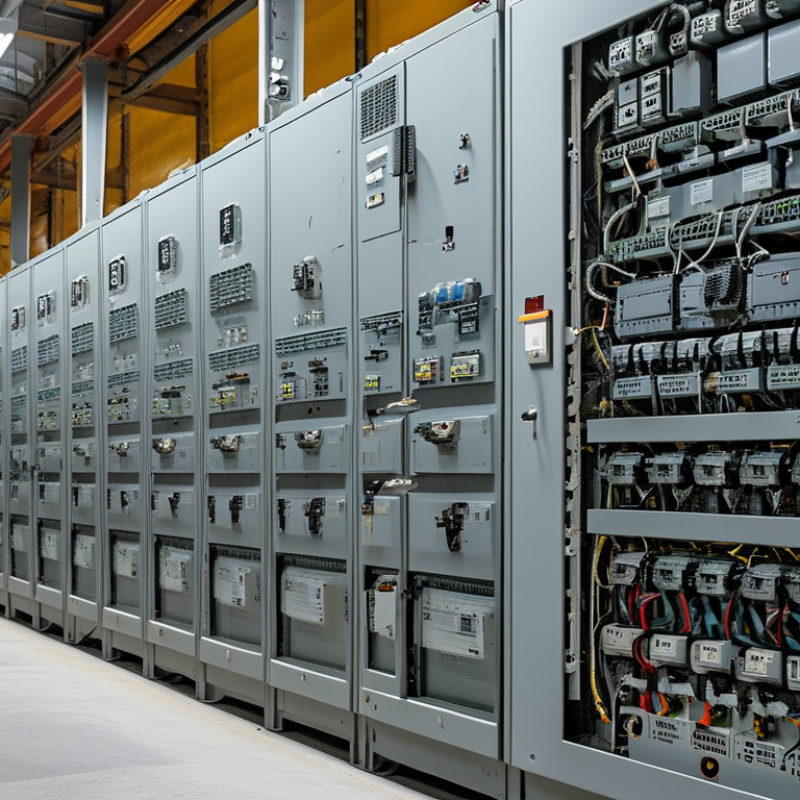
How to Choose the Right Power Panel for Global Sourcing?

Define Power Panel Requirements for the Target Market

Choosing a power panel for global sourcing starts with the target market, not the supplier catalogue. Define the local voltage, frequency, phase arrangement, and available fault current. These details affect breakers, busbars, enclosure ratings, and cable clearances. IEA’s Electricity 2024 report projects global electricity demand will grow by more than 3% annually through 2026. That growth increases pressure on safe, serviceable distribution equipment.

Market conditions also matter. A panel for a humid coastal warehouse may need stronger corrosion protection than one used in a dry factory. Check ambient temperature, altitude, dust, water exposure, and indoor or outdoor installation. Confirm compliance with IEC 61439 or the market’s accepted equivalent. Ask for routine test records, short-circuit verification, wiring diagrams, and material traceability. I have seen projects delayed because the panel fit the voltage, but not the local cable-entry method. Small omissions become expensive.

Tips:

Build a market-specific requirement sheet before requesting quotations. Include rated current, interrupting capacity, enclosure protection, metering, spare circuits, and service access. Compare certification evidence, not just logos. The IEA’s Electricity Grids and Secure Energy Transitions report estimates that over 80 million kilometres of grids must be added or refurbished globally by 2040. Reliability deserves attention. Still, a perfect specification rarely exists; excessive capacity can raise cost and reduce efficiency. Recheck assumptions with a qualified local engineer before production.

Compare Electrical Standards, Ratings, and Compatibility

Choosing the right power panel for global sourcing requires more than matching voltage and current. Electrical standards can change by destination, installation method, and local inspection rules. Compare IEC-based requirements with applicable national standards before requesting quotations. A panel designed for 230 V, 50 Hz may not suit a 120 V, 60 Hz facility.

Check the rated voltage, frequency, phase arrangement, busbar capacity, and short-circuit withstand rating. These details affect safety and operating life. Enclosure ratings also matter. An indoor panel in a dry room may need a different IP rating than one exposed to dust, moisture, or temperature changes. Labels matter. Review wiring diagrams, terminal markings, breaker characteristics, and earthing arrangements. Do not assume that a familiar connector or protective device will fit every market.

Compatibility includes physical dimensions and maintenance access. Measure wall space, cable-entry direction, door clearance, and replacement-part availability. Ask for routine test records, material specifications, and certification documents tied to the exact panel configuration. Factory photographs can reveal poor labeling or crowded wiring, but images may hide important defects. A careful inspection is still necessary. I would also compare SCCR requirements with the site’s available fault current, because a mismatched rating can create serious operational risk. One overlooked detail can delay approval. Recheck every assumption before shipment.

How to Choose the Right Power Panel for Global Sourcing?

Compare electrical standards, nominal supply ratings, frequency, and compatibility before selecting a power panel.

The chart compares typical single-phase nominal supply values used in major markets. North America commonly uses 120 V at 60 Hz, while many markets based on IEC 60038 use approximately 230 V at 50 Hz. Japan uses 100 V and may operate at either 50 Hz or 60 Hz depending on region. Final panel selection should also verify IEC 61439 assembly requirements, local wiring regulations, ingress protection, short-circuit ratings, and the available system voltage.

Evaluate Safety Features, Materials, and Manufacturing Quality

How to Choose the Right Power Panel for Global Sourcing?

As electricity demand rises, panel safety cannot be treated as a paperwork exercise. The IEA Electricity 2024 report expects global electricity demand to grow by about 3.2% annually from 2024 to 2026. That growth increases pressure on distribution equipment and suppliers. Check compliance with IEC 61439, including temperature-rise, dielectric, and short-circuit withstand tests. Ask for recent test reports, not only certificates. Verify protection against dust and moisture through the declared IP rating. Small details matter. Door seals should sit evenly. Terminals should remain accessible after wiring. Protective bonding needs a documented continuity test.

Materials reveal manufacturing discipline. Copper busbars provide stable conductivity, while aluminum can reduce weight and cost when correctly engineered. The enclosure should resist corrosion in its intended environment, with coating thickness and adhesion records available. Look for flame-resistant insulating parts and clearly identified conductor ratings. The ISO Survey of Management System Certifications reports millions of certified sites worldwide, but ISO 9001 certification alone does not guarantee a reliable panel. It shows a management framework, not perfect production. Request batch traceability, calibrated test equipment, torque records, and final inspection photos. A factory acceptance test should confirm wiring, labeling, insulation, and functional operation. I would also sample units from different production dates. One flawless sample can hide inconsistent assembly. That uncomfortable possibility deserves attention.

Assess Suppliers, Certifications, Costs, and Supply Capabilities

Choosing the right power panel for global sourcing requires more than comparing catalog prices. Supplier evaluation should begin with engineering experience, production controls, and documented quality procedures. Ask for inspection records, material traceability, and evidence of similar projects. A factory tour, even through live video, can reveal wiring discipline, test equipment, and storage conditions. Details matter.

Certifications must match the destination market and the panel’s application. Request current certificates, test reports, and clear scope statements. Do not accept a certificate that covers a different model or configuration. Verify ratings for voltage, current, enclosure protection, temperature, and short-circuit performance. Local approval may also affect installation. This part is easy to overlook. My early sourcing reviews focused too heavily on paperwork, while actual test consistency received less attention.

Cost analysis should include tooling, samples, testing, packaging, freight, duties, and possible rework. A low quotation can become expensive after shipment delays or design changes. Compare landed cost, not unit price alone. Also examine supply capabilities: monthly capacity, critical component availability, backup production lines, lead-time history, and communication speed. Ask how the supplier handles urgent replacements and engineering changes. A written continuity plan is valuable, but it may not reflect reality during shortages. Small pilot orders and staged inspections provide stronger evidence than promises. Supplier performance should be reviewed against measurable targets, including defect rates, delivery accuracy, and response time.

Verify Samples, Documentation, and Long-Term Support

Choosing a power panel for global sourcing starts with evidence, not a polished catalog image. Request a production sample matching the proposed enclosure, terminals, busbar layout, and protective devices. Inspect wiring labels, torque marks, insulation gaps, and heat buildup after a controlled test. A sample can reveal details that drawings hide. Ask who tested it, under which conditions, and whether the report covers the exact configuration. Keep dated photos and test records for later comparison.

Documentation should travel with the product. Require wiring diagrams, ratings, installation instructions, material declarations, and applicable conformity records. Check that model numbers, voltage ranges, fault ratings, and revision dates match across every document. An independent laboratory report is useful, but verify its scope and validity rather than trusting a logo. Local electrical rules still matter, even when a supplier presents international paperwork. A qualified engineer should review the panel before approval.

Long-term support is less visible, yet it can decide the real cost. Ask about spare breakers, replacement parts, firmware, response times, and technical training. Put these promises into a written service agreement with clear contacts and escalation steps. I have seen projects delayed because one small terminal was unavailable. That weakness is easy to miss. Suppliers may also change components without notice, so request change-control procedures and continued sample approval. Leave room for doubt; the first sample is evidence, not proof.

Copyright 2025 Fluidra S.A. | Created by BCM Marketing Agencia Privacy Policy Legal note | Cookie policy |

Technical cookies are strictly necessary for our website to work and you can navigate through it. These types of cookies are those that, for example, allow us to identify you, give you access to certain restricted parts of the page if necessary, or remember different options or services already selected by you, such as your privacy preferences. Therefore, they are activated by default, your authorization not being necessary in this regard. Through the configuration of your browser, you can block or alert the presence of this type of cookies, although such blocking will affect the proper functioning of the different functionalities of our website.


The analysis cookies allow us to study the navigation of the users of our website in general (for example, which sections of the page are the most visited, which services are used most and if they work correctly, etc.). From the statistical information on navigation on our website, we can improve both the operation of the page itself and the different services it offers. Therefore, these cookies do not have an advertising purpose, but only serve to make our website work better, adapting to our users in general. By activating them you will contribute to this continuous improvement. You can enable or disable these cookies by checking the corresponding box, being disabled by default.


Functionality cookies allow us to remember your preferences, to personalize certain characteristics and general options of our website, every time you access it (for example, the language in which the information is presented to you, the sections marked as favorites, your browser type, etc.) Therefore, this type of cookies does not have an advertising purpose, but by activating them you will improve the functionality of the website (for example, adapting to your type of browser) and the customization of it based on your preferences (for example, by presenting the information in the language that you have chosen in previous occasions), which will contribute to the ease, usability and comfort of our page during your navigation. You can enable or disable these cookies by checking the corresponding box, being disabled by default.


Advertising cookies allow us to manage the advertising spaces included in our website based on criteria such as the content shown or the frequency in which the ads are displayed. For example, if you have been shown the same ad several times on our website, and you have not shown a personal interest by clicking on it, it will not appear again. In summary, by activating this type of cookies, the advertising shown on our website will be more useful and diverse, and less repetitive. You can enable or disable these cookies by checking the corresponding box, being disabled by default.


Behavioral advertising cookies allow us to obtain information based on the observation of your browsing habits and behaviors on the web, in order to show you advertising content that best suits your personal tastes and interests. To understand it in a very simple way, we will give you a fictitious example: if your last searches on the web were related to suspense literature, we would show you advertising about suspense books. Therefore, activating this type of cookies, the advertising that we show you on our website will not be generic, but will be oriented to your searches, tastes and interests, therefore adjusting exclusively to you. You can enable or disable these cookies by checking the corresponding box, being disabled by default.
To understand it in a very simple way, we will give you a fictitious example: if your last searches on the web were related to suspense literature, we would show you advertising about suspense books. Therefore, activating this type of cookies, the advertising that we show you on our website will not be generic, but will be oriented to your searches, tastes and interests, therefore adjusting exclusively to you. You can enable or disable these cookies by checking the corresponding box, being disabled by default.

SAVE

We use our own and third-party cookies to ensure the proper functioning of the website and to analyse our services, improve your experience on our website and show you advertisements related to your interests according to profiling based on your browsing habits (e.g. websites visited). You can accept all cookies by clicking "ACCEPT" or set or reject them by clicking here. If you would like to know more about the use of cookies, please see our COOKIE POLICY.


ACCEPT ALL
Reject no essentials


