
Why Choose the Right Pneumatic Hose for Your Business Needs?
FLUID HANDLING EXPERTS

Blog, all our news

Why Choose the Right Pneumatic Hose for Your Business Needs?

Choosing the right pneumatic hose is crucial for businesses that rely on compressed air systems. According to a report by MarketsandMarkets, the global market for pneumatic hoses is expected to reach USD 6.7 billion by 2025, growing at a CAGR of 5.2%. This growth highlights the increasing importance of pneumatic hoses in diverse industries, from manufacturing to construction.

A pneumatic hose impacts efficiency, safety, and performance. A poorly chosen hose can lead to leaks, decreased productivity, and potentially hazardous situations. For instance, a high-quality rubber or thermoplastic hose can withstand extreme pressures and temperatures. In contrast, a substandard hose might fail under similar conditions, resulting in substantial downtime and repair costs.

Understanding the specifications of a pneumatic hose, including diameter, length, and material, is essential. An improperly sized hose can restrict airflow and reduce the system's overall efficiency. While it may be tempting to cut costs with cheaper options, investing in the right pneumatic hose pays off by enhancing system performance and longevity.
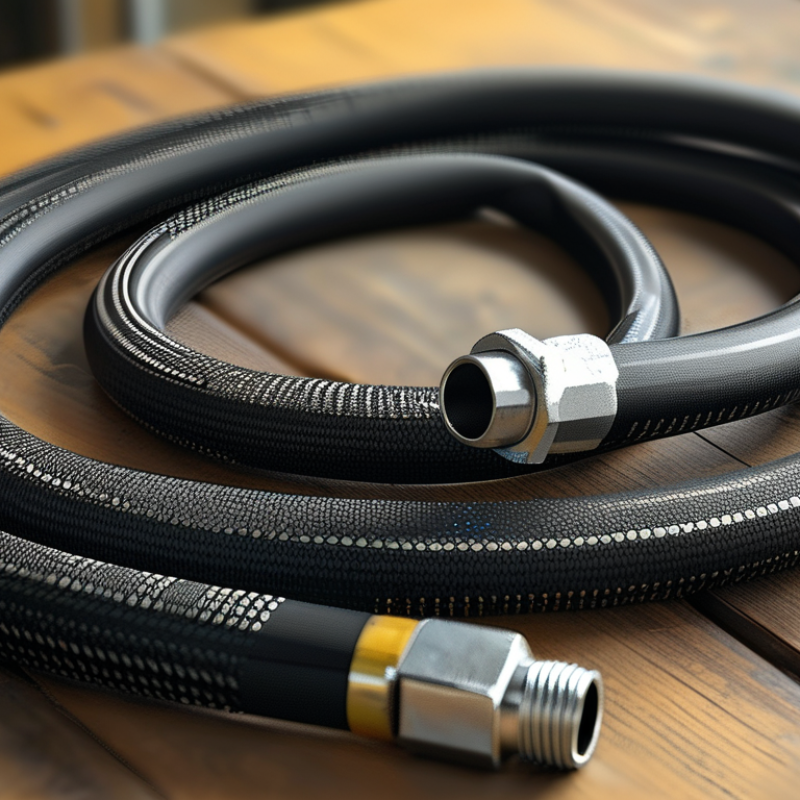
Why Choose the Right Pneumatic Hose for Your Business Needs?

Understanding the Importance of Pneumatic Hoses in Industry

Pneumatic hoses play a crucial role in various industrial applications. They transport compressed air or gas, driving tools and machinery. According to the Pneumatics Manufacturers Association, nearly 70% of industrial processes rely on pneumatic systems. The effectiveness of these systems heavily depends on the quality and suitability of the hoses used. Selecting the wrong type can lead to inefficiencies and increased costs.

Industries report that improper hose selection results in frequent downtime. A study from the Institute of Compressed Air & Gas Applications highlighted that non-optimized hoses can reduce system performance by up to 30%. This affects production rates and operational safety. Using the right materials and sizes can mitigate these risks and enhance overall productivity.

Moreover, it is essential to consider factors like temperature and pressure ratings. Many businesses overlook these specifications, leading to premature hose failure. Regular inspections and maintenance can help identify these risks, but they are often neglected. A fine balance between material durability and flexibility is necessary for optimal performance in dynamic work environments.

Factors to Consider When Selecting Pneumatic Hoses

When selecting pneumatic hoses, several key factors must be considered. First, the material of the hose plays a crucial role in performance and durability. Common options include PVC, rubber, and polyurethane. Each material has unique properties, impacting flexibility and resistance to wear. For example, rubber hoses are more flexible but may not withstand certain chemicals as well as polyurethane.

Pressure ratings should also be assessed. Hoses are rated for maximum pressure, which indicates their ability to handle air or fluid under specific conditions. Using a hose below its pressure rating can lead to inefficiencies. Conversely, exceeding the rating can result in failure or accidents.

Another factor to reflect on is the application’s environment. Extreme temperatures, exposure to UV light, and chemical exposure can degrade materials over time. If hoses are not adequately protected, this leads to premature failure and unsafe conditions. Therefore, proper evaluation of the environment ensures long-term reliability.

Types of Pneumatic Hoses and Their Specific Applications

When selecting pneumatic hoses, understanding the various types and their specific applications is crucial. Common types include polyurethane, nylon, and rubber hoses. Each has unique characteristics that fit different operational needs. For example, polyurethane hoses are lightweight and flexible, ideal for tight spaces and dynamic applications. According to industry data, they can increase efficiency by 20% in assembly lines due to their low friction.

Nylon hoses, on the other hand, are known for their durability and resistance to chemicals. They perform well in high-pressure environments, making them suitable for heavy-duty applications. Reports show that using nylon can reduce maintenance costs by up to 15% due to fewer replacements. For wetter environments, rubber hoses excel, offering a degree of flexibility and resilience. However, they may not always be the best choice for every application, as they can be heavy and less manageable.

Choosing the right pneumatic hose involves careful consideration of these factors. Businesses often face challenges in balancing cost with performance. It’s essential to assess specific applications and operational demands for optimal results. Each material presents its own benefits and shortcomings. Industry standards suggest conducting thorough evaluations to avoid costly mistakes in selection.

Types of Pneumatic Hoses and Their Applications

Benefits of Choosing the Right Pneumatic Hose for Your Business

Selecting the right pneumatic hose is crucial for business efficiency. A suitable hose enhances performance in various applications. Poor choices can lead to frequent replacements and unnecessary downtime. For industries relying on pneumatic systems, durability and resistance to wear are key.

The benefits are significant. First, a well-chosen hose improves airflow and minimizes pressure losses. This optimization leads to greater energy efficiency. Furthermore, specific materials can offer resistance to weather, chemicals, or temperature changes. Businesses experience fewer leaks or failures. However, it's important to assess the specific conditions each hose will face.

Despite these advantages, many overlook the importance of regular maintenance. Hoses can degrade over time, leading to diminished performance. Investing in quality hoses means keeping an eye on their condition, as even the best products require attention. Understanding the operational environment is essential for long-term success.

Why Choose the Right Pneumatic Hose for Your Business Needs?

Hose Type Material Max Pressure (psi) Temperature Range (°F) Applications
PVC Pneumatic Hose PVC 150 32 to 158 General Purpose
Rubber Pneumatic Hose Rubber 250 -20 to 200 Heavy-Duty Applications
Polyurethane Pneumatic Hose Polyurethane 120 -14 to 140 Lightweight Applications
Silicone Pneumatic Hose Silicone 80 -76 to 500 High-Temperature Applications
Nylon Pneumatic Hose Nylon 150 -40 to 210 Automotive and Industrial

Common Challenges in Pneumatic Hose Selection and Usage

Selecting the right pneumatic hose can pose significant challenges. Many businesses struggle with compatibility issues. Different machines require specific hose types and materials. Using the wrong hose can lead to inefficiency or equipment damage. For example, a hose that cannot sustain high pressure may burst, causing downtime.

Another common issue is environmental factors. Temperature fluctuations or exposure to chemicals can degrade hoses. It's essential to consider these conditions during selection. Regular inspections can help identify wear and tear. However, many businesses overlook this, leading to unexpected failures.

Additionally, understanding technical specifications is crucial. Not all hoses are created equal. Variations in diameter, pressure ratings, and bend radius matter. Misjudging these aspects can result in operational delays. Businesses must invest time in training staff on proper usage and maintenance. Empowering employees with knowledge minimizes risks and improves productivity.

Copyright 2025 Fluidra S.A. | Created by BCM Marketing Agencia Privacy Policy Legal note | Cookie policy |

Technical cookies are strictly necessary for our website to work and you can navigate through it. These types of cookies are those that, for example, allow us to identify you, give you access to certain restricted parts of the page if necessary, or remember different options or services already selected by you, such as your privacy preferences. Therefore, they are activated by default, your authorization not being necessary in this regard. Through the configuration of your browser, you can block or alert the presence of this type of cookies, although such blocking will affect the proper functioning of the different functionalities of our website.


The analysis cookies allow us to study the navigation of the users of our website in general (for example, which sections of the page are the most visited, which services are used most and if they work correctly, etc.). From the statistical information on navigation on our website, we can improve both the operation of the page itself and the different services it offers. Therefore, these cookies do not have an advertising purpose, but only serve to make our website work better, adapting to our users in general. By activating them you will contribute to this continuous improvement. You can enable or disable these cookies by checking the corresponding box, being disabled by default.


Functionality cookies allow us to remember your preferences, to personalize certain characteristics and general options of our website, every time you access it (for example, the language in which the information is presented to you, the sections marked as favorites, your browser type, etc.) Therefore, this type of cookies does not have an advertising purpose, but by activating them you will improve the functionality of the website (for example, adapting to your type of browser) and the customization of it based on your preferences (for example, by presenting the information in the language that you have chosen in previous occasions), which will contribute to the ease, usability and comfort of our page during your navigation. You can enable or disable these cookies by checking the corresponding box, being disabled by default.


Advertising cookies allow us to manage the advertising spaces included in our website based on criteria such as the content shown or the frequency in which the ads are displayed. For example, if you have been shown the same ad several times on our website, and you have not shown a personal interest by clicking on it, it will not appear again. In summary, by activating this type of cookies, the advertising shown on our website will be more useful and diverse, and less repetitive. You can enable or disable these cookies by checking the corresponding box, being disabled by default.


Behavioral advertising cookies allow us to obtain information based on the observation of your browsing habits and behaviors on the web, in order to show you advertising content that best suits your personal tastes and interests. To understand it in a very simple way, we will give you a fictitious example: if your last searches on the web were related to suspense literature, we would show you advertising about suspense books. Therefore, activating this type of cookies, the advertising that we show you on our website will not be generic, but will be oriented to your searches, tastes and interests, therefore adjusting exclusively to you. You can enable or disable these cookies by checking the corresponding box, being disabled by default.
To understand it in a very simple way, we will give you a fictitious example: if your last searches on the web were related to suspense literature, we would show you advertising about suspense books. Therefore, activating this type of cookies, the advertising that we show you on our website will not be generic, but will be oriented to your searches, tastes and interests, therefore adjusting exclusively to you. You can enable or disable these cookies by checking the corresponding box, being disabled by default.

SAVE

We use our own and third-party cookies to ensure the proper functioning of the website and to analyse our services, improve your experience on our website and show you advertisements related to your interests according to profiling based on your browsing habits (e.g. websites visited). You can accept all cookies by clicking "ACCEPT" or set or reject them by clicking here. If you would like to know more about the use of cookies, please see our COOKIE POLICY.


ACCEPT ALL
Reject no essentials


