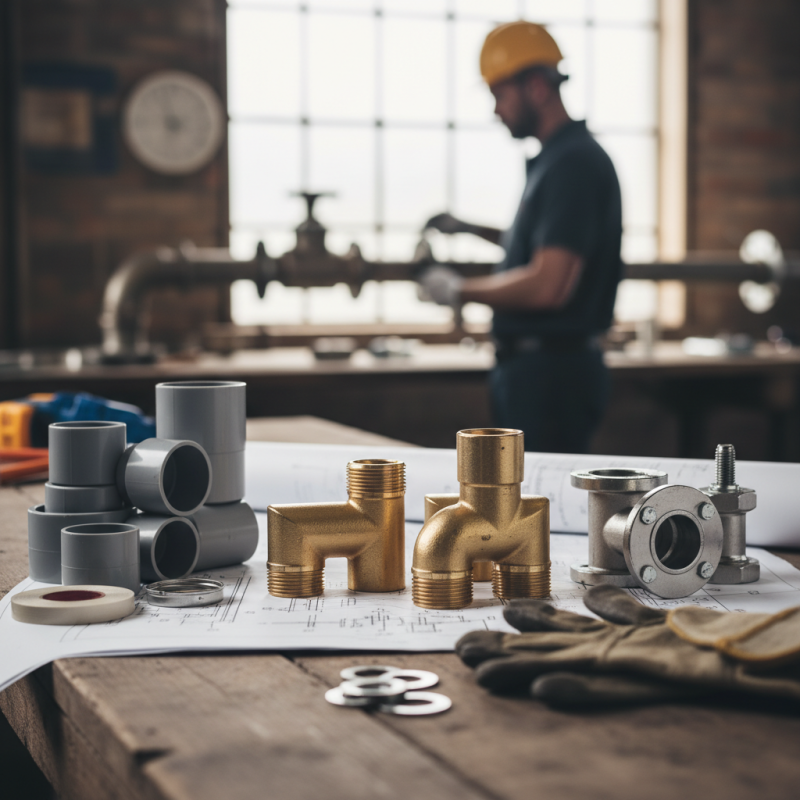
Why Choose the Right Pipe Fitting for Your Project?
Choosing the right Pipe Fitting is crucial for the success of any project. As industry expert John Smith states, “The quality of your pipe fitting directly influences system performance.” This insight highlights the importance of making informed choices.
In the world of plumbing and construction, a small error with pipe fittings can lead to significant issues. Poor fitting selection can result in leaks and costly repairs. Therefore, understanding the specifications, materials, and compatibility of pipe fittings is essential.
Many professionals in the field overlook this aspect. They may prioritize cost over quality. This can lead to regret later on. Investing time in selecting the right pipe fitting pays off. A reliable fitting ensures longevity and efficiency in any system. Remember, the right choice today prevents headaches tomorrow.
Understanding the Importance of Pipe Fittings in Construction Projects
Pipe fittings are critical components in construction projects. They connect pipes, ensuring fluid flows smoothly. The selection of the right fittings can prevent leaks and ensure efficiency. Fittings must match pipe materials and sizes. This step seems simple but can easily be overlooked.
Understanding the types of fittings available is crucial. Elbows, tees, and reducers serve different functions. Each type plays a role in guiding fluids in various directions. Choosing a fitting that is not compatible can lead to project delays. This could cost time and resources.
Experience in selecting fittings cannot be underestimated. Consulting with experts may seem unnecessary, but it pays off. A small oversight in fitting choice can result in future issues. Corrosion or cracks may develop, leading to costly repairs. Careful consideration is essential for long-term success in any construction project.
Types of Pipe Fittings and Their Specific Applications
Choosing the right pipe fitting is crucial for any project. Different types of pipe fittings serve specific applications and are essential for ensuring fluid flow and system integrity. For instance, elbows are used to change the direction of pipes. They come in various angles—45 degrees and 90 degrees are commonly needed. Misjudging the angle can lead to inefficiencies in fluid transport.
Couplings are essential when connecting two pieces of pipe. They create a reliable joint that can withstand pressure. However, choosing the right material is vital. Plastic is excellent for corrosion resistance, while metal offers strength under high pressure. If the wrong type is selected, the entire system can fail.
Tees and crosses help branch out systems. They are particularly useful in complex piping arrangements. Sometimes, engineers overlook the necessity of these fittings. A lack of foresight could lead to costly repairs. Ultimately, understanding each fitting's application ensures a smoother, more effective installation process. Proper training or consultation can help avoid these pitfalls.
Why Choose the Right Pipe Fitting for Your Project? - Types of Pipe Fittings and Their Specific Applications
Type of Pipe Fitting
Description
Common Applications
Material Types
Elbow
Used to change the direction of flow in piping systems.
HVAC systems, plumbing, and irrigation.
PVC, copper, stainless steel.
Tee
Used to branch off a pipeline into two directions.
Water supply systems and drainage systems.
PVC, brass, cast iron.
Coupling
Used to connect two pieces of pipe together.
Piping repairs and extensions.
PVC, stainless steel, bronze.
Cap
Used to seal the end of a pipe.
Piping systems where flow needs to be terminated.
PVC, ductile iron, steel.
Reducer
Used to connect pipes of different diameters.
Fluid transfer systems, like oil and gas pipelines.
Steel, PVC, copper.
Factors to Consider When Selecting Pipe Fittings
Selecting the right pipe fittings is crucial for any construction or plumbing project. When evaluating options, material compatibility is key. According to industry reports, using the wrong material can lead to corrosion, leaks, or even system failures. For example, PVC fittings are ideal for drainage systems but unsuitable for high-temperature services. Knowing your fluid's temperature and pressure ratings is essential.
Another factor to consider is the fitting type. Butt-weld, threaded, or flanged fittings each serve different purposes and have unique strengths. The choice of fitting can affect installation ease and maintenance. Data from a recent survey indicated that improper fitting selection accounted for 30% of project delays. Understanding the application environment is vital to make informed decisions.
Installation practices also play a role. Incorrect installation can compromise the integrity of pipe systems. Research shows that nearly 25% of leaks occur due to poor fitting alignment. A systematic approach to choosing and installing fittings can minimize these risks. Experience in the field and knowledge of best practices are invaluable assets for any project manager.
Common Materials Used in Pipe Fittings and Their Benefits
Choosing the right materials for pipe fittings can greatly impact your project’s success. Common options include PVC, copper, and stainless steel. Each material has unique benefits that make them suitable for various applications.
PVC is lightweight and easy to install. It resists corrosion and offers excellent insulation properties. This makes PVC ideal for residential plumbing and irrigation systems. However, it may not withstand extreme temperatures.
Copper has a long lifespan and is resistant to bacteria. It is often used in plumbing systems for its reliability and efficiency. Yet, copper can be expensive and may require specialized tools for installation.
Stainless steel is strong and durable. It is resistant to rust and corrosion, making it perfect for outdoor or industrial projects. Stainless steel fittings are also aesthetically pleasing. However, they can be heavy and may require proper tools to work with.
Tips: When choosing materials, consider the environment where they will be used. Will they face high temperatures? Is corrosion an issue? Assessing these factors can lead to better choices.
Some projects may involve a mix of materials. Mixing can optimize performance but needs careful planning. Always consult with experts if unsure about compatibility. Using trusted materials is essential to avoid future issues.
The Role of Proper Fitting Selection in Project Safety and Efficiency
Selecting the right pipe fitting is crucial for ensuring safety and efficiency in any project. According to a 2022 report by the American Society of Mechanical Engineers, improper fitting selection can lead to system failures, which contribute to 30% of reported industrial accidents. Such failures not only compromise safety but also result in significant downtime. A project can lose up to $30,000 per hour due to unplanned outages caused by fitting-related issues.
The appropriate fitting enhances performance and minimizes leaks. The National Association of Corrosion Engineers states that leaks can lead to equipment damage, costing industries millions annually. In fact, a 2021 survey highlighted that 90% of construction professionals experienced increased costs due to inadequate pipe fitting choices. This illustrates the importance of making informed decisions in fitting selection.
However, not all projects have the same requirements. Over-specifying fittings can lead to unnecessary expenses. A balanced approach is necessary. An analysis from the Engineering Industry Research Group indicates that fitting selection is often undervalued, with only 50% of project managers prioritizing this area. This gap reflects a need for awareness and education regarding the critical role of proper fitting selection.
Cepex is the brand for the fluid handling market belonging to the Fluidra group. One of the leading european manufacturer of valves and fittings in thermoplastic materials.
Dedicated to the swimming pool, irrigation and industrial markets, we distribute our products worldwide with the Fluidra commercial network and presence in 46 countries with 136 sales branches.
Your data will be processed by CEPEX S.A., with address at C. Lluís Companys, 51-53, 08400, Granollers (Barcelona), and C.I.F. nº A-08928707, to send you communications about our products based on your interests. You can consult more information about the processing of your data and how to exercise your rights as described in the Privacy Policy.
Technical cookies are strictly necessary for our website to work and you can navigate through it. These types of cookies are those that, for example, allow us to identify you, give you access to certain restricted parts of the page if necessary, or remember different options or services already selected by you, such as your privacy preferences. Therefore, they are activated by default, your authorization not being necessary in this regard. Through the configuration of your browser, you can block or alert the presence of this type of cookies, although such blocking will affect the proper functioning of the different functionalities of our website.
The analysis cookies allow us to study the navigation of the users of our website in general (for example, which sections of the page are the most visited, which services are used most and if they work correctly, etc.). From the statistical information on navigation on our website, we can improve both the operation of the page itself and the different services it offers. Therefore, these cookies do not have an advertising purpose, but only serve to make our website work better, adapting to our users in general. By activating them you will contribute to this continuous improvement. You can enable or disable these cookies by checking the corresponding box, being disabled by default.
Functionality cookies allow us to remember your preferences, to personalize certain characteristics and general options of our website, every time you access it (for example, the language in which the information is presented to you, the sections marked as favorites, your browser type, etc.) Therefore, this type of cookies does not have an advertising purpose, but by activating them you will improve the functionality of the website (for example, adapting to your type of browser) and the customization of it based on your preferences (for example, by presenting the information in the language that you have chosen in previous occasions), which will contribute to the ease, usability and comfort of our page during your navigation. You can enable or disable these cookies by checking the corresponding box, being disabled by default.
Advertising cookies allow us to manage the advertising spaces included in our website based on criteria such as the content shown or the frequency in which the ads are displayed. For example, if you have been shown the same ad several times on our website, and you have not shown a personal interest by clicking on it, it will not appear again. In summary, by activating this type of cookies, the advertising shown on our website will be more useful and diverse, and less repetitive. You can enable or disable these cookies by checking the corresponding box, being disabled by default.
Behavioral advertising cookies allow us to obtain information based on the observation of your browsing habits and behaviors on the web, in order to show you advertising content that best suits your personal tastes and interests. To understand it in a very simple way, we will give you a fictitious example: if your last searches on the web were related to suspense literature, we would show you advertising about suspense books. Therefore, activating this type of cookies, the advertising that we show you on our website will not be generic, but will be oriented to your searches, tastes and interests, therefore adjusting exclusively to you. You can enable or disable these cookies by checking the corresponding box, being disabled by default. To understand it in a very simple way, we will give you a fictitious example: if your last searches on the web were related to suspense literature, we would show you advertising about suspense books. Therefore, activating this type of cookies, the advertising that we show you on our website will not be generic, but will be oriented to your searches, tastes and interests, therefore adjusting exclusively to you. You can enable or disable these cookies by checking the corresponding box, being disabled by default.
We use our own and third-party cookies to ensure the proper functioning of the website and to analyse our services, improve your experience on our website and show you advertisements related to your interests according to profiling based on your browsing habits (e.g. websites visited). You can accept all cookies by clicking "ACCEPT" or set or reject them by clicking here. If you would like to know more about the use of cookies, please see our COOKIE POLICY.