
How to Choose the Right Mud Pump Piston?
FLUID HANDLING EXPERTS

Blog, all our news

How to Choose the Right Mud Pump Piston?

Choosing the right Mud Pump Piston starts with the conditions inside the pump, not just the catalog description. Match the piston to the liner size, operating pressure, drilling fluid, and expected temperature. A piston that fits poorly can leak, wear unevenly, or damage the liner. Small details matter. Check the elastomer compound, bonding, and manufacturer’s compatibility guidance before ordering. Abrasive solids, chemical additives, and frequent pressure changes can all affect service life. The hardest part is that field conditions rarely stay constant.

For a transparent illustrative perspective, fictional mud-pump specialist Evan Cole puts it this way: “A piston is only right when its material, fit, and duty match the pump’s real working conditions.” Treat that as a practical reminder, not a verified quotation from a real industry professional. During inspection, look for cuts, swelling, uneven wear, and signs of heat near the sealing surface. Compare the used piston with a new one, and record how long it ran and under what conditions. Those notes can help distinguish a material problem from poor alignment or an unsuitable operating setup. No single piston suits every job. A careful choice improves reliability, but it cannot compensate for a worn liner or neglected maintenance. Check the pump manual and consult the piston manufacturer when specifications or fluid compatibility are uncertain.
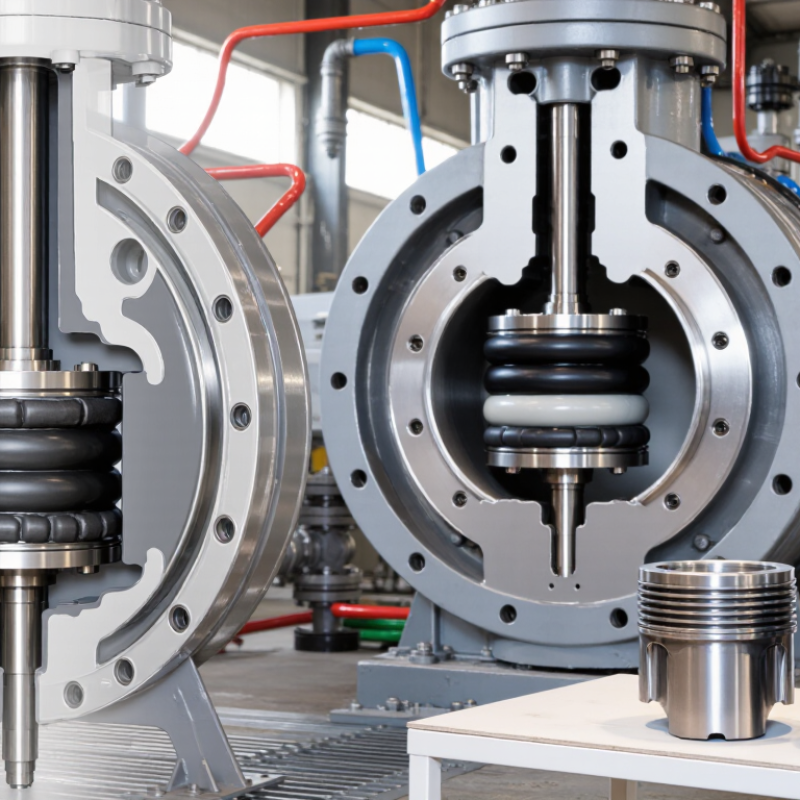
How to Choose the Right Mud Pump Piston?

Understand the Mud Pump Piston’s Role and Operating Conditions

How to Choose the Right Mud Pump Piston?
Understand the Mud Pump Piston’s Role and Operating Conditions

A mud pump piston seals against the liner as the rod drives it back and forth. That movement pushes drilling fluid through the circulation system. The piston works under repeated pressure, heat, and abrasive contact. Its service life depends on more than pump size. Fluid solids, operating speed, pressure, and liner condition all matter. Fine particles can still wear sealing surfaces. Small damage becomes costly.

Use operating records to match the piston to real conditions. API RP 13B-1 describes field tests for drilling-fluid properties, including density, viscosity, and sand content. IADC daily drilling reports also provide a practical record of pump pressure and strokes. Review these readings across shifts, not just at peak load. A piston that performs well in clean fluid may wear quickly in heavier, abrasive mud. That distinction is easy to miss.

Tips: Check liner wear and fluid solids before changing piston material or size. Compare pressure and stroke readings with maintenance notes. Keep the fit snug, but do not ignore uneven wear. Field conditions vary.

How to Choose the Right Mud Pump Piston?

Understand the piston’s role and operating conditions. The chart shows the calculated pressure load on a 5-inch piston face at three example pressure differentials.

Load is calculated as pressure differential × piston face area, assuming a 5-inch circular face (12.7 cm diameter). These are theoretical values, not pump ratings. Select a piston to suit the pump and liner, working pressure, mud abrasiveness, temperature, and fluid compatibility.

Identify the Pump Model and Required Piston Dimensions

Choosing a mud pump piston starts with identifying the pump model, not guessing from appearance. Check the nameplate and maintenance records, then confirm the fluid-end configuration against the service manual. Pumps that look similar can use different piston rods, retainers, or liner sizes. Small details matter.

Record the liner bore and the piston’s outside diameter, overall length, rod connection, and retention style. Use clean measuring tools, and compare your readings with the specified dimensions. A worn piston may measure smaller than its original size, so do not treat it as a reliable template. Check the liner for scoring or uneven wear, too; a new piston cannot compensate for a damaged bore.

Material and operating conditions also affect the choice. Consider mud composition, temperature, pressure, and expected run time when checking the piston’s elastomer or sealing material. I have seen a dimension match look convincing on paper, yet the connection differed. That is an easy detail to overlook. If the model number is unclear, confirm the part drawing and measurements with a qualified pump technician before installation.

How to Choose the Right Mud Pump Piston? - Identify the Pump Model and Required Piston Dimensions

Nominal Liner Bore Metric Equivalent Piston Size to Specify Dimensions and Details to Verify
4.5 in 114.3 mm 4.5 in piston for the matching liner and piston assembly Measure the liner bore; confirm piston overall length, hub or rod interface, and retainer style against the pump specification.
5.0 in 127.0 mm 5.0 in piston for the matching liner and piston assembly Check the specified working fit, piston length, connection dimensions, and whether the assembly uses a replaceable or bonded elastomer.
5.5 in 139.7 mm 5.5 in piston for the matching liner and piston assembly Confirm liner bore and condition, then compare piston length and attachment details with the applicable parts drawing.
6.0 in 152.4 mm 6.0 in piston for the matching liner and piston assembly Verify the nominal bore, required piston-to-liner fit, piston length, and rod or hub connection before ordering.
6.5 in 165.1 mm 6.5 in piston for the matching liner and piston assembly Record the liner bore and inspect for wear; confirm the piston profile, overall length, and retainer compatibility.
7.0 in 177.8 mm 7.0 in piston for the matching liner and piston assembly Match the piston to the specified liner assembly and verify all connection and length dimensions from the pump documentation.

Selection note: These are common nominal liner-bore sizes, with metric values converted from inches. A piston’s actual working outside diameter and fit can vary by design. Identify the pump model and liner assembly, and use the applicable drawing or parts specification to confirm the exact piston dimensions before purchase or installation.

Compare Piston Materials and Sealing Designs

A mud pump piston lives against abrasive fluid, pressure pulses, and heat. Material choice changes how it handles each. Polyurethane often suits abrasive mud because it resists wear, while nitrile rubber can offer more flexibility and sealing conformity. As a practical starting point, many polyurethane compounds are rated around 90–95 Shore A. That figure is not a service-life guarantee. ASTM D2240 measures hardness, and ASTM D395 evaluates compression set; compare actual compound test data, not hardness alone.

Sealing design matters just as much. A bonded piston has fewer loose parts, but damage may require replacing the complete assembly. A replaceable insert can reduce repair time, though a poorly seated insert may leak or wear unevenly. API Spec 7K is a useful equipment reference; ask suppliers for test conditions and compatibility details alongside compliance claims. Match the seal to mud chemistry, solids, temperature, and operating pressure. Check the cup’s contact surface after a run: a polished band can suggest wear, while uneven damage may point to alignment or installation issues. Small clues matter. I would still verify performance with a controlled trial, since field mud rarely behaves like a lab sample.

Match Piston Performance to Fluid and Drilling Requirements

A mud pump piston should be selected for the fluid it will actually handle, not just the pump’s rated pressure. Start with the mud’s composition, temperature, and expected solids content. Water-based and oil-based fluids can affect elastomer materials differently, while abrasive cuttings can accelerate wear along the sealing surface. Small details matter.

Next, match the piston material and design to the drilling conditions. High pressure, frequent starts, and long operating hours place different demands on a piston than steady, moderate-rate circulation. Check compatibility with the liner, too: an unsuitable fit can cause leakage, uneven contact, or premature wear. A piston that performs well in one fluid may not last in another. There is no universal best choice.

Maintenance records help turn a specification into a practical decision. Note how quickly the current piston wears, whether leakage appears early, and what the mud looked like during service. If a change improves sealing but shortens service life, the trade-off may not be worthwhile. That assessment can be messy, especially when fluid properties change during a well. Review operating data regularly, and confirm material limits with a qualified supplier before changing piston type or size.

Check Compatibility, Service Life, and Maintenance Needs

How to Choose the Right Mud Pump Piston?

A piston must match the pump’s fluid end, liner diameter, rod connection, and pressure rating. Check the equipment drawings and API Spec 7K requirements before ordering; a small mismatch can cause leakage, heat, or uneven wear. Material matters too. Urethane may suit many water-based muds, while other elastomers may better tolerate oil-based fluids or elevated temperatures. Confirm chemical compatibility with the fluid supplier rather than relying on color or appearance.

API RP 7L provides guidance on care and maintenance, but neither standard sets a universal piston service-life figure. That number depends heavily on solids, pressure, speed, and operating practice.

Track service hours alongside pump pressure, strokes per minute, fluid temperature, and solids conditions. Inspect at a consistent interval, such as every 50 operating hours, and record cracking, edge rounding, or a polished wear band. Compare those observations with your own replacement history; fleet averages can hide differences between wells.

Replace a piston when wear threatens sealing, not simply because it has reached a guessed hour limit. Keep a spare, but check its storage condition and elastomer date before installation.

Small detail. A tidy log still cannot explain every failure: poor alignment or a damaged liner may imitate piston wear. Check both before blaming the replacement part.

Article Source:

Copyright 2025 Fluidra S.A. | Created by BCM Marketing Agencia Privacy Policy Legal note | Cookie policy |

Technical cookies are strictly necessary for our website to work and you can navigate through it. These types of cookies are those that, for example, allow us to identify you, give you access to certain restricted parts of the page if necessary, or remember different options or services already selected by you, such as your privacy preferences. Therefore, they are activated by default, your authorization not being necessary in this regard. Through the configuration of your browser, you can block or alert the presence of this type of cookies, although such blocking will affect the proper functioning of the different functionalities of our website.


The analysis cookies allow us to study the navigation of the users of our website in general (for example, which sections of the page are the most visited, which services are used most and if they work correctly, etc.). From the statistical information on navigation on our website, we can improve both the operation of the page itself and the different services it offers. Therefore, these cookies do not have an advertising purpose, but only serve to make our website work better, adapting to our users in general. By activating them you will contribute to this continuous improvement. You can enable or disable these cookies by checking the corresponding box, being disabled by default.


Functionality cookies allow us to remember your preferences, to personalize certain characteristics and general options of our website, every time you access it (for example, the language in which the information is presented to you, the sections marked as favorites, your browser type, etc.) Therefore, this type of cookies does not have an advertising purpose, but by activating them you will improve the functionality of the website (for example, adapting to your type of browser) and the customization of it based on your preferences (for example, by presenting the information in the language that you have chosen in previous occasions), which will contribute to the ease, usability and comfort of our page during your navigation. You can enable or disable these cookies by checking the corresponding box, being disabled by default.


Advertising cookies allow us to manage the advertising spaces included in our website based on criteria such as the content shown or the frequency in which the ads are displayed. For example, if you have been shown the same ad several times on our website, and you have not shown a personal interest by clicking on it, it will not appear again. In summary, by activating this type of cookies, the advertising shown on our website will be more useful and diverse, and less repetitive. You can enable or disable these cookies by checking the corresponding box, being disabled by default.


Behavioral advertising cookies allow us to obtain information based on the observation of your browsing habits and behaviors on the web, in order to show you advertising content that best suits your personal tastes and interests. To understand it in a very simple way, we will give you a fictitious example: if your last searches on the web were related to suspense literature, we would show you advertising about suspense books. Therefore, activating this type of cookies, the advertising that we show you on our website will not be generic, but will be oriented to your searches, tastes and interests, therefore adjusting exclusively to you. You can enable or disable these cookies by checking the corresponding box, being disabled by default.
To understand it in a very simple way, we will give you a fictitious example: if your last searches on the web were related to suspense literature, we would show you advertising about suspense books. Therefore, activating this type of cookies, the advertising that we show you on our website will not be generic, but will be oriented to your searches, tastes and interests, therefore adjusting exclusively to you. You can enable or disable these cookies by checking the corresponding box, being disabled by default.

SAVE

We use our own and third-party cookies to ensure the proper functioning of the website and to analyse our services, improve your experience on our website and show you advertisements related to your interests according to profiling based on your browsing habits (e.g. websites visited). You can accept all cookies by clicking "ACCEPT" or set or reject them by clicking here. If you would like to know more about the use of cookies, please see our COOKIE POLICY.


ACCEPT ALL
Reject no essentials


