
How to Choose the Right Marine Flex Hose?
FLUID HANDLING EXPERTS

Blog, all our news

How to Choose the Right Marine Flex Hose?

Choosing the right Marine Flex Hose is not a matter of picking the thickest tube or the lowest price. It is a reliability decision shaped by the fluid, temperature, pressure, routing, and conditions aboard your vessel. Diesel, seawater, bilge discharge, and exhaust service can require very different hose constructions. Looks can mislead. Two hoses may look alike at the counter, yet differ in liner material, reinforcement, bend radius, or fitting compatibility.

A careful choice begins with the hose’s intended service and the equipment manufacturer’s specifications. Check the product’s stated pressure and temperature limits, fluid compatibility, and minimum bend radius. Then measure the route, including space for clamps and movement from engine vibration. A hose forced around a sharp corner may kink or wear against nearby surfaces. That detail is easy to overlook. It is also worth confirming that the fittings suit both the hose and the connection, rather than assuming similar dimensions guarantee a proper fit. This guide explains which specifications matter, how to compare construction types, and what to inspect before installation. It also highlights a common trade-off: a hose that fits neatly today may leave too little room for movement or future maintenance. No single option suits every boat. When documentation is unclear, verify the application with the hose maker or a qualified marine technician, and treat uncertain compatibility as a reason to pause.
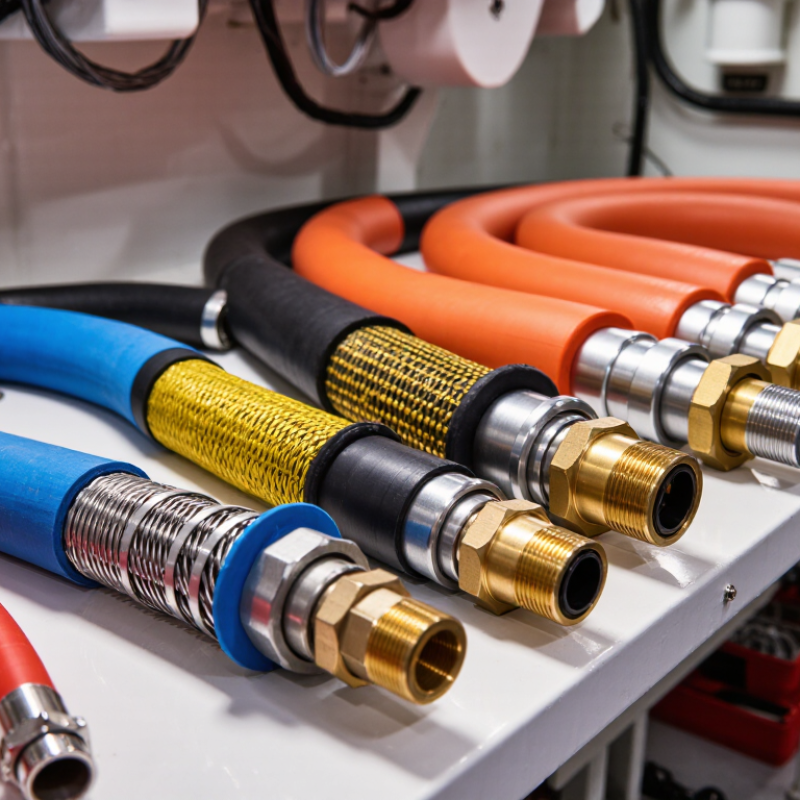
How to Choose the Right Marine Flex Hose?

Classify the Service: Fuel, Exhaust, Water, or Sanitation

How to Choose the Right Marine Flex Hose?

Classify the service before measuring diameter. Fuel hoses must resist fuel exposure and permeation; ISO 7840 specifies requirements for fire-resistant small-craft fuel hose. Check the hose marking and engine or vessel documentation, not just its appearance. Fuel lines can look similar. For wet exhaust, SAE J2006 covers marine exhaust hose performance, including resistance to heat and water. Measure the route carefully: a tight bend near the engine can flatten a hose and restrict flow. Exhaust hose also needs the correct temperature rating for its actual location.

Water and sanitation need different materials and checks. Cooling-water hose must suit the fluid, pressure, temperature, and suction conditions; a generic water hose may collapse under suction. For sanitation systems, ISO 8099 addresses small-craft waste-water retention systems, so confirm compatibility with the sanitation fluid and odor-control requirements. These standards provide useful technical reference points, but they do not replace the equipment maker’s installation limits. I have seen diameter treated as the whole decision. It isn’t. Before buying, compare the printed hose specification with the system’s service, operating temperature, pressure, and bend radius. If any detail is uncertain, pause and verify it; guessing at a hidden bilge connection is a poor test.

How to Choose the Right Marine Flex Hose?

Classify the service first: fuel, exhaust, water, or sanitation.

The 1–5 scores are a qualitative guide to which checks deserve attention, not standardized hose ratings. Verify the hose’s documented fluid compatibility, temperature and pressure limits, and any applicable marine or potable-water requirements before installation.

Match Fuel Hose to ISO 7840/8469 and USCG Type A/B Ratings

How to Choose the Right Marine Flex Hose?

Match the hose standard to its location and fuel system. ISO 7840 covers fire-resistant fuel hoses for small craft, while ISO 8469 covers non-fire-resistant hoses. USCG Type A hoses are fire-resistant; Type B hoses are not. These labels describe different performance requirements, so don’t treat the standards as interchangeable without checking the hose documentation.

Look closely at the printed markings. Confirm the intended fuel, inside diameter, pressure rating, and temperature range against the engine or equipment requirements. A hose routed near an engine or another heat source may need a fire-resistant rating. Installation details matter, too. A hose that kinks behind a tight locker panel can restrict fuel flow, even when its rating is correct. Keep bends broad, support long runs, and use compatible fittings and clamps.

Check the manual. Still, paperwork and hose markings can be easy to misread, especially on an older vessel. If the required rating is unclear, ask a qualified marine technician before replacing the line. Inspect hoses regularly for cracks, soft spots, swelling, or fuel odor. A clean outer surface is not proof that the hose remains sound inside.

Compare Pressure and Temperature Limits with SAE J2006 Exhaust-Hose Ratings

Choosing marine flex hose means matching its rating to the engine’s actual exhaust conditions. SAE J2006 covers marine wet-exhaust hose, but the standard alone does not tell you which hose fits every installation. Check the product’s stated working pressure and temperature limits, along with its size and construction. Small details matter.

Compare those limits with the engine or exhaust-system requirements, allowing for hot spots near the outlet and pressure changes during operation. A hose routed around a tight bend may also face extra strain. Do not treat a burst-pressure figure as a safe continuous working pressure. They are different measurements. If a rating is unclear, ask the supplier for the technical data sheet rather than guessing.

Look closely at the full hose run, not just the visible connection. Note bends, support points, water-injection location, and clearance from hot surfaces. The hose should not be kinked or forced against sharp edges. Then inspect clamps and nearby surfaces for leaks, soft spots, cracks, or heat damage. Ratings guide selection, but real routing can complicate the picture. Recheck the installation after the system has run and cooled.

Size by Hose ID, Fitting Type, and Manufacturer’s Minimum Bend Radius

How to Choose the Right Marine Flex Hose?

Size by Hose ID, Fitting Type, and Manufacturer’s Minimum Bend Radius

Measure the hose’s inside diameter, not its outside diameter or the fitting’s widest point. Match that ID to the fitting’s hose connection, then confirm the fitting type and service rating suit the application. A barb that looks close can still be undersized or poorly matched. Check thread form, angle, and clearance around nearby equipment before ordering. Small details matter. The U.S. Coast Guard’s 2023 Recreational Boating Statistics reports 3,844 recreational boating incidents. That figure does not identify hose failures as their cause, but it underscores why dependable installation and maintenance deserve care.

Next, check the hose manufacturer’s minimum bend radius for the exact hose construction. Do not force a tight turn to make a hose fit; kinks can restrict flow and strain its reinforcement. Leave enough room for engine movement, vibration, and inspection, while keeping the hose supported and clear of hot or sharp surfaces. Follow the manufacturer’s instructions for measuring bend radius, since the reference point can vary. For fuel systems, verify the hose’s documented suitability for the intended service; ISO 7840 specifies requirements for fire-resistant fuel hoses used on small craft. It is easy to over-trust a tape measure. Recheck the route with the hose relaxed, then inspect the finished installation for flattening, twisting, and stressed fittings.

Verify USCG Type A’s 2.5-Minute Fire-Test Rating and Inspect Hose Markings

On a boat, a fuel-hose label can matter when heat or flame reaches the engine space. USCG Type A hose is associated with a 2.5-minute fire-resistance test under marine hose standards such as SAE J1527. That rating describes a defined test, not an unlimited fireproof guarantee. Small detail. Keep that distinction clear.

Check the printing along the hose, not just the packaging. Look for “USCG Type A,” the applicable SAE J1527 marking, hose size, and manufacturer or traceability information. Compare these details with the vessel manual and applicable U.S. Coast Guard requirements, including 33 CFR Part 183. A missing or unreadable marking makes verification difficult. It happens.

Inspect the full run by hand and sight, especially near clamps, bends, and hot surfaces. Reject hose with cracks, swelling, soft spots, exposed reinforcement, or fuel odor. SAE J1527 sets performance requirements; the label alone cannot reveal damage from age, heat, or poor installation. I would recheck after service, too—inspection intervals can be easy to overlook.

How to Choose the Right Marine Flex Hose? - Verify USCG Type A’s 2.5-Minute Fire-Test Rating and Inspect Hose Markings

What to Check What to Look For Why It Matters Practical Action
Fire-resistance type For fuel-system locations requiring fire-resistant hose, verify the hose is identified as Type A and that its documentation confirms the applicable 2.5-minute fire-test rating. A Type A designation indicates fire-resistant performance under the applicable hose standard; it is not a substitute for confirming suitability for the specific installation. Read the complete hose marking and request test or conformity documentation when the rating is unclear. Do not infer a rating from appearance alone.
Standard and type marking Look for a stated applicable standard, such as SAE J1527 or ISO 7840, together with the hose type or classification. Standards define performance and test requirements. Similar-looking hoses may be intended for different marine fuel-system duties. Check the marking against the vessel’s requirements and the current standard. Confirm the exact type with the hose documentation if the printed code is incomplete.
Fuel compatibility Confirm that the hose is specified for the fuel in use, including gasoline or diesel and any applicable ethanol-blended fuel. Fuel composition and exposure conditions can affect hose materials and service life. Use the hose maker’s compatibility information for the exact fuel and application; do not assume that every fuel hose is suitable for every fuel.
Hose size and fit Match the specified inside diameter to the fitting and system requirements. Check that the hose can be routed without kinking or being stretched. Incorrect sizing or routing can restrict flow, strain connections, or damage the hose. Verify dimensions before purchase and follow the hose manufacturer’s minimum bend-radius guidance.
Pressure and temperature limits Check the hose’s marked or documented working-pressure and temperature limits for the intended service. Limits vary by hose construction and application; a general appearance or type label does not establish every operating limit. Select a hose whose documented ratings meet the system requirements, and install it within those limits.
Traceability markings Check for legible product identification and any applicable size, standard, type, production or lot code, and rating information. Clear markings help confirm the hose’s identity and support inspection, documentation, and replacement decisions. Keep the hose markings visible where practical. If the type or rating cannot be identified, confirm it from reliable product documentation before installation.
Condition during inspection Look for cracks, cuts, abrasion, soft or swollen areas, kinks, exposed reinforcement, fuel odor, dampness, or loose connections. Visible damage, fuel odor, or leakage may indicate deterioration or a connection problem. Investigate defects promptly and replace suspect hose with a correctly specified marine hose. Follow applicable service and inspection guidance.

Reference check: Consult 33 CFR Part 183, Subpart J, and the applicable edition of SAE J1527 or ISO 7840 for requirements relevant to the vessel and installation. Confirm the exact hose type and fire-test claim from its markings and supporting documentation.

Copyright 2025 Fluidra S.A. | Created by BCM Marketing Agencia Privacy Policy Legal note | Cookie policy |

Technical cookies are strictly necessary for our website to work and you can navigate through it. These types of cookies are those that, for example, allow us to identify you, give you access to certain restricted parts of the page if necessary, or remember different options or services already selected by you, such as your privacy preferences. Therefore, they are activated by default, your authorization not being necessary in this regard. Through the configuration of your browser, you can block or alert the presence of this type of cookies, although such blocking will affect the proper functioning of the different functionalities of our website.


The analysis cookies allow us to study the navigation of the users of our website in general (for example, which sections of the page are the most visited, which services are used most and if they work correctly, etc.). From the statistical information on navigation on our website, we can improve both the operation of the page itself and the different services it offers. Therefore, these cookies do not have an advertising purpose, but only serve to make our website work better, adapting to our users in general. By activating them you will contribute to this continuous improvement. You can enable or disable these cookies by checking the corresponding box, being disabled by default.


Functionality cookies allow us to remember your preferences, to personalize certain characteristics and general options of our website, every time you access it (for example, the language in which the information is presented to you, the sections marked as favorites, your browser type, etc.) Therefore, this type of cookies does not have an advertising purpose, but by activating them you will improve the functionality of the website (for example, adapting to your type of browser) and the customization of it based on your preferences (for example, by presenting the information in the language that you have chosen in previous occasions), which will contribute to the ease, usability and comfort of our page during your navigation. You can enable or disable these cookies by checking the corresponding box, being disabled by default.


Advertising cookies allow us to manage the advertising spaces included in our website based on criteria such as the content shown or the frequency in which the ads are displayed. For example, if you have been shown the same ad several times on our website, and you have not shown a personal interest by clicking on it, it will not appear again. In summary, by activating this type of cookies, the advertising shown on our website will be more useful and diverse, and less repetitive. You can enable or disable these cookies by checking the corresponding box, being disabled by default.


Behavioral advertising cookies allow us to obtain information based on the observation of your browsing habits and behaviors on the web, in order to show you advertising content that best suits your personal tastes and interests. To understand it in a very simple way, we will give you a fictitious example: if your last searches on the web were related to suspense literature, we would show you advertising about suspense books. Therefore, activating this type of cookies, the advertising that we show you on our website will not be generic, but will be oriented to your searches, tastes and interests, therefore adjusting exclusively to you. You can enable or disable these cookies by checking the corresponding box, being disabled by default.
To understand it in a very simple way, we will give you a fictitious example: if your last searches on the web were related to suspense literature, we would show you advertising about suspense books. Therefore, activating this type of cookies, the advertising that we show you on our website will not be generic, but will be oriented to your searches, tastes and interests, therefore adjusting exclusively to you. You can enable or disable these cookies by checking the corresponding box, being disabled by default.

SAVE

We use our own and third-party cookies to ensure the proper functioning of the website and to analyse our services, improve your experience on our website and show you advertisements related to your interests according to profiling based on your browsing habits (e.g. websites visited). You can accept all cookies by clicking "ACCEPT" or set or reject them by clicking here. If you would like to know more about the use of cookies, please see our COOKIE POLICY.


ACCEPT ALL
Reject no essentials


