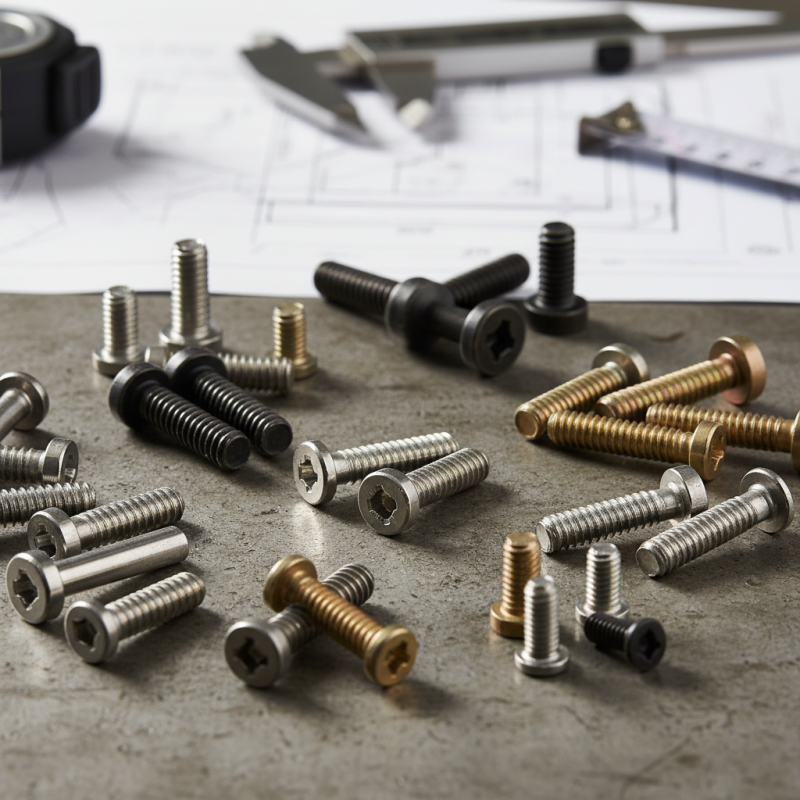
Why Choose the Right Machine Screw for Your Project?
Selecting the right Machine Screw for your project is crucial. As industry expert John Smith states, "The right screw can make or break your assembly." Machine screws serve various functions, from holding components together to ensuring structural integrity. Choosing wisely impacts durability and performance.
In many projects, the details matter. Size, thread type, and material of the machine screw can affect the final outcome. Using the wrong screw can lead to unexpected failures. It’s essential to consider these aspects carefully.
Even experienced engineers can overlook the significance of the machine screw. They might choose based solely on availability or price. This oversight can result in costly mistakes. Every project deserves attention to detail, particularly in selecting the right hardware.
Understanding the Different Types of Machine Screws Available Today
Choosing the right machine screw is crucial for your project. Various types exist to meet specific needs. Machine screws differ in head type, thread size, and material. These variations affect strength and durability. For instance, a flat head screw provides a flush finish, while a round head offers more grip.
When selecting screws, consider their application. Stainless steel screws resist corrosion, making them ideal for outdoor use. However, if weight is an issue, lighter materials like aluminum may be better. It’s essential to evaluate the environment where they will be used.
Tips: Check the screw diameter and length carefully. Ensuring a proper fit is vital. If the screw is too short, it may not hold securely. Too long, and it could damage surrounding materials. Always keep a few extra screws on hand. You might encounter issues that arise unexpectedly.
Key Factors to Consider When Selecting Machine Screws for Your Project
Choosing the right machine screw can significantly impact your project's success. Consider the material. Screws are made from steel, stainless steel, brass, and more. Each material serves a specific purpose. For example, stainless steel is resistant to corrosion, making it suitable for outdoor or damp environments. Think about the environment where your project will be used.
Thread type is another important aspect. Coarse threads provide more holding power in softer materials. Fine threads, however, are better for precise adjustments. The diameter and length of the screw should also match your project requirements. Too long or too short can lead to failures. It’s easy to overlook these details, but they matter greatly.
Don’t forget about the drive type. Phillips, flat, and Torx drive offer different levels of torque and ease of use. Some users may struggle with specific drive types. Evaluate your team's skills and tools. Making decisions based on comfort and experience can save time and frustration later. Remember, choosing a machine screw is not just about fitting parts together; it’s about ensuring reliability and performance in your build.
Machine Screw Selection Criteria
The Importance of Material Selection in Machine Screw Applications
Choosing the right material for machine screws can significantly impact your project’s success. Different materials provide varying strengths, corrosion resistance, and costs. For example, stainless steel screws offer excellent corrosion resistance, making them ideal for outdoor applications. However, they may be more expensive than standard steel screws.
In some cases, using a lower-cost material can lead to unforeseen issues. Consider using aluminum screws for lightweight designs. While they are more affordable, they may not withstand heavy loads. Therefore, understanding the specific requirements of your application is crucial. Testing and evaluating materials can prevent costly mistakes later on.
Each project presents unique challenges. It’s essential to weigh the pros and cons of each material. Sometimes, what seems like a trivial detail can become a major concern. Keep in mind, even minor changes in material selection can lead to significant impacts. Being methodical in your approach can foster better outcomes for your projects.
How Thread Design Affects the Performance of Machine Screws
Choosing the right machine screw is crucial for ensuring optimal performance. Thread design plays a significant role in how screws function, influencing factors like grip strength and load distribution. A well-designed thread can enhance friction, preventing loosening under vibration. Conversely, poorly designed threads may lead to failures, impacting the entire project.
Tips: Consider the specific application when selecting thread types. Coarse threads provide better grip on softer materials. Tight tolerances in fine threads can help in precise applications but may strip easily in softer materials.
Different environments also require different thread designs. For example, outdoor settings may necessitate corrosion-resistant options. In contrast, environments with heavy vibrations may benefit from specialized locking threads. It's critical to match thread design to your specific needs for the best results. Think about the potential for wear and tear over time. Sometimes, a thread that seems perfect at first may not withstand prolonged use.
Common Mistakes to Avoid When Choosing Machine Screws for Engineering Projects
Choosing the right machine screw is essential for any engineering project. A common mistake is not considering the material of the screw. Different materials offer various levels of strength and corrosion resistance. For example, stainless steel screws resist rust but can be brittle under stress. Sometimes, engineers assume that one type of screw fits all situations, which is misleading.
Another frequent error is neglecting the screw size. Using screws that are too short or too long can lead to structural failure. It is important to measure accurately before selection. Tightening a screw too much can strip the threads, while a loose screw might not hold at all. Some project managers overlook these details, thinking they will remember everything. This can lead to costly delays and rework.
Finally, the thread type matters significantly. Coarse threads are better for softer materials. Fine threads work well in hard materials but require precise alignment. Not paying attention to thread compatibility can create headaches later in the process. Reflecting on these common mistakes can improve decision-making and lead to better outcomes in engineering projects. Understanding the intricacies of machine screws is a crucial step toward success.
Why Choose the Right Machine Screw for Your Project? - Common Mistakes to Avoid When Choosing Machine Screws for Engineering Projects
Cepex is the brand for the fluid handling market belonging to the Fluidra group. One of the leading european manufacturer of valves and fittings in thermoplastic materials.
Dedicated to the swimming pool, irrigation and industrial markets, we distribute our products worldwide with the Fluidra commercial network and presence in 46 countries with 136 sales branches.
Your data will be processed by CEPEX S.A., with address at C. Lluís Companys, 51-53, 08400, Granollers (Barcelona), and C.I.F. nº A-08928707, to send you communications about our products based on your interests. You can consult more information about the processing of your data and how to exercise your rights as described in the Privacy Policy.
Technical cookies are strictly necessary for our website to work and you can navigate through it. These types of cookies are those that, for example, allow us to identify you, give you access to certain restricted parts of the page if necessary, or remember different options or services already selected by you, such as your privacy preferences. Therefore, they are activated by default, your authorization not being necessary in this regard. Through the configuration of your browser, you can block or alert the presence of this type of cookies, although such blocking will affect the proper functioning of the different functionalities of our website.
The analysis cookies allow us to study the navigation of the users of our website in general (for example, which sections of the page are the most visited, which services are used most and if they work correctly, etc.). From the statistical information on navigation on our website, we can improve both the operation of the page itself and the different services it offers. Therefore, these cookies do not have an advertising purpose, but only serve to make our website work better, adapting to our users in general. By activating them you will contribute to this continuous improvement. You can enable or disable these cookies by checking the corresponding box, being disabled by default.
Functionality cookies allow us to remember your preferences, to personalize certain characteristics and general options of our website, every time you access it (for example, the language in which the information is presented to you, the sections marked as favorites, your browser type, etc.) Therefore, this type of cookies does not have an advertising purpose, but by activating them you will improve the functionality of the website (for example, adapting to your type of browser) and the customization of it based on your preferences (for example, by presenting the information in the language that you have chosen in previous occasions), which will contribute to the ease, usability and comfort of our page during your navigation. You can enable or disable these cookies by checking the corresponding box, being disabled by default.
Advertising cookies allow us to manage the advertising spaces included in our website based on criteria such as the content shown or the frequency in which the ads are displayed. For example, if you have been shown the same ad several times on our website, and you have not shown a personal interest by clicking on it, it will not appear again. In summary, by activating this type of cookies, the advertising shown on our website will be more useful and diverse, and less repetitive. You can enable or disable these cookies by checking the corresponding box, being disabled by default.
Behavioral advertising cookies allow us to obtain information based on the observation of your browsing habits and behaviors on the web, in order to show you advertising content that best suits your personal tastes and interests. To understand it in a very simple way, we will give you a fictitious example: if your last searches on the web were related to suspense literature, we would show you advertising about suspense books. Therefore, activating this type of cookies, the advertising that we show you on our website will not be generic, but will be oriented to your searches, tastes and interests, therefore adjusting exclusively to you. You can enable or disable these cookies by checking the corresponding box, being disabled by default. To understand it in a very simple way, we will give you a fictitious example: if your last searches on the web were related to suspense literature, we would show you advertising about suspense books. Therefore, activating this type of cookies, the advertising that we show you on our website will not be generic, but will be oriented to your searches, tastes and interests, therefore adjusting exclusively to you. You can enable or disable these cookies by checking the corresponding box, being disabled by default.
We use our own and third-party cookies to ensure the proper functioning of the website and to analyse our services, improve your experience on our website and show you advertisements related to your interests according to profiling based on your browsing habits (e.g. websites visited). You can accept all cookies by clicking "ACCEPT" or set or reject them by clicking here. If you would like to know more about the use of cookies, please see our COOKIE POLICY.