
How to Choose the Right Grinding Tool for Your Needs?
FLUID HANDLING EXPERTS

Blog, all our news

How to Choose the Right Grinding Tool for Your Needs?

Choosing the right Grinding Tool starts with the task, not the biggest motor or the lowest price. Removing a weld bead from mild steel calls for a different setup than smoothing a wooden edge or shaping a small metal part. Material matters. Abrasive type, grit, and wheel shape influence how quickly material comes off, how much heat builds, and what finish remains. An angle grinder offers reach and power for larger surfaces, while a die grinder can handle tighter spaces and finer control. Neither is automatically the better choice.

Think about the workpiece, the finish you need, and how long the tool will run. A coarse abrasive may remove stock quickly, but it can leave deep marks that take time to correct. A finer abrasive offers more control, though it may work slowly on heavy material. That trade-off is easy to underestimate. Tool speed and accessory ratings must match the manufacturer’s specifications; check both before use. Also consider grip, vibration, balance, and dust collection, especially during repeated work. A tool that feels manageable for a brief cut may become tiring over a full shift. Inspect accessories for damage, secure the workpiece, and use suitable eye and respiratory protection. If the right choice is unclear, test a compatible accessory on scrap material first. This guide compares key options and practical selection factors, while recognizing that no single tool suits every workshop or finish.
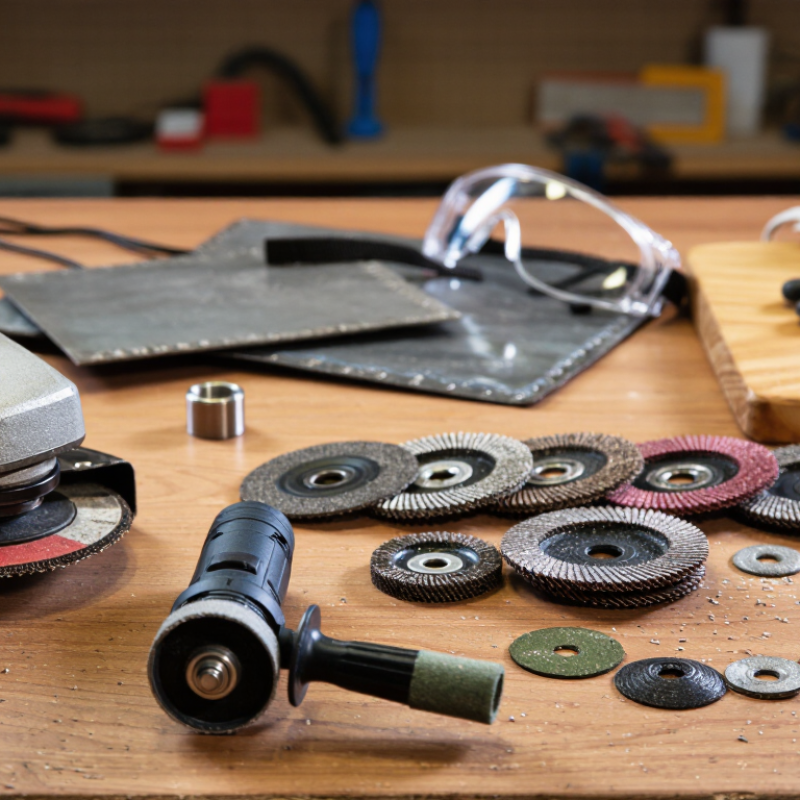
How to Choose the Right Grinding Tool for Your Needs?

Define the Material and Grinding Task

Before choosing a grinding tool, identify the material and the job. Steel, stainless steel, aluminum, stone, and ceramic respond differently to heat and abrasion. A hard material may need a tougher abrasive, while soft aluminum can load the wheel and smear across its surface. Check the workpiece label or technical sheet when available. Guessing from color alone is unreliable.

Then define the task precisely. Are you removing a weld bead, sharpening an edge, smoothing a cut, or producing a fine finish? Each job needs a different balance of stock removal and control. For example, a coarse abrasive can remove a weld quickly, but it may leave deep scratches that take extra time to remove. A small, curved part also needs a tool that can reach its contours without flattening them.

Consider the workpiece size, shape, and sensitivity to heat. Thin sheet metal can warp if grinding pressure stays in one spot. Use light passes, pause to check temperature, and inspect the surface under good light. In practice, the first choice is not always right; a test on scrap can reveal loading, vibration, or an unexpectedly rough finish. Check that the tool and abrasive are rated for the material and operating speed, and wear suitable eye and respiratory protection.

Choose an Abrasive for the Workpiece Material

General suitability guide for common grinding materials and tasks.

Ratings are a qualitative guide from 1 (limited suitability) to 5 (commonly suitable), not standardized test results. Match the abrasive to the material, then select the tool shape and grit for the task. Use a suitable wheel or disc and follow its safety instructions.

Compare Common Types of Grinding Tools

An angle grinder suits portable cutting, weld cleanup, and rough shaping; its exposed disc can remove material quickly, so a steady two-handed grip matters. A bench grinder stays fixed and is useful for sharpening or deburring small parts, but its wheels need correct setup and inspection. A die grinder reaches tight recesses with small rotary accessories. Belt grinders cover broader surfaces and can leave a more even finish, though they may remove stock faster than expected.

A small distinction matters: the tool body and the abrasive attachment both determine the result.

Choose by workpiece, access, and finish. Coarse bonded wheels handle heavier stock removal; flap discs blend edges, while abrasive belts suit longer, flatter surfaces.

Grand View Research estimated the global abrasives market at USD 47.7 billion in 2023, a measure of broad industrial demand, not a guide to choosing one tool.

For that, check the abrasive’s rated speed against the tool, then test on scrap if possible. A useful pause. Even a familiar grinder can leave gouges when pressure or angle shifts.

I would not treat “more powerful” as “better”; control and fit often matter more, and choosing between tools can still involve compromise.

Evaluate Abrasive Materials and Tool Specifications

A grinding tool should match both the workpiece and the task. Aluminum oxide is commonly used for steel, while silicon carbide can suit cast iron, stone, and some nonferrous materials. Diamond abrasives are used for very hard materials, such as ceramics. The best choice still depends on the tool’s design. Material names alone do not tell the whole story.

Check grit, bond, wheel hardness, diameter, thickness, and bore size. Coarse grit removes material quickly but leaves deeper scratches; finer grit gives a smoother finish. Bond affects how firmly abrasive grains stay in place. A hard wheel may work well on softer stock, while a softer wheel can expose fresh grains when grinding harder stock. It is easy to overfocus on grit. I have seen that choice disappoint when the wheel’s bond or fit was wrong.

Match the tool’s rated maximum speed to the machine, and never exceed that rating. Confirm that the wheel fits the spindle and guard correctly. A brief test on scrap can reveal loading, excessive heat, or an unexpectedly rough finish. Watch for changes in sound and vibration. Stop if the wheel is damaged or feels unstable, and use suitable eye and face protection.

Match Tool Size, Power, and Speed to the Job

Choosing a grinding tool starts with the material and the space around it. A compact tool is easier to control on a narrow railing or small repair. Larger tools can cover broad surfaces faster, but their weight may tire your hands. Small tools feel easier. They are not always better.

Match power to the work. Light deburring usually needs less power than removing weld seams or shaping thick steel. If the motor bogs down under pressure, reduce your force and reassess the tool rather than pushing harder. Speed matters too: check that the abrasive wheel is rated for the tool’s maximum speed. Use a suitable wheel size, keep the guard in place, and secure the workpiece before grinding.

In practice, the right balance can take a little trial and error. A high-powered tool may remove material quickly, yet feel awkward on delicate edges. A smaller wheel can reach tight corners, though it may take more passes. I still find that written specifications do not tell the whole story; grip and vibration matter after several minutes of use. Wear eye and hearing protection, and pause if the tool feels unstable or unusually hot.

Check Safety Features and Maintenance Requirements

Before choosing a grinding tool, inspect the safety features you will actually use. The wheel guard should cover the exposed side and stay firmly in place. Check that the switch is easy to reach and stops the tool when released, if that feature is provided. Match the wheel’s rated speed to the tool, and reject wheels with chips, cracks, or other visible damage. A stable side handle can help you control the tool when it catches. Wear eye and hearing protection, and keep loose clothing away from the rotating wheel. Small details matter.

Maintenance needs should fit your routine, not just your plans. Look for clear instructions on replacing wheels, cleaning air vents, and checking the cord or battery. Dust packed into vents can cause overheating, so use the cleaning method recommended by the manufacturer. Disconnect power before inspecting or changing parts. Check the wheel and guard before each use; replace damaged components rather than trying to repair them. In regular workshop use, vibration can gradually loosen fittings. A quick check helps, though it is easy to skip when work is busy. Be honest about that habit: a tool that is difficult to maintain may be poorly suited to your workspace. Keep a simple maintenance log if several people share it.

Article Source:

Copyright 2025 Fluidra S.A. | Created by BCM Marketing Agencia Privacy Policy Legal note | Cookie policy |

Technical cookies are strictly necessary for our website to work and you can navigate through it. These types of cookies are those that, for example, allow us to identify you, give you access to certain restricted parts of the page if necessary, or remember different options or services already selected by you, such as your privacy preferences. Therefore, they are activated by default, your authorization not being necessary in this regard. Through the configuration of your browser, you can block or alert the presence of this type of cookies, although such blocking will affect the proper functioning of the different functionalities of our website.


The analysis cookies allow us to study the navigation of the users of our website in general (for example, which sections of the page are the most visited, which services are used most and if they work correctly, etc.). From the statistical information on navigation on our website, we can improve both the operation of the page itself and the different services it offers. Therefore, these cookies do not have an advertising purpose, but only serve to make our website work better, adapting to our users in general. By activating them you will contribute to this continuous improvement. You can enable or disable these cookies by checking the corresponding box, being disabled by default.


Functionality cookies allow us to remember your preferences, to personalize certain characteristics and general options of our website, every time you access it (for example, the language in which the information is presented to you, the sections marked as favorites, your browser type, etc.) Therefore, this type of cookies does not have an advertising purpose, but by activating them you will improve the functionality of the website (for example, adapting to your type of browser) and the customization of it based on your preferences (for example, by presenting the information in the language that you have chosen in previous occasions), which will contribute to the ease, usability and comfort of our page during your navigation. You can enable or disable these cookies by checking the corresponding box, being disabled by default.


Advertising cookies allow us to manage the advertising spaces included in our website based on criteria such as the content shown or the frequency in which the ads are displayed. For example, if you have been shown the same ad several times on our website, and you have not shown a personal interest by clicking on it, it will not appear again. In summary, by activating this type of cookies, the advertising shown on our website will be more useful and diverse, and less repetitive. You can enable or disable these cookies by checking the corresponding box, being disabled by default.


Behavioral advertising cookies allow us to obtain information based on the observation of your browsing habits and behaviors on the web, in order to show you advertising content that best suits your personal tastes and interests. To understand it in a very simple way, we will give you a fictitious example: if your last searches on the web were related to suspense literature, we would show you advertising about suspense books. Therefore, activating this type of cookies, the advertising that we show you on our website will not be generic, but will be oriented to your searches, tastes and interests, therefore adjusting exclusively to you. You can enable or disable these cookies by checking the corresponding box, being disabled by default.
To understand it in a very simple way, we will give you a fictitious example: if your last searches on the web were related to suspense literature, we would show you advertising about suspense books. Therefore, activating this type of cookies, the advertising that we show you on our website will not be generic, but will be oriented to your searches, tastes and interests, therefore adjusting exclusively to you. You can enable or disable these cookies by checking the corresponding box, being disabled by default.

SAVE

We use our own and third-party cookies to ensure the proper functioning of the website and to analyse our services, improve your experience on our website and show you advertisements related to your interests according to profiling based on your browsing habits (e.g. websites visited). You can accept all cookies by clicking "ACCEPT" or set or reject them by clicking here. If you would like to know more about the use of cookies, please see our COOKIE POLICY.


ACCEPT ALL
Reject no essentials


