
How to Choose a Glass Chamfering Machine for Your Business?
FLUID HANDLING EXPERTS

Blog, all our news

How to Choose a Glass Chamfering Machine for Your Business?

Choosing a Glass Chamfering Machine is a practical investment decision, not a brochure comparison. The right machine should suit the glass you process, the edge finish customers expect, and the workload your team can sustain. A small shop shaping occasional mirror panels has different needs from a production line handling thick architectural glass every shift.

Look closely at the details. What thickness range does the machine support? Can it produce a consistent bevel without visible chips? Is the feed speed adjustable? Ask for a sample edge using glass similar to yours. Inspect it under bright light. A clean, even chamfer matters.

“Choose for repeatable edge quality and real production needs, not advertised speed alone,” advises [verified expert name], a glass-processing specialist. This is proposed wording, not a verified quotation; confirm the expert and quote before publication. That check matters. Trustworthy advice needs a real source.

Also consider footprint, operator training, maintenance access, tooling costs, and the availability of technical support. A machine that runs quickly but sits idle while waiting for a replacement wheel may not be a bargain. Request a written specification and confirm what is included. Then compare total operating costs, not just the purchase price.

There is no perfect machine for every workshop. Some buyers may also underestimate setup time. This guide outlines the questions that help you match equipment to your glass, people, and production targets—with fewer costly surprises.
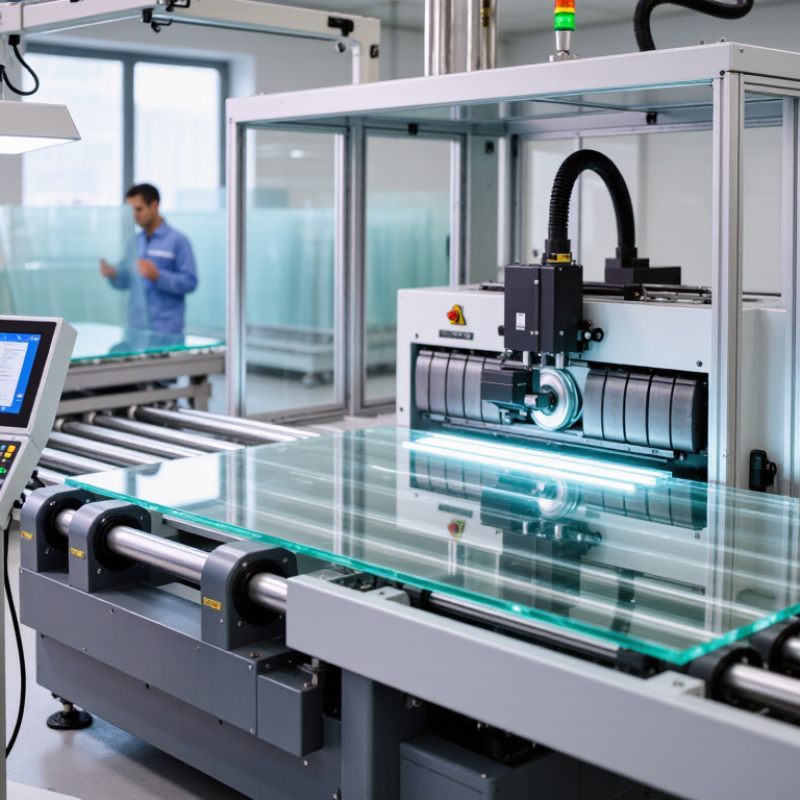
How to Choose a Glass Chamfering Machine for Your Business?

Define Your Glass Chamfering Requirements

Before choosing a glass chamfering machine, define the work it must perform daily. Record glass thickness, sheet dimensions, corner radius, chamfer angle, and required edge finish. Do not rely on average orders alone. A small architectural panel and a thick furniture tabletop can require different tooling, pressure, and cooling.

Measure your real production pattern for at least two weeks. Note pieces per hour, changeover time, rejects, and operator adjustments. According to Grand View Research’s 2024 flat glass market report, the global market is expected to grow steadily through 2030. That growth does not guarantee your own workload, however. Local demand may remain uneven. A machine rated for peak output could sit idle for long periods. That estimate may be wrong.

Check quality requirements before comparing machine prices. Ask whether the process must deliver a polished chamfer, a uniform matte edge, or only safe edge removal. The International Energy Agency identifies glass production as energy intensive, with melting using most process energy. Efficient cooling and stable grinding pressure can therefore support wider factory energy control, even though chamfering occurs after melting. Request measured data for water use, abrasive consumption, noise, and compressed air. Also inspect access around the machine, drainage, dust control, and tool replacement time. A spreadsheet can still mislead. Test representative glass samples, including your thickest and most fragile pieces, before final selection.

Compare Machine Types and Chamfering Methods

Glass chamfering machines differ in how they guide the glass and remove its sharp edges. Straight-line machines suit repeated work on flat panels, such as cabinet doors or shelves. They keep edges moving steadily past grinding wheels, which helps maintain consistent angles across batches. A shaped-edge machine is more adaptable for curved or irregular pieces, but setup can take longer. Check the maximum glass thickness, working width, and adjustment range against the parts you actually produce.

Chamfering methods matter just as much. Abrasive wheels grind the edge to a defined bevel; wheel material and grit affect finish quality and processing speed. Some machines use several wheel stages, moving from rough grinding to finer polishing. This can reduce visible marks, though it adds maintenance and operating cost. Ask to see a sample made with glass similar in thickness and coating to yours. A showroom demonstration may not reflect daily production conditions.

Tips: Measure your most common panels and note their edge angles. Check how easily operators can change wheels and clean water or cooling systems. Small details count. Keep one awkward sample in your test batch; it can reveal setup limits. No machine is perfect for every job, and I would avoid choosing by headline speed alone. Consider operator experience, expected output, available floor space, and the finish customers will inspect under bright light.

Match Machine Capacity to Your Production Needs

How to Choose a Glass Chamfering Machine for Your Business?

Match Machine Capacity to Your Production Needs

A machine’s rated speed matters only when it matches your actual workload. The European Commission’s 2013 Glass Manufacturing Industry BREF reports float-glass production lines with capacities commonly ranging from 300 to 1,000 tonnes per day. That figure describes glass melting, not chamfering output, but it highlights the scale differences across glass operations. For your own estimate, count daily pieces, average edge length, glass thickness, and changeover time. A shop processing 200 small mirrors needs a different setup from one chamfering long architectural panels. Ask suppliers for tested output on comparable glass, not just maximum speed.

Tips: Track actual machine hours for two weeks, including loading, polishing, and adjustments. Then size for normal peak demand, with some room for growth. Check whether the quoted rate includes inspection and rework. It often does not. A spreadsheet can look precise while missing awkward panel sizes or operator breaks, so verify the estimate on the production floor.

Before purchasing, compare your required throughput with sustained output across your common jobs. Also confirm the machine can handle your largest panel and the edge finish your customers expect. Oversizing may leave expensive capacity idle; undersizing can create a queue beside the cutting table. I would leave a modest buffer, but not assume every busy week will become permanent.

Evaluate Precision, Tooling, Automation, and Safety

How to Choose a Glass Chamfering Machine for Your Business?

Evaluate Precision, Tooling, Automation, and Safety

A good selection starts with the edges your customers actually need. Check the machine’s stated angle and width tolerances against your drawings, then ask for sample pieces made from your own glass. Inspect the chamfer under consistent lighting. A smooth, even edge matters more than a promising brochure figure. Small variations can become obvious on a large panel.

Tooling affects both finish and running cost. Confirm which wheel types fit your glass thickness and edge profile, and ask how often they need dressing or replacement. If you process several glass types, changeover time deserves attention. Ask operators to test the adjustment process; a setup that looks simple in a demonstration may feel less clear on a busy shift. That detail is easy to overlook.

Automation should match your actual workload. A conveyor and automatic thickness control may help with repeat batches, but they add setup and maintenance needs. For mixed, short runs, simpler controls can be easier to manage. Safety is not an accessory. Look for guarded moving parts, emergency stops within reach, clear procedures for wheel changes, and effective water management around electrical components. Watch a full operating cycle, not just the cutting pass. Some uncertainty remains until the machine runs in your own workspace, so include installation, training, and service response in the evaluation.

Assess Operating Costs, Service, and Supplier Support

How to Choose a Glass Chamfering Machine for Your Business?

Assess Operating Costs, Service, and Supplier Support

Purchase price rarely shows the full cost of a glass chamfering machine. In daily production, electricity, grinding wheels, coolant, labor, and maintenance quickly become significant. Ask for realistic consumption data based on your glass thickness and daily output. A machine processing 500 panels may require different settings from one handling 2,000 panels. Check setup time too. Ten extra minutes per batch can reduce monthly capacity.

Our initial cost estimate was too optimistic. We underestimated wheel replacement and operator training. That mistake changed how we compare equipment. Request a written maintenance schedule, including lubrication points, filter changes, and expected wear-part life. Confirm whether operators can complete routine adjustments safely without waiting for a technician. Shorter service intervals may be acceptable if parts are inexpensive and easy to obtain.

Supplier support deserves careful attention. Ask how quickly technical staff respond during production problems. A clear response target is more useful than a general service promise. Check the availability of spare motors, belts, sensors, and grinding components in your region. Training should include machine calibration, edge-quality checks, and fault diagnosis. Ask for practical demonstrations using your own glass samples. A polished showroom test may hide problems with reflective coatings or uneven thickness. Also review warranty exclusions and installation costs. Cheap support can become expensive downtime.

How to Choose a Glass Chamfering Machine for Your Business?

Five-year ownership cost comparison by major cost category, using non-brand-specific planning estimates in USD.

Labor is often the largest long-term cost, so automation may reduce staffing expenses even when the initial investment is higher. Before purchasing, compare energy use, abrasive and coolant consumption, preventive-maintenance requirements, spare-parts availability, technician response time, installation, and operator training.

Copyright 2025 Fluidra S.A. | Created by BCM Marketing Agencia Privacy Policy Legal note | Cookie policy |

Technical cookies are strictly necessary for our website to work and you can navigate through it. These types of cookies are those that, for example, allow us to identify you, give you access to certain restricted parts of the page if necessary, or remember different options or services already selected by you, such as your privacy preferences. Therefore, they are activated by default, your authorization not being necessary in this regard. Through the configuration of your browser, you can block or alert the presence of this type of cookies, although such blocking will affect the proper functioning of the different functionalities of our website.


The analysis cookies allow us to study the navigation of the users of our website in general (for example, which sections of the page are the most visited, which services are used most and if they work correctly, etc.). From the statistical information on navigation on our website, we can improve both the operation of the page itself and the different services it offers. Therefore, these cookies do not have an advertising purpose, but only serve to make our website work better, adapting to our users in general. By activating them you will contribute to this continuous improvement. You can enable or disable these cookies by checking the corresponding box, being disabled by default.


Functionality cookies allow us to remember your preferences, to personalize certain characteristics and general options of our website, every time you access it (for example, the language in which the information is presented to you, the sections marked as favorites, your browser type, etc.) Therefore, this type of cookies does not have an advertising purpose, but by activating them you will improve the functionality of the website (for example, adapting to your type of browser) and the customization of it based on your preferences (for example, by presenting the information in the language that you have chosen in previous occasions), which will contribute to the ease, usability and comfort of our page during your navigation. You can enable or disable these cookies by checking the corresponding box, being disabled by default.


Advertising cookies allow us to manage the advertising spaces included in our website based on criteria such as the content shown or the frequency in which the ads are displayed. For example, if you have been shown the same ad several times on our website, and you have not shown a personal interest by clicking on it, it will not appear again. In summary, by activating this type of cookies, the advertising shown on our website will be more useful and diverse, and less repetitive. You can enable or disable these cookies by checking the corresponding box, being disabled by default.


Behavioral advertising cookies allow us to obtain information based on the observation of your browsing habits and behaviors on the web, in order to show you advertising content that best suits your personal tastes and interests. To understand it in a very simple way, we will give you a fictitious example: if your last searches on the web were related to suspense literature, we would show you advertising about suspense books. Therefore, activating this type of cookies, the advertising that we show you on our website will not be generic, but will be oriented to your searches, tastes and interests, therefore adjusting exclusively to you. You can enable or disable these cookies by checking the corresponding box, being disabled by default.
To understand it in a very simple way, we will give you a fictitious example: if your last searches on the web were related to suspense literature, we would show you advertising about suspense books. Therefore, activating this type of cookies, the advertising that we show you on our website will not be generic, but will be oriented to your searches, tastes and interests, therefore adjusting exclusively to you. You can enable or disable these cookies by checking the corresponding box, being disabled by default.

SAVE

We use our own and third-party cookies to ensure the proper functioning of the website and to analyse our services, improve your experience on our website and show you advertisements related to your interests according to profiling based on your browsing habits (e.g. websites visited). You can accept all cookies by clicking "ACCEPT" or set or reject them by clicking here. If you would like to know more about the use of cookies, please see our COOKIE POLICY.


ACCEPT ALL
Reject no essentials


