
How to Choose the Right Gear Drive Motor?
FLUID HANDLING EXPERTS

Blog, all our news

How to Choose the Right Gear Drive Motor?

Choosing the right Gear Drive Motor begins with the application, not the catalog page. A conveyor carrying wet cartons behaves differently from a mixer moving thick material. Load, speed, duty cycle, mounting position, and ambient temperature all change the decision.

The U.S. Department of Energy reports that motor-driven systems consume about 69% of industrial electricity in the United States. This figure makes efficiency important, but efficiency alone cannot determine the correct unit. The U.S. Department of Energy’s Improving Motor and Drive System Performance guide also emphasizes system-level evaluation, including controls, transmission losses, and operating conditions. Grand View Research’s industrial gearbox market analysis identifies automation, material handling, and process equipment as major growth areas. These sectors demand dependable torque, precise speed reduction, and manageable maintenance.

Robert L. Norton, a respected machine-design authority, states, “The design of a machine is an exercise in compromise.” That principle applies directly to Gear Drive Motor selection. A higher reduction ratio may increase torque, yet it can reduce output speed and affect thermal performance. A compact motor may fit the frame, but it may struggle during repeated starts. That shortcut sounds efficient. It is often wrong.

This guide examines torque calculations, service factors, gearbox types, efficiency ratings, braking needs, and environmental protection. It also considers practical details, such as oil leakage near a washdown line or vibration under an uneven load. Published ratings provide a starting point, not a guarantee. Real installations expose gaps in neat calculations. The best choice balances performance, reliability, energy use, installation limits, and long-term serviceability.
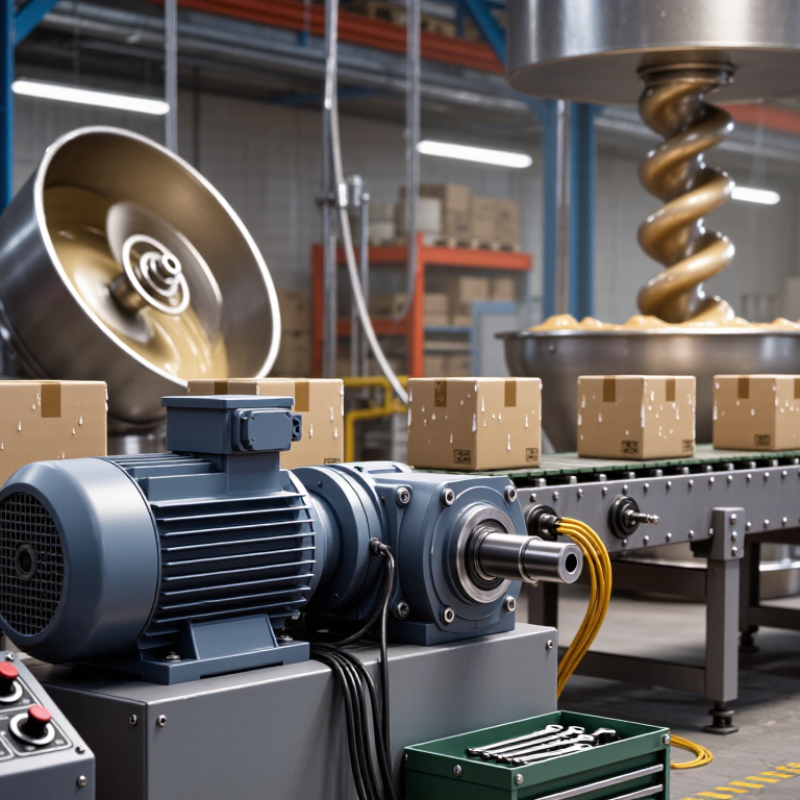
How to Choose the Right Gear Drive Motor?

Define the Load, Speed, and Torque Requirements

How to Choose the Right Gear Drive Motor?

Define the Load, Speed, and Torque Requirements

Start with the load. Identify its weight, shape, friction, and movement direction. A horizontal conveyor needs different support than a vertical lifting system. Measure the actual load when possible. Catalog estimates can hide sudden resistance.

Calculate the required torque at the driven shaft. Use the load force, pulley radius, and mechanical efficiency. For rotary systems, torque equals force multiplied by radius. Then add a safety margin, usually 20 to 30 percent. Do not exaggerate it. An oversized motor may waste energy and respond poorly at low speeds.

Speed must match the process, not just the motor rating. Record the desired output speed and duty cycle. Check whether the mechanism starts and stops frequently. Starting torque can exceed running torque. That detail is easy to miss. A gear ratio can reduce speed while increasing output torque, but losses remain. Allow for heat, gear friction, and operating time.

In practical selection work, I compare measured values with worst-case conditions. I also check whether the motor can handle peak loads without overheating. A rough estimate is not enough. Measure it twice. If the load changes during operation, use a variable-speed controller or a motor with suitable control feedback. The first calculation may be wrong, especially when friction changes with temperature or alignment. Keep those uncertainties visible before choosing the final gear drive motor.

Select the Gear Type for the Application

When choosing a gear drive motor, select the gear type for the application, not merely the highest torque rating. Helical gears suit conveyors, pumps, and mixers requiring quiet, efficient operation. Their angled teeth spread load gradually. Spur gears cost less, but they create more noise and handle shock less smoothly. Bevel gears redirect motion through 90 degrees, making them practical in compact right-angle layouts.

Worm gears provide high reduction in a small housing. However, sliding contact can generate heat and reduce efficiency. They may also resist back-driving, which is useful for lifting equipment but unsuitable for every safety-critical movement. Planetary gears offer high torque density and strong load sharing. They are valuable where space is tight, but their precision can increase purchase and maintenance costs. Check ratio, duty cycle, radial load, backlash, lubrication, and ambient temperature together.

The International Energy Agency reports that electric motor systems consume roughly half of global electricity. The U.S. Department of Energy also states that motor systems can represent about 70% of industrial electricity use. These figures make efficiency more than a design preference. In field assessments, I have seen users select worm gearing for low price, then overlook continuous heat losses. That choice was not entirely wrong. It was incomplete. Measure real operating hours, starting torque, and load variation before deciding. A small spreadsheet is often more honest than a catalog headline.

Match the Motor Power and Operating Conditions

How to Choose the Right Gear Drive Motor?

Match the Motor Power and Operating Conditions

Choosing a gear drive motor starts with the load, not the motor label. Measure required torque, output speed, and running time. Torque equals force multiplied by radius, while power depends on torque and speed. A conveyor carrying 120 kilograms may run smoothly but demand much higher torque during startup.

Starting loads matter.

Select a motor with enough starting torque for acceleration, friction, and occasional overloads. A service factor can provide useful protection, but it should not hide poor calculations. I have seen undersized motors overheat because engineers considered only average load. Check the duty cycle, starts per hour, and load inertia. Frequent reversing needs extra attention.

Operating conditions can change the selection completely. In a dusty workshop, choose suitable enclosure protection and protect the gearbox from contamination. High ambient temperatures reduce cooling capacity. Outdoor equipment may need resistance to moisture, vibration, and sudden temperature changes. Confirm the available voltage and mounting position before ordering. Small installation details can become expensive corrections.

Leave a practical margin.

Too much motor power also causes problems. It can increase energy use, shock loads, and gearbox stress. Recheck the calculation with measured data after installation. Real machines rarely behave exactly like spreadsheets. That part deserves honest review.

Check Mounting, Size, Efficiency, and Compatibility

How to Choose the Right Gear Drive Motor?

A gear drive motor should match the machine, not merely fit inside it. Check the mounting pattern, shaft direction, and available clearance before comparing prices or power ratings. A motor may have the correct torque but still fail installation because its flange holes or shaft length differ. Measure the mounting face, bolt spacing, and output shaft diameter carefully. I once overlooked cable clearance during a replacement, creating an avoidable installation delay.

Size the motor from real operating conditions. Calculate required torque, speed, duty cycle, and starting load. A conveyor carrying uneven weight needs more starting torque than its average load suggests. Select a suitable service factor, but avoid excessive oversizing. A larger motor can consume more energy and may respond poorly to frequent starts and stops. Efficiency matters during long operating hours, so compare gearbox losses, motor efficiency, and expected load points. Check the datasheet, then verify the result under actual conditions.

Tips: Confirm voltage, frequency, control method, and rotation direction. Leave room for ventilation and maintenance access. Check whether the motor tolerates dust, moisture, heat, or vibration at the installation site. Do not assume two motors with identical ratings are interchangeable. Review shaft loads, brake requirements, and mounting orientation with a qualified engineer. A short test run can reveal noise, heating, or vibration that calculations miss. My own preference is to document every measurement, because memory is less reliable than a marked drawing.

Compare Safety, Maintenance, Cost, and Service Life

How to Choose the Right Gear Drive Motor?

Compare Safety, Maintenance, Cost, and Service Life

Choosing a gear drive motor starts with the load, not the catalog price. Check torque, speed, duty cycle, and starting frequency. A motor running beside a dusty conveyor may fail early. For safety, match the motor to the machine’s guarding, braking, and overload requirements. Confirm capacity using real operating data, including shock loads. Small errors can create dangerous heat, unexpected movement, or repeated shutdowns.

Maintenance requirements deserve close attention. Look for accessible lubrication points, sealed bearings, and clear inspection instructions. Poor alignment often causes vibration, noise, and premature gear wear. Keep a simple service log with temperature, noise, lubricant condition, and operating hours. It sounds basic. It works. However, maintenance plans sometimes assume perfect staff availability, which is rarely realistic. Choose equipment that technicians can inspect safely and quickly.

Purchase cost shows only part of the financial picture. Compare energy use, replacement parts, downtime, installation labor, and expected service life. A lower-priced motor may require more frequent repairs under continuous loads. A stronger unit may cost more initially but operate reliably for many years. Ask for test data, rated-life information, and clearly defined operating limits. Environmental details matter too, including moisture, washdown exposure, ambient temperature, and corrosive dust. Record actual performance after installation, because field conditions often differ from design assumptions.

Copyright 2025 Fluidra S.A. | Created by BCM Marketing Agencia Privacy Policy Legal note | Cookie policy |

Technical cookies are strictly necessary for our website to work and you can navigate through it. These types of cookies are those that, for example, allow us to identify you, give you access to certain restricted parts of the page if necessary, or remember different options or services already selected by you, such as your privacy preferences. Therefore, they are activated by default, your authorization not being necessary in this regard. Through the configuration of your browser, you can block or alert the presence of this type of cookies, although such blocking will affect the proper functioning of the different functionalities of our website.


The analysis cookies allow us to study the navigation of the users of our website in general (for example, which sections of the page are the most visited, which services are used most and if they work correctly, etc.). From the statistical information on navigation on our website, we can improve both the operation of the page itself and the different services it offers. Therefore, these cookies do not have an advertising purpose, but only serve to make our website work better, adapting to our users in general. By activating them you will contribute to this continuous improvement. You can enable or disable these cookies by checking the corresponding box, being disabled by default.


Functionality cookies allow us to remember your preferences, to personalize certain characteristics and general options of our website, every time you access it (for example, the language in which the information is presented to you, the sections marked as favorites, your browser type, etc.) Therefore, this type of cookies does not have an advertising purpose, but by activating them you will improve the functionality of the website (for example, adapting to your type of browser) and the customization of it based on your preferences (for example, by presenting the information in the language that you have chosen in previous occasions), which will contribute to the ease, usability and comfort of our page during your navigation. You can enable or disable these cookies by checking the corresponding box, being disabled by default.


Advertising cookies allow us to manage the advertising spaces included in our website based on criteria such as the content shown or the frequency in which the ads are displayed. For example, if you have been shown the same ad several times on our website, and you have not shown a personal interest by clicking on it, it will not appear again. In summary, by activating this type of cookies, the advertising shown on our website will be more useful and diverse, and less repetitive. You can enable or disable these cookies by checking the corresponding box, being disabled by default.


Behavioral advertising cookies allow us to obtain information based on the observation of your browsing habits and behaviors on the web, in order to show you advertising content that best suits your personal tastes and interests. To understand it in a very simple way, we will give you a fictitious example: if your last searches on the web were related to suspense literature, we would show you advertising about suspense books. Therefore, activating this type of cookies, the advertising that we show you on our website will not be generic, but will be oriented to your searches, tastes and interests, therefore adjusting exclusively to you. You can enable or disable these cookies by checking the corresponding box, being disabled by default.
To understand it in a very simple way, we will give you a fictitious example: if your last searches on the web were related to suspense literature, we would show you advertising about suspense books. Therefore, activating this type of cookies, the advertising that we show you on our website will not be generic, but will be oriented to your searches, tastes and interests, therefore adjusting exclusively to you. You can enable or disable these cookies by checking the corresponding box, being disabled by default.

SAVE

We use our own and third-party cookies to ensure the proper functioning of the website and to analyse our services, improve your experience on our website and show you advertisements related to your interests according to profiling based on your browsing habits (e.g. websites visited). You can accept all cookies by clicking "ACCEPT" or set or reject them by clicking here. If you would like to know more about the use of cookies, please see our COOKIE POLICY.


ACCEPT ALL
Reject no essentials


