
How to Choose the Right Flat Face Hydraulic Coupling for Your Needs?
FLUID HANDLING EXPERTS

Blog, all our news

How to Choose the Right Flat Face Hydraulic Coupling for Your Needs?

When selecting a flat face hydraulic coupling, understanding your specific needs is crucial. A flat face hydraulic coupling plays a vital role in ensuring efficient fluid power transmission. Its design minimizes fluid loss and contamination, which is essential for optimal performance in various applications.

Many factors influence the choice of a flat face hydraulic coupling. Different materials, sizes, and pressure ratings can impact the coupling’s efficiency and longevity. It's important to consider the working environment. For example, extreme temperatures or exposure to chemicals can affect material performance.

While numerous options exist, not every flat face hydraulic coupling will suit your application perfectly. The decision-making process can feel overwhelming. However, by reflecting on your needs and examining product specifications, you’ll find a suitable option. Taking time to research and seek professional advice ensures that you make a well-informed choice.
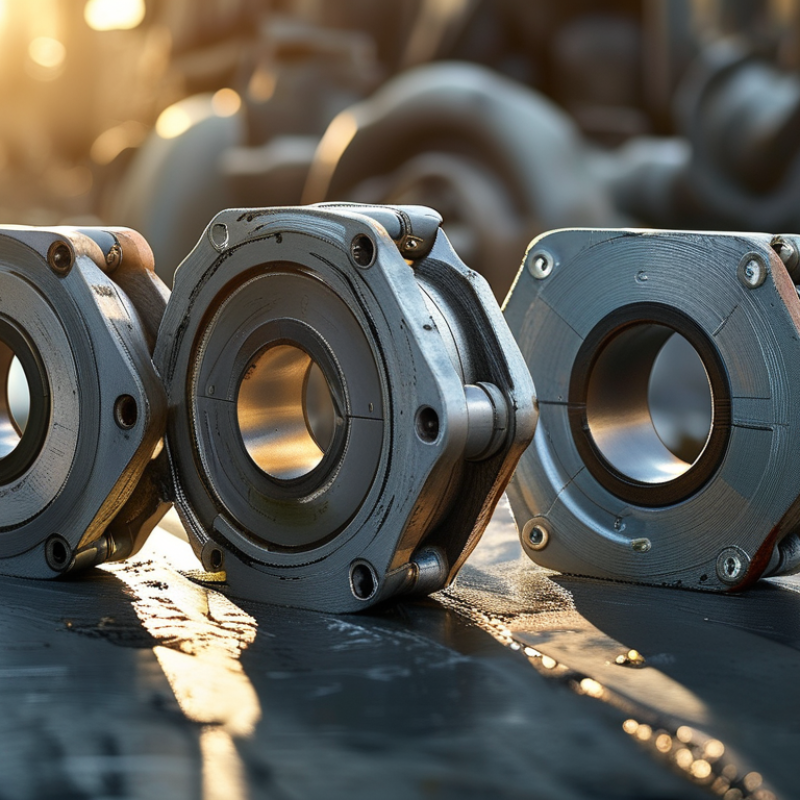
How to Choose the Right Flat Face Hydraulic Coupling for Your Needs?

Factors to Consider When Selecting Flat Face Hydraulic Couplings

When selecting Flat Face Hydraulic Couplings, several factors merit careful consideration. One crucial aspect is the working pressure of your application. Couplings must withstand peak pressures, typically ranging from 3000 to 5000 PSI, depending on machinery requirements. Choosing couplings rated below operational pressure can lead to failures, resulting in costly downtime.

Another significant factor is the material composition of the couplings. Options include carbon steel, stainless steel, and aluminum. Each material has unique properties, such as corrosion resistance and temperature tolerance. For instance, stainless steel couplings are ideal for corrosive environments. An estimated 70% of coupling failures stem from inappropriate material choices, emphasizing the need for thorough assessment.

Lastly, the sealing technology employed in the couplings warrants attention. Various seals are available, including O-rings and flat gaskets. O-ring seals offer tight leakage control, while flat gaskets can handle higher temperatures. Understanding the operating environment and specific requirements is vital. A mismatch can lead to leaks, inefficiency, and safety hazards. Striking the right balance among these factors is essential for optimizing performance and longevity.

Hydraulic Coupling Type Comparison

This chart compares different types of hydraulic couplings based on their application suitability. Flat face couplings are rated the highest (9), making them a great choice for applications requiring minimal leakage and maximum performance. Standard couplings follow with a rating of 7, while quick connect and multi-angle types have lower suitability ratings of 6 and 5, respectively.

Understanding the Specifications of Flat Face Hydraulic Couplings

When selecting a flat face hydraulic coupling, understanding specifications is crucial. These couplings vary in size, pressure rating, and material. Each specification affects their performance, service life, and compatibility with different systems. For instance, a coupling rated for high pressure is essential for heavy machinery. A mistake here could lead to failure and potential hazards.

The material used in the coupling significantly impacts its durability. Steel couplings may offer strength but can be prone to corrosion. In contrast, aluminum options are lighter but may not handle high stress well. Beyond the basic specifications, consider the operating environment. High temperatures and exposure to chemicals demand a coupling with specific attributes.

Pay attention to the connection type as well. Some systems require threaded connections, while others utilize flanges. Understanding your operational needs ensures you choose the right coupling. Not every coupling fits every application, and misjudgments can be costly. Therefore, a deep dive into specifications is not just beneficial; it's essential for safety and functionality.

Comparing Material Types for Durability and Performance

When selecting a flat face hydraulic coupling, the material type plays a crucial role in durability and performance. Common materials include steel, aluminum, and composite options. Steel couplings are renowned for their strength and high resistance to wear. According to a report from the Hydraulic Institute, steel couplings can endure pressures above 5,000 psi, making them suitable for high-demand applications. However, the added weight of steel can be a disadvantage in some setups.

Aluminum options offer a lighter alternative with decent strength, but they may not withstand extreme conditions as well as steel. A study by the American Society of Mechanical Engineers indicated that aluminum couplings perform adequately under moderate pressure and are ideal for weight-sensitive tasks. They resist corrosion, which is an essential factor in humid environments but may not handle abrasive environments effectively.

Composite materials are gaining popularity due to their versatility. They provide a lighter, corrosion-resistant option. Research indicates that composite couplings can reduce weight by up to 50% compared to steel counterparts. However, they may not have the same lifecycle as metal options under severe conditions. Making the right choice means evaluating specific application needs, considering environment and performance requirements critically.

How to Choose the Right Flat Face Hydraulic Coupling for Your Needs?

Material Type Durability Performance Temperature Resistance Cost
Carbon Steel Moderate High Up to 300°F $$
Stainless Steel High Very High Up to 400°F $$$
Aluminum Low Moderate Up to 200°F $
Brass Moderate High Up to 250°F $$
Plastic Composite Low Moderate Up to 150°F $

Identifying Common Applications for Flat Face Hydraulic Couplings

Flat face hydraulic couplings are widely used across various industries. They are known for their ability to create a leak-free connection. This feature makes them popular in applications where fluid loss must be minimized. Construction equipment often utilizes these couplings for hydraulic systems. Machines like excavators and loaders rely on them for efficient operation.

Another common application is in agricultural machinery. Flat face couplings help ensure a reliable and secure connection between hydraulic lines. This is crucial when working on tasks like planting or harvesting. In manufacturing, these couplings assist in the smooth operation of machinery. Reliability is key in this industry, where downtime can be costly.

However, selecting the right coupling requires consideration of specific needs. Factors such as pressure ratings and fluid compatibility matter. It's important to reflect on the operational environment. Not every coupling will perform well under all conditions. Users may need to assess their application needs closely. Finding an ideal match takes time and careful evaluation.

Evaluating Pressure Ratings and Flow Capacities in Couplings

Choosing the right flat face hydraulic coupling involves understanding key specifications like pressure ratings and flow capacities. Pressure ratings indicate the maximum pressure the coupling can handle. Various applications require different pressure thresholds. For instance, hydraulic systems in construction equipment often demand high-pressure ratings. If you underestimate this, you risk failure in high-stress environments.

Flow capacity is equally vital. It reflects how much fluid can pass through the coupling efficiently. A coupling with insufficient flow capacity can cause delays and performance issues. Striking a balance between pressure ratings and flow capacity is crucial. Sometimes, manufacturers provide guidance, but it's not always tailored to your specific needs. Analyzing the requirements of your hydraulic system is essential for optimal performance.

Evaluating your specific application can reveal gaps in your current setup. If the coupling fails to operate efficiently under pressure, reflect on recent system performance. Is the flow too restricted? Are the pressure ratings adequate? Addressing these issues ensures reliable operation over time. Choosing wisely can save time and costs in the long run, contributing to improved system efficiency.

Copyright 2025 Fluidra S.A. | Created by BCM Marketing Agencia Privacy Policy Legal note | Cookie policy |

Technical cookies are strictly necessary for our website to work and you can navigate through it. These types of cookies are those that, for example, allow us to identify you, give you access to certain restricted parts of the page if necessary, or remember different options or services already selected by you, such as your privacy preferences. Therefore, they are activated by default, your authorization not being necessary in this regard. Through the configuration of your browser, you can block or alert the presence of this type of cookies, although such blocking will affect the proper functioning of the different functionalities of our website.


The analysis cookies allow us to study the navigation of the users of our website in general (for example, which sections of the page are the most visited, which services are used most and if they work correctly, etc.). From the statistical information on navigation on our website, we can improve both the operation of the page itself and the different services it offers. Therefore, these cookies do not have an advertising purpose, but only serve to make our website work better, adapting to our users in general. By activating them you will contribute to this continuous improvement. You can enable or disable these cookies by checking the corresponding box, being disabled by default.


Functionality cookies allow us to remember your preferences, to personalize certain characteristics and general options of our website, every time you access it (for example, the language in which the information is presented to you, the sections marked as favorites, your browser type, etc.) Therefore, this type of cookies does not have an advertising purpose, but by activating them you will improve the functionality of the website (for example, adapting to your type of browser) and the customization of it based on your preferences (for example, by presenting the information in the language that you have chosen in previous occasions), which will contribute to the ease, usability and comfort of our page during your navigation. You can enable or disable these cookies by checking the corresponding box, being disabled by default.


Advertising cookies allow us to manage the advertising spaces included in our website based on criteria such as the content shown or the frequency in which the ads are displayed. For example, if you have been shown the same ad several times on our website, and you have not shown a personal interest by clicking on it, it will not appear again. In summary, by activating this type of cookies, the advertising shown on our website will be more useful and diverse, and less repetitive. You can enable or disable these cookies by checking the corresponding box, being disabled by default.


Behavioral advertising cookies allow us to obtain information based on the observation of your browsing habits and behaviors on the web, in order to show you advertising content that best suits your personal tastes and interests. To understand it in a very simple way, we will give you a fictitious example: if your last searches on the web were related to suspense literature, we would show you advertising about suspense books. Therefore, activating this type of cookies, the advertising that we show you on our website will not be generic, but will be oriented to your searches, tastes and interests, therefore adjusting exclusively to you. You can enable or disable these cookies by checking the corresponding box, being disabled by default.
To understand it in a very simple way, we will give you a fictitious example: if your last searches on the web were related to suspense literature, we would show you advertising about suspense books. Therefore, activating this type of cookies, the advertising that we show you on our website will not be generic, but will be oriented to your searches, tastes and interests, therefore adjusting exclusively to you. You can enable or disable these cookies by checking the corresponding box, being disabled by default.

SAVE

We use our own and third-party cookies to ensure the proper functioning of the website and to analyse our services, improve your experience on our website and show you advertisements related to your interests according to profiling based on your browsing habits (e.g. websites visited). You can accept all cookies by clicking "ACCEPT" or set or reject them by clicking here. If you would like to know more about the use of cookies, please see our COOKIE POLICY.


ACCEPT ALL
Reject no essentials


