
7 Tips for Choosing an Energy Discharge Capacitor
FLUID HANDLING EXPERTS

Blog, all our news

7 Tips for Choosing an Energy Discharge Capacitor

Choosing an Energy Discharge Capacitor is not just a matter of matching a voltage number. The capacitor must store enough energy, release it at the required rate, and tolerate repeated pulses without overheating. A unit that looks suitable on a datasheet may behave differently in a warm enclosure or under a demanding discharge cycle. Small details matter.

A useful design maxim, paraphrasing the practical engineering approach associated with analog engineer Robert A. Pease, is: “Trust the calculations, then test the pulse.” This is a paraphrase, not a verified direct quotation. It captures an important habit: check the stored energy, peak current, pulse duration, equivalent series resistance, and repetition rate together. One number rarely tells the full story. Measure, too.

This guide introduces seven practical checks for selecting an Energy Discharge Capacitor. You will consider capacitance tolerance, voltage margin, dielectric choice, temperature limits, and the discharge path. A resistor, switch, or cable can shape the pulse just as much as the capacitor itself. A compact unit may fit neatly beside a circuit board, yet still lack the thermal headroom your application needs. That is easy to overlook. Compare manufacturer data, confirm the operating conditions, and validate the finished design with appropriate test equipment. Calculations are essential, but they are not the whole story. Real pulses can be messy. A careful selection process helps expose those gaps before they become costly surprises.
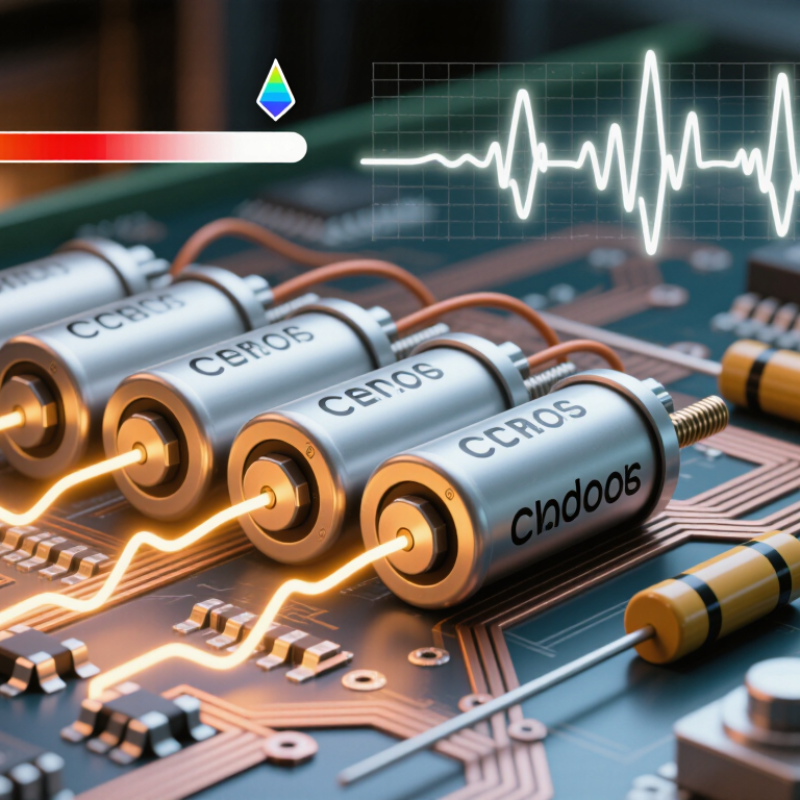
7 Tips for Choosing an Energy Discharge Capacitor

Define the Discharge Duty: Calculate Energy with E = ½CV²

An energy-discharge capacitor should be sized for the energy the load can actually use, not just its headline capacitance. The calculation starts with E = ½CV².

For a 470 µF capacitor charged to 400 V, stored energy is 37.6 J. But if the circuit stops operating at 100 V, usable energy is only ½ × 470 µF × (400² − 100²), or 35.25 J. That difference matters.

Define the discharge duty: required joules, pulse duration, repetition rate, and minimum load voltage. The U.S. Department of Energy’s 2022 Grid Energy Storage Technology Cost and Performance Assessment treats supercapacitors as a distinct, high-power storage technology; system-level performance should not be mistaken for a single capacitor’s rating. For component selection, IEC 61071:2017 covers capacitors used in power-electronic applications.

Check the manufacturer’s voltage, temperature, and ripple-current limits against your actual waveform. Energy alone cannot predict voltage sag.

Include losses and tolerances in the estimate. Equivalent series resistance turns part of the pulse into heat, while capacitance tolerance can reduce available energy.

A quick bench test helps: measure the capacitor voltage before and after a representative discharge, then compare the result with your calculation. A spreadsheet can look precise. The assumptions may not be. I would leave margin, especially when the load current changes sharply or the capacitor operates hot.

Estimate Initial Current: For an RC Circuit, I₀ = V₀/R

7 Tips for Choosing an Energy Discharge Capacitor

Estimate Initial Current: For an RC Circuit, I₀ = V₀/R

For a charged capacitor connected across a resistor, the ideal initial current is I₀ = V₀/R. If the capacitor starts at 100 volts and the resistor is 100 ohms, the estimate is 1 ampere. This value applies at the instant discharge begins, when capacitor voltage is highest. Real circuits differ. The resistor’s tolerance, capacitor voltage, and connection resistance all affect the result. A loose clip or long wire can add resistance, while capacitor equivalent series resistance can alter the current pulse.

Treat V₀/R as a starting estimate, not a complete component specification. The current falls as the capacitor discharges, with the rate set by the time constant RC. Check the resistor’s pulse-energy rating as well as its ordinary power rating; it must tolerate the brief heat from the discharge. A scope and a low-inductance shunt can reveal the current pulse, though measurement setup can distort it. A handheld meter may miss the peak. Check the waveform. I₀ also assumes a simple resistive path; switches, loads, and wiring can complicate it. It is easy to focus on one neat equation and overlook the messy bench details. Verify the capacitor voltage with a meter before handling the circuit.

Match Capacitance Tolerance: ±5% and ±10% Are Common Ratings

Capacitance tolerance shows how far a capacitor’s actual value may differ from its stated value. A 100 μF part rated ±5% may measure from 95 to 105 μF under specified test conditions. At ±10%, the range becomes 90 to 110 μF. That difference affects stored energy, which depends on capacitance and voltage. Small percentages can matter in a tightly controlled discharge circuit.

A ±5% rating can help when repeatable pulse energy or timing is important. A ±10% part may suit designs with more operating margin and can offer a wider selection. Neither rating guarantees better overall performance. Check the datasheet’s measurement conditions, including temperature and test frequency, since capacitance can shift outside the room-temperature bench reading. Easy to overlook.

During evaluation, measure several samples with a suitable meter, then compare their values with the circuit’s acceptable range. For instance, a capacitor near the lower tolerance limit may still work, but the discharge pulse could be weaker than expected. I would not choose by tolerance alone; it is an easy specification to overvalue. Also review voltage rating, equivalent series resistance, pulse capability, and temperature behavior before finalizing a part.

Check Pulse Stress: Compare ESR, ESL, Peak Current, and dV/dt

7 Tips for Choosing an Energy Discharge Capacitor

A capacitor can meet the voltage and capacitance targets yet still fail under a hard pulse. Check the actual pulse waveform, not just the headline ratings. ESR converts pulse current into heat, so even a brief discharge can create localized heating. Repeated pulses leave less time for that heat to dissipate.

Not just capacitance. Compare the expected current and repetition rate with the datasheet conditions; ratings can depend on temperature and test setup.

ESL matters when current rises quickly. Its voltage contribution grows with the rate of current change, which can cause overshoot at the capacitor terminals. Keep leads and bus connections short, then consider the full circuit’s inductance.

Check peak current against the specified pulse or surge limit, and verify that the waveform duration matches the rating. Also compare dV/dt with the capacitor’s permitted rate during both charging and discharging. The limits may differ.

A clean calculation is useful, but real wiring adds parasitics, and that part is easy to underestimate. Leave margin where possible, and validate the design with measured waveforms under realistic operating conditions.

Review Qualification: IEC 61071:2017 Covers Power-Electronic Capacitors

When choosing an energy-discharge capacitor, check whether its qualification matches the circuit’s real pulse conditions. IEC 61071:2017 covers capacitors for power-electronic circuits, including rated voltages above 100 V and operating frequencies up to 15 kHz. That scope is useful, but it is not a promise that every qualified part suits every discharge duty. Small distinction. Ask for test records covering capacitance, dielectric strength, thermal performance, and endurance, then compare their conditions with your design.

Put numbers beside the application: charge voltage, pulse energy, peak current, repetition rate, and maximum case temperature. For example, a capacitor firing every few seconds faces a different thermal burden from one firing several times per second. IEC qualification gives engineers a shared test framework; the standard’s scope data help identify relevance, not predict service life in a specific assembly. Check the manufacturer’s declared limits and verify them under your own waveform where practical. A paper rating can still leave uncertainty. That judgment deserves a margin, especially when hot enclosures or long discharge cables change the stress seen at the terminals.

7 Tips for Choosing an Energy Discharge Capacitor

Review qualification: IEC 61071:2017 covers power-electronic capacitors.

Stored energy is calculated using E = ½CV² at a fixed 1,000 V. These are illustrative calculations, not capacitor ratings or IEC limits. When selecting a capacitor, also check voltage and ripple-current ratings, temperature range, discharge requirements, service life, and the manufacturer’s IEC 61071:2017 documentation.

Copyright 2025 Fluidra S.A. | Created by BCM Marketing Agencia Privacy Policy Legal note | Cookie policy |

Technical cookies are strictly necessary for our website to work and you can navigate through it. These types of cookies are those that, for example, allow us to identify you, give you access to certain restricted parts of the page if necessary, or remember different options or services already selected by you, such as your privacy preferences. Therefore, they are activated by default, your authorization not being necessary in this regard. Through the configuration of your browser, you can block or alert the presence of this type of cookies, although such blocking will affect the proper functioning of the different functionalities of our website.


The analysis cookies allow us to study the navigation of the users of our website in general (for example, which sections of the page are the most visited, which services are used most and if they work correctly, etc.). From the statistical information on navigation on our website, we can improve both the operation of the page itself and the different services it offers. Therefore, these cookies do not have an advertising purpose, but only serve to make our website work better, adapting to our users in general. By activating them you will contribute to this continuous improvement. You can enable or disable these cookies by checking the corresponding box, being disabled by default.


Functionality cookies allow us to remember your preferences, to personalize certain characteristics and general options of our website, every time you access it (for example, the language in which the information is presented to you, the sections marked as favorites, your browser type, etc.) Therefore, this type of cookies does not have an advertising purpose, but by activating them you will improve the functionality of the website (for example, adapting to your type of browser) and the customization of it based on your preferences (for example, by presenting the information in the language that you have chosen in previous occasions), which will contribute to the ease, usability and comfort of our page during your navigation. You can enable or disable these cookies by checking the corresponding box, being disabled by default.


Advertising cookies allow us to manage the advertising spaces included in our website based on criteria such as the content shown or the frequency in which the ads are displayed. For example, if you have been shown the same ad several times on our website, and you have not shown a personal interest by clicking on it, it will not appear again. In summary, by activating this type of cookies, the advertising shown on our website will be more useful and diverse, and less repetitive. You can enable or disable these cookies by checking the corresponding box, being disabled by default.


Behavioral advertising cookies allow us to obtain information based on the observation of your browsing habits and behaviors on the web, in order to show you advertising content that best suits your personal tastes and interests. To understand it in a very simple way, we will give you a fictitious example: if your last searches on the web were related to suspense literature, we would show you advertising about suspense books. Therefore, activating this type of cookies, the advertising that we show you on our website will not be generic, but will be oriented to your searches, tastes and interests, therefore adjusting exclusively to you. You can enable or disable these cookies by checking the corresponding box, being disabled by default.
To understand it in a very simple way, we will give you a fictitious example: if your last searches on the web were related to suspense literature, we would show you advertising about suspense books. Therefore, activating this type of cookies, the advertising that we show you on our website will not be generic, but will be oriented to your searches, tastes and interests, therefore adjusting exclusively to you. You can enable or disable these cookies by checking the corresponding box, being disabled by default.

SAVE

We use our own and third-party cookies to ensure the proper functioning of the website and to analyse our services, improve your experience on our website and show you advertisements related to your interests according to profiling based on your browsing habits (e.g. websites visited). You can accept all cookies by clicking "ACCEPT" or set or reject them by clicking here. If you would like to know more about the use of cookies, please see our COOKIE POLICY.


ACCEPT ALL
Reject no essentials


