
How to Choose the Right Duct Heater for Your HVAC System?
FLUID HANDLING EXPERTS

Blog, all our news

How to Choose the Right Duct Heater for Your HVAC System?

Selecting the right duct heater begins with the air system, not the heater catalog. A duct heater must match airflow, duct size, voltage, heating capacity, and control requirements. If one detail is overlooked, the unit may deliver uneven warmth or create unnecessary electrical demand.

Field inspections often reveal simple problems. A narrow duct can cause excessive air resistance. A weak airflow signal can trigger overheating protection. A heater sized only by floor area may also perform poorly in a drafty building. Measure the actual duct opening, confirm the fan’s airflow, and calculate the required temperature rise before choosing a model. Electric, hydronic, and gas-fired options each have different installation needs. Local codes, manufacturer instructions, clearances, and access for maintenance must guide the final decision.

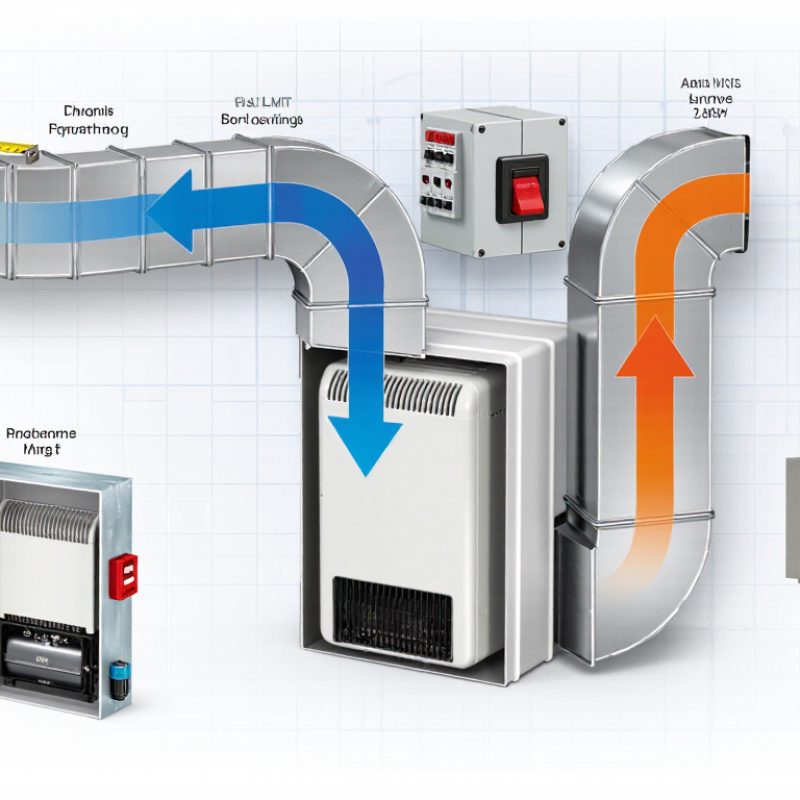
Safety deserves careful attention. Reliable systems use airflow proving switches, high-limit controls, proper grounding, and correctly rated breakers. The control method should also match the HVAC system, whether it uses a thermostat, building automation platform, or staged heating sequence. A neat specification sheet can still mislead when site conditions differ. That is worth remembering. A qualified HVAC professional should verify wiring, pressure drop, and commissioning results before operation. This guide explains how to compare duct heater types, size heating output, evaluate controls, and avoid common selection errors. The goal is practical performance: steady discharge air, reasonable energy use, quiet operation, and safe service access throughout the equipment’s working life.
How to Choose the Right Duct Heater for Your HVAC System?

Define the Role of a Duct Heater in an HVAC System

How to Choose the Right Duct Heater for Your HVAC System?

A duct heater is a controlled heat source installed inside an air-distribution system. It raises supply-air temperature after the air-handling unit, often near a terminal box or branch duct. Its role may include supplemental heating, zone reheat, or freeze protection. In variable-air-volume systems, reheat can prevent cold drafts when airflow decreases. A duct heater does not replace the air handler, ventilation system, or building controls. ASHRAE’s HVAC Systems and Equipment Handbook emphasizes matching heat output with airflow, temperature rise, controls, and safety limits.

Scale matters. The International Energy Agency’s 2023 Buildings report states that building operations consume about 30% of global final energy. The U.S. Energy Information Administration’s 2015 Residential Energy Consumption Survey found space heating represented about 42% of household energy use. These figures are not duct-heater measurements, but they show why unnecessary heating deserves attention. Small errors accumulate. A heater running with weak airflow can overheat, trip protection devices, or waste electricity.

Choose the heater from measured airflow and required temperature rise, not duct size alone. Then verify voltage, available capacity, pressure drop, and control compatibility. Electric models need airflow proving, high-limit protection, and correctly staged elements. Hydronic designs require valve control and coil freeze protection. Oversizing seems safe, but it can create unstable room temperatures and poor efficiency. A field check may expose assumptions that drawings missed. The imperfect part is real: occupancy, door opening, and weather rarely follow the design day.

Assess Heating Requirements and System Compatibility

Choosing a duct heater begins with the building’s actual heating load, not the duct size alone.

ASHRAE Handbook—Fundamentals recommends room-by-room load calculations using outdoor design temperature, insulation, window area, and air infiltration. The U.S. Energy Information Administration’s 2020 Residential Energy Consumption Survey found that space heating represented about 42% of household energy use. That figure shows why oversizing deserves caution.

Measure airflow before selecting heater capacity. A technician should record supply temperature, return temperature, airflow, and available static pressure. The heater must match the system’s voltage, phase, control signal, duct dimensions, and airflow range. Electric elements installed in a narrow duct can create excessive heat concentration. That is a serious compatibility issue.

Duct condition matters too. The U.S. Department of Energy reports that ducts in unconditioned areas can lose 20% to 30% of delivered energy. Seal leaks and inspect insulation before increasing heater output. A high-limit switch, airflow proving control, and staged heating can improve protection and comfort. Field measurements often disagree with drawings. That is normal. A calculation may look precise, yet missing infiltration or blocked filters can change the result. Leave realistic adjustment space, and verify performance after installation.

Compare Duct Heater Types, Sizes, and Installation Methods

Choosing a duct heater starts with the heat source. Electric resistance heaters suit small or medium air-handling systems with limited plant space. Hydronic coils can reduce electrical demand when hot water already exists. Gas-fired duct heaters provide high output, but they need combustion air, venting, and stricter clearances. The best type depends on energy prices, controls, maintenance, and available services.

Size the heater from airflow and required temperature rise, not duct width alone. A practical estimate uses Q = 1.08 × CFM × ΔT for sensible heating. For example, 2,000 CFM needing a 30°F rise requires about 64,800 Btu/h, or 19 kW of electric input. Add staged control when loads vary. Oversizing causes short cycling and uncomfortable discharge air. It also wastes money. I have seen selections fail because design airflow was treated as guaranteed airflow.

Installation quality matters as much as the nameplate rating. Place the heater where airflow remains uniform, with enough straight duct to protect heating elements. Include airflow proving, high-temperature cutouts, access panels, and coordinated controls. NFPA 90A addresses air-distribution fire protection, while ASHRAE’s Handbook guidance supports proper coil selection and service access. The U.S. Department of Energy reports that poorly sealed or insulated ducts can lose roughly 20% to 30% of delivered heating and cooling energy. Seal nearby joints and insulate ducts in unconditioned spaces. A final airflow test is worth the effort, although many projects skip it.

How to Choose the Right Duct Heater for Your HVAC System?

Required heating capacity by airflow for a 10°C air temperature rise

Electric Duct Heaters

Compact and easy to control, electric heaters are suitable where electrical capacity is available. Select the kW rating above the calculated load and verify airflow, staged control, over-temperature protection, and service clearances.

Hydronic Heating Coils

Hydronic coils use hot-water flow from a boiler or heat pump. Coil selection depends on airflow, entering-water temperature, water flow rate, face velocity, pressure drop, and available installation space.

Installation Methods

Common arrangements include in-duct installation, downstream of an air-handling unit, or terminal reheat. Install the heater in a straight duct section with uniform airflow and follow the applicable safety and access requirements.

The chart uses Q = ρ × cp × airflow × temperature rise. It assumes air density of 1.2 kg/m³, air specific heat of 1.005 kJ/kg·K, and a 10°C temperature rise. Actual selection should also consider heat loss, altitude, humidity, voltage, airflow proving, pressure drop, and local code requirements.

Check Safety Features, Energy Use, and Control Options

Choosing the right duct heater starts with safety, not wattage. Select a unit with independent high-limit cutouts, airflow proving, thermal fuses, and grounded metal construction. These features help prevent overheating when filters clog or fans fail. ASHRAE guidance emphasizes coordinated airflow, temperature control, and equipment protection in HVAC design. I have seen undersized airflow create hot spots near heater elements. That mistake is easy to miss during a quick installation check.

Energy use deserves close attention. The U.S. Department of Energy reports that poorly sealed ducts can lose 20% to 30% of delivered heating energy in some homes. A powerful heater cannot repair leaky distribution. Check the heater’s kilowatt rating against measured airflow, voltage, and heat-loss calculations. Electric resistance heating converts electricity directly into heat, but operating costs can still rise quickly during long winter cycles. The calculation is simple. The assumptions are not.

Tips: Ask for staged or modulating control when the load changes often. A proportional controller can reduce temperature swings and unnecessary cycling. Confirm sensor placement near the occupied zone, not beside the heater outlet. Review fault alarms, manual reset access, and commissioning records with a qualified technician. The International Energy Agency notes that cooling and heating demand continues to grow worldwide, making controls increasingly important. I would also recheck the design after installation; real ducts rarely behave exactly like drawings.

How to Choose the Right Duct Heater for Your HVAC System? - Check Safety Features, Energy Use, and Control Options

Duct Heater Type Typical Application Energy Characteristics Key Safety Features Control Options Main Selection Check
Electric Resistance Supplemental heat, reheat coils, packaged air-handling units, and small or medium commercial zones Converts nearly all electrical input into heat at the point of use; operating cost depends mainly on wattage, runtime, and electricity rates Airflow proving switch, high-temperature limit, automatic reset limit, manual-reset limit, grounded metal casing, and staged elements On/off thermostat, staged contactors, SCR or electronic modulation, BACnet or other building-management-system interface Confirm voltage, phase, amperage, duct airflow, heating capacity, minimum airflow, and available electrical service
Hydronic Hot-Water Coil Central HVAC systems with an existing boiler or hot-water heating loop Heating efficiency depends on boiler efficiency, water temperature, pump energy, pipe insulation, and control strategy Freeze protection, low-temperature alarm, coil access for inspection, air venting, isolation valves, and condensate protection where applicable Two-way or three-way valve, modulating valve actuator, supply-air sensor, outdoor-air reset, and building-management-system control Verify water flow, entering-water temperature, pressure drop, coil face area, freeze protection, and boiler capacity
Steam Coil Large commercial or industrial air-handling systems with an available steam distribution system Can deliver high heat output in a compact coil; total energy use is affected by boiler performance, steam pressure, and condensate return Steam trap, vacuum breaker, pressure control, condensate drainage, freeze protection, and appropriate relief and isolation devices Modulating control valve, discharge-air temperature sensor, pressure regulator, and central supervisory control Check steam pressure, condensate removal, coil orientation, valve sizing, freeze risk, and maintenance access
Gas-Fired Duct Heater High-volume commercial or industrial ventilation systems where gas service and combustion-air provisions are available Combustion efficiency varies by equipment design; requires combustion-air supply, venting, and regular burner maintenance Flame safeguard, gas pressure supervision, blocked-vent or airflow protection, high-limit control, automatic shutoff valves, and flame-failure lockout Single-stage, two-stage, or modulating gas control, discharge-air sensor, room thermostat, and building-management-system interface Confirm fuel type, input capacity, ventilation airflow, clearances, venting, combustion air, local code compliance, and service access
Heat-Pump or Refrigerant Reheat Energy-conscious systems that can recover or move heat instead of using resistance heat as the primary source Can use less electrical energy than resistance heating under suitable operating conditions; performance varies with outdoor temperature and system design High- and low-pressure protection, refrigerant monitoring, compressor protection, airflow proving, temperature limits, and condensate management Variable-capacity compressor, electronic expansion valve, supply-air sensor, room thermostat, and integrated system controller Evaluate heating capacity at design conditions, defrost behavior, refrigerant circuit compatibility, airflow, and backup heat requirements

Important Sizing and Control Criteria

Parameter Recommended Practice Why It Matters
Heating Load Select capacity from a calculated design heat load rather than using a general rule of thumb Oversizing can increase cycling and reduce comfort, while undersizing may prevent the system from reaching the target temperature
Airflow Match the heater to the system airflow and verify the manufacturer’s minimum airflow requirement Insufficient airflow can cause overheating, nuisance trips, equipment damage, or unsafe operation
Temperature Rise Check the required entering-air and leaving-air temperatures at the design airflow Temperature rise is directly related to heating capacity and airflow and helps prevent excessive discharge temperatures
Safety Interlocks Use airflow proving, high-limit protection, and automatic shutdown controls appropriate to the heater type Interlocks help stop heating when airflow is lost or temperatures exceed safe limits
Control Modulation Use staged or modulating control when the system has varying loads or requires stable discharge-air temperature Better modulation can reduce temperature swings, short cycling, and unnecessary energy use
Maintenance Access Provide access for inspection, cleaning, electrical checks, coil service, burner service, and safety-control testing Accessible equipment is easier to maintain safely and is more likely to operate efficiently over its service life

Note: Actual capacity, efficiency, electrical requirements, clearances, controls, and safety devices must be verified from the equipment submittal and applicable local HVAC, electrical, fuel-gas, and building codes.

Verify Codes, Maintenance Needs, and Total Operating Costs

Choosing a duct heater starts with safety codes, not heating capacity. Confirm local electrical, mechanical, and fire requirements before comparing models. A qualified HVAC professional should verify voltage, amperage, airflow, clearances, grounding, and emergency shutoff access. Permit rules may also apply. Keep the installation documents near the air-handling unit. Inspectors and future technicians need clear records.

Maintenance needs affect real performance. Ask whether the heater allows safe access to elements, sensors, terminals, and filters. A clogged filter can reduce airflow, raise element temperature, and trigger repeated safety cutouts. Schedule inspections before the heating season. Check wiring for heat damage, test controls, and clean dust from accessible components. Small faults can become expensive failures. I have seen maintenance plans overlook airflow testing, which is a costly gap.

Total operating cost includes more than the purchase price. Estimate energy use from heater kilowatts, expected runtime, local electricity rates, and seasonal demand. Better insulation and accurate temperature controls may reduce runtime significantly. Oversizing is not always efficient. It can increase cycling and create uneven temperatures. Compare installation labor, replacement parts, inspection time, and expected service life. A simple spreadsheet helps, but assumptions require review. Weather patterns change. Occupancy changes. Recheck the estimate after the first season and compare actual meter data with the original forecast.

Copyright 2025 Fluidra S.A. | Created by BCM Marketing Agencia Privacy Policy Legal note | Cookie policy |

Technical cookies are strictly necessary for our website to work and you can navigate through it. These types of cookies are those that, for example, allow us to identify you, give you access to certain restricted parts of the page if necessary, or remember different options or services already selected by you, such as your privacy preferences. Therefore, they are activated by default, your authorization not being necessary in this regard. Through the configuration of your browser, you can block or alert the presence of this type of cookies, although such blocking will affect the proper functioning of the different functionalities of our website.


The analysis cookies allow us to study the navigation of the users of our website in general (for example, which sections of the page are the most visited, which services are used most and if they work correctly, etc.). From the statistical information on navigation on our website, we can improve both the operation of the page itself and the different services it offers. Therefore, these cookies do not have an advertising purpose, but only serve to make our website work better, adapting to our users in general. By activating them you will contribute to this continuous improvement. You can enable or disable these cookies by checking the corresponding box, being disabled by default.


Functionality cookies allow us to remember your preferences, to personalize certain characteristics and general options of our website, every time you access it (for example, the language in which the information is presented to you, the sections marked as favorites, your browser type, etc.) Therefore, this type of cookies does not have an advertising purpose, but by activating them you will improve the functionality of the website (for example, adapting to your type of browser) and the customization of it based on your preferences (for example, by presenting the information in the language that you have chosen in previous occasions), which will contribute to the ease, usability and comfort of our page during your navigation. You can enable or disable these cookies by checking the corresponding box, being disabled by default.


Advertising cookies allow us to manage the advertising spaces included in our website based on criteria such as the content shown or the frequency in which the ads are displayed. For example, if you have been shown the same ad several times on our website, and you have not shown a personal interest by clicking on it, it will not appear again. In summary, by activating this type of cookies, the advertising shown on our website will be more useful and diverse, and less repetitive. You can enable or disable these cookies by checking the corresponding box, being disabled by default.


Behavioral advertising cookies allow us to obtain information based on the observation of your browsing habits and behaviors on the web, in order to show you advertising content that best suits your personal tastes and interests. To understand it in a very simple way, we will give you a fictitious example: if your last searches on the web were related to suspense literature, we would show you advertising about suspense books. Therefore, activating this type of cookies, the advertising that we show you on our website will not be generic, but will be oriented to your searches, tastes and interests, therefore adjusting exclusively to you. You can enable or disable these cookies by checking the corresponding box, being disabled by default.
To understand it in a very simple way, we will give you a fictitious example: if your last searches on the web were related to suspense literature, we would show you advertising about suspense books. Therefore, activating this type of cookies, the advertising that we show you on our website will not be generic, but will be oriented to your searches, tastes and interests, therefore adjusting exclusively to you. You can enable or disable these cookies by checking the corresponding box, being disabled by default.

SAVE

We use our own and third-party cookies to ensure the proper functioning of the website and to analyse our services, improve your experience on our website and show you advertisements related to your interests according to profiling based on your browsing habits (e.g. websites visited). You can accept all cookies by clicking "ACCEPT" or set or reject them by clicking here. If you would like to know more about the use of cookies, please see our COOKIE POLICY.


ACCEPT ALL
Reject no essentials


