
How to Choose a Conveyor Drum Pulley Manufacturer?
FLUID HANDLING EXPERTS

Blog, all our news

How to Choose a Conveyor Drum Pulley Manufacturer?

Selecting a Conveyor Drum Pulley Manufacturer is not just a matter of comparing prices. The pulley must match the belt width, load, speed, operating environment, and maintenance plan. A small mismatch can show up later as belt mistracking, excess vibration, or premature bearing wear. That is expensive—and often avoidable.

“Ask how the pulley will perform in your operating conditions, not only how it looks on a quotation,” says fictional conveyor engineering specialist Daniel Mercer. This is a practical editorial viewpoint, not a published quotation. A credible supplier should be able to discuss shell thickness, shaft design, lagging, balance, and bearing arrangements in plain terms. They should also explain how those choices relate to your duty cycle. Specific answers matter.

This guide outlines how to assess manufacturing experience, engineering support, quality controls, customization, and after-sales service. Look for evidence: drawings reviewed against your specifications, inspection records, and clear material details. A polished brochure is not enough. Neither is the lowest bid. Still, even careful checks cannot predict every site condition; access constraints, dust, moisture, and uneven loading may change what works in practice. Ask questions before ordering, and treat vague promises as a reason to pause.
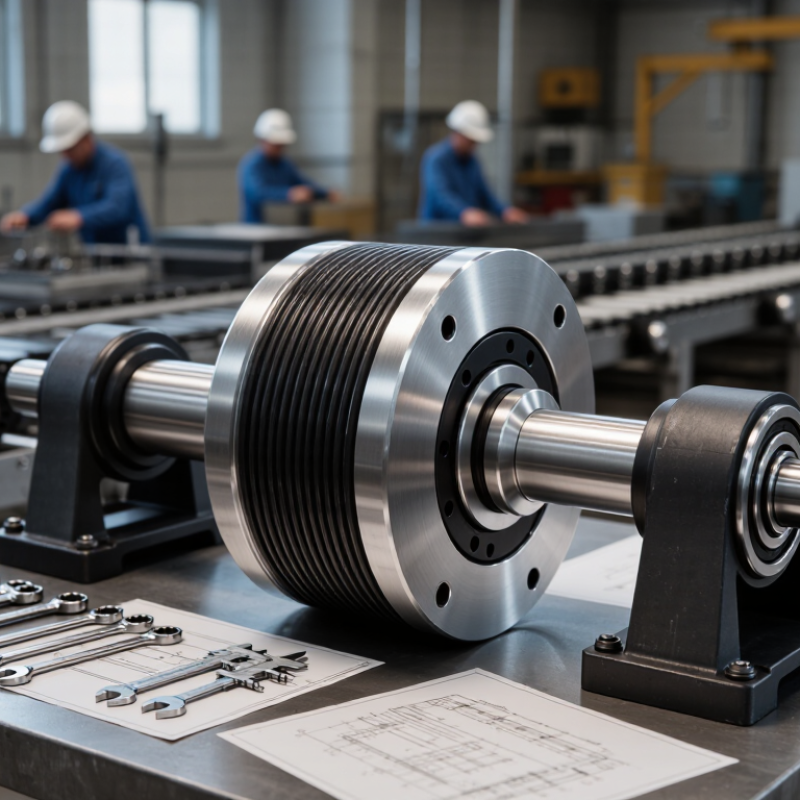
How to Choose a Conveyor Drum Pulley Manufacturer?

Define Your Conveyor Drum Pulley Requirements

How to Choose a Conveyor Drum Pulley Manufacturer?

Define Your Conveyor Drum Pulley Requirements

Start with operating facts, not catalog photos. Record belt width, speed, material flow, lump size, moisture, and daily running hours. Calculate maximum belt tension, pulley diameter, shaft load, and required belt wrap. CEMA’s Belt Conveyors for Bulk Materials, Seventh Edition, treats these values as core design inputs. ISO 5048 also uses belt tension and resistance calculations for conveyor power selection.

Be specific about the environment. A wet aggregate line may need sealed bearings and corrosion-resistant surfaces. A mining conveyor may require thicker shells, stronger shafts, and replaceable lagging. The pulley must match the belt construction, not only its width. Small mismatches can create tracking problems. I have seen drawings omit startup torque, then reveal the weakness during commissioning.

Market data supports careful planning. Grand View Research valued the global conveyor belt market at about USD 4.2 billion in 2022. It projects a 4.9% compound annual growth rate from 2023 to 2030. Growing systems often face higher loads later. Ask the manufacturer for shell thickness calculations, finite element analysis, weld procedures, balance records, and inspection reports. Request test evidence for dynamic loads, not just static dimensions. Also confirm tolerances, lagging hardness, shaft material, and maintenance access. “Standard duty” is not a complete requirement. Neither is “heavy duty.”

Identify the Pulley Design and Specifications You Need

When choosing a conveyor drum pulley manufacturer, define the pulley design before comparing suppliers. Start with the conveyor belt width, belt speed, material load, and operating hours. A small aggregate line needs different construction from a heavy mining conveyor. Confirm the required pulley diameter, face width, shaft diameter, and bearing arrangement. These details affect belt tracking, torque transfer, and service life.

Specify the shell thickness and material, then review the lagging type and thickness. Ceramic, rubber, and bare steel surfaces offer different grip and wear performance. Include the drive pulley position, bend pulley function, and expected belt tension. Ask for shaft calculations, weld procedures, balancing records, and inspection documents. Reliable manufacturers should explain their design choices clearly, not only provide a low price. In practice, overlooked cleaning conditions can damage a well-designed pulley. That mistake is easy to make.

Tips: Provide a simple conveyor layout and operating data. Mention dust, moisture, temperature, and material size. Check whether the pulley fits existing bearings and frames. Request dimensional drawings before production. A second review often catches an incorrect shaft length or clearance. Keep some design flexibility; field measurements are not always perfect.

Evaluate Manufacturer Expertise and Production Capabilities

A conveyor drum pulley manufacturer should understand the conditions your pulley will face, not just its dimensions. Ask about experience with similar belt widths, loads, speeds, and operating environments. A supplier familiar with abrasive material or frequent starts and stops can explain how those demands affect shell thickness, shaft design, and bearing selection. Specific examples are more useful than broad claims.

Inspect production capabilities closely. Can the facility machine shafts to the required tolerances, control weld quality, and balance completed pulleys? Ask how each step is checked and whether inspection records can be provided. Review equipment capacity against your actual pulley size; a large workshop does not guarantee consistent results. Confirm realistic lead times, too. I have seen delivery estimates change when special coatings or outsourced machining were involved.

Tips: Request a sample inspection report and a clear production schedule. Ask what happens if a measurement falls outside tolerance. Compare answers, not just prices. If explanations feel vague, pause and ask again. Some details may seem minor, but a pulley that runs unevenly can cause belt wear and maintenance headaches.

Check Quality Standards, Materials, and Testing Processes

How to Choose a Conveyor Drum Pulley Manufacturer?

Check Quality Standards, Materials, and Testing Processes

A dependable manufacturer should explain how each pulley is specified, built, and inspected. Ask for documented quality controls, material certificates, and inspection records—not just a general assurance of “high quality.” CEMA’s Belt Conveyors for Bulk Materials handbook provides industry guidance on conveyor design and component selection. For steel, ASTM A36 specifies a minimum yield strength of 36 ksi for applicable plate thicknesses. That figure is a useful reference, not proof that a pulley suits every load. Match the material, shaft, welds, and lagging to your belt width, speed, and operating environment.

Look closely at the test plan. It may include dimensional checks, weld inspection, balance testing, and runout measurement; ask which tests apply to your pulley and what tolerances are recorded. Request traceability from raw material to finished assembly. ISO 9001 certification can indicate a quality-management system, but it does not replace product-specific inspection evidence. A certificate alone is not enough. I would still ask how defects are recorded and corrected—an area that can be overlooked.

Tips: Share the duty cycle, belt tension, and site conditions before requesting a quote. Ask for sample inspection reports and the acceptance criteria. Compare the actual evidence, not just the paperwork.

Compare Support, Delivery, and Total Cost Before Selecting a Manufacturer

How to Choose a Conveyor Drum Pulley Manufacturer?

A drum pulley must suit the belt, load, and operating environment. But product specifications are only part of the decision. Ask how the manufacturer handles technical questions before and after delivery. Can its team review pulley dimensions, lagging, shaft details, and expected belt tension? Clear answers help prevent costly fit-up problems. Vague promises do not.

Compare delivery estimates against your maintenance schedule. Ask whether the quoted date covers production, inspection, and shipping, and how delays are communicated. Then compare total cost, not just the purchase price. Include freight, installation adjustments, expected maintenance, and any required spare parts. A low quote can look less attractive when the pulley arrives late or needs rework. Even a careful comparison has limits; actual service life depends on site conditions and maintenance.

Tips: Request a written scope, delivery window, and warranty terms. Share operating details, including belt speed and material conditions. Check whether support is available during installation. Keep the questions specific. A little extra checking now may save downtime later.

Copyright 2025 Fluidra S.A. | Created by BCM Marketing Agencia Privacy Policy Legal note | Cookie policy |

Technical cookies are strictly necessary for our website to work and you can navigate through it. These types of cookies are those that, for example, allow us to identify you, give you access to certain restricted parts of the page if necessary, or remember different options or services already selected by you, such as your privacy preferences. Therefore, they are activated by default, your authorization not being necessary in this regard. Through the configuration of your browser, you can block or alert the presence of this type of cookies, although such blocking will affect the proper functioning of the different functionalities of our website.


The analysis cookies allow us to study the navigation of the users of our website in general (for example, which sections of the page are the most visited, which services are used most and if they work correctly, etc.). From the statistical information on navigation on our website, we can improve both the operation of the page itself and the different services it offers. Therefore, these cookies do not have an advertising purpose, but only serve to make our website work better, adapting to our users in general. By activating them you will contribute to this continuous improvement. You can enable or disable these cookies by checking the corresponding box, being disabled by default.


Functionality cookies allow us to remember your preferences, to personalize certain characteristics and general options of our website, every time you access it (for example, the language in which the information is presented to you, the sections marked as favorites, your browser type, etc.) Therefore, this type of cookies does not have an advertising purpose, but by activating them you will improve the functionality of the website (for example, adapting to your type of browser) and the customization of it based on your preferences (for example, by presenting the information in the language that you have chosen in previous occasions), which will contribute to the ease, usability and comfort of our page during your navigation. You can enable or disable these cookies by checking the corresponding box, being disabled by default.


Advertising cookies allow us to manage the advertising spaces included in our website based on criteria such as the content shown or the frequency in which the ads are displayed. For example, if you have been shown the same ad several times on our website, and you have not shown a personal interest by clicking on it, it will not appear again. In summary, by activating this type of cookies, the advertising shown on our website will be more useful and diverse, and less repetitive. You can enable or disable these cookies by checking the corresponding box, being disabled by default.


Behavioral advertising cookies allow us to obtain information based on the observation of your browsing habits and behaviors on the web, in order to show you advertising content that best suits your personal tastes and interests. To understand it in a very simple way, we will give you a fictitious example: if your last searches on the web were related to suspense literature, we would show you advertising about suspense books. Therefore, activating this type of cookies, the advertising that we show you on our website will not be generic, but will be oriented to your searches, tastes and interests, therefore adjusting exclusively to you. You can enable or disable these cookies by checking the corresponding box, being disabled by default.
To understand it in a very simple way, we will give you a fictitious example: if your last searches on the web were related to suspense literature, we would show you advertising about suspense books. Therefore, activating this type of cookies, the advertising that we show you on our website will not be generic, but will be oriented to your searches, tastes and interests, therefore adjusting exclusively to you. You can enable or disable these cookies by checking the corresponding box, being disabled by default.

SAVE

We use our own and third-party cookies to ensure the proper functioning of the website and to analyse our services, improve your experience on our website and show you advertisements related to your interests according to profiling based on your browsing habits (e.g. websites visited). You can accept all cookies by clicking "ACCEPT" or set or reject them by clicking here. If you would like to know more about the use of cookies, please see our COOKIE POLICY.


ACCEPT ALL
Reject no essentials


