
How to Choose the Right Belt Conveyor for Your Business Needs?
FLUID HANDLING EXPERTS

Blog, all our news

How to Choose the Right Belt Conveyor for Your Business Needs?

Choosing the right Belt Conveyor is crucial for any business looking to enhance efficiency. A belt conveyor plays a vital role in transporting materials quickly and effectively. Understanding different types of conveyors can prevent costly mistakes in your operations.

Evaluating your specific needs is essential. Consider the materials you will move and the distance involved. Weight, size, and surface properties are factors to review. Furthermore, the design and layout of your facility may impact your choice. Many businesses overlook these details, leading to inefficient systems.

Consulting with experts can provide valuable insights. They can help identify the best options for your requirements. Remember, investing in the right belt conveyor is not merely about cost. It's about optimizing performance and maintaining reliability in your operations. Investing time in research will pay off.
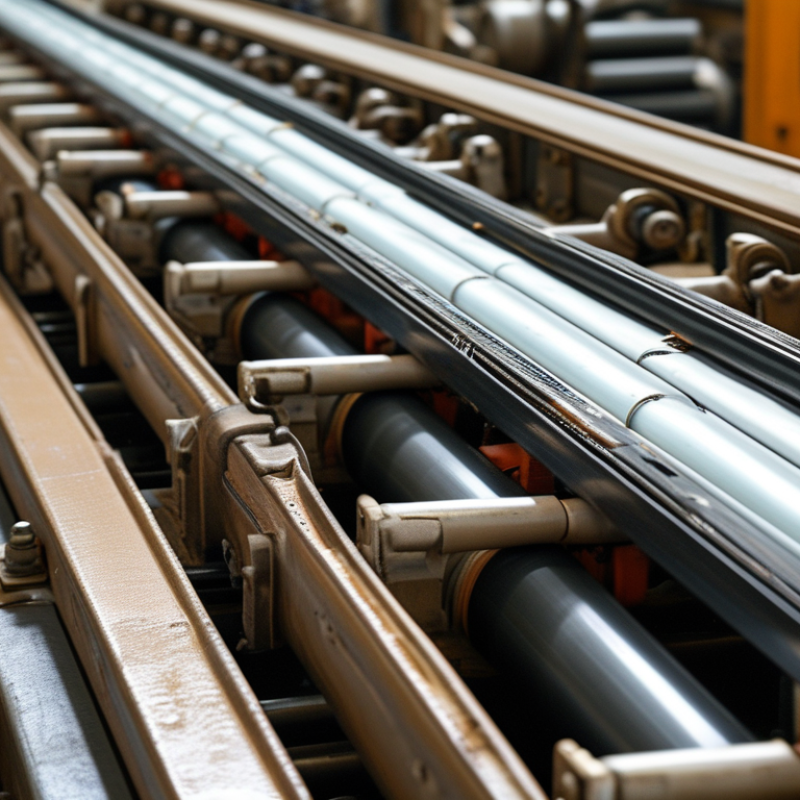
How to Choose the Right Belt Conveyor for Your Business Needs?

Understanding Your Business Requirements for a Belt Conveyor

When selecting a belt conveyor for your business, understanding your unique requirements is key. Start by assessing the volume of materials you handle daily. Consider the types of products that will be transported. Different materials require different conveyor types. For instance, heavy items may need a sturdier design.

**Tip:** Evaluate the dimensions of your workspace. The available space will influence the conveyor's length and width. If a conveyor is too wide, it may obstruct movement.

Think about the operational environment as well. Will the conveyor operate in a humid area? Or is it subject to temperature changes? These factors will determine the materials used in the conveyor's construction.

**Tip:** Always measure the transition points. This helps in avoiding any unexpected issues during installation. Also, consider future growth. Will your business expand? Choose a model that can adapt to increased productivity.

By reflecting on these aspects, you can make a more informed decision. Each choice influences efficiency and overall productivity.

Choosing the Right Belt Conveyor: Key Factors

This chart illustrates the key factors to consider when selecting a belt conveyor for your business. Each dimension reflects important specifications that meet different operational needs.

Assessing Material Characteristics and Handling Needs

Choosing the right belt conveyor starts with a thorough understanding of your material's characteristics. Different materials require specific handling techniques. For instance, bulk materials like gravel need robust structures, while fragile items like glass might need a gentler approach. Consider factors like weight, size, and abrasiveness when evaluating your choices. Each of these factors can significantly impact the efficiency of your conveyor system.

Next, assess your handling needs. Will the conveyor be transporting items over long distances or short runs? What incline or decline angles will it encounter? Each scenario demands a unique design. For example, a steep incline would require a belt with added grip. Think about the load capacity too. If you frequently overload the conveyor, it can lead to premature wear. Reflect on how often you plan to change the types of materials being handled. Flexibility in design can prove invaluable in the long run.

Evaluating Different Types of Belt Conveyors Available

When selecting a belt conveyor, the type you choose greatly impacts efficiency. Numerous types exist, each suited to different applications. For instance, modular belt conveyors are ideal for shifting items smoothly. They excel in handling diverse product shapes. That versatility allows them to navigate complex layouts easily.

Another option is power belt conveyors. They use a continuous band for moving materials. These are essential in environments where heavy loads are common. Their robust design ensures reliability, but they can be costly. Consider your budget carefully. Weighing costs against operational needs is crucial.

Finally, incline belt conveyors facilitate the vertical transportation of items. However, they may require careful angle selection for effective operation. The choices might seem overwhelming, reflecting varying demands. Some businesses struggle with decision-making. It's important to reflect on past experiences and equipment performance. Consider reaching out to industry experts for insights on the best options.

Determining Conveyor Length, Width, and Speed Specifications

Choosing the right belt conveyor involves understanding your specific business needs. A key factor is determining the conveyor's length, width, and speed. Each of these specifications plays a crucial role in efficiency and productivity.

The length of the conveyor should align with the layout of your facility. Consider the distance materials must travel. An overly long conveyor can cause unnecessary delays, while a short conveyor may not meet your needs.

Width is equally important. It must accommodate the size of the products being transported. If the conveyor is too narrow, materials can jam or fall off. Conversely, a belt that is too wide may lead to wasted space and added costs.

Speed specifications are vital for meeting production targets. A conveyor that moves too quickly can lead to mishaps. On the other hand, if it moves too slowly, productivity suffers. Carefully assess your workflow to determine the optimal speed.

Tip: Always prototype with your products. Monitor how they perform on different conveyor setups. This can provide valuable insights into adjustments needed.

Tip: Consult industry guidelines when setting your conveyor's specifications. Adhering to these can enhance safety and effectiveness in operation.

Considering Maintenance, Cost, and Scalability Options

Choosing the right belt conveyor requires careful consideration of various factors. Maintenance is crucial. An easily accessible conveyor will reduce downtime. Regular inspections and simple adjustments can enhance longevity. Over time, wear and tear are inevitable. Planning for quick repairs can mitigate delays in production.

Cost is another significant aspect. The initial investment matters, but it’s not the only consideration. A higher upfront cost may deliver better efficiency and lower operational costs in the long run. Think about energy consumption and replacement parts. These ongoing expenses can impact your budget significantly.

Scalability is vital for a growing business. A conveyor that adapts to changing demands can save you from costly upgrades. Ensure that the chosen system can handle increased loads. Also, assess whether it can integrate with newer technologies. Flexibility in your conveyor choice allows room for future growth.

How to Choose the Right Belt Conveyor for Your Business Needs?

Conveyor Type Maintenance Frequency Initial Cost ($) Scalability Options
Modular Belt Conveyor Monthly 5,000 High - Easy to add modules
Roller Bed Conveyor Quarterly 4,000 Medium - Can extend length
Flat Belt Conveyor Bi-annual 3,500 Low - Limited modifications
Bucket Conveyor Monthly 6,500 Medium - Can modify bucket size
Wire Mesh Belt Conveyor Quarterly 7,000 High - Modular sections
Copyright 2025 Fluidra S.A. | Created by BCM Marketing Agencia Privacy Policy Legal note | Cookie policy |

Technical cookies are strictly necessary for our website to work and you can navigate through it. These types of cookies are those that, for example, allow us to identify you, give you access to certain restricted parts of the page if necessary, or remember different options or services already selected by you, such as your privacy preferences. Therefore, they are activated by default, your authorization not being necessary in this regard. Through the configuration of your browser, you can block or alert the presence of this type of cookies, although such blocking will affect the proper functioning of the different functionalities of our website.


The analysis cookies allow us to study the navigation of the users of our website in general (for example, which sections of the page are the most visited, which services are used most and if they work correctly, etc.). From the statistical information on navigation on our website, we can improve both the operation of the page itself and the different services it offers. Therefore, these cookies do not have an advertising purpose, but only serve to make our website work better, adapting to our users in general. By activating them you will contribute to this continuous improvement. You can enable or disable these cookies by checking the corresponding box, being disabled by default.


Functionality cookies allow us to remember your preferences, to personalize certain characteristics and general options of our website, every time you access it (for example, the language in which the information is presented to you, the sections marked as favorites, your browser type, etc.) Therefore, this type of cookies does not have an advertising purpose, but by activating them you will improve the functionality of the website (for example, adapting to your type of browser) and the customization of it based on your preferences (for example, by presenting the information in the language that you have chosen in previous occasions), which will contribute to the ease, usability and comfort of our page during your navigation. You can enable or disable these cookies by checking the corresponding box, being disabled by default.


Advertising cookies allow us to manage the advertising spaces included in our website based on criteria such as the content shown or the frequency in which the ads are displayed. For example, if you have been shown the same ad several times on our website, and you have not shown a personal interest by clicking on it, it will not appear again. In summary, by activating this type of cookies, the advertising shown on our website will be more useful and diverse, and less repetitive. You can enable or disable these cookies by checking the corresponding box, being disabled by default.


Behavioral advertising cookies allow us to obtain information based on the observation of your browsing habits and behaviors on the web, in order to show you advertising content that best suits your personal tastes and interests. To understand it in a very simple way, we will give you a fictitious example: if your last searches on the web were related to suspense literature, we would show you advertising about suspense books. Therefore, activating this type of cookies, the advertising that we show you on our website will not be generic, but will be oriented to your searches, tastes and interests, therefore adjusting exclusively to you. You can enable or disable these cookies by checking the corresponding box, being disabled by default.
To understand it in a very simple way, we will give you a fictitious example: if your last searches on the web were related to suspense literature, we would show you advertising about suspense books. Therefore, activating this type of cookies, the advertising that we show you on our website will not be generic, but will be oriented to your searches, tastes and interests, therefore adjusting exclusively to you. You can enable or disable these cookies by checking the corresponding box, being disabled by default.

SAVE

We use our own and third-party cookies to ensure the proper functioning of the website and to analyse our services, improve your experience on our website and show you advertisements related to your interests according to profiling based on your browsing habits (e.g. websites visited). You can accept all cookies by clicking "ACCEPT" or set or reject them by clicking here. If you would like to know more about the use of cookies, please see our COOKIE POLICY.


ACCEPT ALL
Reject no essentials


