
How to Choose the Best Vacuum Packing Machine?
FLUID HANDLING EXPERTS

Blog, all our news

How to Choose the Best Vacuum Packing Machine?

Choosing the right Vacuum Packing Machine starts with the product, not the most impressive pump rating. A small café sealing soups has different needs from a workshop packing dry components. Think about daily volume, bag dimensions, liquid content, and available counter space. Then compare chamber and external models against those details.

Food-engineering expert Dr. Juming Tang’s research informs an important principle. Paraphrased for this guide: “Match the process to the product, and verify the result.” This is a paraphrase, not a verbatim quotation. It captures why vacuum level alone cannot determine a machine’s suitability. A machine may remove air effectively yet struggle with moist foods, repeated production cycles, or the bag materials you use. Check sealing consistency, cycle time, cleaning access, and replacement-part availability. Ask for a demonstration with your own product, if possible. Watch the seal. Inspect the finished package.

This guide explains how to weigh those practical factors before buying. It also covers chamber size, pump performance, controls, maintenance, and total operating cost. A compact unit may suit occasional batches. But a busy line needs reliable output and clear service support. The trade-offs are not always neat. A cheaper machine can cost more in downtime; a larger one may occupy space you need. Compare written specifications with real operating needs, and question claims that lack test conditions. A careful choice should fit today’s workflow without ignoring tomorrow’s demand.
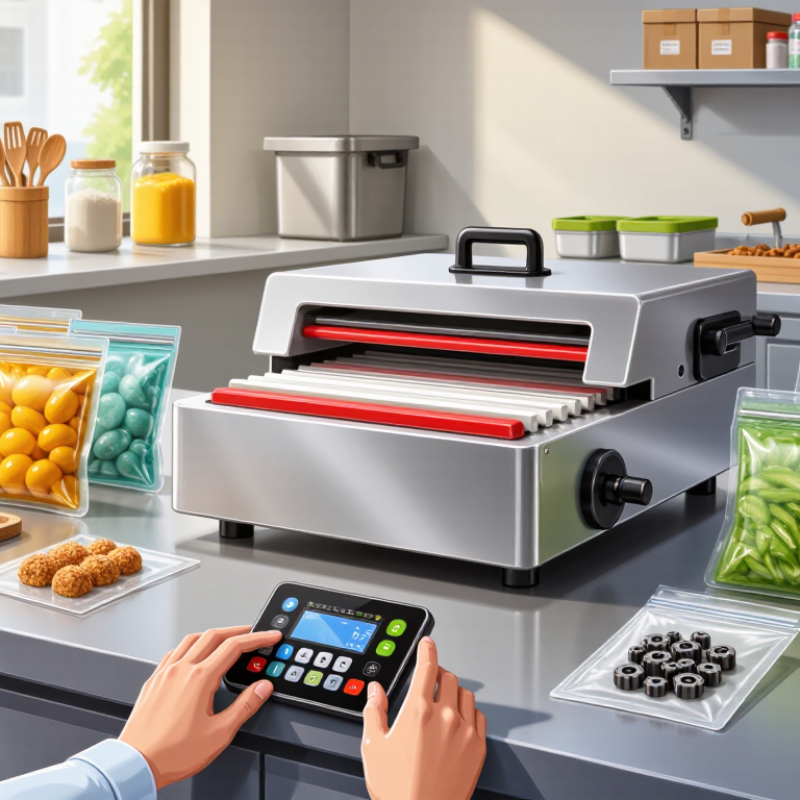
How to Choose the Best Vacuum Packing Machine?

Identify Your Packaging Needs and Intended Use

How to Choose the Best Vacuum Packing Machine?

Identify Your Packaging Needs and Intended Use

Start with the product, not the machine. Are you packing moist fish, dry grains, sharp-edged parts, or occasional leftovers? Each needs different bag materials, seal strength, and chamber space. Measure your largest item and note its weight, moisture, and daily packing volume. A small countertop unit may suit a café’s quiet shifts, but struggle during a busy lunch rush. It happens.

For food operations, plan around storage conditions too. Vacuum sealing can help limit exposure to air, but it does not replace safe refrigeration or handling. The FAO’s 2019 report, The State of Food and Agriculture, estimated that 13.8% of food was lost between harvest and retail. That figure does not mean a vacuum machine prevents all losses; it does show why matching packaging to the product and workflow matters. Think about bag costs, cleaning time, operator training, and whether you need a chamber or external-suction model. The perfect fit is rarely obvious at first. Recheck your assumptions after a trial run.

Tips: Pack a few real products before buying. Test wet and dry items, seal consistency, cycle time, and how easily staff can clean the unit. Keep notes. A practical checklist beats choosing by advertised speed alone.

Compare Vacuum Packing Machine Types

Chamber vacuum packers remove air from the entire chamber, so they handle liquids and moist foods more reliably than external-suction models. A soup pouch can sit flat inside without liquid being pulled into the seal area. These machines work well for frequent batches, but they take up counter space and need compatible chamber pouches. Watch the cycle time, too; a larger pump does not always mean faster daily packing.

External-suction machines draw air through the open end of a textured bag. They are compact and often practical for dry goods, occasional use, or a small kitchen. Thin slices of bread or crisp herbs may crush under strong suction, so adjustable vacuum settings matter. A nozzle-style machine can suit larger bags, though bag positioning takes practice. For steady, high-volume production, conveyor systems can package many items with less manual handling, but they require more floor space and maintenance. It is easy to focus on suction strength and overlook sealing width, replacement parts, and cleaning access. Those small details shape everyday use. I would test a few typical products before choosing; one machine may not suit every bag or texture.

Evaluate Sealing Performance, Capacity, and Compatibility

A vacuum packing machine should produce a consistent seal, not just a strong one. Check seal width, heat control, and how evenly pressure reaches the bag edge. A good seal should stay closed after cooling and gentle handling. Test several bags, including one with a slightly damp or uneven rim. A spec sheet can still mislead. If seals wrinkle, leak, or burn, adjust settings before increasing speed.

Capacity is about pace as much as chamber size. Estimate packs per hour, then compare that figure with your real batch size and operator workflow. A larger unit may seem efficient, yet take too much bench space or require longer setup. Leave room for loading, cleaning, and routine maintenance. Small detail. Consider bag length, product height, and whether repeated cycles cause heat buildup.

Compatibility deserves equal attention. Confirm the machine supports the bag material, thickness, and dimensions you plan to use; not every film seals well at every temperature. For chamber machines, check whether the bag and product fit without blocking the seal bar. External suction models may need textured bags, so include their cost in your calculations. Try a sample run with your actual product. Oil, crumbs, sharp corners, and trapped liquid can change sealing results. Record settings and inspect seals after storage; one successful cycle is not enough.

Assess Ease of Use, Cleaning, and Maintenance

When comparing vacuum packing machines, pay attention to the steps required for an ordinary sealing cycle. Controls should be easy to read, and the lid should close without awkward pressure. A clear indicator can help you tell when sealing is complete. Small details matter. Check whether the machine accepts bags that are easy to position and whether its drip tray can be removed without spilling. A machine with many settings may seem versatile, but extra choices can slow down routine use. Try to picture using it with damp hands and limited counter space.

Cleaning and maintenance affect how often the machine stays ready to use. Look for smooth surfaces, accessible corners, and removable parts that can be washed according to the manual. After sealing foods that release liquid, unplug the unit and let its sealing area cool before wiping it clean. Never immerse electrical components. Inspect the gasket and sealing strip periodically; residue, cracks, or flattening can weaken the seal. Replacement parts and care schedules vary, so check their availability before buying. It is easy to underestimate cleanup. A model that seals slightly faster may be less convenient if its tray is fiddly or its grooves collect crumbs. That trade-off is worth considering.

How to Choose the Best Vacuum Packing Machine? - Assess Ease of Use, Cleaning, and Maintenance

Machine Type Ease of Use Cleaning Requirements Routine Maintenance Best Fit Practical Consideration
External suction Generally straightforward: place the open end of a compatible textured bag in the sealing area and start the cycle. Usually easy to wipe down; keep the sealing strip and surrounding surfaces free of crumbs and liquid. Inspect the sealing strip and gasket for wear or residue; replace parts according to the manual. Home kitchens and occasional or moderate packing. Typically works with textured vacuum bags. Liquids and moist foods can be harder to pack because liquid may be drawn toward the vacuum channel.
Chamber Requires placing the bag inside the chamber and arranging its open edge across the sealing bar; cycle settings may take practice. Wipe the chamber, lid, and sealing area after use, especially when packing liquids or uncooked foods. Check the chamber gasket, oil level on oil-lubricated pumps, and sealing components as directed by the manufacturer. Frequent packing, batch preparation, and foods with liquid content. Can use smooth chamber pouches. The chamber and pump make the machine larger and add cleaning and maintenance tasks.
Handheld vacuum sealer Simple for small tasks; operation depends on the compatible valve bags or containers. Usually minimal; clean the nozzle and any removable food-contact parts after use. Keep the nozzle clear, check seals for residue, and recharge or replace batteries as applicable. Small portions, containers, and quick everyday jobs. Often has less capacity and may not seal ordinary bags; check the system’s bag and container compatibility.
Continuous-duty or commercial unit Can offer repeatable controls for high-volume work, but setup and operating procedures may require training. Needs regular cleaning of food-contact surfaces and any accessible chamber or drip-tray areas. Follow scheduled inspection and service procedures for the pump, seals, filters, and other specified components. Commercial kitchens and other settings with frequent, repeated packing. Higher capacity may come with greater space, power, service, and maintenance requirements.

Comparison is based on common machine designs. Actual cleaning procedures, compatible bags, and service intervals vary by model; follow the machine’s instruction manual.

Balance Purchase Cost with Long-Term Value

How to Choose the Best Vacuum Packing Machine?

Balance Purchase Cost with Long-Term Value

A low purchase price can look appealing, but the machine’s daily costs matter more over time. Compare the price of compatible bags, replacement seals, and routine servicing. If you pack several batches each day, a slow cycle can also add labor costs. In a small kitchen, a bulky machine may take up useful counter space. That matters. A larger model can feel like a safer choice, though that instinct is not always right.

Tips: Estimate your weekly packing volume before comparing models. Ask how often seals and other wear parts may need replacement. Check whether cleaning the chamber is simple enough for your team to do consistently.

For occasional use, a compact machine may offer better value than a high-capacity unit. For steady production, look at cycle time, chamber size, and the availability of service support. These details can affect downtime and operating costs, but estimates vary with use and maintenance. Leave room in your budget for consumables and repairs. I might still choose a cheaper model for a light workload, even if its warranty is shorter; that trade-off deserves a careful second look. Compare the total cost over several years, not just the number on the purchase quote.

How to Choose the Best Vacuum Packing Machine: Balance Purchase Cost with Long-Term Value

Compare upfront purchase cost with estimated additional energy and maintenance costs over five years.

How to read this: The example estimates show total five-year cost as the purchase price plus energy and maintenance. Actual costs vary with machine specifications, workload, local energy rates, and service needs. Compare costs against your required throughput and uptime—not purchase price alone.

Copyright 2025 Fluidra S.A. | Created by BCM Marketing Agencia Privacy Policy Legal note | Cookie policy |

Technical cookies are strictly necessary for our website to work and you can navigate through it. These types of cookies are those that, for example, allow us to identify you, give you access to certain restricted parts of the page if necessary, or remember different options or services already selected by you, such as your privacy preferences. Therefore, they are activated by default, your authorization not being necessary in this regard. Through the configuration of your browser, you can block or alert the presence of this type of cookies, although such blocking will affect the proper functioning of the different functionalities of our website.


The analysis cookies allow us to study the navigation of the users of our website in general (for example, which sections of the page are the most visited, which services are used most and if they work correctly, etc.). From the statistical information on navigation on our website, we can improve both the operation of the page itself and the different services it offers. Therefore, these cookies do not have an advertising purpose, but only serve to make our website work better, adapting to our users in general. By activating them you will contribute to this continuous improvement. You can enable or disable these cookies by checking the corresponding box, being disabled by default.


Functionality cookies allow us to remember your preferences, to personalize certain characteristics and general options of our website, every time you access it (for example, the language in which the information is presented to you, the sections marked as favorites, your browser type, etc.) Therefore, this type of cookies does not have an advertising purpose, but by activating them you will improve the functionality of the website (for example, adapting to your type of browser) and the customization of it based on your preferences (for example, by presenting the information in the language that you have chosen in previous occasions), which will contribute to the ease, usability and comfort of our page during your navigation. You can enable or disable these cookies by checking the corresponding box, being disabled by default.


Advertising cookies allow us to manage the advertising spaces included in our website based on criteria such as the content shown or the frequency in which the ads are displayed. For example, if you have been shown the same ad several times on our website, and you have not shown a personal interest by clicking on it, it will not appear again. In summary, by activating this type of cookies, the advertising shown on our website will be more useful and diverse, and less repetitive. You can enable or disable these cookies by checking the corresponding box, being disabled by default.


Behavioral advertising cookies allow us to obtain information based on the observation of your browsing habits and behaviors on the web, in order to show you advertising content that best suits your personal tastes and interests. To understand it in a very simple way, we will give you a fictitious example: if your last searches on the web were related to suspense literature, we would show you advertising about suspense books. Therefore, activating this type of cookies, the advertising that we show you on our website will not be generic, but will be oriented to your searches, tastes and interests, therefore adjusting exclusively to you. You can enable or disable these cookies by checking the corresponding box, being disabled by default.
To understand it in a very simple way, we will give you a fictitious example: if your last searches on the web were related to suspense literature, we would show you advertising about suspense books. Therefore, activating this type of cookies, the advertising that we show you on our website will not be generic, but will be oriented to your searches, tastes and interests, therefore adjusting exclusively to you. You can enable or disable these cookies by checking the corresponding box, being disabled by default.

SAVE

We use our own and third-party cookies to ensure the proper functioning of the website and to analyse our services, improve your experience on our website and show you advertisements related to your interests according to profiling based on your browsing habits (e.g. websites visited). You can accept all cookies by clicking "ACCEPT" or set or reject them by clicking here. If you would like to know more about the use of cookies, please see our COOKIE POLICY.


ACCEPT ALL
Reject no essentials


