
How to Choose the Best UAV Camera Gimbal?
FLUID HANDLING EXPERTS

Blog, all our news

How to Choose the Best UAV Camera Gimbal?

Choosing the right Uav Camera Gimbal is not simply a matter of buying the most expensive model. It is a practical decision involving image stability, payload weight, flight endurance, and mission risk. A survey drone over a windy coastline needs different equipment from a cinema platform inside a warehouse. Small details matter, such as connector placement, vibration isolation, and whether operators can replace a damaged lens quickly.

Industry forecasts show why this decision deserves careful evaluation. Grand View Research reports continued growth in the global drone market, driven by mapping, inspection, agriculture, and media production. MarketsandMarkets also identifies imaging and sensor payloads as major contributors to commercial UAV adoption. However, market estimates differ because companies define drone payloads and camera systems differently. That uncertainty should not be ignored.

Real-world testing remains essential. A gimbal may perform smoothly in a laboratory, then reveal horizon drift during a sharp turn. It may support a high-resolution camera, yet reduce flight time by several minutes. The best choice balances stabilization accuracy, camera compatibility, control software, weather resistance, and after-sales support. DJI, Gremsy, and other established manufacturers publish useful specifications, but specifications cannot replace field evidence. Operators should compare sample footage, calibration procedures, and maintenance records before committing.

This guide explains how to assess each factor. It also questions common assumptions, including the belief that more axes always produce better results. Sometimes, simpler is better. Performance depends on the complete UAV system, not the gimbal alone.
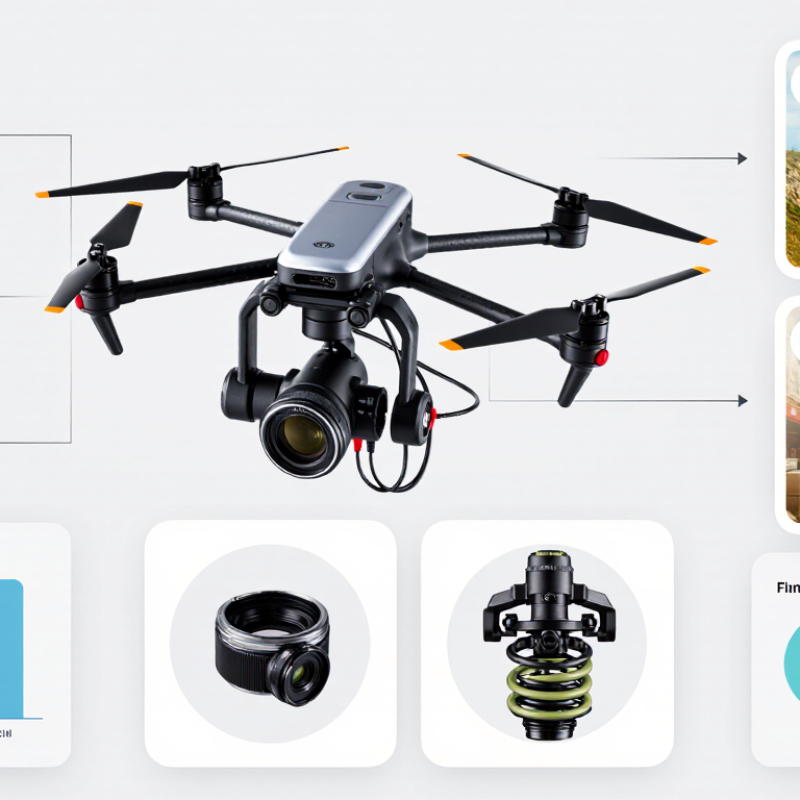
How to Choose the Best UAV Camera Gimbal?

Define Your UAV Camera Gimbal Requirements

How to Choose the Best UAV Camera Gimbal?

Define Your UAV Camera Gimbal Requirements

Choosing a UAV camera gimbal starts with the aircraft, not the camera. Measure the camera, lens, battery, and mounting plate together. Their combined weight must stay below the aircraft’s practical payload limit. Leave a safety margin for wind and sudden movement. A gimbal that looks suitable indoors may struggle outdoors.

Decide what your footage requires. A three-axis gimbal usually provides smoother yaw, pitch, and roll control. For mapping, stable nadir imaging may matter more than cinematic movement. For inspection, fast response and precise angle control are often essential. Check vibration isolation, operating temperature, power input, and control compatibility. In field testing, I have seen a lightweight gimbal perform poorly because its cables transferred motor vibration. That mistake was avoidable, but easy to miss.

Tips: Record your camera’s center of gravity before choosing a mount. Test the full setup with propellers, cables, and storage media installed. Review flight logs after each test. Watch for drifting horizons, motor heat, and shortened flight time. Do not trust a specification sheet alone. Real conditions can expose weaknesses. A small wind test may reveal more than a long indoor demonstration. Also, confirm replacement parts and calibration procedures. I sometimes prioritize stabilization too heavily, then discover that setup time slows the entire survey. Requirements can change after practical testing. Recheck them before purchase.

How to Choose the Best UAV Camera Gimbal?

Define your UAV camera gimbal requirements before selecting a payload system.

Payload capacity is a practical starting point when defining gimbal requirements. Inspection and mapping systems commonly use lighter camera payloads, while public-safety and cinematic missions may require higher capacity for larger sensors, lenses, or dual-camera configurations. Confirm the gimbal’s weight, power consumption, stabilization accuracy, control interface, and environmental rating against the UAV before deployment.

Compare Gimbal Stabilization and Camera Compatibility

Choosing the best UAV camera gimbal starts with stabilization, not megapixels.

A sharp camera still produces unusable footage when vibrations reach the lens. Three-axis systems usually correct roll, pitch, and yaw. They keep horizons steady during turns, wind gusts, and quick altitude changes. However, stabilization quality depends on motor response, balance, and control software. A heavy camera may overload a small motor. The result is jitter, heat, or slow movement. Test the gimbal with the complete payload, including filters, cables, and storage media.

Short answer: balance matters.

Camera compatibility needs more than a mounting hole.

Check payload limits, dimensions, center of gravity, power requirements, and communication protocols. The camera must fit securely without blocking its lens, cooling vents, or memory card access. Confirm whether the gimbal supports shutter, focus, zoom, exposure, and recording commands. Some systems offer only basic triggering. That limitation can affect mapping, inspection, or survey work. Also inspect the connector type and voltage range before flight. A converter may add weight and introduce another failure point. Perform a bench test, then a low-altitude hover test in calm weather.

In practice, no specification sheet tells the whole story.

I once underestimated cable stiffness; it pulled the camera during a yaw movement. The footage looked fine on the ground but drifted in flight. That mistake changed my checklist. I now test every movement at slow and fast speeds. I also review footage frame by frame, not only on a phone screen. Choose a gimbal for real operating needs, not its advertised maximum payload. Leave a safety margin.

Evaluate Weight, Payload, and UAV Flight Performance

How to Choose the Best UAV Camera Gimbal?

A gimbal that looks light on paper may demand more power after installation. Measure the complete payload, including the camera, lens, cables, memory devices, and mounting hardware. Then compare that total with the aircraft’s recommended payload, not its absolute lifting limit. Keep a practical margin for wind, battery aging, and temperature changes. Small errors matter. Verify technical specifications through reliable documentation and practical testing.

Payload affects more than takeoff. Extra mass increases motor effort, reduces endurance, and can make the aircraft slower to respond. An overloaded setup may hover normally indoors but drift noticeably outdoors. During field testing, check hover stability, climb rate, braking distance, and battery consumption. Record readings in calm conditions, then repeat them with realistic wind. Watch the live image during sharp turns. If horizons tilt or vibration appears, the problem may involve balance, isolation, or flight tuning rather than the camera itself. Do not trust one test.

Choose a gimbal with useful payload capacity, but avoid carrying capacity you will never use. A heavier unit can offer stronger stabilization, yet it may reduce flight time enough to limit field coverage. Review the center of gravity carefully; a forward-mounted camera can force constant correction. Professional evaluation should include repeated flights, not only bench measurements. Flight logs reveal trends that a product sheet cannot. Leave room for future accessories, but question every added gram. Early testing often underestimates cable weight and setup imbalance. That mistake is avoidable.

Assess Control Systems, Imaging Features, and Durability

How to Choose the Best UAV Camera Gimbal?

A UAV camera gimbal should respond smoothly, not merely move quickly. During field evaluations, I check control latency during slow turns and sudden stops. A reliable system keeps the horizon level when wind pushes the aircraft sideways. Look for adjustable damping, responsive joystick input, and clear feedback from the flight controller. Manual and automatic modes should feel predictable. Poor tuning creates small shakes that become obvious in aerial footage. Test it at low speed first. Then test sharper movements. Some systems perform well indoors but struggle outdoors.

Imaging features deserve equal attention. A three-axis gimbal usually provides smoother footage than a two-axis design. Confirm whether it supports the camera’s weight, lens length, and balance range. Optical stabilization can help, but it cannot repair severe vibration. Check image transmission delay, focus control, exposure adjustment, and low-light performance. A bright monitor may hide noisy shadows. Review raw clips on a larger screen. That detail matters.

Durability affects every flight. Inspect the arm joints, cable protection, mounting plate, and motor housings. Sealed components help against dust and light rain, but they are not waterproof by default. Ask how the gimbal handles repeated landings and transport. A protective case is useful, though I once overlooked its added weight. That mistake reduced flight time noticeably. Spare dampers and simple calibration procedures can prevent avoidable downtime. Choose repairable construction when possible, because delicate parts eventually need attention.

Select the Best Gimbal Based on Cost and Mission Needs

Choosing the best UAV camera gimbal starts with the mission, not the specification sheet. A survey team may need steady nadir images, accurate mapping, and long flight endurance. An inspection crew may value vibration control, thermal support, and rapid target tracking. The U.S. FAA reported more than 865,000 registered drones in 2024, showing how widely these systems are used. Yet registration numbers do not reveal operational quality.

Match the gimbal to the camera and aircraft payload. A heavier three-axis unit can improve stability, but it may reduce flight time by several minutes. For routine daylight inspection, a lightweight two-axis gimbal may offer better value. For surveying, prioritize repeatable angle control and low image distortion. For public-safety observation, low-light performance may matter more than maximum resolution. Industry reports from Drone Industry Insights continue to identify inspection, mapping, and public safety as major commercial UAV applications. Cost should include calibration, spare parts, software, and operator training. I once underestimated transport damage. That mistake was expensive.

Tips: Set a mission budget before comparing models. Test the gimbal during wind, vibration, and fast yaw movements. Check whether the camera can be replaced without changing the aircraft balance. Keep at least 10% payload capacity unused. It sounds cautious, but overloaded aircraft respond poorly. Also, do not trust a perfect laboratory sample; field footage can expose rolling-shutter wobble, loose connectors, or unstable control algorithms. A short outdoor trial is often more valuable than another page of specifications.

Copyright 2025 Fluidra S.A. | Created by BCM Marketing Agencia Privacy Policy Legal note | Cookie policy |

Technical cookies are strictly necessary for our website to work and you can navigate through it. These types of cookies are those that, for example, allow us to identify you, give you access to certain restricted parts of the page if necessary, or remember different options or services already selected by you, such as your privacy preferences. Therefore, they are activated by default, your authorization not being necessary in this regard. Through the configuration of your browser, you can block or alert the presence of this type of cookies, although such blocking will affect the proper functioning of the different functionalities of our website.


The analysis cookies allow us to study the navigation of the users of our website in general (for example, which sections of the page are the most visited, which services are used most and if they work correctly, etc.). From the statistical information on navigation on our website, we can improve both the operation of the page itself and the different services it offers. Therefore, these cookies do not have an advertising purpose, but only serve to make our website work better, adapting to our users in general. By activating them you will contribute to this continuous improvement. You can enable or disable these cookies by checking the corresponding box, being disabled by default.


Functionality cookies allow us to remember your preferences, to personalize certain characteristics and general options of our website, every time you access it (for example, the language in which the information is presented to you, the sections marked as favorites, your browser type, etc.) Therefore, this type of cookies does not have an advertising purpose, but by activating them you will improve the functionality of the website (for example, adapting to your type of browser) and the customization of it based on your preferences (for example, by presenting the information in the language that you have chosen in previous occasions), which will contribute to the ease, usability and comfort of our page during your navigation. You can enable or disable these cookies by checking the corresponding box, being disabled by default.


Advertising cookies allow us to manage the advertising spaces included in our website based on criteria such as the content shown or the frequency in which the ads are displayed. For example, if you have been shown the same ad several times on our website, and you have not shown a personal interest by clicking on it, it will not appear again. In summary, by activating this type of cookies, the advertising shown on our website will be more useful and diverse, and less repetitive. You can enable or disable these cookies by checking the corresponding box, being disabled by default.


Behavioral advertising cookies allow us to obtain information based on the observation of your browsing habits and behaviors on the web, in order to show you advertising content that best suits your personal tastes and interests. To understand it in a very simple way, we will give you a fictitious example: if your last searches on the web were related to suspense literature, we would show you advertising about suspense books. Therefore, activating this type of cookies, the advertising that we show you on our website will not be generic, but will be oriented to your searches, tastes and interests, therefore adjusting exclusively to you. You can enable or disable these cookies by checking the corresponding box, being disabled by default.
To understand it in a very simple way, we will give you a fictitious example: if your last searches on the web were related to suspense literature, we would show you advertising about suspense books. Therefore, activating this type of cookies, the advertising that we show you on our website will not be generic, but will be oriented to your searches, tastes and interests, therefore adjusting exclusively to you. You can enable or disable these cookies by checking the corresponding box, being disabled by default.

SAVE

We use our own and third-party cookies to ensure the proper functioning of the website and to analyse our services, improve your experience on our website and show you advertisements related to your interests according to profiling based on your browsing habits (e.g. websites visited). You can accept all cookies by clicking "ACCEPT" or set or reject them by clicking here. If you would like to know more about the use of cookies, please see our COOKIE POLICY.


ACCEPT ALL
Reject no essentials


