
7 Tips for Choosing the Best EV Charger Type 2
FLUID HANDLING EXPERTS

Blog, all our news

7 Tips for Choosing the Best EV Charger Type 2

Choosing the right Ev Charger Type 2 begins with the vehicle, not the cable. Battery capacity, onboard charger limits, parking time, and local grid conditions all matter. A 22 kW charger may sound impressive, yet many home EVs accept only 7.4 or 11 kW. The extra capacity could remain unused.

The International Energy Agency reported more than 14 million electric car sales worldwide in 2023. Electric vehicles represented about one in five new cars sold. This growth increases pressure on homes, workplaces, apartment buildings, and public destinations to provide dependable charging. The European Automobile Manufacturers’ Association has also warned that charging-point deployment must accelerate alongside EV adoption. Availability matters.

“Charging infrastructure is the backbone of e-mobility,” says Claas Bracklo, a leading CharIN industry representative. His point is practical. A charger must work safely, communicate clearly, and match daily driving habits. IEC 62196-2 Type 2 equipment commonly supports single-phase or three-phase AC charging, depending on the installation and vehicle. Proper protection, qualified installation, load management, and weather resistance remain essential.

Small details change the decision. A home charger beside a cold garage wall faces different demands than a public unit beside a busy motorway. Cable length, socket design, smart scheduling, solar integration, and maintenance support deserve attention. No charger is perfect. Faster is not always better. Cheaper may become expensive after installation or repeated faults.

This guide examines seven practical tips for selecting the best Ev Charger Type 2. It compares charging power, compatibility, safety features, connectivity, installation requirements, operating cost, and future readiness. The goal is not to recommend the most powerful unit. It is to identify the charger that fits real use.
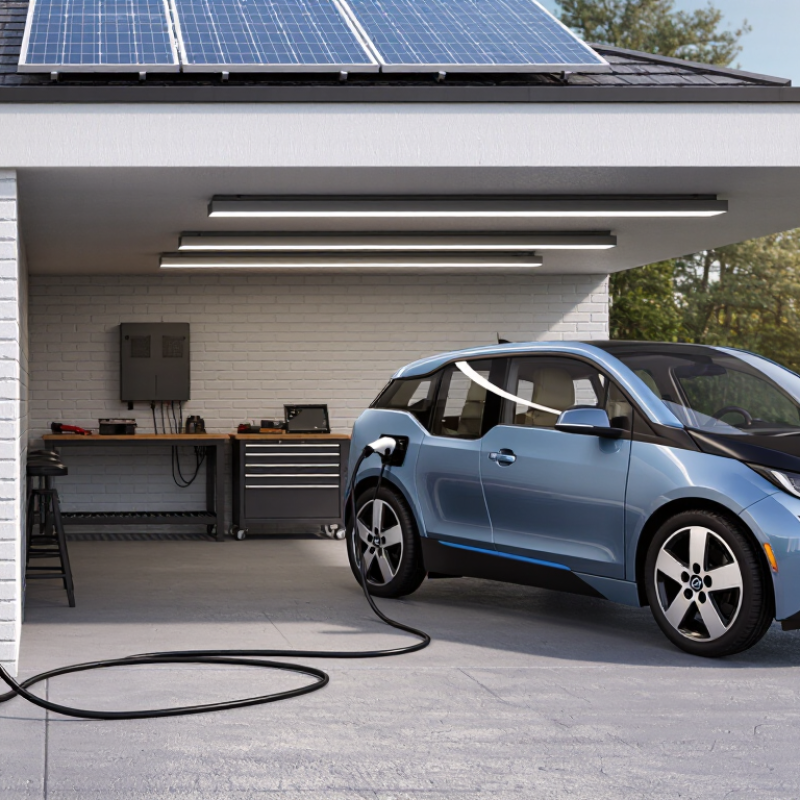
7 Tips for Choosing the Best EV Charger Type 2

Identify Type 2 Standards: IEC 62196-2, AC Charging, and Regional Compatibility

Choosing a Type 2 EV charger starts with understanding IEC 62196-2. This standard defines connector dimensions, pin layouts, and safety features for conductive charging. It does not guarantee identical charging speeds everywhere. Your vehicle’s onboard charger still controls the maximum AC power it can accept.

Type 2 usually supports AC charging through single-phase or three-phase electricity. A home installation may provide 3.7 kW, 7.4 kW, or higher output, depending on the local supply. Check the vehicle manual, inlet label, and charger datasheet together. A higher-rated cable cannot increase a vehicle’s internal charging limit. Small detail, major difference.

Regional compatibility requires more than matching the plug shape. Confirm voltage, frequency, socket wiring, protection devices, and installation rules with a qualified electrician. Some regions use different grid arrangements or require specific residual-current protection. Do not assume a Type 2 connector fits every public station safely. In practical checks, I would inspect cable temperature, locking action, and visible pin damage. A loose connection can interrupt charging or create heat. I once underestimated the importance of cable length; extra reach helped, but storage became awkward. That trade-off deserves honest consideration. Reliable specifications matter more than impressive packaging.

7 Tips for Choosing the Best EV Charger Type 2 - Identify Type 2 Standards: IEC 62196-2, AC Charging, and Regional Compatibility

Tip Decision Dimension Verified Technical Information What to Check Before Purchase
1 Confirm the connector standard Type 2 is the AC vehicle connector geometry defined by IEC 62196-2. It has seven contacts: three power contacts, one neutral contact, one protective-earth contact, and two signal contacts for control pilot and proximity detection. Verify that the vehicle inlet and the charging cable are both Type 2. Do not assume that every round AC connector uses the same pin arrangement.
2 Match AC charging power Common Type 2 AC charging configurations include approximately 3.7 kW at 230 V and 16 A single-phase, 7.4 kW at 230 V and 32 A single-phase, and about 11 kW at 400 V and 16 A three-phase. Around 22 kW is possible at 400 V and 32 A three-phase when supported by the vehicle and installation. Compare the charger's rated output with the vehicle's onboard AC charger. The vehicle's lower limit determines the actual AC charging rate.
3 Select the correct charging mode Mode 2 charging uses a cable with an in-cable control and protection device connected to a standard socket. Mode 3 uses a dedicated AC charging station with control and safety functions. Type 2 is commonly used with Mode 3 equipment. For regular home charging, check whether a dedicated circuit and fixed AC charging station are permitted and available. Use a household socket only when the electrical installation and local rules allow it.
4 Check regional compatibility Type 2 is widely used for AC charging in Europe and several other markets influenced by European standards. Other regions may commonly use different AC connector systems, so regional prevalence does not replace checking the vehicle specification. Confirm the vehicle's market specification, inlet type, grid voltage, supply frequency, and local electrical requirements before selecting a cable or charging station.
5 Understand AC versus DC charging A standard Type 2 connector is used for AC charging, where the vehicle's onboard charger converts AC to DC for the battery. High-power DC charging requires a different connector arrangement with additional direct-current contacts; a Type 2 AC cable alone does not provide DC fast charging. Choose Type 2 equipment for AC charging. If rapid DC charging is required, check the vehicle's separate DC inlet and the charging station's DC connector specification.
6 Choose the right cable configuration A Mode 3 cable may be Type 2-to-Type 2 for a vehicle with a Type 2 inlet and a Type 2 charging socket. Cable current ratings must be at least equal to the intended charging current; the charging system will still be limited by its lowest-rated component. Check cable length, current rating, connector temperature limits, weather protection, storage requirements, and whether the station already has a permanently attached cable.
7 Verify safety and installation requirements AC charging equipment should provide protective-earth continuity, control-pilot communication, overcurrent protection, and suitable residual-current protection. Installation requirements vary by country and may depend on supply capacity, earthing arrangement, and outdoor placement. Use a qualified electrical installer where required. Confirm circuit capacity, protective devices, enclosure rating, cable routing, earthing, and compliance with applicable local electrical codes.
Key selection rule: The usable charging speed is limited by the lowest-rated element among the vehicle's onboard AC charger, the charging station, the cable, the electrical circuit, and the local supply.

Match Charger Output to Vehicle Limits: 3.7, 7.4, 11, and 22 kW

Choosing the right Type 2 EV charger begins with one number: your vehicle’s maximum AC charging rate. A charger rated at 22 kW cannot force a car to accept 22 kW. The onboard charger controls the limit. Check the vehicle handbook or charging specification before paying for extra capacity.

A 3.7 kW charger suits overnight charging and smaller daily distances. It adds roughly 15–25 kilometres of range per hour, depending on the vehicle. A 7.4 kW unit is often a practical home choice for single-phase installations. It can add about 35–45 kilometres hourly.

Need faster charging? An 11 kW charger usually requires three-phase power and a compatible onboard charger. It may add approximately 50–70 kilometres per hour. A 22 kW model can deliver much more, but only when the vehicle and electrical supply support it. Many cars accept less.

Measure your routine honestly. A 7.4 kW charger may be enough for a car parked overnight. Choosing 22 kW without checking the supply can increase installation costs for little benefit. I once assumed maximum output always meant better value; that was too simple. Charging speed can also reduce when the battery is nearly full, or when household demand rises. Look for adjustable current settings, clear safety monitoring, and professional installation. The smartest match is not the highest rating. It is the output your car can use repeatedly, safely, and economically.

Check Electrical Requirements: 230/400 V Supply, 32 A, and RCD Protection

Before choosing a Type 2 EV charger, check the electrical supply at the installation point. A qualified electrician should verify whether the property provides 230 V single-phase or 400 V three-phase power. At 32 A, single-phase charging can reach about 7.4 kW. Three-phase charging may reach about 22 kW. The vehicle may accept less. That detail matters.

The circuit also needs suitable cable sizing, protective devices, earthing, and RCD protection. An RCD can disconnect power when leakage current becomes dangerous. Its type and rating must match the charger and local electrical rules. Some installations also require protection against smooth DC leakage. Never assume an existing household RCD is sufficient.

In practical installations, the consumer unit, cable route, and voltage drop deserve close attention. A long cable run can reduce performance, even when the charger is rated at 32 A. I once underestimated this detail during a home upgrade. The cable stayed cool, but the measured voltage was lower than expected. That mistake changed the final circuit design. Ask the electrician to record test results and confirm the maximum current before commissioning. Check the vehicle manual too, because its onboard charger may limit power.

Compare Smart Controls: OCPP 1.6/2.0.1, Load Balancing, and Energy Monitoring

7 Tips for Choosing the Best EV Charger Type 2

Compare Smart Controls: OCPP 1.6/2.0.1, Load Balancing, and Energy Monitoring

Tip 1:

Check the protocol before checking the screen. OCPP 1.6 supports core charging control and remote diagnostics. OCPP 2.0.1 adds stronger device models, transaction details, and better security options. The newer version sounds better, but compatibility still matters. Confirm that your software supports every feature you need. A smart charger is only useful when its backend communicates reliably.

Tip 2:

Examine load balancing in real conditions. A household may run an oven, heat pump, and charger simultaneously. Dynamic balancing measures site demand and reduces charging power before the main breaker trips. This can avoid expensive electrical upgrades. The International Energy Agency reported over four million public charging points worldwide at the end of 2023. More connected chargers will increase pressure on local networks. Test response time, recovery behavior, and offline operation. Small details matter.

Tip 3:

Demand clear energy monitoring. Look for kWh data, charging duration, power limits, and historical exports. These records help verify electricity bills and identify abnormal consumption. The U.S. Department of Energy highlights networked charging as important for managed charging and grid integration. However, dashboards can exaggerate simplicity. Some meters lose data during outages. Ask how readings are stored, synchronized, and corrected.

Tip 4:

Inspect installation experience, not just specifications. Type 2 hardware may support high power, yet the site wiring may not. I would request a commissioning report, firmware policy, and realistic support response times. OCPP 2.0.1 offers valuable structure, but it cannot repair poor configuration. That part is often overlooked.

Evaluate Installation Safety: IP54 Enclosures, Cable Ratings, and Certification

Choosing the best EV Charger Type 2 starts with the installation environment, not the display screen. The IEA’s Global EV Outlook 2024 reported more than four million public charging points worldwide in 2023. More equipment means more exposure to rain, dust, heat, and accidental impact.

Check the enclosure first. IP54 protects against limited dust entry and water splashes, but it is not waterproof. Mount the charger away from direct runoff, standing water, and poorly sealed walls. Inspect cable ratings next. The cable should support the charger’s maximum current, outdoor temperature, and repeated bending. Look for clear markings, strain relief, and durable insulation. Small details matter.

Certification must match local electrical requirements and the Type 2 charging standard. Verify conformity documents, protective earthing, residual-current protection, and installation instructions. IEC 60364-7-722 provides widely used guidance for electric-vehicle supply installations, while IEC 61851 covers conductive charging systems. A qualified electrician should also check circuit capacity, voltage drop, and breaker coordination.

The National Renewable Energy Laboratory has repeatedly highlighted installation quality and maintenance as important factors in charging reliability. A tidy unit can still hide a weak connection. I have found checklists too narrow when they focus only on IP ratings. Add a final inspection after heavy rain, cable heating, and several charging cycles. Safety is not a sticker.

Copyright 2025 Fluidra S.A. | Created by BCM Marketing Agencia Privacy Policy Legal note | Cookie policy |

Technical cookies are strictly necessary for our website to work and you can navigate through it. These types of cookies are those that, for example, allow us to identify you, give you access to certain restricted parts of the page if necessary, or remember different options or services already selected by you, such as your privacy preferences. Therefore, they are activated by default, your authorization not being necessary in this regard. Through the configuration of your browser, you can block or alert the presence of this type of cookies, although such blocking will affect the proper functioning of the different functionalities of our website.


The analysis cookies allow us to study the navigation of the users of our website in general (for example, which sections of the page are the most visited, which services are used most and if they work correctly, etc.). From the statistical information on navigation on our website, we can improve both the operation of the page itself and the different services it offers. Therefore, these cookies do not have an advertising purpose, but only serve to make our website work better, adapting to our users in general. By activating them you will contribute to this continuous improvement. You can enable or disable these cookies by checking the corresponding box, being disabled by default.


Functionality cookies allow us to remember your preferences, to personalize certain characteristics and general options of our website, every time you access it (for example, the language in which the information is presented to you, the sections marked as favorites, your browser type, etc.) Therefore, this type of cookies does not have an advertising purpose, but by activating them you will improve the functionality of the website (for example, adapting to your type of browser) and the customization of it based on your preferences (for example, by presenting the information in the language that you have chosen in previous occasions), which will contribute to the ease, usability and comfort of our page during your navigation. You can enable or disable these cookies by checking the corresponding box, being disabled by default.


Advertising cookies allow us to manage the advertising spaces included in our website based on criteria such as the content shown or the frequency in which the ads are displayed. For example, if you have been shown the same ad several times on our website, and you have not shown a personal interest by clicking on it, it will not appear again. In summary, by activating this type of cookies, the advertising shown on our website will be more useful and diverse, and less repetitive. You can enable or disable these cookies by checking the corresponding box, being disabled by default.


Behavioral advertising cookies allow us to obtain information based on the observation of your browsing habits and behaviors on the web, in order to show you advertising content that best suits your personal tastes and interests. To understand it in a very simple way, we will give you a fictitious example: if your last searches on the web were related to suspense literature, we would show you advertising about suspense books. Therefore, activating this type of cookies, the advertising that we show you on our website will not be generic, but will be oriented to your searches, tastes and interests, therefore adjusting exclusively to you. You can enable or disable these cookies by checking the corresponding box, being disabled by default.
To understand it in a very simple way, we will give you a fictitious example: if your last searches on the web were related to suspense literature, we would show you advertising about suspense books. Therefore, activating this type of cookies, the advertising that we show you on our website will not be generic, but will be oriented to your searches, tastes and interests, therefore adjusting exclusively to you. You can enable or disable these cookies by checking the corresponding box, being disabled by default.

SAVE

We use our own and third-party cookies to ensure the proper functioning of the website and to analyse our services, improve your experience on our website and show you advertisements related to your interests according to profiling based on your browsing habits (e.g. websites visited). You can accept all cookies by clicking "ACCEPT" or set or reject them by clicking here. If you would like to know more about the use of cookies, please see our COOKIE POLICY.


ACCEPT ALL
Reject no essentials



