
How to Choose the Best Sock Making Machine?
FLUID HANDLING EXPERTS

Blog, all our news

How to Choose the Best Sock Making Machine?

Choosing the right Sock Making Machine can shape your production quality, operating costs, and delivery reliability. The decision is not about speed alone. It involves yarn compatibility, needle configuration, sock size range, automation, energy use, and operator training. A machine that produces 300 pairs daily may seem attractive, but its real value depends on stable output and manageable maintenance.

Begin with your product plan. Examine whether you will make athletic socks, compression styles, school socks, or premium seamless designs. Each category may require different cylinders, needles, feeders, and programming functions. During factory visits, inspect the knitting area closely. Listen for unusual vibration, check the control panel response, and review actual sample socks rather than promotional photographs. Ask for production records, warranty terms, spare-parts availability, and training support. Reliable manufacturers should explain limitations clearly.

Small details matter.

An experienced operator can often identify uneven tension by touching the fabric edge. However, personal judgment should support testing, not replace it. Request a trial using your intended yarn, because cotton blends and synthetic fibers can behave differently under identical settings. Compare fabric density, toe quality, pattern accuracy, and rejection rates. Consider local service access as carefully as the machine’s purchase price. A cheaper Sock Making Machine may become expensive when specialized parts require long shipping times. No machine is perfect. Your evaluation should acknowledge that. The best choice is the model that fits your products, staff, budget, and realistic production goals, while leaving room for future improvements.
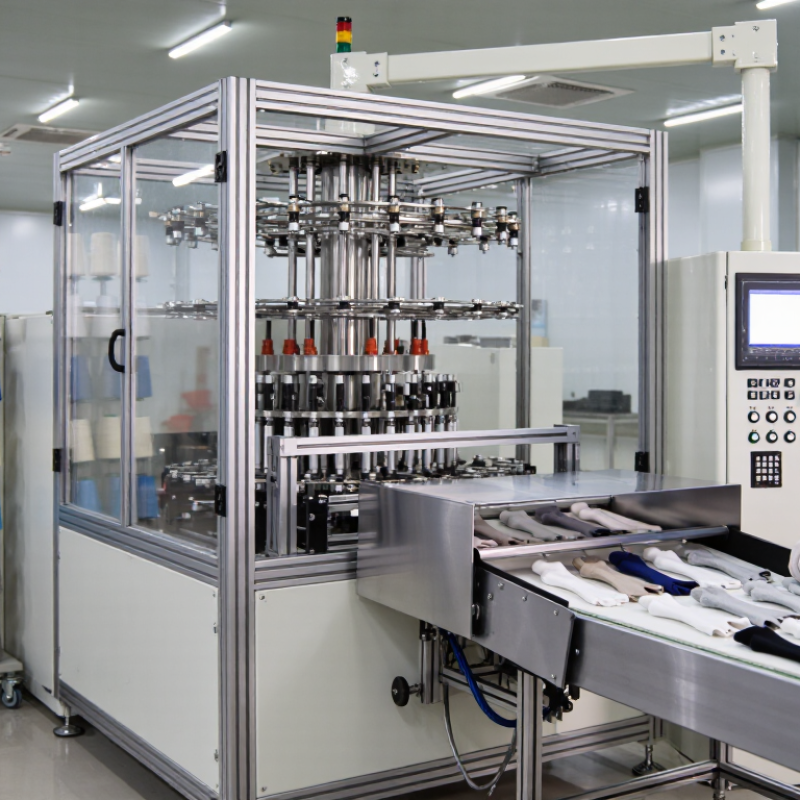
How to Choose the Best Sock Making Machine?

Define Your Sock Production Needs and Business Goals

Choosing the best sock making machine starts with your production needs, not the machine’s appearance. Define your target products first: athletic socks, compression styles, dress socks, or custom patterns. Each category requires different gauges, needle systems, cylinder sizes, and programming functions.

According to Grand View Research, the global hosiery market was valued at about USD 116.8 billion in 2022 and may grow at a 5.8% CAGR through 2030. Demand exists, but every segment has different technical expectations.

Set measurable business goals. Estimate monthly pairs, acceptable defect rates, labor availability, and available floor space. A small workshop may need a flexible machine with quick style changes. A high-volume factory may prioritize cycle speed, automatic toe closing, and stable output.

Energy use also matters. Textile Exchange reported that global fiber production reached 116 million tonnes in 2022, increasing pressure for better material efficiency.

Excess yarn waste can quietly reduce profit.

Test before committing. Ask suppliers for samples using your yarn, patterns, and preferred sizes. Check operator training, spare-part access, maintenance intervals, and software support.

A machine producing 400 pairs daily is not automatically profitable if changeovers take hours. I have seen production plans fail because maintenance time was ignored. That detail is easy to miss.

Calculate payback using real labor, electricity, rejected pairs, and downtime figures. Reconsider the purchase if the forecast depends on perfect utilization.

Compare Different Types of Sock Making Machines

Choosing the best sock making machine starts with comparing machine types, not advertised speed. Each structure suits a different production goal.

Single-cylinder machines work well for everyday athletic socks, casual socks, and lightweight designs. They usually offer simpler operation and easier maintenance. Double-cylinder machines handle more complex rib patterns and shaped constructions. They can produce firmer cuffs and improved structure around the leg. However, operators need stronger technical skills. The learning curve is real.

Terry machines add cushioning inside the sole, heel, and toe. They suit sports and work socks that need comfort and abrasion resistance. Jacquard machines create detailed patterns, logos, and color changes, but they require careful programming and yarn control. Fine-gauge models create smooth, thin socks for formal wear. Coarser gauges produce thicker products with faster knitting potential. Speed is not everything.

During machine trials, check the cylinder size, gauge, needle quality, and automatic toe-closing system. These details affect fit, waste, and daily output. A machine may run quickly but still create uneven heels or loose stitches. I have seen operators focus on production numbers and overlook cleaning access. That decision often increases downtime later. Leave enough space around the machine for oiling, inspection, and repairs. Review training support, spare-part availability, and power consumption before purchasing. Some comparisons remain incomplete because fabric testing happens only after installation. Test several yarn types, wash the samples, and inspect them under bright light.

Evaluate Machine Features, Materials, and Production Capacity

How to Choose the Best Sock Making Machine?

Machine features should match your actual production plan, not only the sales brochure. Check needle gauge, cylinder size, feeder quantity, speed control, and automatic pattern functions. A machine with 200 needles may produce fine dress socks, while thicker sports socks need a different gauge. Review changeover time, noise levels, power use, and access to replacement parts. Small delays become expensive during continuous production.

Materials matter just as much. The 2024 Textile Exchange Materials Market Report states that global fiber production reached about 124 million tonnes in 2023. It may reach 160 million tonnes by 2030. This growth increases the need for machines that handle cotton, recycled polyester, nylon, wool, and elastane consistently. Test yarn tension, friction, and heat behavior before purchasing. In practice, elastane can expose weak feeding systems quickly. A machine may pass a showroom test and still struggle with uneven recycled yarn.

Tips: Calculate capacity from usable output, not advertised speed. Record rejected pairs, setup hours, and maintenance stops. Ask for a sample run using your own yarn. A simple trial often reveals more than a polished demonstration. I have found that quieter machines are not always better; some hide slower cycles or difficult servicing. Compare daily output, material waste, operator skill, and five-year maintenance costs. Industry forecasts can guide decisions, but your factory data should have the final word.

How to Choose the Best Sock Making Machine?

Comparison of common machine configurations based on typical output, material flexibility, and product capability. Actual performance depends on sock size, yarn type, pattern complexity, and operating conditions.

Higher production capacity is useful for standard designs, while broader material compatibility and pattern capability are important for customized or premium socks.

Check Automation, Maintenance, Energy Use, and Operator Requirements

How to Choose the Best Sock Making Machine?

A suitable sock making machine should match your production goals and the skills of your operators. Check how much work it automates, from knitting patterns to routine adjustments. Ask for a demonstration using a design similar to your own. Watch how clearly the machine signals a yarn break or setup error. Small details matter. A confusing control panel can slow a shift, even when the machine runs quickly.

Maintenance affects output as much as speed. Find out how often needles, feeders, and other wear parts need inspection or replacement. Ask whether common service tasks require special tools, and how long a typical cleaning takes. Energy use deserves a close look, too. Compare power requirements under realistic operating conditions, not only figures from a product sheet. Keep in mind that room temperature, production schedules, and operator habits can change actual consumption. The numbers may not tell the whole story.

Tips: Ask operators to test the machine before purchase. Have them thread yarn, change a setting, and clear a simple fault. Notice where they hesitate. Also check training time, safety instructions, and access to technical support. A detailed checklist is helpful, though it can miss problems that only appear during a full shift. Talk with the people who will maintain and run the equipment; their practical feedback may reveal an overlooked cost.

How to Choose the Best Sock Making Machine? - Check Automation, Maintenance, Energy Use, and Operator Requirements
Compare machines using the same sock design, yarn, production shift, and measurement method. Specifications and performance vary by machine configuration and operating conditions.
Selection factor Basic or mechanically controlled machine Computerized single-cylinder machine Advanced computerized machine
Automation and controls More settings and pattern changes may require manual adjustment. Confirm which functions are automatic and which need operator input. Electronic controls can store patterns and manage programmed knitting sequences; automation depends on the configuration. May offer more programmable functions, pattern options, and production monitoring. Verify each function with a sample run.
Maintenance needs Check access to needles, sinkers, yarn paths, and adjustment points. Regular cleaning, inspection, and lubrication are important. Routine knitting-mechanism care is still required; electronic controls add components that may need qualified troubleshooting. Ask for the maintenance schedule, diagnostic guidance, spare-parts list, and service support for both mechanical and electronic systems.
Energy use Compare the machine’s nameplate power and measure actual consumption during production; connected equipment affects total use. Request rated power and measure kWh over a representative production period. Consumption depends on settings, operating time, and auxiliaries. Use a measured production trial rather than assuming that more automation means lower energy use. Include compressor and finishing equipment where relevant.
Operator requirements Operators may need hands-on experience with setup, adjustments, yarn handling, and defect checks. Operators need training in pattern selection, parameter entry, yarn handling, and responding to machine alarms. Plan for training in programming, setup, fault recovery, and routine quality checks; confirm available documentation and support.
Style and size changes Check changeover steps and the time needed to adjust for different sizes, yarns, or designs. Stored programs may help repeat approved styles; confirm how patterns are transferred, edited, and backed up. Can suit frequent design changes when the available controls match the required patterns. Test actual products before purchase.
Production and quality evaluation Judge output using saleable pairs per shift and defect rate, not an unqualified maximum-speed claim. Run the intended sock design and record cycle time, stoppages, rejected pairs, and changeover time. Request a production trial with your yarn and target specifications; verify consistent quality and saleable output.
Best fit Consider when the required product range is stable and the team can handle manual setup and adjustments. Consider when repeatable programmed production and a balance of control and flexibility are priorities. Consider when the required styles and workflow benefit from the machine’s specific programmable functions and the team can support them.
Useful comparison: kWh per 1,000 saleable pairs = electricity consumed during the test (kWh) ÷ saleable pairs produced × 1,000. Keep the test conditions consistent and record downtime and rejected pairs.

Assess Supplier Support, Total Cost, and Long-Term Value

Choosing the best sock making machine requires more than comparing production speed. Supplier support can determine whether the machine performs well after installation. Ask who provides operator training, troubleshooting, and software updates. Request a written response-time policy. A reliable supplier should explain maintenance clearly, not hide behind technical terms. Ask for service records from similar factories. Small details matter.

Calculate the total cost over five years. Include the machine, installation, shipping, electricity, needles, sensors, software, and technician visits. Spare parts can become expensive surprises. That estimate is often optimistic. Compare energy use at your expected workload, not the supplier’s ideal setting. Also check whether common parts are available locally. A cheaper machine may lose its advantage after repeated downtime.

Long-term value depends on stable output and practical support. Request a live demonstration using your yarn and target sock designs. Inspect stitch consistency, noise, adjustment time, and waste. A short test can expose problems. I once saw a machine produce excellent samples but struggle during continuous operation. The factory had ignored cooling requirements. Ask for references from current users, preferably those with similar production volumes. Keep every promise in the contract, including training hours, warranty coverage, spare-part availability, and upgrade costs. Reliable documentation protects your investment when expectations and reality differ.

Copyright 2025 Fluidra S.A. | Created by BCM Marketing Agencia Privacy Policy Legal note | Cookie policy |

Technical cookies are strictly necessary for our website to work and you can navigate through it. These types of cookies are those that, for example, allow us to identify you, give you access to certain restricted parts of the page if necessary, or remember different options or services already selected by you, such as your privacy preferences. Therefore, they are activated by default, your authorization not being necessary in this regard. Through the configuration of your browser, you can block or alert the presence of this type of cookies, although such blocking will affect the proper functioning of the different functionalities of our website.


The analysis cookies allow us to study the navigation of the users of our website in general (for example, which sections of the page are the most visited, which services are used most and if they work correctly, etc.). From the statistical information on navigation on our website, we can improve both the operation of the page itself and the different services it offers. Therefore, these cookies do not have an advertising purpose, but only serve to make our website work better, adapting to our users in general. By activating them you will contribute to this continuous improvement. You can enable or disable these cookies by checking the corresponding box, being disabled by default.


Functionality cookies allow us to remember your preferences, to personalize certain characteristics and general options of our website, every time you access it (for example, the language in which the information is presented to you, the sections marked as favorites, your browser type, etc.) Therefore, this type of cookies does not have an advertising purpose, but by activating them you will improve the functionality of the website (for example, adapting to your type of browser) and the customization of it based on your preferences (for example, by presenting the information in the language that you have chosen in previous occasions), which will contribute to the ease, usability and comfort of our page during your navigation. You can enable or disable these cookies by checking the corresponding box, being disabled by default.


Advertising cookies allow us to manage the advertising spaces included in our website based on criteria such as the content shown or the frequency in which the ads are displayed. For example, if you have been shown the same ad several times on our website, and you have not shown a personal interest by clicking on it, it will not appear again. In summary, by activating this type of cookies, the advertising shown on our website will be more useful and diverse, and less repetitive. You can enable or disable these cookies by checking the corresponding box, being disabled by default.


Behavioral advertising cookies allow us to obtain information based on the observation of your browsing habits and behaviors on the web, in order to show you advertising content that best suits your personal tastes and interests. To understand it in a very simple way, we will give you a fictitious example: if your last searches on the web were related to suspense literature, we would show you advertising about suspense books. Therefore, activating this type of cookies, the advertising that we show you on our website will not be generic, but will be oriented to your searches, tastes and interests, therefore adjusting exclusively to you. You can enable or disable these cookies by checking the corresponding box, being disabled by default.
To understand it in a very simple way, we will give you a fictitious example: if your last searches on the web were related to suspense literature, we would show you advertising about suspense books. Therefore, activating this type of cookies, the advertising that we show you on our website will not be generic, but will be oriented to your searches, tastes and interests, therefore adjusting exclusively to you. You can enable or disable these cookies by checking the corresponding box, being disabled by default.

SAVE

We use our own and third-party cookies to ensure the proper functioning of the website and to analyse our services, improve your experience on our website and show you advertisements related to your interests according to profiling based on your browsing habits (e.g. websites visited). You can accept all cookies by clicking "ACCEPT" or set or reject them by clicking here. If you would like to know more about the use of cookies, please see our COOKIE POLICY.


ACCEPT ALL
Reject no essentials


