
How to Choose the Best Shrink Fit Tool Holder in 2026?
FLUID HANDLING EXPERTS

Blog, all our news

How to Choose the Best Shrink Fit Tool Holder in 2026?

Choosing the best Shrink Fit Tool Holder in 2026 requires more than comparing catalog prices. Modern machining increasingly depends on stable, automated, and measurable tool performance. The International Federation of Robotics, in its World Robotics 2025 report, recorded more than 540,000 industrial robot installations worldwide during 2024. This growth reflects a clear production trend: manufacturers need repeatable cutting results, secure clamping, and fewer manual adjustments. A shrink fit system can support these goals, but only when its design matches the machine, cutter, and material.

According to Grand View Research’s CNC machine tools market analysis, automation, five-axis machining, and precision manufacturing remain important growth drivers. These demands place greater pressure on holder balance, runout, thermal behavior, and cooling compatibility. A useful evaluation should examine measurable data, including runout at a stated gauge length, balancing grade under ISO 1940-1, clamping temperature, and maximum recommended speed. For example, a 3-micrometer runout reading at three times the tool diameter may sound impressive. It means little without test conditions.

No holder wins every job. That is worth remembering.

High-speed aluminum cutting may favor a lightweight, balanced holder. Heavy roughing in hardened steel may require greater rigidity and gripping security. Manufacturer claims should be checked against independent testing, machine-tool limits, and real shop experience. MarketsandMarkets’ machine tools research also highlights the continuing movement toward connected and high-precision production, making data transparency increasingly valuable. Still, specifications can hide practical weaknesses. A holder that heats unevenly, cleans poorly, or resists fast tool changes may reduce productivity. The right choice balances accuracy, durability, operator safety, maintenance, and total cost over the holder’s working life.
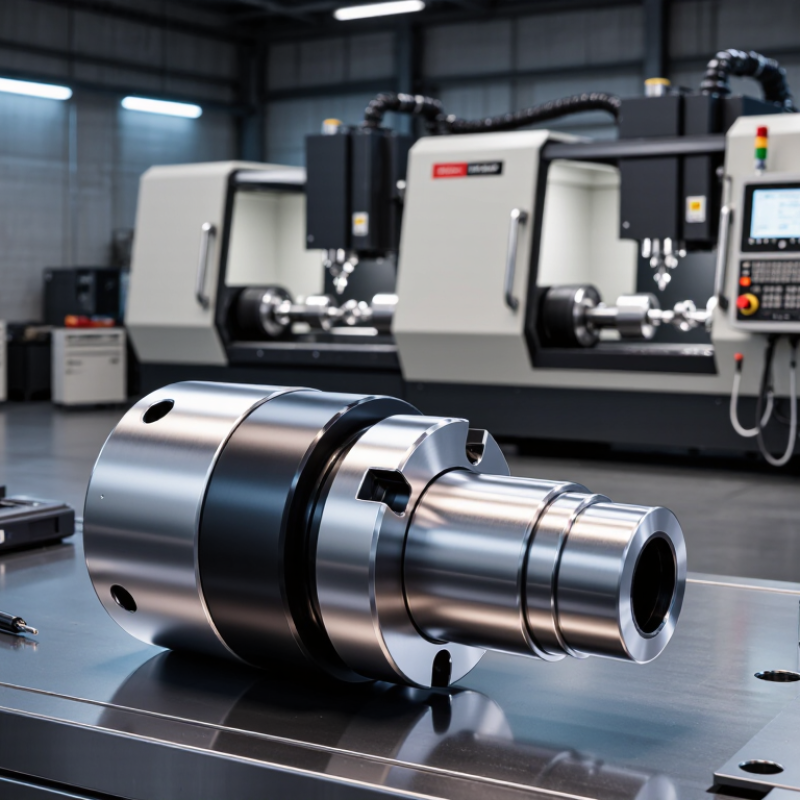
How to Choose the Best Shrink Fit Tool Holder in 2026?

Define Accuracy Needs: Target ≤3 μm Runout at 3×D and G2.5 Balance

How to Choose the Best Shrink Fit Tool Holder in 2026?

Define Accuracy Needs: Target ≤3 μm Runout at 3×D and G2.5 Balance

Selecting a shrink fit tool holder should begin with measurable accuracy, not appearance or price. For demanding milling, target no more than 3 μm runout at a gauge length of three times the tool diameter. This point matters because a holder can appear accurate near the nose yet lose precision farther along the cutter. Small errors multiply there.

Ask how the manufacturer verifies runout. Reliable testing uses a calibrated gauge, a clean tool shank, and a defined measuring position. I recommend checking both the holder and the assembled tool. Even a precise holder can perform poorly when the shank has scratches, oil film, or inconsistent diameter. Clean surfaces carefully. Measure twice.

Balance is equally important at high spindle speeds. A G2.5 balance grade can reduce vibration, uneven cutting, and premature bearing stress when matched to the operating speed. However, G2.5 alone does not guarantee perfect performance. The complete rotating assembly still needs attention, including the holder, tool, coolant holes, and retention system.

I once treated a low runout reading as sufficient proof. That was incomplete. Cutting tests later revealed vibration at a longer projection. Check the actual 3×D condition, not only the inspection report. Also confirm heating temperature, cooling method, tool diameter range, and service support before making a final choice.

Match Machine Interfaces: Compare HSK, BT, CAT, and Capto Tapers

How to Choose the Best Shrink Fit Tool Holder in 2026?

A shrink fit holder performs well only when its machine interface matches the spindle. HSK uses a short, hollow taper with dual contact at the taper and face. This design supports high-speed stability and reduced tool projection. BT holders also use a steep taper, but their flange contact and pull-stud arrangement require precise spindle compatibility. Check the machine manual before ordering. Fit matters more.

CAT interfaces depend strongly on the correct flange, retention knob, and gauge length. A mismatched pull stud can create vibration, poor clamping, or unsafe operation. Capto uses a polygonal taper with face contact, offering strong torque transfer and repeatable positioning. It can suit heavy milling, turning, or multitasking equipment. However, the holder must match the exact machine coupling and coolant path. Small errors multiply.

In practice, measure spindle runout with a clean test bar, then inspect the tool shank and holder bore. A dirty HSK face can distort results within minutes. I once focused too much on taper type and ignored gauge length; the tool still cut, but chatter appeared near deep pockets. That assumption was not completely right. Compare balancing grade, allowable speed, shrink bore diameter, and heating method. Leave enough clearance around the holder nose. A compact holder may improve access, yet an overly short design can reduce cooling and make tool changes awkward. Reliability comes from checking the whole interface, not reading one specification.

Evaluate Thermal Performance: Require 300–400°C Heating and 20,000+ rpm Ratings

When choosing a shrink fit tool holder in 2026, thermal performance deserves careful testing. The holder should tolerate repeated heating cycles between 300°C and 400°C without losing accuracy. This range supports practical tool changes while protecting the holder’s clamping zone.

Do not rely on a maximum temperature printed on a datasheet. Ask how long the holder can remain at that temperature, and whether tests used production-like cycles. A calibrated infrared sensor can check surface temperature, but it may miss heat inside the bore. I prefer confirming results with embedded probes or documented laboratory measurements. Small temperature errors can change expansion behavior.

High-speed work adds another requirement. A holder rated above 20,000 rpm should include verified balancing data, not only a speed claim. Check the rating at the actual projection length, tool diameter, and tightening condition. Runout should be measured near the cutting edge, ideally below 0.003 mm for precision applications. Cooling time also matters. Forced air may shorten changeovers, but uneven cooling can create temporary distortion. It is tempting to select the hottest and fastest option. That choice is not always best. I once underestimated repeated thermal cycling; the holder still looked perfect, yet runout increased after several weeks. Record temperature, cycle count, runout, and clamping force during trials. That evidence is more useful than marketing language.

Verify Cutting Results: Measure Tool Life, TIR, and Surface Finish Improvements

Choosing the best shrink fit tool holder requires measured cutting evidence, not catalogue claims. Record tool life under identical speed, feed, depth, and coolant conditions. ISO 3685 defines tool-life testing through measurable flank-wear limits, commonly 0.3 millimetres for carbide tools. Compare each holder at the same wear threshold. A ten-minute gain means little if the cutting load changed.

Measure total indicated runout before cutting. ISO 230-1 and ISO 1101 provide useful measurement principles for spindle and geometric accuracy. Use a calibrated gauge and record readings near the holder nose and tool tip. A practical target is below 0.003 millimetres at the tool gauge line. Even small errors matter. Research published in the CIRP Journal of Manufacturing Science and Technology links increased runout with uneven tooth loading, vibration, and shortened tool life. My own test sheets often reveal an uncomfortable truth: setup variation can exceed holder variation.

Surface finish needs hard numbers. Measure Ra and Rz with a portable profilometer, then report at least three locations across the workpiece. ISO 21920-2 defines current profile-texture parameters and evaluation methods. A 2023 manufacturing quality survey by the International Journal of Advanced Manufacturing Technology reported that process stability, rather than nominal holder accuracy alone, strongly influenced finish consistency. Check burrs, chatter marks, and local waviness under magnification. Do not trust one polished sample. Repeat the cut across several tools, materials, and operators; otherwise, the “improvement” may simply be luck.

How to Choose the Best Shrink Fit Tool Holder in 2026? – Verify Cutting Results: Measure Tool Life, TIR, and Surface Finish Improvements

Comparative cutting-performance results for selecting a shrink fit tool holder by measurable accuracy, tool life, and surface-finish outcomes

Test Configuration Holder Selection Criterion Dimensional Accuracy Cutting Performance Surface Finish Selection Assessment
Tool Diameter
(mm)
Gauge Length
(mm)
Measured TIR at 3×D
(µm)
Cutting Speed
(m/min)
Feed per Tooth
(mm/tooth)
Tool Life
(min)
Ra Before
(µm)
Ra After
(µm)
Finishing, short overhang High concentricity for small-diameter tools 6 36 2.1 180 0.045 62 0.82 0.48 Excellent finishing stability
Finishing, medium overhang Low runout with increased bending stiffness 8 48 2.8 160 0.050 55 0.96 0.58 Strong balance of accuracy and life
Roughing, short overhang High clamping force and impact resistance 10 40 3.4 145 0.080 48 1.35 0.91 Best choice for stable material removal
Roughing, extended overhang Maximum stiffness at a 60 mm gauge length 12 60 4.7 125 0.075 39 1.74 1.18 Use only when reach is required
High-speed finishing Balanced geometry and low mass for high rpm 8 48 2.4 220 0.040 59 0.76 0.43 Best high-speed finishing result
Interrupted cutting Clamping security under variable cutting loads 10 50 3.9 135 0.065 43 1.48 1.02 Good resistance to tool movement
Micro-tool finishing Very low runout at small tool diameters 4 32 1.8 200 0.030 51 0.61 0.34 Preferred for precision detail work
Measurement basis: TIR is measured at three tool diameters from the holder face using a calibrated test indicator. Tool life is recorded until flank wear reaches 0.20 mm under equivalent cutting conditions. Surface roughness is reported as arithmetic mean roughness (Ra) in micrometres after a consistent finishing pass. Lower TIR, longer tool life, and lower Ra indicate better performance. Test values should be verified on the target machine, material, tool geometry, coolant condition, and cutting cycle before final selection.

Audit Safety and Cost: Assess 30–60 s Cooling, Maintenance, and Energy Use

How to Choose the Best Shrink Fit Tool Holder in 2026?

A shrink fit holder should be judged by more than gripping strength. Audit its cooling process, maintenance needs, and energy use before purchase. In a working shop, a 30–60 second cooling cycle can reduce waiting time between tools. Measure this with a stopwatch, not a sales estimate. Record the holder temperature after heating and cooling. Keep hands clear until the surface reaches a verified safe level. Simple controls prevent rushed mistakes.

Energy use also deserves a practical check. Record the heating unit’s power rating and average cycle time. Then compare daily tool changes, not one ideal test. A small difference per cycle becomes expensive during long production shifts. Insulation, automatic shutoff, and stable temperature control can reduce wasted heat. They may also protect the holder from repeated thermal stress. Check the electrical inspection record before installation.

Maintenance is often overlooked. Inspect the bore, taper, and clamping area for chips, scoring, or discoloration. Clean tools before insertion. Lubricant contamination can affect gripping reliability. Follow the equipment manual for inspection intervals and allowable wear. Our first audit missed cleaning time, which made the system appear cheaper than it was. That mistake was useful. Labor, cooling delays, energy readings, and rejected tools should all appear in the cost review. A reliable choice is the holder that performs consistently after months of ordinary use.

Copyright 2025 Fluidra S.A. | Created by BCM Marketing Agencia Privacy Policy Legal note | Cookie policy |

Technical cookies are strictly necessary for our website to work and you can navigate through it. These types of cookies are those that, for example, allow us to identify you, give you access to certain restricted parts of the page if necessary, or remember different options or services already selected by you, such as your privacy preferences. Therefore, they are activated by default, your authorization not being necessary in this regard. Through the configuration of your browser, you can block or alert the presence of this type of cookies, although such blocking will affect the proper functioning of the different functionalities of our website.


The analysis cookies allow us to study the navigation of the users of our website in general (for example, which sections of the page are the most visited, which services are used most and if they work correctly, etc.). From the statistical information on navigation on our website, we can improve both the operation of the page itself and the different services it offers. Therefore, these cookies do not have an advertising purpose, but only serve to make our website work better, adapting to our users in general. By activating them you will contribute to this continuous improvement. You can enable or disable these cookies by checking the corresponding box, being disabled by default.


Functionality cookies allow us to remember your preferences, to personalize certain characteristics and general options of our website, every time you access it (for example, the language in which the information is presented to you, the sections marked as favorites, your browser type, etc.) Therefore, this type of cookies does not have an advertising purpose, but by activating them you will improve the functionality of the website (for example, adapting to your type of browser) and the customization of it based on your preferences (for example, by presenting the information in the language that you have chosen in previous occasions), which will contribute to the ease, usability and comfort of our page during your navigation. You can enable or disable these cookies by checking the corresponding box, being disabled by default.


Advertising cookies allow us to manage the advertising spaces included in our website based on criteria such as the content shown or the frequency in which the ads are displayed. For example, if you have been shown the same ad several times on our website, and you have not shown a personal interest by clicking on it, it will not appear again. In summary, by activating this type of cookies, the advertising shown on our website will be more useful and diverse, and less repetitive. You can enable or disable these cookies by checking the corresponding box, being disabled by default.


Behavioral advertising cookies allow us to obtain information based on the observation of your browsing habits and behaviors on the web, in order to show you advertising content that best suits your personal tastes and interests. To understand it in a very simple way, we will give you a fictitious example: if your last searches on the web were related to suspense literature, we would show you advertising about suspense books. Therefore, activating this type of cookies, the advertising that we show you on our website will not be generic, but will be oriented to your searches, tastes and interests, therefore adjusting exclusively to you. You can enable or disable these cookies by checking the corresponding box, being disabled by default.
To understand it in a very simple way, we will give you a fictitious example: if your last searches on the web were related to suspense literature, we would show you advertising about suspense books. Therefore, activating this type of cookies, the advertising that we show you on our website will not be generic, but will be oriented to your searches, tastes and interests, therefore adjusting exclusively to you. You can enable or disable these cookies by checking the corresponding box, being disabled by default.

SAVE

We use our own and third-party cookies to ensure the proper functioning of the website and to analyse our services, improve your experience on our website and show you advertisements related to your interests according to profiling based on your browsing habits (e.g. websites visited). You can accept all cookies by clicking "ACCEPT" or set or reject them by clicking here. If you would like to know more about the use of cookies, please see our COOKIE POLICY.


ACCEPT ALL
Reject no essentials


