
How to Choose the Best Portable Axial Fan for Your Needs?
FLUID HANDLING EXPERTS

Blog, all our news

How to Choose the Best Portable Axial Fan for Your Needs?

When it comes to selecting a Portable Axial Fan, understanding your requirements is crucial. According to industry reports, the demand for portable fans has surged by 35% in recent years. This highlights a growing need for effective and convenient cooling solutions across various settings, from construction sites to home workshops.

Portable Axial Fans stand out due to their design, which allows for efficient airflow in specific directions. This adaptability makes them ideal for numerous applications. However, not all fans are created equal. Some may underperform or lack durability. What’s worse, choosing the wrong model can lead to increased energy costs or inadequate cooling.

Experts recommend assessing factors like airflow capacity, noise levels, and build quality. A common mistake is overlooking the fan's intended use. For instance, a high CFM rating may seem appealing, but it’s not always necessary for smaller spaces. Balancing power and efficiency is often challenging, requiring careful thought. Thus, investing time in research is beneficial for finding the right Portable Axial Fan for your needs.
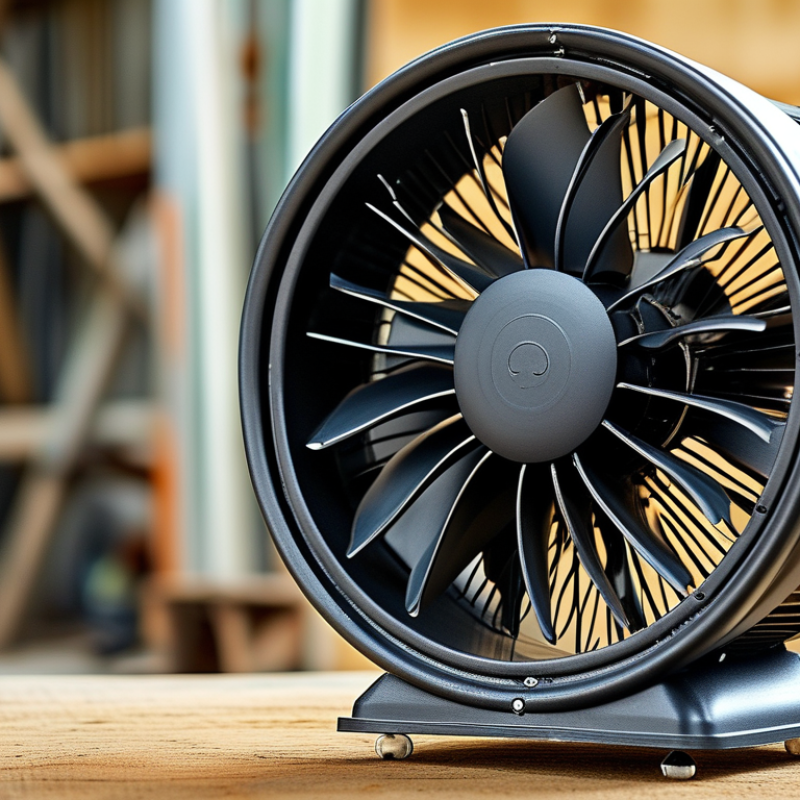
How to Choose the Best Portable Axial Fan for Your Needs?

Factors to Consider When Choosing a Portable Axial Fan

Choosing the right portable axial fan involves understanding your specific needs. Different environments require different features. For instance, if you’re using it outdoors, consider factors like battery life and weather resistance. A fan with a robust build can withstand outdoor conditions better. If you plan to use it indoors, noise level becomes crucial.

Airflow is another important consideration. Measured in cubic feet per minute (CFM), it indicates how much air the fan can move. Higher CFM means better cooling, essential for larger spaces. Think about the size of your space. A small fan may not suffice for a large workshop. On the other hand, a fan that’s too powerful for a small room can create an uncomfortable draft.

Don’t forget energy efficiency. An efficient fan saves on electricity costs over time. Energy Star-rated models are worth considering. Also, pay attention to the fan’s weight and portability. If you need to move it frequently, a lighter fan may be more convenient. Reflect on these details carefully. Making the right choice can significantly enhance comfort in your space.

Understanding Airflow and Fan Size Requirements

Choosing the right portable axial fan is crucial for optimal airflow. Airflow is measured in cubic feet per minute (CFM). A fan’s size directly correlates to its CFM rating. For example, a typical axial fan with a 20-inch diameter can move around 7,500 CFM. This measurement is vital when determining the suitable fan for your workspace.

Consider the size of the area you need to ventilate. A small garage may require a lower CFM, whereas larger industrial settings need much higher airflow to maintain comfort. According to a report by the American Society of Heating, Refrigerating and Air-Conditioning Engineers (ASHRAE), the recommended airflow for comfortable workspaces is about 15 CFM per person. This metric can guide your choice of fan size based on the number of users in a space.

Fan positioning is another important factor. Placing the fan near air intake or exhaust points can enhance its effectiveness. However, an axial fan might not always reach every corner of a large room. Some areas may still feel stagnant. It's worth noting that while one fan can excel in airflow, it might not circulate air evenly, leading to spots that feel hotter or cooler than others. Understanding these dynamics is key to making an informed decision.

Evaluating Power Consumption and Noise Levels

When choosing a portable axial fan, two critical factors stand out: power consumption and noise levels. A recent industry report shows that efficient models consume as little as 30 watts while delivering substantial airflow. This contrasts sharply with older designs that might use over 100 watts. Choosing a fan with lower power consumption can lead to significant savings on energy bills, especially during prolonged use.

Noise levels are equally important. Many modern axial fans prioritize quiet operation. The quietest models operate at around 30 decibels, similar to a whisper. In contrast, some fans can reach noise levels of over 70 decibels, which is comparable to a vacuum cleaner. This can be disruptive in quiet environments like offices or bedrooms. Thus, you should consider models that balance good airflow with low noise.

However, it's essential to reflect on your specific needs. A fan that is powerful and quiet may also be pricier. You might sacrifice some airflow for an affordable option. Not all portable axial fans are created equal; some might excel in one area but fall short in another. Carefully weighing these aspects can lead to a more informed and satisfying choice.

Comparing Portability Features and Design Options

When selecting a portable axial fan, consider its design features carefully. Portability is often defined by weight and size. A fan that is lightweight and compact can easily fit into tight spaces. Think about where you will use it. If it's for outdoor activities, look for a model that folds or has a convenient handle. This will facilitate transportation, making it easier to carry from one spot to another.

The design also affects performance. Look for fans with adjustable angles or oscillation features. These can direct air more effectively. Some models may have rugged designs suitable for outdoor conditions. On the other hand, a sleek design could complement indoor aesthetics. Balance functionality with style to ensure it fits your needs. Don't overlook the noise levels either; quieter fans offer comfort in tranquil settings but might compromise power.

Finally, reflect on your specific requirements before making a decision. Portability might not be the only feature that matters. Each environment poses different challenges. A fan that works well in one setting may not suit another. Understanding your usage scenarios can guide a more thoughtful purchase.

Identifying Suitable Applications and Environments for Use

When selecting a portable axial fan, it's crucial to consider your specific application and environment. Different settings can drastically change the effectiveness of the fan. For instance, in industrial spaces, larger air volumes are often necessary to maintain air quality. According to industry reports, fans in such environments should ideally provide airflow rates of 3,000 to 6,000 CFM (cubic feet per minute).

In contrast, smaller spaces, like workshops or garages, benefit from portable fans providing 1,500 to 3,000 CFM. The fan's noise level is also a significant factor, especially in quieter settings. Research shows that promoting a sound level below 60 dBA is essential to avoid disruption. Failure to select a fan with adequate noise control might lead to uncomfortable working conditions.

Moreover, portability and weight matter. Fans that are easy to maneuver and transport enhance usability across multiple locations. The need for adjustable speed settings further allows versatility, catering to fluctuating air requirements. Not every portable axial fan will meet these standards effectively. Assessing the environment and acknowledging the specific air movement needs can prevent costly mistakes. Ultimately, the right choice hinges on balancing performance, sound, and mobility.

Copyright 2025 Fluidra S.A. | Created by BCM Marketing Agencia Privacy Policy Legal note | Cookie policy |

Technical cookies are strictly necessary for our website to work and you can navigate through it. These types of cookies are those that, for example, allow us to identify you, give you access to certain restricted parts of the page if necessary, or remember different options or services already selected by you, such as your privacy preferences. Therefore, they are activated by default, your authorization not being necessary in this regard. Through the configuration of your browser, you can block or alert the presence of this type of cookies, although such blocking will affect the proper functioning of the different functionalities of our website.


The analysis cookies allow us to study the navigation of the users of our website in general (for example, which sections of the page are the most visited, which services are used most and if they work correctly, etc.). From the statistical information on navigation on our website, we can improve both the operation of the page itself and the different services it offers. Therefore, these cookies do not have an advertising purpose, but only serve to make our website work better, adapting to our users in general. By activating them you will contribute to this continuous improvement. You can enable or disable these cookies by checking the corresponding box, being disabled by default.


Functionality cookies allow us to remember your preferences, to personalize certain characteristics and general options of our website, every time you access it (for example, the language in which the information is presented to you, the sections marked as favorites, your browser type, etc.) Therefore, this type of cookies does not have an advertising purpose, but by activating them you will improve the functionality of the website (for example, adapting to your type of browser) and the customization of it based on your preferences (for example, by presenting the information in the language that you have chosen in previous occasions), which will contribute to the ease, usability and comfort of our page during your navigation. You can enable or disable these cookies by checking the corresponding box, being disabled by default.


Advertising cookies allow us to manage the advertising spaces included in our website based on criteria such as the content shown or the frequency in which the ads are displayed. For example, if you have been shown the same ad several times on our website, and you have not shown a personal interest by clicking on it, it will not appear again. In summary, by activating this type of cookies, the advertising shown on our website will be more useful and diverse, and less repetitive. You can enable or disable these cookies by checking the corresponding box, being disabled by default.


Behavioral advertising cookies allow us to obtain information based on the observation of your browsing habits and behaviors on the web, in order to show you advertising content that best suits your personal tastes and interests. To understand it in a very simple way, we will give you a fictitious example: if your last searches on the web were related to suspense literature, we would show you advertising about suspense books. Therefore, activating this type of cookies, the advertising that we show you on our website will not be generic, but will be oriented to your searches, tastes and interests, therefore adjusting exclusively to you. You can enable or disable these cookies by checking the corresponding box, being disabled by default.
To understand it in a very simple way, we will give you a fictitious example: if your last searches on the web were related to suspense literature, we would show you advertising about suspense books. Therefore, activating this type of cookies, the advertising that we show you on our website will not be generic, but will be oriented to your searches, tastes and interests, therefore adjusting exclusively to you. You can enable or disable these cookies by checking the corresponding box, being disabled by default.

SAVE

We use our own and third-party cookies to ensure the proper functioning of the website and to analyse our services, improve your experience on our website and show you advertisements related to your interests according to profiling based on your browsing habits (e.g. websites visited). You can accept all cookies by clicking "ACCEPT" or set or reject them by clicking here. If you would like to know more about the use of cookies, please see our COOKIE POLICY.


ACCEPT ALL
Reject no essentials


