
How to Choose the Best Mud Pump Piston?
FLUID HANDLING EXPERTS

Blog, all our news

How to Choose the Best Mud Pump Piston?

Choosing a Mud Pump Piston is not just a matter of matching dimensions. The right choice must suit the pump model, liner, operating pressure, fluid, and expected service conditions. A piston that performs well in clean water may wear quickly when drilling fluid carries abrasive solids. Material matters. So does the seal design. Even small differences in fit can affect leakage, heat, and wear.

For transparency, the following is an editorially created principle, not a verified quotation from a real person. Fictional maintenance specialist Daniel Mercer puts it this way: “Choose for the fluid, pressure, and liner you actually run—not the conditions you hope to have.” It is a simple reminder, but an important one. Check manufacturer specifications before comparing rubber, polyurethane, or other piston options. Review temperature limits, compatibility, and installation requirements. Ask what failure signs appeared on the previous piston, too. That detail can be more useful than a sales claim.

This guide explains how to assess those factors and compare options for your application. It also covers compatibility, service life, inspection, and common selection mistakes. Look closely at the working conditions. A scored liner, hardened seal, or uneven wear pattern can point to problems beyond piston material. No chart replaces a careful inspection. And no piston lasts forever. Choosing well can reduce avoidable downtime, but the final decision should be checked against your pump manual and operating data.
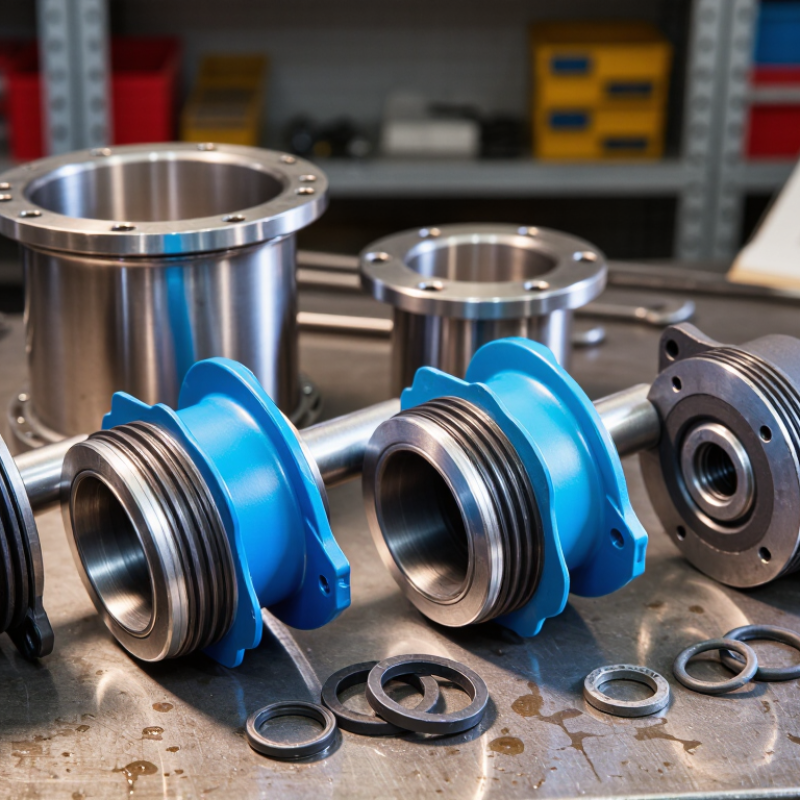
How to Choose the Best Mud Pump Piston?

Define Pump Duty by Flow Rate, Stroke Speed, and Liner Bore

Mud-pump duty starts with required flow, not piston price. Record the circulation target in gallons per minute, then check available stroke speed and liner bore. The IADC Drilling Manual’s triplex-pump displacement method estimates theoretical output as 0.000243 × liner bore² × stroke length × strokes per minute, in barrels per minute. For a 6.5-inch liner, 12-inch stroke, and 100 strokes per minute, that equals about 12.3 barrels per minute before losses. Real output is lower because valves, seals, and fluid compressibility reduce volumetric efficiency. A neat calculation can still mislead.

Match the piston to the working pressure and fluid conditions after estimating flow. Larger liners generally move more fluid per stroke, but require more drive force at the same pressure. Smaller liners can support higher pressure within the pump’s rated limits, while increasing speed to recover flow may accelerate wear. Check the pump data sheet and API Spec 7K requirements for the equipment’s operating limits. Then compare calculated output with a calibrated flow meter or tank-volume check. Watch for pressure pulsation, leakage, and a hot liner surface during a short run. Small details matter. Measurements may also vary with fluid density and solids content, so record both. Recheck the duty point when the drilling program changes; a piston that suits clean water may perform poorly in abrasive mud.

How to Choose the Best Mud Pump Piston? — Define Pump Duty by Flow Rate, Stroke Speed, and Liner Bore
Example Duty Liner Bore Stroke Length Stroke Speed Theoretical Flow Estimated Flow at 90% Volumetric Efficiency Piston Selection Consideration
Lower-flow, larger-bore operation 7.0 in 12 in 60 strokes/min 360 gpm (1,363 L/min) 324 gpm (1,227 L/min) Match the piston diameter and sealing system to the liner. Confirm the pump’s pressure rating and the operating fluid conditions.
Medium-flow operation 6.0 in 12 in 100 strokes/min 440 gpm (1,666 L/min) 396 gpm (1,499 L/min) Check the piston’s pressure and temperature limits, plus compatibility with the drilling fluid and expected solids content.
Higher-flow operation 6.5 in 12 in 120 strokes/min 623 gpm (2,359 L/min) 560 gpm (2,120 L/min) Higher speed can increase heat and wear. Verify the manufacturer’s allowable speed, lubrication, cooling, and fluid-end limits.
High-speed, moderate-bore operation 5.0 in 12 in 140 strokes/min 427 gpm (1,616 L/min) 384 gpm (1,453 L/min) Assess abrasion and heat carefully. Select a piston construction suited to the mud chemistry and solids, and monitor liner condition.
Calculation basis: Illustrative values assume a triplex, single-acting pump. Theoretical flow = 3 × (π × liner bore² ÷ 4) × stroke length × strokes per minute ÷ 231, with dimensions in inches and flow in US gallons per minute. Estimated flow applies a 90% volumetric-efficiency assumption; actual output varies with pump condition, pressure, fluid properties, valve performance, and operating speed. Select a piston that matches the specified liner and pump, and verify all operating limits against the pump documentation.

Match Piston Diameter to Common 4–7.5 in. Mud-Pump Liners

How to Choose the Best Mud Pump Piston?
Match Piston Diameter to Common 4–7.5 in. Mud-Pump Liners

A piston should match the liner’s nominal bore and the pump’s specified piston design. Common liner sizes span 4 to 7.5 inches, often in half-inch steps, but available sizes vary. A 5-inch liner, for example, needs a piston specified for that liner—not simply one that looks close on a bench. Check the pump manual and supplier’s dimensional data before ordering.

Nominal size is only part of the check. Measure the liner bore at several points, since wear or scoring can make its diameter uneven. Confirm the piston’s fit, material, pressure rating, and compatibility with the drilling fluid. Abrasive solids, high operating temperatures, and frequent starts can affect wear life. A tighter fit is not automatically better; follow the stated clearance and installation requirements. I have seen “standard size” create confusion when worn liners were treated as new. It is an easy detail to overlook.

Tips: Record the liner’s marked size and actual condition. Compare both with the piston specification. Inspect the liner for grooves before fitting a replacement. If measurements disagree, pause and verify them rather than guessing.

How to Choose the Best Mud Pump Piston

Match the piston to the mud-pump liner’s nominal bore size.

The chart converts common 4–7.5 in. liner sizes to millimeters (1 in. = 25.4 mm). These are nominal liner bore dimensions, not guaranteed piston outside diameters. Check the measured liner bore and the pump or piston manufacturer’s specified fit and clearance before selecting a piston.

Check API Spec 7K Compliance and the Pump’s Rated Working Pressure

API Spec 7K compliance is a useful starting point when choosing a mud pump piston, but check what the documentation actually covers. The specification applies to drilling and well-servicing equipment; it does not automatically prove that every replacement piston is certified. Ask for traceable product information and confirm the pump or equipment’s compliance scope. A certificate without a matching part description deserves a closer look.

Then compare the piston’s intended service with the pump’s rated working pressure. Never treat the pump rating as permission to exceed the limit of any component in the pressure path. Check the manual and nameplate, and verify that the piston assembly, liner, and related parts are suitable for the planned operating pressure. Pressure is not a guess. Fluid chemistry, temperature, and abrasive solids can also affect sealing and wear. A piston that fits neatly may still be wrong for the service. I would double-check the records before installation; that step is easy to rush, and paperwork can be incomplete. If ratings or compatibility details are unclear, get written confirmation from the equipment supplier before operating.

Compare Piston Options for 5,000- and 7,500-psi Pump Designs

A 5,000-psi mud pump piston should match the pump’s rated pressure, fluid, and operating conditions. In this range, piston options may include different elastomer compounds, bonded designs, or replaceable inserts. A softer compound can seal well against a liner, but abrasive solids may wear it quickly. Check the manufacturer’s pressure and temperature limits, not just the piston’s material name. Small details matter.

For a 7,500-psi design, pressure rating and fit become even more critical. Select a piston specifically approved for that service; a 5,000-psi option is not an acceptable substitute. Higher pressure can increase heat and stress at the sealing surface, especially during long runs or with poor lubrication. Confirm compatibility with the drilling fluid, including oils, salts, and solids. That distinction is easy to overlook.

Compare options using the same operating data: liner size, expected pressure, fluid temperature, and solids content. Ask for documented limits and inspect the piston’s sealing face and bond before installation. Track leakage, wear, and service hours after startup; field results can reveal problems a specification sheet cannot. A longer-wearing piston may cost more upfront, but it is not automatically the better choice. The right answer depends on the actual duty cycle, and that can take a few runs to judge.

Choose Elastomer Material by Mud Chemistry, Temperature, and Abrasion Risk

A mud pump piston’s elastomer should match the fluid it actually contacts, not just the well’s headline temperature. Water-based mud can carry salts and fine solids; oil-based mud may swell a rubber that performs well in water. Nitrile often suits oil exposure, while EPDM is generally more compatible with water-based fluids but performs poorly in oils. These are starting points, not guarantees. Check the full mud recipe, including additives and expected temperature swings.

Ask for immersion and wear data before choosing. ASTM D471 measures changes such as elastomer volume, mass, and hardness after liquid exposure; ASTM D5963 measures abrasion loss. Compare results using the actual mud or a representative fluid at service temperature. API RP 13B-1 provides field methods for measuring drilling-fluid properties, including density, pH, and rheology; record these alongside solids content and temperature when reviewing piston wear. A small swell may still matter if it increases friction in the liner. I would not treat one lab result as a promise: field mud changes, and a good-looking data sheet can miss abrasive particles. Test a candidate against the real fluid where possible.

Copyright 2025 Fluidra S.A. | Created by BCM Marketing Agencia Privacy Policy Legal note | Cookie policy |

Technical cookies are strictly necessary for our website to work and you can navigate through it. These types of cookies are those that, for example, allow us to identify you, give you access to certain restricted parts of the page if necessary, or remember different options or services already selected by you, such as your privacy preferences. Therefore, they are activated by default, your authorization not being necessary in this regard. Through the configuration of your browser, you can block or alert the presence of this type of cookies, although such blocking will affect the proper functioning of the different functionalities of our website.


The analysis cookies allow us to study the navigation of the users of our website in general (for example, which sections of the page are the most visited, which services are used most and if they work correctly, etc.). From the statistical information on navigation on our website, we can improve both the operation of the page itself and the different services it offers. Therefore, these cookies do not have an advertising purpose, but only serve to make our website work better, adapting to our users in general. By activating them you will contribute to this continuous improvement. You can enable or disable these cookies by checking the corresponding box, being disabled by default.


Functionality cookies allow us to remember your preferences, to personalize certain characteristics and general options of our website, every time you access it (for example, the language in which the information is presented to you, the sections marked as favorites, your browser type, etc.) Therefore, this type of cookies does not have an advertising purpose, but by activating them you will improve the functionality of the website (for example, adapting to your type of browser) and the customization of it based on your preferences (for example, by presenting the information in the language that you have chosen in previous occasions), which will contribute to the ease, usability and comfort of our page during your navigation. You can enable or disable these cookies by checking the corresponding box, being disabled by default.


Advertising cookies allow us to manage the advertising spaces included in our website based on criteria such as the content shown or the frequency in which the ads are displayed. For example, if you have been shown the same ad several times on our website, and you have not shown a personal interest by clicking on it, it will not appear again. In summary, by activating this type of cookies, the advertising shown on our website will be more useful and diverse, and less repetitive. You can enable or disable these cookies by checking the corresponding box, being disabled by default.


Behavioral advertising cookies allow us to obtain information based on the observation of your browsing habits and behaviors on the web, in order to show you advertising content that best suits your personal tastes and interests. To understand it in a very simple way, we will give you a fictitious example: if your last searches on the web were related to suspense literature, we would show you advertising about suspense books. Therefore, activating this type of cookies, the advertising that we show you on our website will not be generic, but will be oriented to your searches, tastes and interests, therefore adjusting exclusively to you. You can enable or disable these cookies by checking the corresponding box, being disabled by default.
To understand it in a very simple way, we will give you a fictitious example: if your last searches on the web were related to suspense literature, we would show you advertising about suspense books. Therefore, activating this type of cookies, the advertising that we show you on our website will not be generic, but will be oriented to your searches, tastes and interests, therefore adjusting exclusively to you. You can enable or disable these cookies by checking the corresponding box, being disabled by default.

SAVE

We use our own and third-party cookies to ensure the proper functioning of the website and to analyse our services, improve your experience on our website and show you advertisements related to your interests according to profiling based on your browsing habits (e.g. websites visited). You can accept all cookies by clicking "ACCEPT" or set or reject them by clicking here. If you would like to know more about the use of cookies, please see our COOKIE POLICY.


ACCEPT ALL
Reject no essentials



