
How to Choose the Best Metal Plate Cutting Method?
FLUID HANDLING EXPERTS

Blog, all our news

How to Choose the Best Metal Plate Cutting Method?

Choosing the best method for Metal Plate Cutting is essential in today’s manufacturing landscape. In 2021, the global metal cutting tools market was valued at approximately $63 billion, a figure expected to grow steadily. This highlights the importance of selecting the right cutting techniques to meet industry demands effectively.

There are various methods available, each with unique benefits. Traditional techniques like plasma cutting are popular, while advanced technologies such as laser cutting are on the rise. Reports suggest that laser cutting can improve precision by up to 50% compared to older methods. However, not every approach suits every application.

Considerations such as material type, thickness, and production volume influence the decision. While laser cutting offers speed and accuracy, it may not be feasible for thick metal plates. This necessitates a deep understanding of each method's strengths and limitations. An informed choice will enhance productivity and cost-effectiveness.
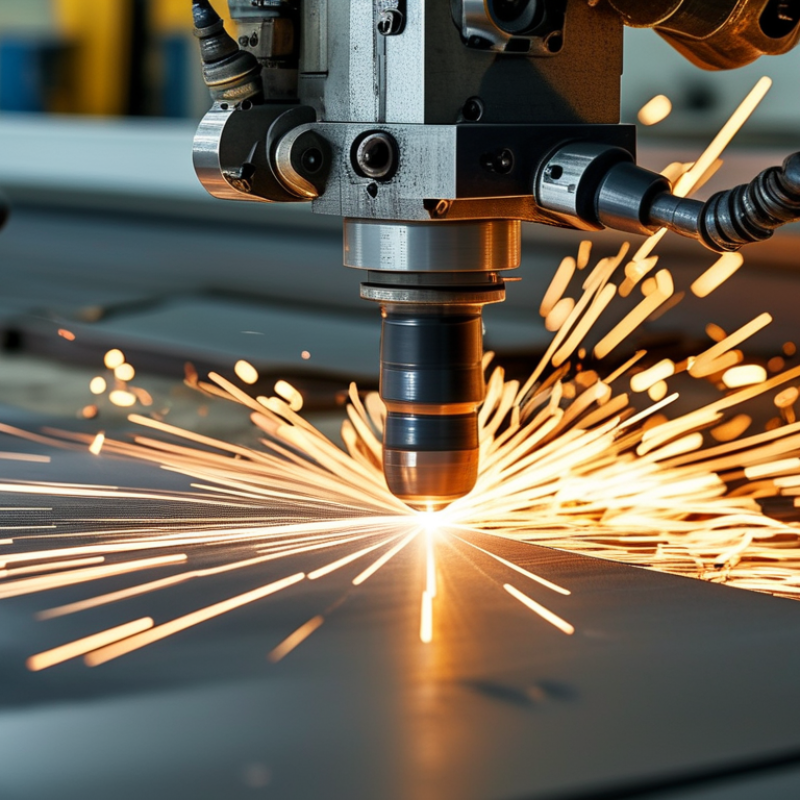
How to Choose the Best Metal Plate Cutting Method?

Factors to Consider When Selecting a Metal Plate Cutting Method

Choosing the best metal plate cutting method requires careful consideration of several factors. The material type and thickness play a significant role. Some methods excel with thin sheets, while others work best for heavy plates. Understanding the specific characteristics of the metal can lead to better decisions.

Tips: Always assess the material’s heat sensitivity. Some metals might warp under heat during cutting. A careful choice of method can prevent unnecessary waste.

The desired cutting precision is another essential factor. Laser cutting offers high accuracy but may be more costly. Meanwhile, plasma cutting can cut thicker materials but might sacrifice precision. It’s essential to align your budget with the required quality.

Tips: Don’t overlook the finish quality. A rough edge may increase post-processing time, impacting overall efficiency. Consulting with experienced professionals can provide insights into the best practices for your specific project.

Comparison of Metal Plate Cutting Methods

Overview of Popular Metal Plate Cutting Techniques and Their Applications

When it comes to metal plate cutting techniques, understanding their applications can help in making educated decisions. Laser cutting is highly precise and versatile. It works well with various materials, from stainless steel to aluminum. This method produces minimal waste and results in clean edges. However, setup costs can be high, and thick materials may pose challenges.

On the other hand, plasma cutting is effective for thicker plates. This technique uses ionized gas to create a high-temperature arc. It is faster than laser cutting but may leave rough edges. It's best suited for heavy-duty applications and is often used in construction and manufacturing. Yet, the skill of the operator is crucial for maintaining quality, highlighting a potential area for improvement.

Oxy-fuel cutting remains popular for its simplicity and affordability. It can handle various thicknesses and is accessible for shops with limited budgets. However, the heat-affected zone can cause warping. Balancing cost with quality is often a dilemma for many fabricators. Each method comes with strengths and weaknesses, demanding a careful evaluation of project needs.

How to Choose the Best Metal Plate Cutting Method?

Cutting Method Material Compatibility Cut Quality Thickness Range Cost Efficiency Typical Applications
Laser Cutting Steel, Aluminum, Stainless Steel High precision, Smooth edges Up to 25mm Moderate to High Automotive, Aerospace, Artworks
Plasma Cutting Steel, Stainless Steel, Copper Good accuracy, Varies with thickness Up to 100mm Low to Moderate Shipbuilding, Pipe Cutting, Industrial Fabrication
Waterjet Cutting All Metals, Glass, Stone Excellent finish, No heat-affected zone Up to 200mm Moderate Aerospace, Automotive, Architectural
Oxy-Fuel Cutting Carbon Steel Good quality, Burrs possible Up to 300mm Very Low Heavy Steel Structures, Pipeline Production

Comparative Analysis of Cutting Speed and Precision in Different Methods

When selecting a metal plate cutting method, speed and precision are crucial considerations. Different methods offer unique advantages and drawbacks. For instance, plasma cutting is known for its speed, but it may compromise on precision. This approach uses a high-velocity stream of ionized gas to melt metal, allowing for rapid processing. However, the cut edges can be rough, requiring additional finishing work.

On the other hand, laser cutting delivers exceptional precision. It utilizes a focused laser beam to achieve clean cuts in various thicknesses. The fine tolerance reduces the need for post-processing. Yet, laser cutting can be slower compared to plasma, especially with thicker materials.

Waterjet cutting represents another option, offering a balance between speed and precision. It uses high-pressure water mixed with abrasive material to cut through metal.

Each method presents its own set of challenges. A high cutting speed might lead to thermal distortion in certain materials. Conversely, methods that prioritize precision could extend production time, impacting productivity. It's essential to evaluate the project requirements and limitations carefully. Understanding these nuances can aid in choosing the most suitable method for your needs.

Evaluating Material Type and Thickness for Optimal Cutting Choices

When evaluating metal plate cutting methods, material type and thickness play a crucial role. Different metals require diverse techniques. For thinner materials, laser cutting is often ideal. It provides precision and minimizes waste. Thicker plates, however, may benefit from plasma cutting or waterjet methods. Each has unique strengths depending on the metal's properties.

Consider the specific application. For example, aluminum is softer and can be cut easily with laser options. In contrast, stainless steel demands more robust solutions due to its durability. It's important to understand that not every method is equally effective for all materials. Sometimes, trial and error leads to the best results.

**Tips:** Always test a sample piece before committing to a method. This can reveal the limitations of certain techniques. For safety, ensure all precautions are taken, especially with high-powered tools. Reflect on past projects to improve future decisions. Understanding your material is key to achieving desired results.

Cost Analysis: Budgeting for Metal Plate Cutting Projects and Methods

When budgeting for metal plate cutting projects, understanding the costs associated with various methods is essential. For example, laser cutting offers precision but may come with higher initial costs. A report by the Fabricators and Manufacturers Association (FMA) indicates that laser cutting costs can range from $0.50 to $5.00 per inch, depending on material thickness. In contrast, plasma cutting often presents a lower upfront cost, typically averaging between $0.30 and $2.00 per inch.

Material waste is another critical factor. Techniques like waterjet cutting generate minimal waste, potentially reducing overall material costs. However, the operational expenses for waterjet technology can be significant, with maintenance and energy costs averaging around $10 per hour. According to a study by the American Welding Society, budget planners should also consider downstream costs, such as finishing processes. These additional steps can inflate the total project cost by up to 25%. It's crucial to weigh the trade-offs between initial costs and long-term efficiencies to make informed choices in metal plate cutting methods.

Copyright 2025 Fluidra S.A. | Created by BCM Marketing Agencia Privacy Policy Legal note | Cookie policy |

Technical cookies are strictly necessary for our website to work and you can navigate through it. These types of cookies are those that, for example, allow us to identify you, give you access to certain restricted parts of the page if necessary, or remember different options or services already selected by you, such as your privacy preferences. Therefore, they are activated by default, your authorization not being necessary in this regard. Through the configuration of your browser, you can block or alert the presence of this type of cookies, although such blocking will affect the proper functioning of the different functionalities of our website.


The analysis cookies allow us to study the navigation of the users of our website in general (for example, which sections of the page are the most visited, which services are used most and if they work correctly, etc.). From the statistical information on navigation on our website, we can improve both the operation of the page itself and the different services it offers. Therefore, these cookies do not have an advertising purpose, but only serve to make our website work better, adapting to our users in general. By activating them you will contribute to this continuous improvement. You can enable or disable these cookies by checking the corresponding box, being disabled by default.


Functionality cookies allow us to remember your preferences, to personalize certain characteristics and general options of our website, every time you access it (for example, the language in which the information is presented to you, the sections marked as favorites, your browser type, etc.) Therefore, this type of cookies does not have an advertising purpose, but by activating them you will improve the functionality of the website (for example, adapting to your type of browser) and the customization of it based on your preferences (for example, by presenting the information in the language that you have chosen in previous occasions), which will contribute to the ease, usability and comfort of our page during your navigation. You can enable or disable these cookies by checking the corresponding box, being disabled by default.


Advertising cookies allow us to manage the advertising spaces included in our website based on criteria such as the content shown or the frequency in which the ads are displayed. For example, if you have been shown the same ad several times on our website, and you have not shown a personal interest by clicking on it, it will not appear again. In summary, by activating this type of cookies, the advertising shown on our website will be more useful and diverse, and less repetitive. You can enable or disable these cookies by checking the corresponding box, being disabled by default.


Behavioral advertising cookies allow us to obtain information based on the observation of your browsing habits and behaviors on the web, in order to show you advertising content that best suits your personal tastes and interests. To understand it in a very simple way, we will give you a fictitious example: if your last searches on the web were related to suspense literature, we would show you advertising about suspense books. Therefore, activating this type of cookies, the advertising that we show you on our website will not be generic, but will be oriented to your searches, tastes and interests, therefore adjusting exclusively to you. You can enable or disable these cookies by checking the corresponding box, being disabled by default.
To understand it in a very simple way, we will give you a fictitious example: if your last searches on the web were related to suspense literature, we would show you advertising about suspense books. Therefore, activating this type of cookies, the advertising that we show you on our website will not be generic, but will be oriented to your searches, tastes and interests, therefore adjusting exclusively to you. You can enable or disable these cookies by checking the corresponding box, being disabled by default.

SAVE

We use our own and third-party cookies to ensure the proper functioning of the website and to analyse our services, improve your experience on our website and show you advertisements related to your interests according to profiling based on your browsing habits (e.g. websites visited). You can accept all cookies by clicking "ACCEPT" or set or reject them by clicking here. If you would like to know more about the use of cookies, please see our COOKIE POLICY.


ACCEPT ALL
Reject no essentials


