
How to Choose the Best Line Boring Machine?
FLUID HANDLING EXPERTS

Blog, all our news

How to Choose the Best Line Boring Machine?

Choosing the right Line Boring Machine starts with the repair, not the catalog. A worn excavator boom, a loader linkage, and a large industrial housing each present different access, alignment, and bore-size challenges. Measure the bore diameter and length, inspect the surrounding structure, and note how much room remains for setup. A compact machine may fit a crowded worksite, while a larger unit may offer useful capacity for heavier repairs. Neither choice is automatically better.

Look closely at the machine’s working range, mounting options, feed control, and available tooling. Check whether the setup can stay rigid on the actual component; even a capable machine can produce poor results if its supports shift or the workpiece is misaligned. Ask for documented accuracy limits and clear guidance on setup, maintenance, and operator training. When possible, compare those details with a demonstration or a similar repair—not only with brochure figures.

Practical details matter. A long cable run, limited power, awkward lifting, or slow tool changes can turn a promising purchase into a difficult workday. Confirm what the package includes and whether replacement parts and technical support are accessible. Also consider how often the machine will be used and whether one system can handle your expected range of jobs. There is no perfect choice for every workshop. A careful shortlist, based on real measurements and working conditions, is a better starting point than buying the largest or most feature-rich model. Some details only become clear after setup, so leave room to reassess.
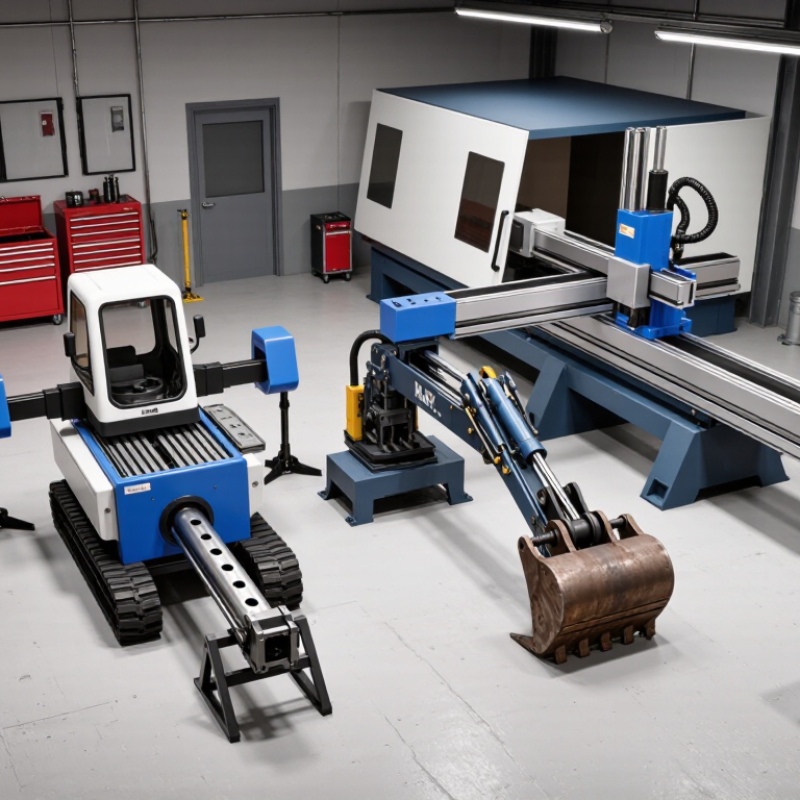
How to Choose the Best Line Boring Machine?

Define the Job: Record Bore Diameter, Length, and Required Tolerance

Before choosing a line boring machine, write down the bore’s finished diameter, usable length, and specified tolerance. Measure the existing bore at several depths and in two directions; a 60 mm opening may be oval or tapered, not truly cylindrical. Note access limits, setup clearance, and whether the job requires in-place machining. A tape measure cannot establish a precision bore. Use a calibrated bore gauge or suitable measuring system, and record the instrument and measurement conditions.

Tolerance changes the machine and setup requirements. ISO 286-1:2010 lists an IT7 tolerance of 30 micrometres for nominal sizes over 50 mm through 80 mm. That is a reference tolerance grade, not an automatic job specification: the drawing’s fit and geometric requirements take priority. Record roundness, straightness, and alignment needs separately where they matter. Also note the bore’s full length, since a long reach can increase tool deflection and make the target harder to hold. Small details matter. Recheck measurements after cleaning the surface; chips, wear, or temperature can skew readings. And be honest about uncertainty—one quick measurement may feel sufficient, but it can lead to the wrong machine choice.

Match Capacity: Compare Machine Bore Range, Bar Diameter, and Stroke

How to Choose the Best Line Boring Machine?

Match capacity to the repair, not just the largest bore listed. Measure the worn housing at its widest point, then allow room for alignment and setup. For example, a 120 mm bore may need a machine rated beyond 120 mm once tool clearance and mounting space are considered. Check the full working bore range, since some machines reach their maximum only with a specific bar or configuration. Fit matters.

Bar diameter affects rigidity. A long, thin bar can deflect under cutting load, leaving chatter marks or an uneven finish. Compare the required reach with the bar’s supported length, and check whether the machine accepts a stiffer bar for that setup. Stroke must also cover the entire repair area without repeated repositioning. That can be easy to overlook.

ISO 230-1:2012 and ISO 230-2:2014 describe standardized tests for machine-tool geometry and axis positioning; request relevant test results when available, rather than relying only on catalog figures. Record the bore, reach, bar diameter, and stroke from a real job. A simple worksheet helps, though field measurements are rarely perfect. Keep a little margin for wear, fixtures, and awkward access.

Set Accuracy: Specify Bore Tolerance Using ISO 286-1 Fit Classes

A line boring machine should be selected against a measurable bore requirement, not a vague claim of precision.

ISO 286-1 fit classes provide a shared way to specify limits around a nominal diameter. For a bore, a designation such as H7 defines a tolerance zone; the actual limits depend on the nominal size range. The letter sets the zone position, while the number identifies its tolerance grade. Check the applicable standard tables before setting the target.

Choose the bore class from the mating part and operating conditions. An H7 bore paired with a g6 shaft, for example, commonly forms a clearance fit, but the resulting clearance varies with diameter. Then compare the permitted bore tolerance with the machine’s stated accuracy and your measurement method. A dial bore gauge, clean reference surfaces, and a stable temperature matter.

Small details count. On a long workpiece, bar deflection, fixture movement, or heat can shift the finished diameter. I have seen setup assumptions look neat on paper and fail at the far end of a bore. Leave a practical allowance for those conditions, and verify the result at several positions along the bore.

Choose the Drive: Compare Spindle Speed, Torque, and Feed Rate

When choosing a line boring machine, match the drive to the cut, not just the advertised speed. Spindle speed controls how quickly the cutter travels around the bore, while torque helps it maintain cutting power as resistance rises. A large bore, tough material, or uneven surface may call for steady torque at modest speed. High rpm can seem efficient, but a flexible setup may chatter, overheat, or leave a rough finish. More speed is not always better.

Feed rate controls how quickly the tool advances along the bore. Too much feed can overload the cutter; too little can rub the cutting edge and waste time. Check whether the machine lets you adjust feed independently, and look for stable performance under load rather than relying on no-load figures. I would compare the drive against the material, bore diameter, cutter, and available support before deciding. A short test cut can reveal vibration or finish problems that specifications miss. Real conditions are rarely perfect, so leave room to slow the feed or change speed as the cut develops.

How to Choose the Best Line Boring Machine? - Choose the Drive: Compare Spindle Speed, Torque, and Feed Rate

Drive type Typical spindle speed Typical spindle torque Typical axial feed Main advantages Best suited to
Electric About 5–300 rpm, depending on gearing and control About 20–200 N·m at the spindle, depending on motor and reduction Common cutting-feed settings: about 0.05–0.30 mm/rev Convenient speed control; easy to power where electrical supply is available Workshops and field jobs with reliable power and a range of materials or bore sizes
Hydraulic About 5–250 rpm, depending on flow and motor displacement About 50–300 N·m at the spindle, depending on pressure and reduction Common cutting-feed settings: about 0.05–0.30 mm/rev High torque at low speed; drive unit can be positioned away from the cutting area Heavy-duty cutting, restricted access, or sites already equipped with hydraulic power
Pneumatic About 20–300 rpm, depending on air pressure, airflow, and gearing About 10–100 N·m at the spindle, depending on motor and reduction Common cutting-feed settings: about 0.05–0.30 mm/rev No electric motor at the cutting head; suitable where compressed air is available Lighter-duty work or locations where electrical equipment is unsuitable

Figures are indicative selection ranges, not guaranteed specifications. Actual spindle speed and torque vary with motor size, gearing, supply conditions, and machine setup. Axial feed is generally set by the feed mechanism and cutting conditions, rather than by the drive type alone. Follow the machine and tooling manufacturers’ recommendations for the material, cutter, and bore diameter.

Plan the Setup: Check Alignment, Clamping, and On-Site Access

Choosing the best line boring machine starts with the job geometry, not the catalogue. Measure bore diameter, center distance, and available travel at the workpiece. Then check alignment from stable reference points, using a straightedge, laser, or dial indicator as the setup requires. Record the readings before cutting. A few minutes here can prevent a tapered bore or uneven tool wear.

Clamping must resist cutting forces without distorting the housing. Clean the contact faces, place supports near the bore, and tighten clamps evenly. Recheck alignment after clamping; it can shift. Small details matter. The U.S. Department of Energy’s 2014 motor-systems sourcebook estimates that motor-driven systems account for about 54% of U.S. manufacturing electricity use. That figure is not specific to boring machines, but it reinforces the value of checking site power and supply capacity before choosing a unit.

Access gets overlooked. Measure the route through doors and around adjacent equipment, then confirm room for the machine, operator, cables, and chip removal. Check whether the setup allows safe tool changes and clear viewing of the cut. A compact machine may fit the bore but leave no space for its supports. The plan can look perfect on paper and still fail in the field. Revisit it after the first dry fit.

Copyright 2025 Fluidra S.A. | Created by BCM Marketing Agencia Privacy Policy Legal note | Cookie policy |

Technical cookies are strictly necessary for our website to work and you can navigate through it. These types of cookies are those that, for example, allow us to identify you, give you access to certain restricted parts of the page if necessary, or remember different options or services already selected by you, such as your privacy preferences. Therefore, they are activated by default, your authorization not being necessary in this regard. Through the configuration of your browser, you can block or alert the presence of this type of cookies, although such blocking will affect the proper functioning of the different functionalities of our website.


The analysis cookies allow us to study the navigation of the users of our website in general (for example, which sections of the page are the most visited, which services are used most and if they work correctly, etc.). From the statistical information on navigation on our website, we can improve both the operation of the page itself and the different services it offers. Therefore, these cookies do not have an advertising purpose, but only serve to make our website work better, adapting to our users in general. By activating them you will contribute to this continuous improvement. You can enable or disable these cookies by checking the corresponding box, being disabled by default.


Functionality cookies allow us to remember your preferences, to personalize certain characteristics and general options of our website, every time you access it (for example, the language in which the information is presented to you, the sections marked as favorites, your browser type, etc.) Therefore, this type of cookies does not have an advertising purpose, but by activating them you will improve the functionality of the website (for example, adapting to your type of browser) and the customization of it based on your preferences (for example, by presenting the information in the language that you have chosen in previous occasions), which will contribute to the ease, usability and comfort of our page during your navigation. You can enable or disable these cookies by checking the corresponding box, being disabled by default.


Advertising cookies allow us to manage the advertising spaces included in our website based on criteria such as the content shown or the frequency in which the ads are displayed. For example, if you have been shown the same ad several times on our website, and you have not shown a personal interest by clicking on it, it will not appear again. In summary, by activating this type of cookies, the advertising shown on our website will be more useful and diverse, and less repetitive. You can enable or disable these cookies by checking the corresponding box, being disabled by default.


Behavioral advertising cookies allow us to obtain information based on the observation of your browsing habits and behaviors on the web, in order to show you advertising content that best suits your personal tastes and interests. To understand it in a very simple way, we will give you a fictitious example: if your last searches on the web were related to suspense literature, we would show you advertising about suspense books. Therefore, activating this type of cookies, the advertising that we show you on our website will not be generic, but will be oriented to your searches, tastes and interests, therefore adjusting exclusively to you. You can enable or disable these cookies by checking the corresponding box, being disabled by default.
To understand it in a very simple way, we will give you a fictitious example: if your last searches on the web were related to suspense literature, we would show you advertising about suspense books. Therefore, activating this type of cookies, the advertising that we show you on our website will not be generic, but will be oriented to your searches, tastes and interests, therefore adjusting exclusively to you. You can enable or disable these cookies by checking the corresponding box, being disabled by default.

SAVE

We use our own and third-party cookies to ensure the proper functioning of the website and to analyse our services, improve your experience on our website and show you advertisements related to your interests according to profiling based on your browsing habits (e.g. websites visited). You can accept all cookies by clicking "ACCEPT" or set or reject them by clicking here. If you would like to know more about the use of cookies, please see our COOKIE POLICY.


ACCEPT ALL
Reject no essentials


