
How to Choose the Best Laser Cleaning Equipment?
FLUID HANDLING EXPERTS

Blog, all our news

How to Choose the Best Laser Cleaning Equipment?

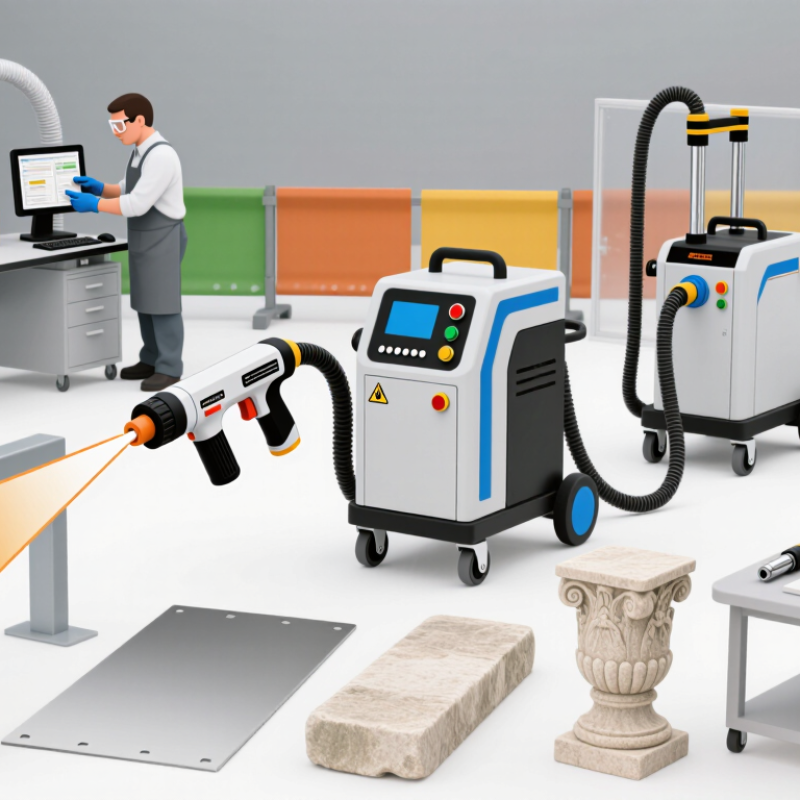
Choosing the right Laser Cleaning Equipment starts with the surface, not the machine’s headline power rating. A steel bracket with light rust needs a different approach from a painted aluminum panel or a delicate stone feature. The wrong settings can discolor, pit, or otherwise damage a workpiece. Small test areas matter.

Before comparing models, define the contaminant and the required finish. Is the target rust, paint, oil, oxide, or residue inside a narrow seam? Note the part’s material, size, shape, and condition. Then compare laser type, average power, pulse energy, repetition rate, scan width, and working distance against the actual task. Specifications only make sense in context. A higher power rating is not automatically better.

Also consider the conditions around the job. Check whether the equipment supports suitable fume extraction, protective enclosures, safety interlocks, and clear operating guidance. Ask suppliers about sample testing, maintenance intervals, replacement parts, training, and response times for service. A live demonstration on representative material can reveal details that a brochure cannot. Watch for uneven cleaning, heat marks, slow coverage, and awkward access around edges. That takes testing.

There is no universal setting or perfect machine for every workshop. Results depend on the material, contamination, operator technique, and process conditions. Even experienced teams may need to adjust their assumptions after a trial. This guide explains how to compare equipment practically, ask more useful supplier questions, and select a system that fits the work without overlooking safety, upkeep, or the limits of laser cleaning.
How to Choose the Best Laser Cleaning Equipment?

Understand How Laser Cleaning Works and Where It Is Used

How to Choose the Best Laser Cleaning Equipment?

Laser cleaning removes rust, paint, oil, or oxide by directing concentrated light at a surface. The contaminant absorbs energy and heats rapidly; depending on the settings, it may vaporize or break away. The base material responds differently according to its alloy, coating, and condition. That variation matters. Laser cleaning is not simply “point and clean.” Pulse duration, power, scan speed, and working distance all affect the result.

The process is used to prepare metal parts before welding, clean tools and molds, and remove corrosion from equipment. It can also help clean delicate surfaces, but that does not mean every material is suitable. In practice, an initial pass may look uneven, and hidden coatings or surface damage can complicate the job. Check the substrate and test a small area before choosing equipment. A clean appearance alone does not confirm that the surface is undamaged.

Tips: Match the laser’s power and pulse settings to the material and contaminant. Use suitable eye protection and fume extraction, especially when coatings are present. Record test settings; small changes can affect cleaning quality.

How to Choose the Best Laser Cleaning Equipment

Common laser wavelengths used in cleaning systems

Laser cleaning removes contaminants by directing controlled laser energy at a surface. Near-infrared 1064 nm systems are widely used in industrial cleaning; 532 nm and 355 nm options are also available for applications that benefit from different absorption characteristics. Wavelength alone does not determine the best equipment: match the laser to the substrate, contaminant, required throughput, and surface-finish limits, and validate the settings on a sample.

Define the Contaminant, Surface Material, and Cleaning Goals

Choosing laser cleaning equipment starts with identifying what must be removed. Rust, paint, oil, and oxide scale respond differently to laser energy. Note the contaminant’s thickness, coverage, and bond to the surface. A thin oxide layer on steel is not the same job as several paint layers on a delicate component.

Then assess the base material and the desired finish. Steel, aluminum, stone, and composite surfaces tolerate different amounts of heat and energy. Decide whether you need complete removal, light surface preparation, or selective cleaning that preserves an underlying coating. Define practical limits too, such as acceptable discoloration, surface texture, and cleaning speed. Test a small, inconspicuous area before setting production parameters. Results can vary more than expected.

Tips: Ask for trials using your actual contaminant and material, not a similar sample. Check whether the system allows controlled adjustments to pulse energy, spot size, and scan speed. Provide suitable ventilation and dust collection for released particles. Keep records of settings and results; one overlooked variable can change the finish.

Compare Laser Types, Power Levels, and Operating Modes

Laser cleaning equipment should be compared by laser type, power, and operating mode—not by wattage alone. Pulsed lasers deliver energy in short bursts, which can remove rust or paint while limiting heat buildup on thin metal. Continuous-wave systems provide a steady beam and can clean robust surfaces faster, but may leave more heat in the workpiece. Fiber lasers are common for metal cleaning; the best choice still depends on the material and contamination.

Power is not everything. Check pulse energy, repetition rate, spot size, and scanning speed together. A high-power unit can damage a delicate surface if its settings are poorly matched. Test a sample first. A small, marked test area can reveal discoloration or surface changes before full production. I would not claim one setting suits every job; it rarely does.

Tips: Match protective eyewear to the laser wavelength, and use suitable fume extraction. Compare handheld and automated modes, too: handheld units offer flexibility for awkward parts, while automated systems can give more consistent coverage. Ask for a practical demonstration on a sample similar to your workpiece. Record the settings and inspect the surface under bright, angled light; missed patches can be easy to overlook.

Assess Safety Features, Portability, and Maintenance Needs

How to Choose the Best Laser Cleaning Equipment?

Assess Safety Features, Portability, and Maintenance Needs

When comparing laser cleaning equipment, examine its safety controls before focusing on output. Check for beam shields, emergency stops, interlocks, and clear warning indicators. The manual should specify eye protection for the equipment’s wavelength and operating conditions. Never assume ordinary safety glasses are sufficient. Reflective surfaces, nearby workers, and poor ventilation can all affect a work area’s risk. A tidy demonstration may not reveal these challenges.

Portability matters when equipment moves between a workshop, a vehicle frame, and tight corners. Compare the complete system’s weight, including the cleaning head, cables, and extraction unit. Check whether handles feel comfortable and cables catch on nearby fixtures. A compact unit may be easier to carry, yet a short hose or awkward control can slow the job. Try a realistic setup if possible. Small details matter.

Maintenance should fit your staff and schedule. Ask how often filters, lenses, and cooling components need inspection. Look for accessible service points and clear fault indicators. Dust around vents is easy to miss, and it can shorten component life. Keep essential consumables available, but make sure staff know how to identify and store them. No system is maintenance-free. Record cleaning intervals during use, then reconsider them when working conditions change.

Test Equipment Performance Against Your Cleaning Requirements

Choose laser cleaning equipment by testing it against the actual task, not its advertised maximum power. Prepare coupons from the same material and contamination found on site. Test a small range of pulse energy and scan speeds. Record cleaning time, surface temperature, visible residue, and any change in surface texture. For steel that will be coated, compare results with ISO 8501-1 cleanliness grades, including Sa 2½, and assess remaining dust using the ISO 8502-3 tape method. These checks make comparisons more repeatable. A clean-looking panel can still hide residue.

Tips: Test edges, seams, and flat areas. Keep the nozzle distance and angle consistent. Photograph each coupon under the same lighting.

The NACE IMPACT study estimated global corrosion costs at US$2.5 trillion in 2013, or about 3.4% of global GDP. It also estimated that corrosion-control practices could save 15–35% of those costs. This is not a laser-cleaning performance benchmark, but it shows why preserving the substrate matters. Compare each system’s cleaning rate with its effect on the surface, then repeat the test on more than one coupon. Results may vary with coating thickness, rust scale, and operator technique. Record those limits instead of treating one successful pass as proof.

How to Choose the Best Laser Cleaning Equipment? - Test Equipment Performance Against Your Cleaning Requirements
Equipment Type Typical Laser Output Best-Suited Cleaning Requirements Typical Contaminants Cleaning Speed Potential Substrate Control Key Performance Test
Pulsed fiber laser cleaner Typically 20–500 W average power; short pulses, often in the nanosecond range Precision work, localized cleaning, thin coatings, and applications where heat input must be controlled Oxide films, light rust, paint, and surface residues Low to moderate; depends on pulse energy, scan width, and number of passes Generally offers good control on suitable metals, but settings must be tested to avoid surface marking or damage Compare removal rate and surface condition at several power, frequency, and scan-speed settings
Continuous-wave fiber laser cleaner Commonly about 500–3,000 W; continuous output Large-area cleaning and higher-throughput removal on robust metal surfaces Heavy rust, thick oxide, and some paint or coating layers Moderate to high on compatible surfaces; actual throughput varies with contaminant thickness Higher heat input can increase the risk of discoloration, warping, or surface alteration on thin or heat-sensitive parts Measure area cleaned per minute while checking surface temperature, roughness, and dimensional change
High-power continuous-wave system Often above 3,000 W, depending on the system configuration Large, heavily contaminated workpieces where production throughput is a priority Thick rust, scale, and tenacious surface deposits on suitable materials High potential on large areas, subject to safe operating distance and process validation Requires careful control because concentrated heat can affect the base material Run a production-scale trial and inspect for residual contamination, heat effects, and repeatability
Compact handheld laser cleaner Usually a lower-power configuration; available as pulsed or continuous-wave equipment On-site maintenance, small parts, weld areas, and locations that are difficult to move to a fixed station Light to moderate rust, oxide, paint, and localized residues Low to moderate; operator movement and access strongly affect results Depends on laser mode and operator technique; use a test area before cleaning valuable surfaces Check cleaning consistency across operators, reach, setup time, and results on representative parts
Automated or integrated laser cleaning cell Power and pulse mode selected to match the part and production process Repeated, high-volume jobs requiring consistent coverage and integration with a production line Process-specific rust, oxide, coatings, or residues Potentially high and repeatable after process optimization Can provide consistent control when part positioning, fixturing, and laser parameters are validated Verify cycle time, coverage, part-to-part consistency, and safety interlocks during a sustained production trial
Requirement to verify Confirm average power, pulse energy (if applicable), pulse duration, repetition rate, and wavelength from the equipment specification Define the target material, contaminant, required cleanliness, acceptable surface finish, and production rate before selection Test the actual contaminant and its thickness; mixed or layered deposits may need different settings Record cleaned area per minute or cycle time using a representative part and a consistent measurement method Inspect for discoloration, roughness change, pitting, warping, and any effect on coatings or underlying material Request a sample trial using the intended material and contamination level; compare results against written acceptance criteria
Note: Power ranges and performance descriptions are general examples, not guaranteed specifications. Actual results depend on laser parameters, optics, scan pattern, working distance, material, contaminant, and operating conditions. Follow the equipment safety instructions and applicable laser-safety requirements.
Copyright 2025 Fluidra S.A. | Created by BCM Marketing Agencia Privacy Policy Legal note | Cookie policy |

Technical cookies are strictly necessary for our website to work and you can navigate through it. These types of cookies are those that, for example, allow us to identify you, give you access to certain restricted parts of the page if necessary, or remember different options or services already selected by you, such as your privacy preferences. Therefore, they are activated by default, your authorization not being necessary in this regard. Through the configuration of your browser, you can block or alert the presence of this type of cookies, although such blocking will affect the proper functioning of the different functionalities of our website.


The analysis cookies allow us to study the navigation of the users of our website in general (for example, which sections of the page are the most visited, which services are used most and if they work correctly, etc.). From the statistical information on navigation on our website, we can improve both the operation of the page itself and the different services it offers. Therefore, these cookies do not have an advertising purpose, but only serve to make our website work better, adapting to our users in general. By activating them you will contribute to this continuous improvement. You can enable or disable these cookies by checking the corresponding box, being disabled by default.


Functionality cookies allow us to remember your preferences, to personalize certain characteristics and general options of our website, every time you access it (for example, the language in which the information is presented to you, the sections marked as favorites, your browser type, etc.) Therefore, this type of cookies does not have an advertising purpose, but by activating them you will improve the functionality of the website (for example, adapting to your type of browser) and the customization of it based on your preferences (for example, by presenting the information in the language that you have chosen in previous occasions), which will contribute to the ease, usability and comfort of our page during your navigation. You can enable or disable these cookies by checking the corresponding box, being disabled by default.


Advertising cookies allow us to manage the advertising spaces included in our website based on criteria such as the content shown or the frequency in which the ads are displayed. For example, if you have been shown the same ad several times on our website, and you have not shown a personal interest by clicking on it, it will not appear again. In summary, by activating this type of cookies, the advertising shown on our website will be more useful and diverse, and less repetitive. You can enable or disable these cookies by checking the corresponding box, being disabled by default.


Behavioral advertising cookies allow us to obtain information based on the observation of your browsing habits and behaviors on the web, in order to show you advertising content that best suits your personal tastes and interests. To understand it in a very simple way, we will give you a fictitious example: if your last searches on the web were related to suspense literature, we would show you advertising about suspense books. Therefore, activating this type of cookies, the advertising that we show you on our website will not be generic, but will be oriented to your searches, tastes and interests, therefore adjusting exclusively to you. You can enable or disable these cookies by checking the corresponding box, being disabled by default.
To understand it in a very simple way, we will give you a fictitious example: if your last searches on the web were related to suspense literature, we would show you advertising about suspense books. Therefore, activating this type of cookies, the advertising that we show you on our website will not be generic, but will be oriented to your searches, tastes and interests, therefore adjusting exclusively to you. You can enable or disable these cookies by checking the corresponding box, being disabled by default.

SAVE

We use our own and third-party cookies to ensure the proper functioning of the website and to analyse our services, improve your experience on our website and show you advertisements related to your interests according to profiling based on your browsing habits (e.g. websites visited). You can accept all cookies by clicking "ACCEPT" or set or reject them by clicking here. If you would like to know more about the use of cookies, please see our COOKIE POLICY.


ACCEPT ALL
Reject no essentials


