
How to Choose the Best Garden Sun Screen Netting?
FLUID HANDLING EXPERTS

Blog, all our news

How to Choose the Best Garden Sun Screen Netting?

Choosing Garden Sun Screen Netting is not just a matter of buying the darkest mesh. The right cover should soften harsh sunlight while still giving plants enough light and airflow. That balance matters more as hot conditions become harder to ignore. The World Meteorological Organization reported that 2024 was about 1.55°C warmer than the 1850–1900 average, making it the warmest year in its observational record. This global figure does not predict the temperature of any one garden. It does underline why practical heat management deserves attention.

Start by checking the net’s shade rating, material, and intended use. University of Florida IFAS Extension guidance explains that shade cloth is rated by the percentage of sunlight it blocks; crop needs and local conditions should guide the choice. A leafy bed in afternoon sun may benefit from different coverage than seedlings under a bright, exposed patio. Too much shade can be a problem. Plants may stretch toward the light, and damp air can linger beneath tightly fitted mesh. Look for UV-stabilized fabric, reinforced edges, and attachment points that can handle wind. Then measure the area, including space for secure fastening.

There is no universally best percentage. That part is easy to underestimate. Watch how the garden responds after installation: note leaf color, soil drying, and midday wilting. A small test section can reveal more than a confident guess. Even good netting cannot fix poor placement or weak supports, so consider both the plants and the structure before choosing.
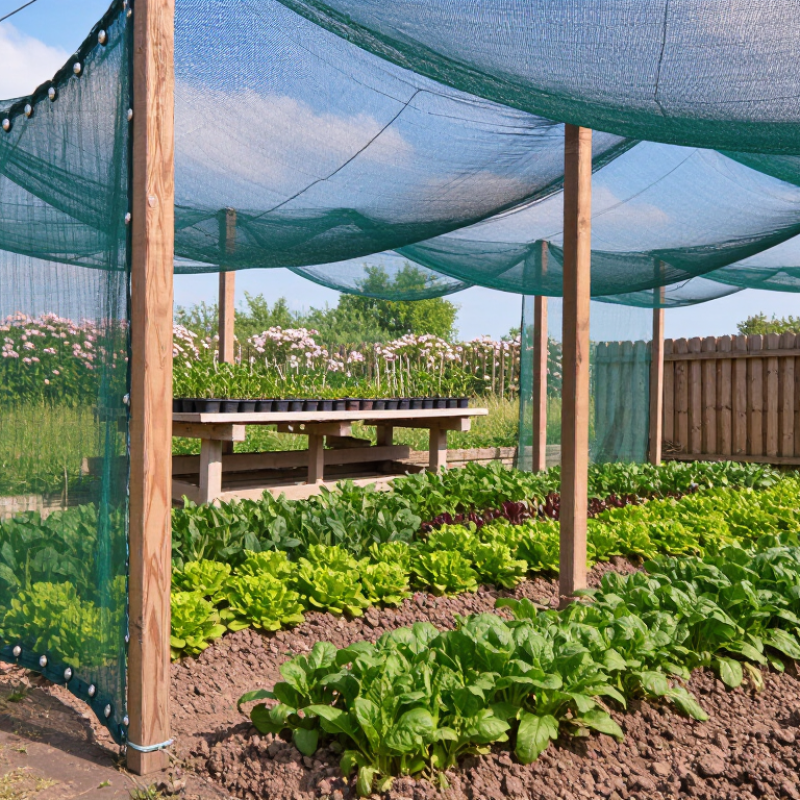
How to Choose the Best Garden Sun Screen Netting?

Understand Shade Ratings: Commercial Garden Nets Commonly Range from 30% to 90%

Commercial garden shade nets commonly range from 30% to 90%. The rating estimates how much sunlight the net blocks, not exactly how cool a garden bed will become. A 30% net still allows plenty of light, making it a reasonable option for tomatoes, peppers, and other sun-loving crops exposed to harsh afternoon sun. In a dry yard with pale paving, however, reflected heat can make that level feel insufficient. Net height, orientation, airflow, and distance from leaves also affect results.

A 50% to 60% rating can offer a useful balance for leafy greens, young transplants, and nursery benches. Watch the plants, not just the label. If lettuce edges scorch by midday, try stronger shade or extend coverage into the afternoon. Nets rated 70% to 90% may help protect sensitive plants during severe heat, but heavy shade can slow growth when crops need bright light. The darkest choice is not always the safest. Test a small area for several days, checking leaves and soil around noon. Shade ratings may not be directly comparable between suppliers, so leave room to adjust.

Match Shade Percentage to Crop Light Needs and Local Sun Exposure

Choosing a garden sun screen net starts with the crop, not the hottest afternoon. Shade percentage describes how much sunlight the net blocks, but plant needs vary. Lettuce and leafy greens often benefit from moderate protection during hot weather. Fruiting crops such as tomatoes usually need more direct light to flower and produce well. Check crop guidance, then treat it as a starting point. A tidy percentage cannot tell the whole story.

Local exposure matters just as much. A bed facing intense afternoon sun may need more protection than one receiving gentle morning light. Dry heat, reflective walls, and long summer days can also increase stress. Start with a conservative shade level and watch the plants for one or two weeks. Scorched leaf edges may signal excess exposure; pale, stretched growth can suggest too much shade. These signs are not perfect diagnoses, so check watering and soil conditions too.

Tips: Compare the net’s shade rating with your crop’s needs, and note how many hours of direct sun reach the bed. Secure the net above the plants, leaving airflow around the sides. Keep a simple weekly record. It may feel fussy, but it helps you adjust before growth slows.

How to Choose the Best Garden Sun Screen Netting?

Match shade percentage to crop light needs and local sun exposure

Bars show general starting ranges, not fixed requirements. In hot, intensely sunny gardens, consider the upper end; in mild or partly shaded sites, start near the lower end. Check plant response and avoid excessive shade, which can reduce growth and fruiting.

Compare HDPE Material, GSM Weight, Mesh Size, and UV Stabilization

How to Choose the Best Garden Sun Screen Netting?

HDPE is a common choice because it resists moisture and handles outdoor use without becoming unnecessarily heavy. Check that the netting feels evenly woven, with no thin patches or loose edges. GSM tells you the fabric’s weight per square meter, but a higher number does not automatically mean better performance. Heavier netting may hold up well in exposed spots, yet it can restrict airflow or require stronger supports. Match the weight to your local wind, frame, and growing season. Feel the fabric.

Mesh size affects what passes through. A wider opening usually allows more air and light, while a tighter weave can block smaller pests and provide deeper shade. But smaller openings may trap heat on still afternoons. Shade percentage and mesh size are related, not interchangeable, so check both specifications. If possible, test a sample above the bed for a few sunny days. Watch the leaves.

UV stabilization matters because sunlight gradually weakens plastic fibers. Ask for clear information about UV treatment and expected outdoor service life; appearance alone cannot confirm protection. I have sometimes focused too much on shade percentage and overlooked airflow. That choice can leave tender plants warmer than expected. Inspect seams and attachment points too, since abrasion often starts where netting rubs against a frame.

Check UV Weathering-Test Data Under ASTM G154 Before Buying

Before buying garden sun screen netting, ask for the UV weathering-test report, not just a claim of “UV resistant.”

ASTM G154 describes methods for exposing materials to fluorescent ultraviolet light and moisture. The report should identify the lamp type, exposure cycle, temperature, and test duration.

Details matter. Two products tested under different settings may not be directly comparable, even if both mention ASTM G154.

Look for results tied to the netting’s actual construction, including yarn, coating, and color. Ask whether the sample was checked for fading, brittleness, cracking, or loss of tensile strength after exposure.

A pale, brittle corner on a tested sample may tell you more than a broad marketing claim. Still, ASTM G154 does not set one universal pass mark, and test hours cannot reliably be translated into years outdoors.

That part is easy to overlook. Use the data as evidence for comparing products, then consider your local sun, heat, wind, and seasonal storage.

I would treat a strong report as a useful clue, not a guarantee; real gardens are messy, and the test cannot reproduce every site condition.

Plan Net Coverage, Airflow, and Watering Around the Shade Rating

A shade rating describes how much sunlight a net blocks, but it does not tell you how cool every plant will stay. Check the stated rating and product specifications, since testing methods can vary. Start with the crop. Leafy greens often tolerate more shade than fruiting plants, which usually need stronger light to produce well. In a small garden, note which beds receive harsh afternoon sun before choosing coverage.

Measure the area you want to shade, then allow room to secure the net without pulling it tight across plants. A low, taut cover can restrict airflow and trap warm, damp air around leaves. Leave open sides or raise the net on a simple frame, especially in humid weather. Watch how it moves on breezy days; a loose edge can flap against tender shoots. I have seen gardeners cover the whole bed when only one row needed relief. That choice can leave nearby seedlings short of light.

Shading also changes how quickly soil dries. Check beneath the net with a finger, not just the exposed surface, and water when the root zone begins to dry. Watch the soil. Drip lines may need repositioning if the cover redirects rain or leaves some rows drier than others. Adjust watering gradually after installation, then check plants during the hottest part of the day for wilting, pale leaves, or slow growth.

Copyright 2025 Fluidra S.A. | Created by BCM Marketing Agencia Privacy Policy Legal note | Cookie policy |

Technical cookies are strictly necessary for our website to work and you can navigate through it. These types of cookies are those that, for example, allow us to identify you, give you access to certain restricted parts of the page if necessary, or remember different options or services already selected by you, such as your privacy preferences. Therefore, they are activated by default, your authorization not being necessary in this regard. Through the configuration of your browser, you can block or alert the presence of this type of cookies, although such blocking will affect the proper functioning of the different functionalities of our website.


The analysis cookies allow us to study the navigation of the users of our website in general (for example, which sections of the page are the most visited, which services are used most and if they work correctly, etc.). From the statistical information on navigation on our website, we can improve both the operation of the page itself and the different services it offers. Therefore, these cookies do not have an advertising purpose, but only serve to make our website work better, adapting to our users in general. By activating them you will contribute to this continuous improvement. You can enable or disable these cookies by checking the corresponding box, being disabled by default.


Functionality cookies allow us to remember your preferences, to personalize certain characteristics and general options of our website, every time you access it (for example, the language in which the information is presented to you, the sections marked as favorites, your browser type, etc.) Therefore, this type of cookies does not have an advertising purpose, but by activating them you will improve the functionality of the website (for example, adapting to your type of browser) and the customization of it based on your preferences (for example, by presenting the information in the language that you have chosen in previous occasions), which will contribute to the ease, usability and comfort of our page during your navigation. You can enable or disable these cookies by checking the corresponding box, being disabled by default.


Advertising cookies allow us to manage the advertising spaces included in our website based on criteria such as the content shown or the frequency in which the ads are displayed. For example, if you have been shown the same ad several times on our website, and you have not shown a personal interest by clicking on it, it will not appear again. In summary, by activating this type of cookies, the advertising shown on our website will be more useful and diverse, and less repetitive. You can enable or disable these cookies by checking the corresponding box, being disabled by default.


Behavioral advertising cookies allow us to obtain information based on the observation of your browsing habits and behaviors on the web, in order to show you advertising content that best suits your personal tastes and interests. To understand it in a very simple way, we will give you a fictitious example: if your last searches on the web were related to suspense literature, we would show you advertising about suspense books. Therefore, activating this type of cookies, the advertising that we show you on our website will not be generic, but will be oriented to your searches, tastes and interests, therefore adjusting exclusively to you. You can enable or disable these cookies by checking the corresponding box, being disabled by default.
To understand it in a very simple way, we will give you a fictitious example: if your last searches on the web were related to suspense literature, we would show you advertising about suspense books. Therefore, activating this type of cookies, the advertising that we show you on our website will not be generic, but will be oriented to your searches, tastes and interests, therefore adjusting exclusively to you. You can enable or disable these cookies by checking the corresponding box, being disabled by default.

SAVE

We use our own and third-party cookies to ensure the proper functioning of the website and to analyse our services, improve your experience on our website and show you advertisements related to your interests according to profiling based on your browsing habits (e.g. websites visited). You can accept all cookies by clicking "ACCEPT" or set or reject them by clicking here. If you would like to know more about the use of cookies, please see our COOKIE POLICY.


ACCEPT ALL
Reject no essentials


