
10 Tips for Choosing the Best Garden Shed?
FLUID HANDLING EXPERTS

Blog, all our news

10 Tips for Choosing the Best Garden Shed?

Choosing a Garden Shed is about more than finding a style that looks good beside the house. It should protect the things you use and fit the space you actually have. A roomy model can seem appealing in a store, yet feel awkward beside a gate or narrow path. The right choice depends on your yard, storage needs, local weather, and budget. Measure the site carefully, including the space needed to open doors and move around the shed. Small details matter.

Think about what you will store before comparing materials or prices. A mower needs a wide entrance, while hand tools can fit on shelves. Timber, metal, and resin each have practical trade-offs in maintenance, durability, and appearance. No material is perfect. A level, well-drained base and adequate ventilation can also help prevent damp problems, though they do not replace sound construction. Check product specifications, warranty terms, and any local requirements before buying. These checks may feel tedious, but they can prevent expensive surprises.

The ten tips in this guide will help you assess size, materials, security, access, upkeep, and value. They are starting points, not a substitute for examining your own site. A shed that suits one garden may be a poor fit for another. Take measurements, picture your daily routine, and be honest about what you will store. That last part is easy to skip. It is often where a better decision begins.
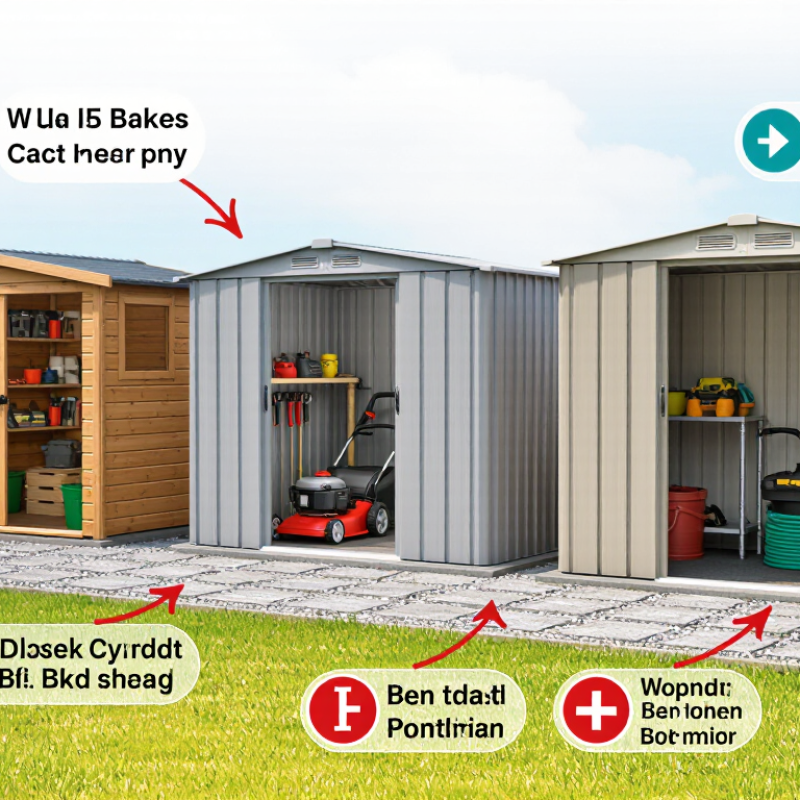
10 Tips for Choosing the Best Garden Shed?

Assess Your Storage Needs and Available Garden Space

Start with what the shed must hold, not the size you think will look right. List bulky items such as a mower, wheelbarrow, and long-handled tools, then measure their actual dimensions. A mower may fit through the doorway but leave no room to turn. Measure twice. Allow space for shelves, seasonal items, and a little future overflow. Be honest about what you will store; “just one more box” has a way of multiplying.

Next, measure the garden area and the route to it. Check the shed’s exterior footprint, door swing, and roof overhang, then leave a clear path for carrying equipment in and out. Leave room to work. Look up for low branches and check whether rainwater collects on the ground after a storm. A dry, fairly level spot makes access easier and helps protect stored tools. I’d also recheck measurements after marking the footprint with string; a paper plan can make a tight corner seem roomier than it is. Consider how the shed will look from the house and whether opening its doors will block a gate, path, or planting bed.

Choose a Shed Material Suited to Your Climate and Upkeep Preferences

Your climate should guide the shed material as much as its price. In damp regions, untreated wood can absorb moisture and decay, especially where walls sit close to wet ground. A raised, well-drained base helps, while paint or stain adds upkeep you will need to repeat. Metal sheds resist rot, but scratched coatings and exposed fasteners can rust in persistent rain or salty air. Check how the panels and fixings are protected, not just the material listed on the product sheet.

In sunny, hot areas, resin or composite sheds need suitable UV protection; intense exposure can fade or weaken some plastics. No material is maintenance-free. Not quite. Before choosing, consider how often you are willing to inspect seams, clear roof debris, repaint surfaces, or tighten fittings. Snow, wind, and local humidity also affect what a shed can safely handle, so check the manufacturer’s specifications and prepare the base carefully. A shaded corner may reduce sun damage, but it can stay damp longer. That trade-off is easy to miss. Reassess your choice against the actual spot in your yard, not just the regional forecast.

Compare Shed Size, Layout, Doors, and Ventilation

A shed should fit your routines, not just your lot. A 6-by-8-foot model offers 48 square feet, but mower handles and long tools need clear turning space. Sketch the floor and mark shelves, bins, and the widest item before buying. I still tend to underestimate door clearance. A single narrow door can make a bulky wheelbarrow awkward; double doors help, but need room to swing open. Sliding doors save that space, though their tracks can collect leaves and grit.

Think about airflow as part of the layout. Place vents on opposite walls when possible, and keep stored items clear of them. The USDA Forest Products Laboratory’s Wood Handbook notes that decay fungi generally need wood moisture content above about 20%. That is a warning sign. The U.S. Environmental Protection Agency’s Moisture Control Guidance recommends indoor relative humidity below 60%, ideally 30–50%; those figures are useful targets, not a shed-specific guarantee. Add roof overhangs, a raised floor, and vents sized for the shed’s design. Check after rain. A damp corner can reveal a flaw that a floor plan missed.

Check Foundation Requirements, Local Rules, Security, and Weatherproofing

10 Tips for Choosing the Best Garden Shed

Tip 1: Check the foundation before choosing a shed. Soft soil, slopes, and standing water can cause shifting. Tip 2: Choose a stable base suited to the site and shed weight. Tip 3: Leave room for drainage around it. A shallow gravel border can help keep rainwater away. Tip 4: Measure the access route, too. A shed that cannot reach its prepared base is a frustrating surprise.

Tip 5: Ask your local planning or building office about size limits, setbacks, and permits. Rules vary by location, so do not rely on a neighbor’s shed as a guide. Tip 6: Check any property or community restrictions that apply. Tip 7: Plan security before installation. A sturdy door, protected hinges, and a good-quality hasp can deter casual tampering. Keep the shed visible from the house, and avoid storing valuables in plain sight.

Tip 8: Look for a roof with sound flashing and edges that direct water away from walls. Tip 9: Seal exposed joints, but preserve ventilation to reduce trapped moisture. Tip 10: Match materials and finish to local weather, including strong sun, heavy rain, or freeze-thaw cycles. I used to focus too much on appearance; damp corners taught me otherwise. Check the shed after the first storm, then fix small leaks promptly.

Compare Costs, Warranties, Assembly Needs, and Long-Term Value

Compare the purchase price with the full cost of getting the shed ready to use. Include delivery, a level base, fasteners, paint, and any tools you may need. A low-priced kit can become less attractive when these extras add up. Write down your estimate; it may still be imperfect, but it is more useful than guessing.

Read the warranty before choosing. Check how long the roof, panels, and frame are covered, and note exclusions for water damage, rust, or poor installation. Ask whether you must keep receipts or follow specific maintenance steps. Small print matters. Assembly also affects value. Find out whether the kit needs two people, special tools, or several hours of work. Lay the parts out on a dry, flat surface, and check that the instructions show each stage clearly. If assembly feels beyond your skills, include professional help in your budget.

Think about the years after installation, not just opening day. A sturdy floor, replaceable parts, and materials suited to your local weather can reduce future repairs. Check roof joints and door hinges; these details are easy to overlook. It is tempting to choose the longest warranty, but coverage terms and build quality deserve equal attention. No option is perfect, so decide which compromises you can live with.

10 Tips for Choosing the Best Garden Shed

Compare costs, warranties, assembly needs, and long-term value

How to use this chart: These broad U.S. planning estimates show that kit prices vary by material and product. Actual costs depend on size, design, delivery, foundation, and local market. Before buying, compare warranty coverage and exclusions, check whether assembly or a foundation is included, and consider maintenance needs alongside the upfront price.

Article Source:

Copyright 2025 Fluidra S.A. | Created by BCM Marketing Agencia Privacy Policy Legal note | Cookie policy |

Technical cookies are strictly necessary for our website to work and you can navigate through it. These types of cookies are those that, for example, allow us to identify you, give you access to certain restricted parts of the page if necessary, or remember different options or services already selected by you, such as your privacy preferences. Therefore, they are activated by default, your authorization not being necessary in this regard. Through the configuration of your browser, you can block or alert the presence of this type of cookies, although such blocking will affect the proper functioning of the different functionalities of our website.


The analysis cookies allow us to study the navigation of the users of our website in general (for example, which sections of the page are the most visited, which services are used most and if they work correctly, etc.). From the statistical information on navigation on our website, we can improve both the operation of the page itself and the different services it offers. Therefore, these cookies do not have an advertising purpose, but only serve to make our website work better, adapting to our users in general. By activating them you will contribute to this continuous improvement. You can enable or disable these cookies by checking the corresponding box, being disabled by default.


Functionality cookies allow us to remember your preferences, to personalize certain characteristics and general options of our website, every time you access it (for example, the language in which the information is presented to you, the sections marked as favorites, your browser type, etc.) Therefore, this type of cookies does not have an advertising purpose, but by activating them you will improve the functionality of the website (for example, adapting to your type of browser) and the customization of it based on your preferences (for example, by presenting the information in the language that you have chosen in previous occasions), which will contribute to the ease, usability and comfort of our page during your navigation. You can enable or disable these cookies by checking the corresponding box, being disabled by default.


Advertising cookies allow us to manage the advertising spaces included in our website based on criteria such as the content shown or the frequency in which the ads are displayed. For example, if you have been shown the same ad several times on our website, and you have not shown a personal interest by clicking on it, it will not appear again. In summary, by activating this type of cookies, the advertising shown on our website will be more useful and diverse, and less repetitive. You can enable or disable these cookies by checking the corresponding box, being disabled by default.


Behavioral advertising cookies allow us to obtain information based on the observation of your browsing habits and behaviors on the web, in order to show you advertising content that best suits your personal tastes and interests. To understand it in a very simple way, we will give you a fictitious example: if your last searches on the web were related to suspense literature, we would show you advertising about suspense books. Therefore, activating this type of cookies, the advertising that we show you on our website will not be generic, but will be oriented to your searches, tastes and interests, therefore adjusting exclusively to you. You can enable or disable these cookies by checking the corresponding box, being disabled by default.
To understand it in a very simple way, we will give you a fictitious example: if your last searches on the web were related to suspense literature, we would show you advertising about suspense books. Therefore, activating this type of cookies, the advertising that we show you on our website will not be generic, but will be oriented to your searches, tastes and interests, therefore adjusting exclusively to you. You can enable or disable these cookies by checking the corresponding box, being disabled by default.

SAVE

We use our own and third-party cookies to ensure the proper functioning of the website and to analyse our services, improve your experience on our website and show you advertisements related to your interests according to profiling based on your browsing habits (e.g. websites visited). You can accept all cookies by clicking "ACCEPT" or set or reject them by clicking here. If you would like to know more about the use of cookies, please see our COOKIE POLICY.


ACCEPT ALL
Reject no essentials


