
How to Choose the Best Epoxy Adhesive for Your Needs?
FLUID HANDLING EXPERTS

Blog, all our news

How to Choose the Best Epoxy Adhesive for Your Needs?

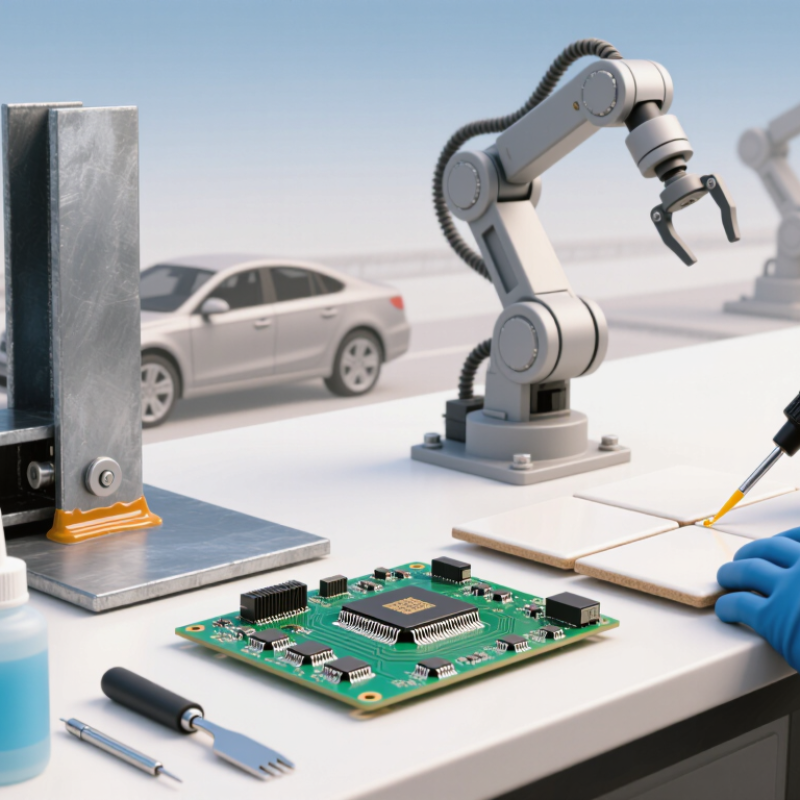
Choosing the best Epoxy Adhesive is not simply a matter of selecting the strongest product. The right choice depends on the substrates, joint design, service temperature, curing time, and expected chemical exposure. A metal bracket inside a vibrating machine needs different performance from a small repair on ceramic tile. That difference is easy to overlook.

Industry data shows why careful selection matters. Grand View Research estimates that the global epoxy adhesives market was valued at approximately USD 7 billion in 2023, with continued growth expected through 2030. MarketsandMarkets also forecasts steady expansion, driven by automotive, construction, electronics, and aerospace applications. These reports use different market definitions, so their figures should not be treated as perfectly interchangeable. Still, the direction is clear: demand is increasing for stronger and more specialized bonding systems.

Dr. Edward M. Petrie, author of Handbook of Adhesive Technology, states, “The adhesive must be compatible with the substrates, the environment, and the processing conditions.” That principle should guide every purchase. Check the technical data sheet, not only the marketing label. Compare lap-shear strength, viscosity, working time, cure temperature, and resistance to moisture or solvents. A two-part epoxy may deliver excellent strength, yet fail when the surfaces are oily, poorly fitted, or exposed to unexpected heat. I have seen product selection become too focused on headline strength. That is not enough. A slower cure may improve alignment, while a low-viscosity formula may run into narrow gaps. The best decision is sometimes less impressive on paper, but more reliable in the real joint.
How to Choose the Best Epoxy Adhesive for Your Needs?

Understanding Epoxy Adhesive Types and Their Core Properties

Choosing an epoxy adhesive starts with its chemistry, not its label. Two-part epoxies mix resin and hardener before application. They usually provide strong bonds, high chemical resistance, and better gap filling. One-part epoxies cure with heat, so they suit controlled production lines more than household repairs.

The core properties matter at the joint. High-viscosity epoxy stays on vertical surfaces, while low-viscosity formulas flow into narrow cracks. Rigid systems resist movement and compression. Flexible systems handle vibration and thermal expansion better. Cure temperature also matters. A workshop may feel warm, but the bond line can remain under-cured. Grand View Research’s 2024 assessment valued the global epoxy adhesives market at about USD 9 billion in 2023, showing demand across construction, transport, electronics, and manufacturing. However, market growth does not prove that one formula fits every surface.

Tips: Clean both surfaces, remove grease, and measure the mix carefully. Test a small joint first. Check open time, fixture time, service temperature, and peel strength in the technical data sheet. A shiny bond is not always a strong bond. Roughening metal with fine abrasive paper can improve mechanical grip, but excessive sanding may weaken thin parts. ASTM testing data can guide comparisons, yet real-world humidity, joint design, and operator errors still change results. That is where selection becomes less perfect.

Matching Adhesive Strength to Different Materials and Applications

How to Choose the Best Epoxy Adhesive for Your Needs?

Matching adhesive strength to the material is more important than choosing the strongest formula. A steel bracket needs high shear strength, while a glass panel may require better flexibility and impact resistance. Wood and concrete absorb moisture differently, so bond strength can change during curing. Not always.

Consider the forces acting on the joint. Pulling, twisting, vibration, and peeling each demand different performance. For outdoor repairs, check temperature resistance, water exposure, and curing behavior. I once underestimated surface preparation on painted metal, and the joint failed within weeks. Sanding, degreasing, and drying often matter as much as adhesive strength. Use the technical data sheet, but test a small sample under real conditions. Laboratory values may not reflect dust, uneven surfaces, or rushed assembly.

Tips: Match the adhesive to both materials, not just one. Use a thin, even layer for many rigid joints. Support the parts during curing. Leave extra curing time in cold conditions. For heavy loads, design the joint so the adhesive carries shear rather than peel. Check the bond after curing by examining cracks, gaps, or movement. My early test was too simple; adding heat and vibration would have revealed the weakness sooner.

Evaluating Curing Time, Temperature Resistance, and Durability

How to Choose the Best Epoxy Adhesive for Your Needs?

Curing time should match your working process, not merely the label. A five-minute epoxy may reach handling strength quickly, yet require 24 hours for full performance. Test samples at the actual shop temperature. At 18°C, a repair can cure noticeably slower than the datasheet’s 23°C condition. I have seen rushed assemblies fail because “set” was mistaken for “cured.” ASTM D1002 offers a useful lap-shear method for comparing bonded samples, but results depend strongly on surface preparation and bond thickness.

Temperature resistance needs closer inspection. A stated service range is not the same as glass-transition temperature or heat-deflection temperature. ASTM D648 measures deflection under load, while DSC testing can help identify Tg. For parts near engines, heaters, or outdoor enclosures, cycle samples between cold and hot conditions. One peak-temperature test is insufficient. The 2024 Grand View Research report estimated the global epoxy adhesives market at about USD 7.1 billion in 2023, reflecting broad industrial use, not guaranteed durability.

Durability comes from chemistry, joint design, and preparation. Clean metal, controlled bond gaps, and gentle abrasion usually matter more than extra adhesive. ISO 4587 supports tensile lap-shear evaluation after aging. Include moisture, heat, and vibration exposure when possible. Record failures, too. A bond that survives today may still creep next month. My practical choice is often slower curing epoxy when alignment, heat, or impact creates uncertainty. It is less convenient. That may be the point.

How to Choose the Best Epoxy Adhesive for Your Needs? - Evaluating Curing Time, Temperature Resistance, and Durability
Epoxy Adhesive Type Typical Working Time Handling Strength Full Cure Time Typical Service Temperature Approximate Tensile Shear Strength* Best-Suited Applications Key Advantages Main Limitations
Fast-Curing Two-Part Epoxy 3–8 minutes 15–60 minutes 12–24 hours -40°C to 80°C
(-40°F to 176°F)
10–20 MPa
(1,450–2,900 psi)
Quick repairs, household items, small assemblies, and low-load fixtures Short waiting time; convenient for urgent repairs Limited repositioning time; generally lower heat resistance than slow-curing grades
General-Purpose Two-Part Epoxy 20–60 minutes 2–6 hours 24–72 hours -50°C to 100°C
(-58°F to 212°F)
15–30 MPa
(2,175–4,350 psi)
Metal, ceramic, wood, rigid plastics, and routine maintenance work Balanced working time, strength, and durability Requires accurate mixing and adequate curing time
Slow-Curing High-Strength Epoxy 45–120 minutes 6–12 hours 48–168 hours -55°C to 120°C
(-67°F to 248°F)
20–35 MPa
(2,900–5,075 psi)
Structural bonding, machinery repairs, demanding metal assemblies, and load-bearing joints Higher final strength; improved resistance to heat, vibration, and long-term loading Longer production cycle; parts must remain fixed during curing
Flexible or Toughened Epoxy 15–60 minutes 2–8 hours 24–72 hours -50°C to 120°C
(-58°F to 248°F)
8–25 MPa
(1,160–3,625 psi)
Joints exposed to vibration, impact, thermal expansion, or dissimilar materials Better impact resistance and stress relief than rigid epoxy Usually lower stiffness and compressive strength than rigid formulations
High-Temperature Epoxy 30–90 minutes 4–12 hours 24–168 hours 120°C to 200°C
(248°F to 392°F), formulation-dependent
10–30 MPa
(1,450–4,350 psi)
Engine components, industrial equipment, electrical parts, and elevated-temperature fixtures Maintains useful bond performance at higher temperatures May require heat post-curing; often more brittle and more difficult to process
Gap-Filling Epoxy 10–60 minutes 2–8 hours 24–72 hours -40°C to 100°C
(-40°F to 212°F)
8–25 MPa
(1,160–3,625 psi)
Uneven surfaces, loose-fitting parts, cast-in-place repairs, and bonded inserts Fills voids and helps maintain alignment on imperfect surfaces Thick bond lines can reduce strength and extend cure time
Electrically Insulating Epoxy 15–90 minutes 2–12 hours 24–168 hours -50°C to 150°C
(-58°F to 302°F), formulation-dependent
10–30 MPa
(1,450–4,350 psi)
Electronic components, cable terminations, sensor assemblies, and electrical encapsulation Provides mechanical bonding and electrical insulation Electrical properties depend strongly on moisture, voids, cleanliness, and cure conditions
*Typical indicative ranges for cured epoxy systems tested under controlled conditions. Actual performance depends on formulation, surface preparation, bond-line thickness, mixing ratio, curing temperature, substrate, and test method. Always consult the technical data sheet for the selected product.

Checking Surface Preparation, Application Methods, and Safety Requirements

Choosing the best epoxy adhesive starts with the surfaces, not the tube. Remove oil, dust, rust, and loose paint using a suitable cleaner. Let the surface dry completely. Lightly abrade smooth metal with 80–120 grit abrasive, then remove every particle with a lint-free cloth. I have learned that one rushed wipe can weaken an otherwise strong joint.

Application conditions matter. Follow the stated mixing ratio precisely, because extra hardener does not usually accelerate curing. Apply a thin, continuous layer and assemble the parts within the product’s working time. ASTM D1002 uses controlled lap-shear testing, but workshop results can differ because pressure, temperature, and joint gaps vary. A 0.1–0.3 mm bond line is often more reliable than a thick bead. Measure it.

Safety deserves equal attention. The European Chemicals Agency identifies uncured epoxy components as important skin-sensitisation hazards. Wear chemical-resistant gloves, eye protection, and protective clothing. Improve ventilation, especially during mixing or solvent cleaning. Do not sand cured material without controlling dust. OSHA’s respirable-silica standard sets a limit of 50 micrograms per cubic metre over eight hours when silica-containing fillers are present. Check the safety data sheet before work begins. I sometimes treat “low odour” as reassuring, but that assumption is unsafe. Cure time also needs verification under the actual room temperature, not just the label’s ideal conditions.

Comparing Product Formulations, Packaging Options, and Overall Value

How to Choose the Best Epoxy Adhesive for Your Needs?

Product formulation should match the job, not just the label. Two-part epoxy usually offers strong bonding and adjustable working time. Fast-curing formulas reduce waiting, but they may become brittle under vibration. Slow-curing systems often provide better penetration and higher final strength. I check the technical data sheet for shear strength, service temperature, viscosity, and cure conditions. These details matter more than broad claims.

Packaging changes both convenience and cost. Dual syringes simplify small repairs and reduce measuring errors. Cartridge systems suit repeated work, especially when a static mixing nozzle improves consistency. Jars can offer a lower price per gram, but opened material may cure around the lid. That creates waste. I once selected a bulk pack for a small assembly project. The unit price looked attractive, yet half the adhesive expired before use. That choice was efficient on paper, not in practice.

Overall value includes labor, storage, waste, and rework. A higher-priced formulation may save hours when alignment is difficult or surfaces need gap filling. Check whether the package includes mixing tips, caps, or application tools. Also compare usable adhesive, not total package weight. Some products leave significant residue in the nozzle. Keep records from trial bonds, including cure time and failure mode. My own testing is not perfect, and one result can mislead. Repeating the test under realistic temperature and load conditions gives a more dependable purchasing decision.

How to Choose the Best Epoxy Adhesive for Your Needs?

Comparing generic epoxy formulations, packaging efficiency, and overall value

The benchmark uses a 0–100 decision index based on typical characteristics of common epoxy categories. Higher scores indicate stronger suitability for the stated criterion. Fast-curing formulas prioritize speed, slow-curing structural formulas generally provide better bond performance, and larger two-part packages typically improve packaging efficiency and cost value for frequent use.

Copyright 2025 Fluidra S.A. | Created by BCM Marketing Agencia Privacy Policy Legal note | Cookie policy |

Technical cookies are strictly necessary for our website to work and you can navigate through it. These types of cookies are those that, for example, allow us to identify you, give you access to certain restricted parts of the page if necessary, or remember different options or services already selected by you, such as your privacy preferences. Therefore, they are activated by default, your authorization not being necessary in this regard. Through the configuration of your browser, you can block or alert the presence of this type of cookies, although such blocking will affect the proper functioning of the different functionalities of our website.


The analysis cookies allow us to study the navigation of the users of our website in general (for example, which sections of the page are the most visited, which services are used most and if they work correctly, etc.). From the statistical information on navigation on our website, we can improve both the operation of the page itself and the different services it offers. Therefore, these cookies do not have an advertising purpose, but only serve to make our website work better, adapting to our users in general. By activating them you will contribute to this continuous improvement. You can enable or disable these cookies by checking the corresponding box, being disabled by default.


Functionality cookies allow us to remember your preferences, to personalize certain characteristics and general options of our website, every time you access it (for example, the language in which the information is presented to you, the sections marked as favorites, your browser type, etc.) Therefore, this type of cookies does not have an advertising purpose, but by activating them you will improve the functionality of the website (for example, adapting to your type of browser) and the customization of it based on your preferences (for example, by presenting the information in the language that you have chosen in previous occasions), which will contribute to the ease, usability and comfort of our page during your navigation. You can enable or disable these cookies by checking the corresponding box, being disabled by default.


Advertising cookies allow us to manage the advertising spaces included in our website based on criteria such as the content shown or the frequency in which the ads are displayed. For example, if you have been shown the same ad several times on our website, and you have not shown a personal interest by clicking on it, it will not appear again. In summary, by activating this type of cookies, the advertising shown on our website will be more useful and diverse, and less repetitive. You can enable or disable these cookies by checking the corresponding box, being disabled by default.


Behavioral advertising cookies allow us to obtain information based on the observation of your browsing habits and behaviors on the web, in order to show you advertising content that best suits your personal tastes and interests. To understand it in a very simple way, we will give you a fictitious example: if your last searches on the web were related to suspense literature, we would show you advertising about suspense books. Therefore, activating this type of cookies, the advertising that we show you on our website will not be generic, but will be oriented to your searches, tastes and interests, therefore adjusting exclusively to you. You can enable or disable these cookies by checking the corresponding box, being disabled by default.
To understand it in a very simple way, we will give you a fictitious example: if your last searches on the web were related to suspense literature, we would show you advertising about suspense books. Therefore, activating this type of cookies, the advertising that we show you on our website will not be generic, but will be oriented to your searches, tastes and interests, therefore adjusting exclusively to you. You can enable or disable these cookies by checking the corresponding box, being disabled by default.

SAVE

We use our own and third-party cookies to ensure the proper functioning of the website and to analyse our services, improve your experience on our website and show you advertisements related to your interests according to profiling based on your browsing habits (e.g. websites visited). You can accept all cookies by clicking "ACCEPT" or set or reject them by clicking here. If you would like to know more about the use of cookies, please see our COOKIE POLICY.


ACCEPT ALL
Reject no essentials


