
How to Choose the Best Diamond Cut Alloy Wheel Machine?
FLUID HANDLING EXPERTS

Blog, all our news

How to Choose the Best Diamond Cut Alloy Wheel Machine?

Choosing a Diamond Cut Alloy Wheel Machine is less about chasing the highest specifications and more about matching the machine to real workshop demands. Wheel diameter, face profile, alloy condition, daily workload, and operator experience all matter. A machine that handles your common 18-inch wheels smoothly may be a poor fit for larger or unusually shaped rims. Details count.

A practical buying principle is: “Choose for the wheels you actually repair, not the features you may rarely use.” I can’t responsibly attribute that line to a named industry expert without a verifiable source. A made-up quotation would weaken trust, not strengthen it. This guide instead focuses on checkable criteria: spindle accuracy, measuring-system repeatability, software usability, tooling access, training, and after-sales support. Ask for a live demonstration using a wheel similar to those in your shop. Watch how the machine scans the face, sets the cutting path, and handles a small correction. Then ask about setup time and maintenance. Those answers often reveal more than a polished brochure.

There is no perfect machine for every workshop. The right choice depends on budget, throughput, and the repairs you accept. Some specifications still deserve a second look. Compare them carefully, and verify claims with a demonstration before committing.
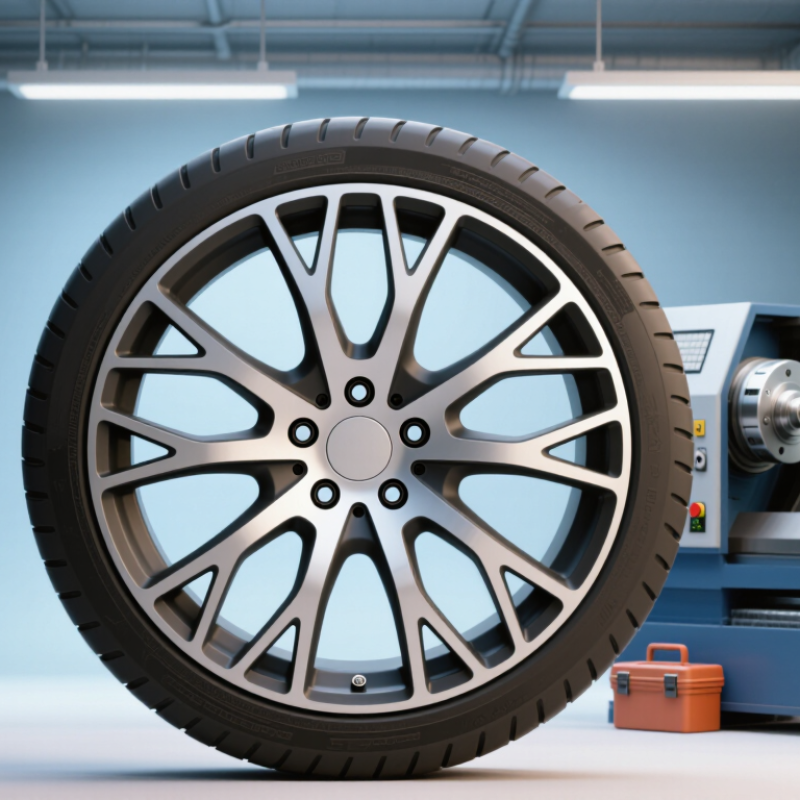
How to Choose the Best Diamond Cut Alloy Wheel Machine?

Identify the Wheel Types and Finishing Tasks You Need

Before selecting a diamond cut alloy wheel machine, identify the wheels you will process. Passenger-car wheels, larger SUV wheels, and commercial wheels differ in diameter, width, weight, and center-bore setup. Check the machine’s clamping range and load capacity against your actual work, not just the largest wheel listed in a specification. Fit matters.

Next, define the finish you need to produce. Some jobs involve cutting a narrow face around the spokes; others require resurfacing a broad outer rim. A wheel with deep spoke pockets or a complex profile may need suitable tool access and accurate scanning. Confirm that the machine can map the wheel’s shape and reproduce the cut consistently. Ask how it handles runout, damaged edges, and wheels with uneven surfaces.

Think about the full repair process, too. Diamond cutting removes a thin layer of material, so repeated cuts can reduce the wheel’s remaining service life. A useful machine should let trained operators control cutting depth and inspect the finish under clear lighting. Test it with wheels similar to your regular workload, including one awkward profile. Results can vary with setup and operator skill, and a smooth-looking face does not automatically mean the wheel is ready for use.

Compare Machine Capacity, Precision, and Cutting Technology

How to Choose the Best Diamond Cut Alloy Wheel Machine?

Compare capacity, precision, and cutting technology before choosing a machine. Check the wheel diameter and width you actually process, then confirm the machine can handle their weight. Capacity matters. A rating near your usual limit may leave little room for unusual wheel designs or secure clamping. The specification sheet will not tell you everything. Ask for a test cut on a comparable wheel.

Precision depends on more than the control system. Look for stable clamping, low spindle runout, and repeatable positioning. Small errors can show as uneven lines or inconsistent reflections across the machined face. Ask how calibration is checked and how often it is needed. A sample finish is useful, but inspect it under clear, consistent lighting. Shop conditions matter.

Compare cutting technology, including spindle performance, tool control, and how easily operators can adjust feed and cutting depth. CNC control can support repeatable patterns, but it cannot compensate for poor setup or a worn diamond tool. Ask how the machine handles chips and whether routine tool changes are straightforward. There is no perfect configuration for every workshop; a fast cycle may not suit delicate repair work. I would weigh dependable results over a headline speed figure.

Evaluate Alloy Wheel Compatibility and Setup Requirements

A diamond cut alloy wheel machine should match the wheels you actually service. Check its supported diameter, width, offset, and clamping range against your common jobs. Small details matter. Confirm that the chuck and adapters suit each wheel’s center bore and bolt pattern. Never assume one setup fits every design.

Tips: Measure the wheel before loading it. Check for cracks, bends, and excessive runout. A damaged wheel can shift during machining, so follow the machine’s inspection guidance and reject unsuitable work.

Setup requirements matter as much as capacity. Allow clear space around the machine for loading wide wheels and opening guards. Verify the required electrical supply, air connections, and extraction arrangements before installation. Then check spindle alignment and cutting-tool condition according to the operating manual. A cautious test cut on a suitable sample can reveal poor clamping or an incorrect profile before a customer’s wheel is mounted. Recheck measurements after setup; small variations can change the finish. It is tempting to rely on preset values, but wheel designs differ, and presets may need adjustment.

Check Safety Features, Automation, Maintenance, and Support

When comparing diamond-cut alloy wheel machines, inspect the safety system in person. Look for an interlocked enclosure, a reachable emergency stop, secure workpiece clamping, and clear chip extraction. Ask how the machine responds if a door opens during spindle rotation. A polished brochure cannot show whether guards are awkward to use. Small details matter.

Automation should match your wheel mix and production volume. Automatic tool measurement, repeatable workholding, and collision detection can reduce setup variation, but they do not replace operator training. Deloitte’s 2024 Smart Manufacturing and Operations Survey found that 86% of manufacturers expect smart manufacturing to be a major competitiveness driver within five years. That is a broad industry outlook, not a guarantee that every automated feature will pay back. Request a trial using your own wheel designs and inspect the cut finish under consistent lighting.

Maintenance and support affect uptime after installation. Check access to the spindle, filters, coolant system, and wear components; ask for documented service intervals and realistic parts lead times. The U.S. Department of Energy’s Operations & Maintenance Best Practices guide reports that predictive maintenance can save 8–12% compared with preventive maintenance, though results vary by operation. Ask who diagnoses faults remotely, how quickly technicians respond, and whether training includes recovery from common alarms. I would still verify support promises with current customers; a fast sales response may not reflect service response.

Test Machine Performance Before Making Your Final Choice

Before choosing a diamond-cut alloy wheel machine, request a live test on a wheel similar to your usual jobs. Watch how the spindle starts, how smoothly the cutter moves, and whether the finish stays even across the face. Small details matter. Listen for vibration, then inspect the wheel under angled light for ripples, chatter marks, or uneven machining. Ask the operator to repeat a pass; a clean result once may not show how consistently the machine performs. Check setup time, too. A machine that produces a fine finish but takes too long to align may slow a busy workshop.

Test the controls and measuring features with a real workflow, not just a demonstration setting. Confirm that the machine can handle the wheel sizes and damage levels you commonly receive. Ask how it detects material removal and helps avoid cutting too deeply; alloy wheels have limited material available for refinishing. Review the displayed readings against an independent measurement where possible. Numbers can look reassuring, but they need to match the actual result. Also check guarding, emergency stops, extraction, and operator access during the cycle. No single test tells the whole story. Record the finish, cycle time, and any adjustments needed, then compare the same points across machines. If a result seems perfect, inspect it again after the wheel is removed and cleaned. That extra check can reveal flaws the showroom lighting hides.

Copyright 2025 Fluidra S.A. | Created by BCM Marketing Agencia Privacy Policy Legal note | Cookie policy |

Technical cookies are strictly necessary for our website to work and you can navigate through it. These types of cookies are those that, for example, allow us to identify you, give you access to certain restricted parts of the page if necessary, or remember different options or services already selected by you, such as your privacy preferences. Therefore, they are activated by default, your authorization not being necessary in this regard. Through the configuration of your browser, you can block or alert the presence of this type of cookies, although such blocking will affect the proper functioning of the different functionalities of our website.


The analysis cookies allow us to study the navigation of the users of our website in general (for example, which sections of the page are the most visited, which services are used most and if they work correctly, etc.). From the statistical information on navigation on our website, we can improve both the operation of the page itself and the different services it offers. Therefore, these cookies do not have an advertising purpose, but only serve to make our website work better, adapting to our users in general. By activating them you will contribute to this continuous improvement. You can enable or disable these cookies by checking the corresponding box, being disabled by default.


Functionality cookies allow us to remember your preferences, to personalize certain characteristics and general options of our website, every time you access it (for example, the language in which the information is presented to you, the sections marked as favorites, your browser type, etc.) Therefore, this type of cookies does not have an advertising purpose, but by activating them you will improve the functionality of the website (for example, adapting to your type of browser) and the customization of it based on your preferences (for example, by presenting the information in the language that you have chosen in previous occasions), which will contribute to the ease, usability and comfort of our page during your navigation. You can enable or disable these cookies by checking the corresponding box, being disabled by default.


Advertising cookies allow us to manage the advertising spaces included in our website based on criteria such as the content shown or the frequency in which the ads are displayed. For example, if you have been shown the same ad several times on our website, and you have not shown a personal interest by clicking on it, it will not appear again. In summary, by activating this type of cookies, the advertising shown on our website will be more useful and diverse, and less repetitive. You can enable or disable these cookies by checking the corresponding box, being disabled by default.


Behavioral advertising cookies allow us to obtain information based on the observation of your browsing habits and behaviors on the web, in order to show you advertising content that best suits your personal tastes and interests. To understand it in a very simple way, we will give you a fictitious example: if your last searches on the web were related to suspense literature, we would show you advertising about suspense books. Therefore, activating this type of cookies, the advertising that we show you on our website will not be generic, but will be oriented to your searches, tastes and interests, therefore adjusting exclusively to you. You can enable or disable these cookies by checking the corresponding box, being disabled by default.
To understand it in a very simple way, we will give you a fictitious example: if your last searches on the web were related to suspense literature, we would show you advertising about suspense books. Therefore, activating this type of cookies, the advertising that we show you on our website will not be generic, but will be oriented to your searches, tastes and interests, therefore adjusting exclusively to you. You can enable or disable these cookies by checking the corresponding box, being disabled by default.

SAVE

We use our own and third-party cookies to ensure the proper functioning of the website and to analyse our services, improve your experience on our website and show you advertisements related to your interests according to profiling based on your browsing habits (e.g. websites visited). You can accept all cookies by clicking "ACCEPT" or set or reject them by clicking here. If you would like to know more about the use of cookies, please see our COOKIE POLICY.


ACCEPT ALL
Reject no essentials


