
How to Choose the Best Acrylic Impact Modifier?
FLUID HANDLING EXPERTS

Blog, all our news

How to Choose the Best Acrylic Impact Modifier?

Choosing an Acrylic Impact Modifier is not a matter of chasing the highest impact-strength figure. The right grade must protect the finished part while fitting its resin, processing conditions, appearance requirements, and cost target. A rigid PVC profile, for example, faces different demands from a transparent acrylic sheet. Small formulation differences can affect impact resistance, melt flow, surface quality, and production consistency. Details matter.

The scale of plastics manufacturing makes careful selection important. PlasticsEurope’s Plastics—The Fast Facts 2024 reports that global plastics production reached 413.8 million tonnes in 2023. That figure describes the wider industry, not acrylic impact modifiers alone. It does, however, underline the need for dependable material choices and repeatable quality checks. Professor Michael F. Ashby’s materials-selection framework offers a useful lens: judge material properties against the product’s actual service requirements. This is a paraphrase of his approach, not a direct quotation about acrylic modifiers.

A practical comparison should examine impact performance at the intended test temperature, compatibility with the base polymer, processing stability, weathering needs, and supplier documentation. Request technical data sheets, test methods, and sample results. Then validate shortlisted grades in your own formulation and production conditions. Laboratory results are a starting point, not a guarantee. No independently verified direct quotation from a specialist in acrylic impact modifiers was available for this introduction, so none is attributed here. This guide will help you compare grades systematically and identify trade-offs before committing to a formulation.
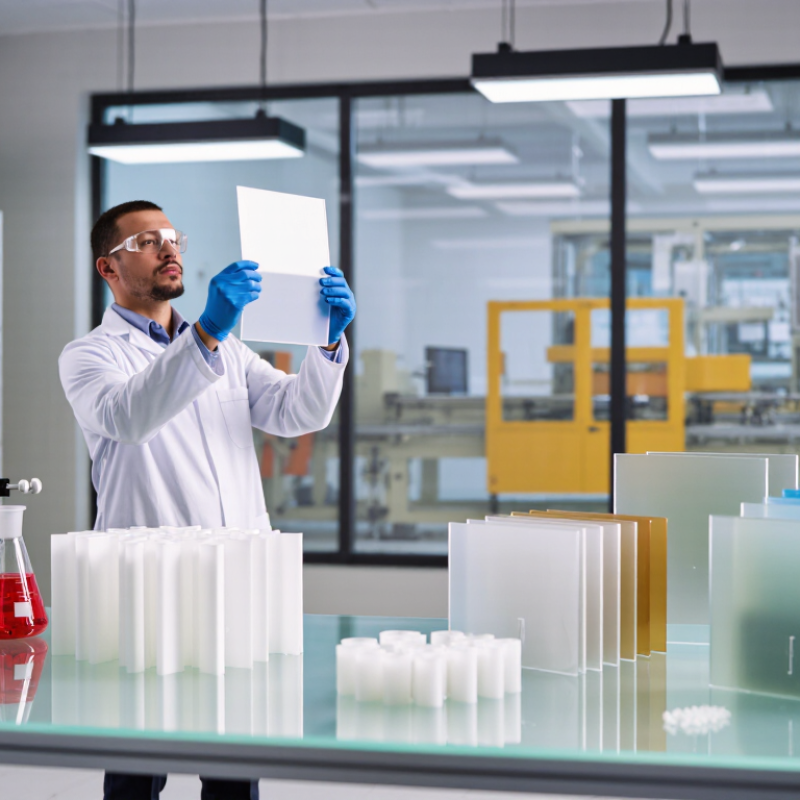
How to Choose the Best Acrylic Impact Modifier?

Understand the Role of an Acrylic Impact Modifier

An acrylic impact modifier helps a plastic part resist cracking when it is struck, dropped, or stressed during use. In many formulations, flexible particles absorb and spread impact energy through a more rigid polymer matrix. Some modifiers use a core-shell structure: a softer core deforms, while the outer layer helps the particles interact with the surrounding resin. The effect is practical. A panel that might crack from a sharp knock can instead flex slightly and remain intact.

Its role is not simply to make a material “tougher.” The modifier can also affect stiffness, surface appearance, melt flow, and weathering performance. The balance depends on the base resin, modifier grade, loading, and processing conditions. For example, an outdoor trim part may need impact resistance after prolonged exposure to sunlight, while a clear component may place greater limits on haze. There is no universal dosage. Too little may show little improvement; too much can reduce rigidity or complicate processing. A small trial can still mislead if the test temperature or molding conditions differ from production. Compare samples under realistic conditions, including cold impact when relevant, and inspect both the break pattern and surface finish. Some results will be messier than expected. That is useful evidence.

Define the Application’s Impact and Weathering Requirements

Before choosing an acrylic impact modifier, define how the part may fail in service. A cold outdoor housing struck during installation needs different protection from an indoor trim piece facing occasional knocks. Record the service temperature, impact location, wall thickness, and expected strike energy. Then test representative molded parts, not just neat resin. ASTM D256 provides a notched Izod impact method, but one result cannot predict every real-world failure. Include low-temperature testing when cold impacts are possible. Small details matter.

Weather exposure needs its own limits. Specify sunlight, moisture, temperature cycling, and the acceptable change in color, gloss, or impact strength. NOAA’s National Centers for Environmental Information reported that 2023 global temperature was 1.18°C above the twentieth-century average. That is a climate indicator, not a product exposure specification. Local conditions can differ sharply. Use it as context, not as a pass/fail limit. For controlled UV screening, ASTM G154 describes fluorescent UV exposure practices; compare appearance and impact performance before and after exposure. Be careful: accelerated aging does not perfectly reproduce years outdoors. A practical specification should state the test cycle, acceptance threshold, and intended service environment. Without those details, “weather-resistant” is too vague. That is an easy mistake to make.

Compare Modifier Types, Performance, and Compatibility

Choosing an acrylic impact modifier starts with the resin and the failure you need to prevent. Acrylic modifiers often suit rigid PVC products exposed to sunlight, where weatherability and surface appearance matter. MBS types can preserve clarity in some formulations, but outdoor exposure may limit their usefulness. Chlorinated polyethylene can offer impact resistance at lower cost, though it may affect stiffness and processing. No type wins everywhere.

Compatibility is practical, not just chemical. Check dispersion, fusion time, melt strength, and the modifier’s effect on color and gloss. Then compare notched impact results at the temperatures your product will actually face. ASTM D256 and ISO 179 describe common impact-test methods; keep specimen thickness and test conditions consistent. Small differences matter. A room-temperature result may hide brittle failure on a cold loading dock.

413.8 million tonnes PlasticsEurope’s Plastics – the Fast Facts 2024 reports 413.8 million tonnes of global plastics production in 2023. That scale makes durable formulation choices consequential, but it does not identify the right modifier for a specific part. Pilot batches do. Record dosage, processing temperature, and impact results, then inspect failed samples closely.

One caveat: higher impact strength can come with trade-offs in stiffness or cost. The first formulation may still be wrong.

Evaluate Processing Needs and Cost Considerations

Choose an acrylic impact modifier against the actual production line, not a supplier’s headline impact value. In extrusion, track melt pressure, torque, output, and surface finish. For injection molding, record cycle time, weld-line strength, and impact performance at the part’s thinnest section. Keep the base resin, modifier loading, and test conditions constant. Small changes matter.

Compare cost per acceptable part, not price per kilogram. Include modifier dosage, scrap, energy, and any slower cycle time. Plastics Europe’s Plastics—the Fast Facts 2024 reports global plastics production of 413.8 million tonnes in 2023. That figure is market context, not a modifier price forecast; request current local quotes and check feedstock exposure. A cheaper grade may cost more if it raises rejects or limits line speed.

Run a pilot on the intended equipment and inspect samples after cooling, not just at the press. A neat lab result can mislead. Weigh parts, log cycle times, and test impact using the same method for every candidate. ASTM D256 provides a standardized notched Izod impact method for plastics. Still, it may not predict every real-use failure. Leave room for one uncomfortable result: the best-performing modifier may not be the most economical choice.

How to Choose the Best Acrylic Impact Modifier? — Evaluate Processing Needs and Cost Considerations

Qualitative screening comparison for common PVC impact modifier families. Ratings are directional (1–5), not measured test results; actual performance and cost depend on the formulation, grade, dosage, and processing conditions.

How to use this chart: Acrylic modifiers are often considered for outdoor durability and processing assistance; MBS modifiers are often selected for high impact performance where UV exposure is limited; CPE can be a cost-focused option. Confirm the choice with trials using your resin, target properties, and processing window.

Test Candidate Formulations Before Selecting a Modifier

Acrylic impact modifiers should be chosen through comparative testing, not datasheets alone. Resin grade, processing history, and service temperature can all shift performance.

PlasticsEurope’s Plastics – the Fast Facts 2024 reports global plastics production of 413.8 million tonnes in 2023. That scale makes repeatable quality checks important, even for a small formulation change.

Start with the intended application: a clear panel, an outdoor part, or a molded component may need different balances of toughness, appearance, and stiffness.

Prepare a control sample and several candidate formulations, changing only the modifier level. Keep mixing, molding temperature, specimen thickness, and conditioning consistent. ASTM D256 provides a standard method for measuring notched Izod impact resistance; ASTM D638 covers tensile properties.

Record both results, plus haze or gloss when appearance matters. Test at room temperature and at the lowest expected service temperature.

Small differences matter. A common lab trap is comparing samples made on different days or with different cooling histories; the numbers may look precise, but the comparison is weak. Repeat promising tests, inspect fracture surfaces, and note any brittleness, whitening, or edge cracking before selecting a formulation.

Copyright 2025 Fluidra S.A. | Created by BCM Marketing Agencia Privacy Policy Legal note | Cookie policy |

Technical cookies are strictly necessary for our website to work and you can navigate through it. These types of cookies are those that, for example, allow us to identify you, give you access to certain restricted parts of the page if necessary, or remember different options or services already selected by you, such as your privacy preferences. Therefore, they are activated by default, your authorization not being necessary in this regard. Through the configuration of your browser, you can block or alert the presence of this type of cookies, although such blocking will affect the proper functioning of the different functionalities of our website.


The analysis cookies allow us to study the navigation of the users of our website in general (for example, which sections of the page are the most visited, which services are used most and if they work correctly, etc.). From the statistical information on navigation on our website, we can improve both the operation of the page itself and the different services it offers. Therefore, these cookies do not have an advertising purpose, but only serve to make our website work better, adapting to our users in general. By activating them you will contribute to this continuous improvement. You can enable or disable these cookies by checking the corresponding box, being disabled by default.


Functionality cookies allow us to remember your preferences, to personalize certain characteristics and general options of our website, every time you access it (for example, the language in which the information is presented to you, the sections marked as favorites, your browser type, etc.) Therefore, this type of cookies does not have an advertising purpose, but by activating them you will improve the functionality of the website (for example, adapting to your type of browser) and the customization of it based on your preferences (for example, by presenting the information in the language that you have chosen in previous occasions), which will contribute to the ease, usability and comfort of our page during your navigation. You can enable or disable these cookies by checking the corresponding box, being disabled by default.


Advertising cookies allow us to manage the advertising spaces included in our website based on criteria such as the content shown or the frequency in which the ads are displayed. For example, if you have been shown the same ad several times on our website, and you have not shown a personal interest by clicking on it, it will not appear again. In summary, by activating this type of cookies, the advertising shown on our website will be more useful and diverse, and less repetitive. You can enable or disable these cookies by checking the corresponding box, being disabled by default.


Behavioral advertising cookies allow us to obtain information based on the observation of your browsing habits and behaviors on the web, in order to show you advertising content that best suits your personal tastes and interests. To understand it in a very simple way, we will give you a fictitious example: if your last searches on the web were related to suspense literature, we would show you advertising about suspense books. Therefore, activating this type of cookies, the advertising that we show you on our website will not be generic, but will be oriented to your searches, tastes and interests, therefore adjusting exclusively to you. You can enable or disable these cookies by checking the corresponding box, being disabled by default.
To understand it in a very simple way, we will give you a fictitious example: if your last searches on the web were related to suspense literature, we would show you advertising about suspense books. Therefore, activating this type of cookies, the advertising that we show you on our website will not be generic, but will be oriented to your searches, tastes and interests, therefore adjusting exclusively to you. You can enable or disable these cookies by checking the corresponding box, being disabled by default.

SAVE

We use our own and third-party cookies to ensure the proper functioning of the website and to analyse our services, improve your experience on our website and show you advertisements related to your interests according to profiling based on your browsing habits (e.g. websites visited). You can accept all cookies by clicking "ACCEPT" or set or reject them by clicking here. If you would like to know more about the use of cookies, please see our COOKIE POLICY.


ACCEPT ALL
Reject no essentials


