
7 Tips for Choosing SPC Stone Flooring for Your Project
FLUID HANDLING EXPERTS

Blog, all our news

7 Tips for Choosing SPC Stone Flooring for Your Project

Choosing SPC flooring is not just a color decision. A sample may look convincing under showroom lights, then feel different beside a sunny window or a cold exterior door. This guide explores seven practical checks for choosing SPC Stone Flooring for your project, from wear-layer specifications and plank thickness to locking systems, warranties, and installation conditions. Small details matter. A slightly uneven subfloor, for example, can affect how a floating floor feels underfoot. Check the product instructions before assuming the planks will hide imperfections.

One note on attribution: the following quote is an illustrative line, not a verified statement from a real industry expert. Fictional SPC flooring specialist Elena Brooks puts the selection challenge this way: “A good floor is chosen for the room it must serve, not just the sample that looks best.” That is a useful test for Spc Flooring Stone. Consider foot traffic, moisture exposure, cleaning routines, and the transition between rooms. Ask suppliers for technical data, not only lifestyle photos. Compare compatible underlayments and confirm whether installation limits apply to your space. Details can vary by product. Even a careful checklist has limits; site conditions and manufacturer guidance deserve a final review before purchase.
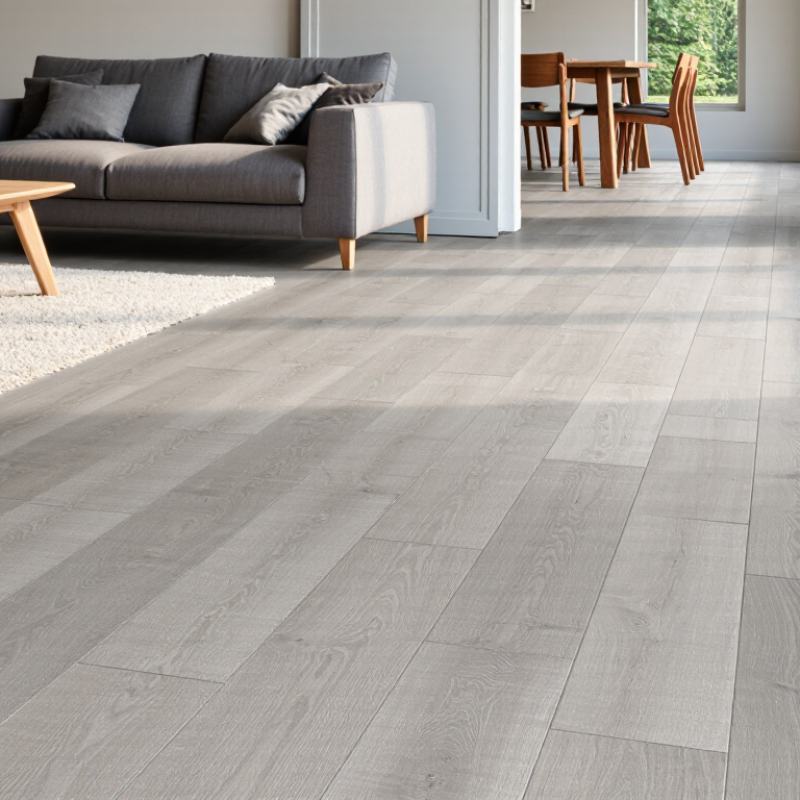
7 Tips for Choosing SPC Stone Flooring for Your Project

Understand SPC Stone Flooring and Its Core Construction

SPC means stone-plastic composite, though “stone” usually refers to mineral filler, not a solid stone slab. A typical plank combines a wear layer, printed décor film, rigid core, and sometimes an attached backing. The core commonly blends calcium-carbonate filler with PVC and stabilizers. Exact recipes and layer thicknesses vary, so compare technical sheets rather than relying on the name alone. That distinction matters.

ASTM F3261-20 covers resilient flooring with a rigid polymeric core and provides a framework for evaluating product properties. It does not mean every SPC floor performs identically in every room. Check the stated wear-layer thickness, dimensional stability, and installation limits. A rigid plank may feel firm underfoot, but an uneven subfloor can still show through or stress the joints. Small details count.

Indoor emissions deserve a separate check. California’s Department of Public Health Standard Method (2017) uses chamber testing and evaluates modeled emissions at 14 days. Ask whether the exact flooring assembly—not just a raw core sample—has relevant emissions documentation. This test is useful, but it does not describe every aspect of a product’s environmental impact. The layer stack sounds simple; actual formulations are not.

Define Your Project’s Room Conditions and Performance Needs

Before choosing SPC stone flooring, record what each room actually experiences. A kitchen beside an exterior door may collect grit and see frequent spills. A sunny living room can heat sharply near broad windows. A basement may have a cool slab or moisture concerns. Measure twice. Note foot traffic, pets, rolling chairs, direct sunlight, and cleaning habits. These details help determine suitable wear-layer performance, surface texture, and color. Water-resistant planks can handle routine spills, but they cannot fix leaks or replace moisture testing.

Check the subfloor with a straightedge and follow the flooring maker’s flatness requirements. A rigid core does not make an uneven base disappear; movement or gaps may still develop. Confirm whether the product allows installation over your specific subfloor and underfloor heating system. For shared buildings, ask about sound-control requirements before selecting an underlay. Small details matter. A dark sample may disguise dust but reveal scratches, while a textured finish can feel less slippery yet take longer to clean. Room plans change, too, so verify clearances at doors and cabinets before ordering.

Compare Wear Layers, Thickness, Core Density, and Surface Finishes

When comparing SPC stone flooring, look at the wear layer separately from the plank’s total thickness. The wear layer protects the printed design from scuffs and daily traffic. Ask for its stated measurement and test a sample with shoes, chair legs, or grit near an entry. A thicker layer can help in busy rooms, but installation and cleaning habits still matter. Numbers alone are not a guarantee.

Overall thickness affects feel and may help cover small subfloor variations, but it cannot fix an uneven floor. Check the core density and product data, too. A denser core may feel more stable underfoot, yet density figures are useful only when measured and reported consistently. I would not treat one number as a verdict. Small details matter. Compare samples side by side, then check how their edges lock together.

Surface finish changes both appearance and use. Embossed textures can add grip and make stone patterns look less flat, while smooth finishes are easier to wipe clean. Glossy samples may show dust or scratches more clearly under bright kitchen lights. Matte finishes can look softer, but some textures hold grime in their grooves. View samples in your project’s lighting, and check the care instructions before choosing. A tiny sample can mislead.

Check Installation Methods, Subfloor Requirements, and Compatibility

Choosing an installation method starts with the flooring’s instructions, not a guess based on appearance. Many SPC planks use a floating click-lock system, which needs a stable perimeter and room for movement. Some products allow glue-down installation, but the adhesive and preparation must be approved for that specific flooring. Mixing methods can cause loose joints or difficult repairs. Check door clearances, stair edges, and transitions before ordering; a plank that fits the main room may sit too high beneath a door.

The subfloor should be firm, clean, dry, and within the product’s stated flatness tolerance. Flat does not mean perfectly level. Use a long straightedge to find dips or ridges, and correct them with suitable materials before laying planks. On concrete, measure moisture rather than relying on a surface that merely looks dry. Small details matter. Dust left in a crack can create a noticeable bump underfoot.

Compatibility deserves a separate check. Confirm whether an attached pad is already present before adding underlayment; extra cushioning may stress click joints. Verify that the floor, underlayment, and any moisture barrier work together, especially over concrete or radiant heating. I’ve seen planning focus too heavily on plank color and too little on these layers. That is easy to overlook, and the product instructions can feel tedious, but they are the best guide to a dependable installation.

7 Tips for Choosing SPC Stone Flooring for Your Project

Check installation methods, subfloor requirements, and compatibility before selecting your flooring.

Example flatness limits found in flooring installation guidance, converted to millimeters per meter for comparison. Requirements vary by product; check the selected SPC flooring’s instructions and confirm subfloor condition, moisture, and installation-method compatibility before installation.

Evaluate Safety, Maintenance, Warranty, and Overall Value

Safety starts with the actual room, not a product photo. Check the flooring’s slip-resistance information, especially for kitchens, entryways, and bathrooms. A textured surface may help, but it does not make a wet floor harmless. Ask how the product performs when damp, and inspect transition pieces for raised edges that could catch a shoe. Details matter.

Maintenance should fit the people using the space. Ask for written cleaning instructions before choosing a finish. Some surfaces show dust, scuffs, or dried water spots more clearly than others. A soft broom and a damp, well-wrung mop are often practical; abrasive pads and standing water can create problems. Keep a small sample near a window and check it under changing light. It is an imperfect test, but useful.

Read the warranty line by line. Compare coverage periods, wear conditions, water-related exclusions, and whether installation labor is included. Also confirm requirements for subfloor preparation and room conditions, since missed steps can affect a claim. Then weigh the full cost: flooring, underlayment, trims, installation, and likely upkeep. The cheapest option may not be the best value. Still, longer coverage alone does not guarantee better performance. Match the product to the room and the installer’s instructions.

7 Tips for Choosing SPC Stone Flooring for Your Project - Evaluate Safety, Maintenance, Warranty, and Overall Value
Tip What to Evaluate Practical Guidance What to Verify
1. Match the wear layer to the traffic Check the wear-layer thickness and the flooring’s intended residential or commercial use. A thicker wear layer can provide more protection against surface wear, but it does not by itself establish overall product quality or suitability. Look for the stated wear-layer thickness, use classification, and test information in the product’s technical documentation.
2. Assess slip and fire safety Consider the location, expected footwear, moisture exposure, and applicable building requirements. Slip resistance depends on the test method and surface conditions. Fire-test results and required classifications also vary by jurisdiction and project type. Request test reports for the actual product and confirm that the test methods and ratings meet local code and project specifications.
3. Confirm installation and subfloor requirements Review permitted substrates, subfloor flatness, expansion gaps, and installation temperature conditions. SPC is dimensionally stable compared with many softer flooring types, but the floor still needs correct installation and room for movement as specified by the manufacturer. Check the installation guide for substrate preparation, allowable flatness tolerance, perimeter spacing, and approved installation methods.
4. Understand moisture limitations Identify whether the area is a kitchen, basement, bathroom, or other space with potential moisture exposure. Water-resistant planks do not automatically make the whole floor assembly waterproof. Water can enter at seams, edges, or around penetrations. Review the product’s moisture claims, room restrictions, leak-cleanup instructions, and any required sealing or underlayment details.
5. Check cleaning and maintenance needs Consider routine cleaning, furniture movement, pets, and the likelihood of spills or grit. Regular dust removal and cleaning with a suitable, non-abrasive product help limit scratching and residue. Avoid care methods not approved for the flooring. Ask for written cleaning instructions, approved cleaners, stain guidance, and recommendations for entry mats and furniture protectors.
6. Read the warranty in detail Compare residential and commercial coverage, term length, exclusions, and claim requirements. Warranty terms are product-specific. Coverage may depend on correct installation and maintenance, and may exclude damage from flooding, misuse, or unsuitable site conditions. Obtain the complete warranty document and check who is covered, what remedies apply, and what proof is required for a claim.
7. Compare total project value Include more than the plank price: underlayment, subfloor preparation, trims, labor, waste, and replacement risk. A lower upfront price may not mean a lower installed cost. Sample the floor in the project’s lighting and check that color and texture suit the space. Compare itemized installed quotes, confirm matching transition pieces are available, and keep spare planks from the same production batch when practical.
Copyright 2025 Fluidra S.A. | Created by BCM Marketing Agencia Privacy Policy Legal note | Cookie policy |

Technical cookies are strictly necessary for our website to work and you can navigate through it. These types of cookies are those that, for example, allow us to identify you, give you access to certain restricted parts of the page if necessary, or remember different options or services already selected by you, such as your privacy preferences. Therefore, they are activated by default, your authorization not being necessary in this regard. Through the configuration of your browser, you can block or alert the presence of this type of cookies, although such blocking will affect the proper functioning of the different functionalities of our website.


The analysis cookies allow us to study the navigation of the users of our website in general (for example, which sections of the page are the most visited, which services are used most and if they work correctly, etc.). From the statistical information on navigation on our website, we can improve both the operation of the page itself and the different services it offers. Therefore, these cookies do not have an advertising purpose, but only serve to make our website work better, adapting to our users in general. By activating them you will contribute to this continuous improvement. You can enable or disable these cookies by checking the corresponding box, being disabled by default.


Functionality cookies allow us to remember your preferences, to personalize certain characteristics and general options of our website, every time you access it (for example, the language in which the information is presented to you, the sections marked as favorites, your browser type, etc.) Therefore, this type of cookies does not have an advertising purpose, but by activating them you will improve the functionality of the website (for example, adapting to your type of browser) and the customization of it based on your preferences (for example, by presenting the information in the language that you have chosen in previous occasions), which will contribute to the ease, usability and comfort of our page during your navigation. You can enable or disable these cookies by checking the corresponding box, being disabled by default.


Advertising cookies allow us to manage the advertising spaces included in our website based on criteria such as the content shown or the frequency in which the ads are displayed. For example, if you have been shown the same ad several times on our website, and you have not shown a personal interest by clicking on it, it will not appear again. In summary, by activating this type of cookies, the advertising shown on our website will be more useful and diverse, and less repetitive. You can enable or disable these cookies by checking the corresponding box, being disabled by default.


Behavioral advertising cookies allow us to obtain information based on the observation of your browsing habits and behaviors on the web, in order to show you advertising content that best suits your personal tastes and interests. To understand it in a very simple way, we will give you a fictitious example: if your last searches on the web were related to suspense literature, we would show you advertising about suspense books. Therefore, activating this type of cookies, the advertising that we show you on our website will not be generic, but will be oriented to your searches, tastes and interests, therefore adjusting exclusively to you. You can enable or disable these cookies by checking the corresponding box, being disabled by default.
To understand it in a very simple way, we will give you a fictitious example: if your last searches on the web were related to suspense literature, we would show you advertising about suspense books. Therefore, activating this type of cookies, the advertising that we show you on our website will not be generic, but will be oriented to your searches, tastes and interests, therefore adjusting exclusively to you. You can enable or disable these cookies by checking the corresponding box, being disabled by default.

SAVE

We use our own and third-party cookies to ensure the proper functioning of the website and to analyse our services, improve your experience on our website and show you advertisements related to your interests according to profiling based on your browsing habits (e.g. websites visited). You can accept all cookies by clicking "ACCEPT" or set or reject them by clicking here. If you would like to know more about the use of cookies, please see our COOKIE POLICY.


ACCEPT ALL
Reject no essentials


