
How to Choose Selective Pallet Racking for Your Warehouse?
FLUID HANDLING EXPERTS

Blog, all our news

How to Choose Selective Pallet Racking for Your Warehouse?

Choosing the right storage solution for your warehouse is vital for maximizing efficiency. Selective Pallet Racking is one of the most popular choices in modern warehouses. This system allows easy access to individual pallets while maintaining a compact design. Its versatility makes it suitable for various types of inventory, accommodating different sizes and weights.

However, selecting Selective Pallet Racking requires careful consideration. You must evaluate your warehouse space, the types of goods stored, and the handling equipment used. Each of these factors plays a critical role in ensuring optimal performance. Racking that fits your space poorly can lead to inefficiencies. Miscalculating load capacities can result in safety hazards.

When reviewing your options, look for reputable suppliers with industry experience. Their expertise can guide you through the nuances of racking systems. Be mindful of your long-term needs to avoid costly future adjustments. Remember, the goal is not just storage but maximizing operational flow. Balancing cost and functionality ensures a reliable investment in your warehouse's infrastructure.
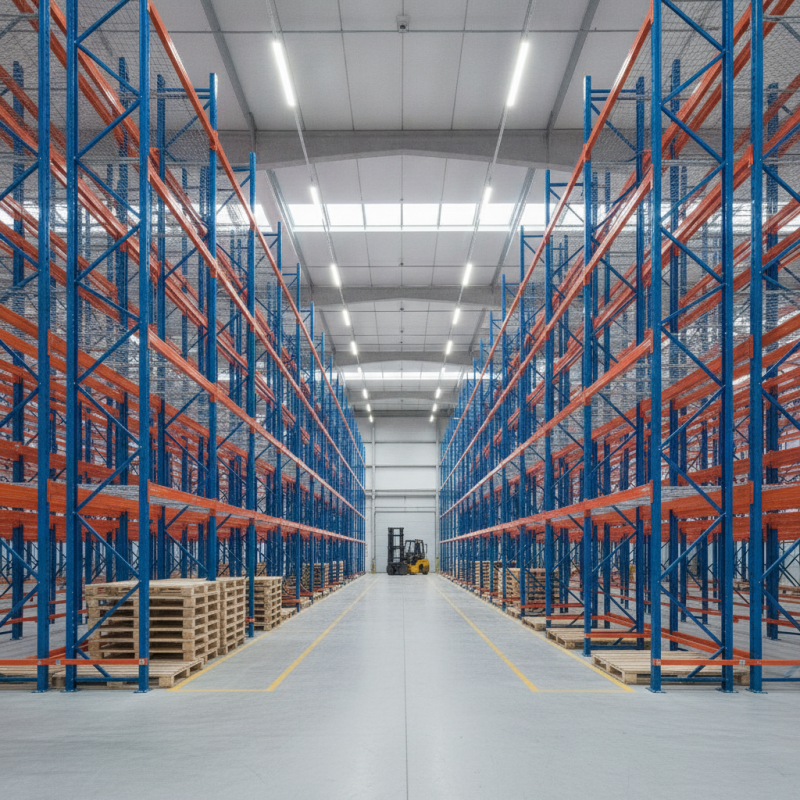
How to Choose Selective Pallet Racking for Your Warehouse?

Understanding Selective Pallet Racking Types and Features

Choosing the right selective pallet racking system is crucial for optimizing warehouse efficiency. Understanding the various types and features available is essential for making an informed decision. Selective racking offers direct access to pallets, which greatly improves retrieval times. This system is ideal for warehouses with a diverse range of products.

Various types of selective pallet racks exist. Double deep racks, for example, allow for additional storage density, yet they require specialized forklifts. Drive-in and drive-thru racks increase space utilization but may complicate inventory management. Knowing the balance between accessibility and storage efficiency is vital.

Tips: Consider your inventory turnover rates. High-rotation items should be easily accessible. Low-demand products can be stored deeper in the racks. Assessing your loading and unloading processes can reveal areas for improvement. Make sure to evaluate load capacity and racking adjustments to avoid potential mishaps. Rethink your layout regularly, as inventory needs can change drastically over time. Small adjustments can lead to significant efficiency gains.

Assessing Your Warehouse Space and Layout Requirements

When assessing your warehouse space and layout, it's crucial to visualize how items will be stored and accessed. Begin by measuring the overall dimensions of your warehouse. Identify any irregularities, such as columns or overhead obstacles, that might impact your racking system. Understanding these physical constraints allows for better decision-making.

Next, consider your inventory types. High-turnover products should be easily accessible. This might require a different racking configuration than items that move slowly. Evaluate the ceiling height, too. If you have vertical space, taller racks could maximize storage efficiency. However, ensure that the design allows safe picking practices.

Don't overlook the workflow path. Plan routes for forklifts and staff to minimize congestion. Can products be retrieved quickly without blocking others? It's worth revisiting your layout if you frequently encounter delays. Reviewing these details can reveal inefficiencies and lead to better storage solutions. Balancing accessibility and space is vital for operational success.

How to Choose Selective Pallet Racking for Your Warehouse?

Aspect Description Example Measurement
Warehouse Size Total area of the warehouse available for racking 10,000 sq ft
Aisle Width Width required for easy access and maneuvering 10 ft
Racking Height Maximum height of the racking system 20 ft
Load Capacity Weight limit each pallet position can hold 2500 lbs
Pallet Size Dimensions of the pallets to be stored 48" x 40"
Future Expansion Consideration for potential growth in inventory 20% additional space

Evaluating Load Capacity and Weight Distribution Needs

When selecting selective pallet racking for your warehouse, understanding load capacity and weight distribution is essential. Each racking system has specific load limits. According to the Material Handling Industry of America, the average load capacity for selective pallet racks ranges from 1,500 to 3,000 pounds per beam level. It’s critical to know the total weight your system will support.

Consider the type of products stored. Heavy, dense materials require robust support. Uneven weight distribution can cause instability. A recent industry report noted that 25% of warehouse accidents result from improper racking use. This statistic highlights the need for careful planning. Understanding weight distribution helps ensure safety and efficiency in operations.

Evaluate the floor's load-bearing capacity as well. It should support the combined weight of racks and products. A structural engineer can provide invaluable insights here. Regularly re-evaluate your racking system as inventory changes. Warehouse dynamics shift, and so do weight needs. Regular audits can prevent overloading. Equipment failures lead to costly downtime. Hence, attention to detail is necessary for optimal performance.

Selective Pallet Racking Load Capacity and Distribution

Considering Accessibility and Picking Efficiency in Design

Designing selective pallet racking for a warehouse requires a focus on accessibility and picking efficiency. It’s crucial to consider how easy it is for workers to access products. A study by the Warehousing Education and Research Council (WERC) indicates that well-designed racking can improve picking efficiency by up to 30%. When incorporating wide aisles and adjustable shelving, companies can facilitate faster inventory turnover.

Accessibility impacts not just speed but also safety. A report from the Occupational Safety and Health Administration (OSHA) suggests that nearly 25% of workplace injuries occur in warehousing. By ensuring clear pathways and minimal obstructions within the racking system, warehouses can reduce risks. Flexibility is essential; racking systems should accommodate various product sizes. This adaptability can boost productivity and simplify the reorganization of stock.

Moreover, while focusing on efficiency, it’s essential not to overlook the layout's limitations. Not all products may fit neatly within standard configurations. Regular reviews of the racking and layout can reveal inefficiencies and help in making necessary adjustments. Balancing accessibility with the sheer volume of items stored can often be challenging.

Budgeting for Installation and Maintenance of Racking Systems

When budgeting for installation and maintenance of selective pallet racking systems, consider both upfront and ongoing costs. Installation can vary greatly based on warehouse size and layout. It's essential to obtain multiple quotes to ensure you are getting a fair deal.

Tips: Always prioritize safety features in your racking systems. This investment can prevent costly accidents down the line. Also, think about the long-term costs of maintenance. Regular inspections can save you from unexpected expenses.

Moreover, factor in the cost of downtime during installation. Consult with specialists who can offer valuable insights based on their experiences. Reflect on the necessity of each feature rather than opting for all available options. You might find that simpler solutions meet your needs effectively.

Consider the implications of scalability. As your business grows, your racking might need adjustments. Ensure your plan accommodates potential expansions without significant extra costs. Remember that a wELL-thought-out budget can lead to better operational efficiency in the long run.

Copyright 2025 Fluidra S.A. | Created by BCM Marketing Agencia Privacy Policy Legal note | Cookie policy |

Technical cookies are strictly necessary for our website to work and you can navigate through it. These types of cookies are those that, for example, allow us to identify you, give you access to certain restricted parts of the page if necessary, or remember different options or services already selected by you, such as your privacy preferences. Therefore, they are activated by default, your authorization not being necessary in this regard. Through the configuration of your browser, you can block or alert the presence of this type of cookies, although such blocking will affect the proper functioning of the different functionalities of our website.


The analysis cookies allow us to study the navigation of the users of our website in general (for example, which sections of the page are the most visited, which services are used most and if they work correctly, etc.). From the statistical information on navigation on our website, we can improve both the operation of the page itself and the different services it offers. Therefore, these cookies do not have an advertising purpose, but only serve to make our website work better, adapting to our users in general. By activating them you will contribute to this continuous improvement. You can enable or disable these cookies by checking the corresponding box, being disabled by default.


Functionality cookies allow us to remember your preferences, to personalize certain characteristics and general options of our website, every time you access it (for example, the language in which the information is presented to you, the sections marked as favorites, your browser type, etc.) Therefore, this type of cookies does not have an advertising purpose, but by activating them you will improve the functionality of the website (for example, adapting to your type of browser) and the customization of it based on your preferences (for example, by presenting the information in the language that you have chosen in previous occasions), which will contribute to the ease, usability and comfort of our page during your navigation. You can enable or disable these cookies by checking the corresponding box, being disabled by default.


Advertising cookies allow us to manage the advertising spaces included in our website based on criteria such as the content shown or the frequency in which the ads are displayed. For example, if you have been shown the same ad several times on our website, and you have not shown a personal interest by clicking on it, it will not appear again. In summary, by activating this type of cookies, the advertising shown on our website will be more useful and diverse, and less repetitive. You can enable or disable these cookies by checking the corresponding box, being disabled by default.


Behavioral advertising cookies allow us to obtain information based on the observation of your browsing habits and behaviors on the web, in order to show you advertising content that best suits your personal tastes and interests. To understand it in a very simple way, we will give you a fictitious example: if your last searches on the web were related to suspense literature, we would show you advertising about suspense books. Therefore, activating this type of cookies, the advertising that we show you on our website will not be generic, but will be oriented to your searches, tastes and interests, therefore adjusting exclusively to you. You can enable or disable these cookies by checking the corresponding box, being disabled by default.
To understand it in a very simple way, we will give you a fictitious example: if your last searches on the web were related to suspense literature, we would show you advertising about suspense books. Therefore, activating this type of cookies, the advertising that we show you on our website will not be generic, but will be oriented to your searches, tastes and interests, therefore adjusting exclusively to you. You can enable or disable these cookies by checking the corresponding box, being disabled by default.

SAVE

We use our own and third-party cookies to ensure the proper functioning of the website and to analyse our services, improve your experience on our website and show you advertisements related to your interests according to profiling based on your browsing habits (e.g. websites visited). You can accept all cookies by clicking "ACCEPT" or set or reject them by clicking here. If you would like to know more about the use of cookies, please see our COOKIE POLICY.


ACCEPT ALL
Reject no essentials


