
How to Choose the Right Drip Line Pressure Regulator for You?
FLUID HANDLING EXPERTS

Blog, all our news

How to Choose the Right Drip Line Pressure Regulator for You?

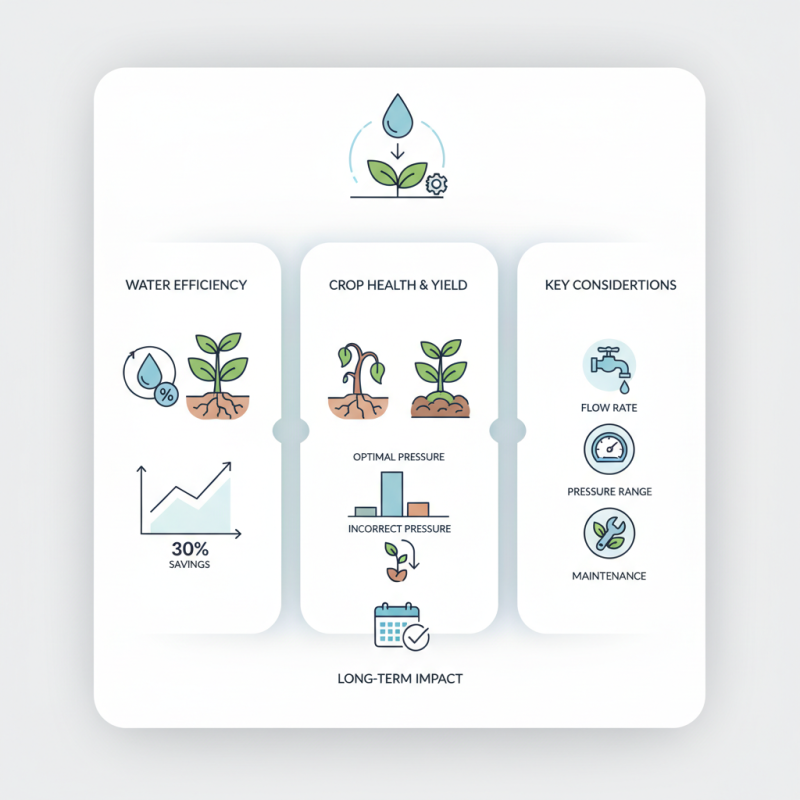
Choosing the right Drip Line Pressure Regulator is crucial for effective irrigation. Recent studies show that proper pressure regulation can improve water efficiency by up to 30%. This not only conserves water but also enhances plant health, ensuring they receive optimal moisture.

Farmers often face the challenge of selecting a regulator that suits their specific needs. A pressure regulator that is too high can waste water, while one that is too low may not deliver enough pressure. Industry experts emphasize the importance of understanding local soil conditions and crop requirements. Data suggests that miscalculations in pressure can lead to crop failures, directly impacting yield.

Selecting the appropriate Drip Line Pressure Regulator requires careful consideration. It’s essential to evaluate factors such as flow rate, pressure range, and maintenance requirements. Note that choices made today will influence irrigation efficiency tomorrow. Reflecting on these aspects can lead to more informed decisions that benefit both the environment and agricultural productivity.
How to Choose the Right Drip Line Pressure Regulator for You?

Understanding Drip Line Pressure Regulators and Their Importance

Understanding drip line pressure regulators is crucial for efficient irrigation. These devices help maintain a consistent water pressure in your drip irrigation system. Studies by the Irrigation Association reveal that improper pressure can lead to uneven water distribution, potentially wasting water and harming crops.

Choosing the right regulator depends on your specific needs. For example, low-pressure systems typically require a different regulator compared to high-pressure systems. Look for a regulator that matches your water source pressure for optimal performance. According to research, a well-chosen regulator can improve water efficiency by up to 30%.

Tips: Always check the manufacturer's specifications. Compare the flow rates and pressure settings. Consider your landscape's unique needs when selecting a regulator.

Remember, the effectiveness of drip irrigation hinges on proper pressure management. Many users overlook this, leading to inefficiencies. Regular maintenance and testing of pressure levels can help identify potential issues early. Inaccurate pressure may require adjustments to meet the demands of your plants effectively.

Key Factors in Selecting the Right Pressure Regulator for Drip Irrigation

When choosing a pressure regulator for drip irrigation, it's vital to consider several key factors that can impact performance. One critical measure is the flow rate capacity. Studies indicate that most drip systems require regulators that manage flow rates between 10 to 30 gallons per hour. Not addressing this can lead to uneven watering and potential plant stress.

Another significant factor is the pressure range. Ideal operating pressure typically falls between 8 to 12 PSI. However, many users experience pressure fluctuations. This can cause under or over watering. A regulator that can efficiently handle these variations ensures consistent water delivery. According to irrigation guidelines, pressure that varies significantly from recommended levels can decrease system efficiency by up to 50%.

Lastly, consider the size of your irrigation system. A large-scale system may require multiple regulators to maintain uniform pressure. Inadequate sizing can lead to localized flooding or drought conditions. It's common for even experienced users to overlook this detail. Evaluating your specific needs can improve your irrigation setup significantly.

Comparing Different Pressure Regulator Types and Their Specifications

Choosing the right drip line pressure regulator can be challenging. There are various types available, each with unique specifications. Common types include manual, automatic, and adjustable pressure regulators. Manual regulators allow users to set pressure levels, while automatic regulators adjust pressure based on water flow. Adjustable ones offer flexibility for changing conditions.

When comparing specifications, flow rate is a critical factor. High flow rates might not need the same pressure as low flow systems. Pay attention to the PSI ratings too. Some regulators work efficiently at low pressure, while others excel at higher pressures. The material used in construction affects durability. Plastic models might be lighter, but metal regulators often last longer.

Personal preferences should also guide your choice. Do you prefer simplicity or customization? Some users might find complexity daunting, leading to less efficient watering. It's essential to weigh these aspects against your irrigation needs. Everyone makes mistakes in the selection process. Reflecting on past choices can lead to better decisions in the future.

Evaluating Pressure Ratings and Flow Rates for Optimal System Performance

When selecting a drip line pressure regulator, understanding pressure ratings and flow rates is crucial. Proper regulation is vital for optimal system performance. Pressure ratings typically range from 10 to 30 PSI, depending on your specific needs. A study by the Irrigation Association indicates that systems running above 25 PSI may experience more pressure losses and inefficient water usage.

Flow rates also play an important role. For instance, a flow rate of 0.5 to 2 GPH (gallons per hour) is ideal for most drip systems. This aligns with the American Society of Agricultural and Biological Engineers' recommended guidelines. Inadequate flow can result in dry spots in your garden, while excess flow may lead to system failures.

Tips: Always check your landscape's water requirements. Make adjustments based on the plant types you are using. Review pressure ratings in conjunction with your soil type to prevent over-irrigation. Your drip system’s performance depends on both proper pressure and flow rate balance. Regularly monitor your system to ensure consistent output. Even minor changes in pressure can significantly affect water distribution, leading to potential inefficiencies.

Maintenance Tips for Ensuring Longevity of Your Pressure Regulator

Maintaining a drip line pressure regulator is essential for its longevity and optimal performance. Regular inspection is crucial. Check for any visible damage or wear. Look for leaks around the connections. These checks should be done monthly, especially during peak usage seasons. A worn-out regulator can lead to inconsistent water flow, affecting your irrigation efficiency.

Cleaning the regulator is equally important. Debris can accumulate inside, causing blockages. Use a soft brush to gently remove dirt. Soak the parts in warm, soapy water if necessary. Rinse thoroughly to avoid soap residue. Reassemble the regulator once everything is dry. Consider double-checking the settings after cleaning. Misadjustments can cause pressure issues.

Timely replacement of parts is vital. Over time, seals and diaphragms degrade. Monitor how the regulator responds with changing weather conditions. A sudden change might indicate a need for replacement. Documenting the lifespan of your regulator can help track its performance. This record allows for informed decisions on maintenance and replacements.

Copyright 2025 Fluidra S.A. | Created by BCM Marketing Agencia Privacy Policy Legal note | Cookie policy |

Technical cookies are strictly necessary for our website to work and you can navigate through it. These types of cookies are those that, for example, allow us to identify you, give you access to certain restricted parts of the page if necessary, or remember different options or services already selected by you, such as your privacy preferences. Therefore, they are activated by default, your authorization not being necessary in this regard. Through the configuration of your browser, you can block or alert the presence of this type of cookies, although such blocking will affect the proper functioning of the different functionalities of our website.


The analysis cookies allow us to study the navigation of the users of our website in general (for example, which sections of the page are the most visited, which services are used most and if they work correctly, etc.). From the statistical information on navigation on our website, we can improve both the operation of the page itself and the different services it offers. Therefore, these cookies do not have an advertising purpose, but only serve to make our website work better, adapting to our users in general. By activating them you will contribute to this continuous improvement. You can enable or disable these cookies by checking the corresponding box, being disabled by default.


Functionality cookies allow us to remember your preferences, to personalize certain characteristics and general options of our website, every time you access it (for example, the language in which the information is presented to you, the sections marked as favorites, your browser type, etc.) Therefore, this type of cookies does not have an advertising purpose, but by activating them you will improve the functionality of the website (for example, adapting to your type of browser) and the customization of it based on your preferences (for example, by presenting the information in the language that you have chosen in previous occasions), which will contribute to the ease, usability and comfort of our page during your navigation. You can enable or disable these cookies by checking the corresponding box, being disabled by default.


Advertising cookies allow us to manage the advertising spaces included in our website based on criteria such as the content shown or the frequency in which the ads are displayed. For example, if you have been shown the same ad several times on our website, and you have not shown a personal interest by clicking on it, it will not appear again. In summary, by activating this type of cookies, the advertising shown on our website will be more useful and diverse, and less repetitive. You can enable or disable these cookies by checking the corresponding box, being disabled by default.


Behavioral advertising cookies allow us to obtain information based on the observation of your browsing habits and behaviors on the web, in order to show you advertising content that best suits your personal tastes and interests. To understand it in a very simple way, we will give you a fictitious example: if your last searches on the web were related to suspense literature, we would show you advertising about suspense books. Therefore, activating this type of cookies, the advertising that we show you on our website will not be generic, but will be oriented to your searches, tastes and interests, therefore adjusting exclusively to you. You can enable or disable these cookies by checking the corresponding box, being disabled by default.
To understand it in a very simple way, we will give you a fictitious example: if your last searches on the web were related to suspense literature, we would show you advertising about suspense books. Therefore, activating this type of cookies, the advertising that we show you on our website will not be generic, but will be oriented to your searches, tastes and interests, therefore adjusting exclusively to you. You can enable or disable these cookies by checking the corresponding box, being disabled by default.

SAVE

We use our own and third-party cookies to ensure the proper functioning of the website and to analyse our services, improve your experience on our website and show you advertisements related to your interests according to profiling based on your browsing habits (e.g. websites visited). You can accept all cookies by clicking "ACCEPT" or set or reject them by clicking here. If you would like to know more about the use of cookies, please see our COOKIE POLICY.


ACCEPT ALL
Reject no essentials


