How to Choose PVC Valves and Fittings for Your Project?
FLUID HANDLING EXPERTS

Blog, all our news

How to Choose PVC Valves and Fittings for Your Project?

Choosing the right PVC valves and fittings is crucial for any project. These components play a significant role in various industries, including plumbing, agriculture, and industrial applications. According to a report by Freedonia Group, demand for PVC fittings is projected to grow by 3.5% annually. This growth highlights the increasing reliance on these materials for reliable and efficient systems.

When selecting PVC valves and fittings, one must consider factors like pressure ratings, temperature resistance, and the specific chemical compatibility required for your project. Experts emphasize that even minor oversights in these considerations can lead to leaks or system failures. The global PVC market has expanded, indicating that professional insight is essential for making informed choices.

While PVC offers many benefits, including lightweight and corrosion resistance, it is not without challenges. Some limitations exist regarding flexibility and temperature constraints. Therefore, evaluating both the advantages and disadvantages of PVC valves and fittings is vital. This careful approach can ultimately enhance durability and performance in your project.
How to Choose PVC Valves and Fittings for Your Project?

Understanding the Basics of PVC Valves and Fittings

When working with PVC valves and fittings, understanding their basics is crucial. PVC, or polyvinyl chloride, is a popular material in plumbing due to its durability and resistance to corrosion. According to the Plastics Pipe Institute, PVC presents less waste and greater efficiency in pipe systems. It is lightweight, making it easier to transport and install.

Tips: Always check the pressure rating of your chosen valves. Optimal performance often relies on matching valve ratings to your project’s specific needs.

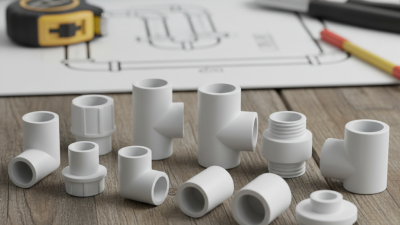
PVC fittings come in various shapes and sizes, including elbows, tees, and couplings. Selecting the correct type is essential. A poorly chosen fitting can lead to leaks, which could damage your project. The American Society of Plumbing Engineers states that leaks in plumbing systems can waste thousands of gallons of water yearly.

Tips: Consider using solvent cement for a strong bond. Properly prepared surfaces are key to achieving maximum strength.

It's also essential to match materials properly. PVC should not be used with certain chemicals or under extreme temperatures. Always refer to manufacturer guidelines for compatibility. The reliability of your project hinges on these small details. Choosing the wrong component can lead to expensive fixes later on.

How to Choose PVC Valves and Fittings for Your Project?

Type Material Pressure Rating (PSI) Size (Inches) Application
Ball Valve PVC 150 1/2 - 4 Water Systems
Gate Valve PVC 100 1 - 6 Wastewater Systems
Check Valve PVC 80 1 - 3 Irrigation Systems
Coupling PVC N/A 1/2 - 8 Joining Pipes
Elbow Fitting PVC N/A 1/2 - 6 Directional Changes

Identifying Project Requirements for PVC Components

Identifying project requirements for PVC components is crucial. Start by defining the project scope. Consider factors like the type of fluid, pressure, and temperature. Each application might have unique needs. For instance, wastewater systems require specific standards compared to drinking water systems. Knowing these details helps in selecting the right PVC valves and fittings.


Next, evaluate the environment where the components will be installed. High humidity or exposure to sunlight can impact material choice. Make sure the fittings can withstand these conditions. Sometimes, required specs may seem conflicting. You might find that durable options are more expensive, but they can save money in maintenance later.


Ensure you check the compatibility of your chosen components. PVC fittings must match the pipe sizes and types. Misalignment can lead to leaks and failures. Take your time to assess each requirement thoroughly. This attention to detail can prevent costly mistakes down the line. Revisit your criteria as the project evolves, adapting as necessary. Understanding every aspect will lead to a successful outcome.

Evaluating Different Types of PVC Valves and Their Applications

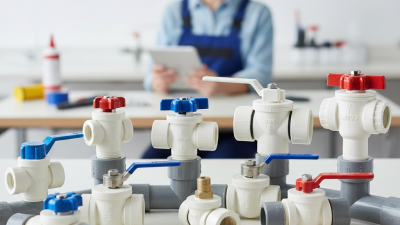
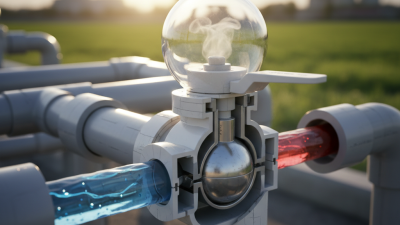
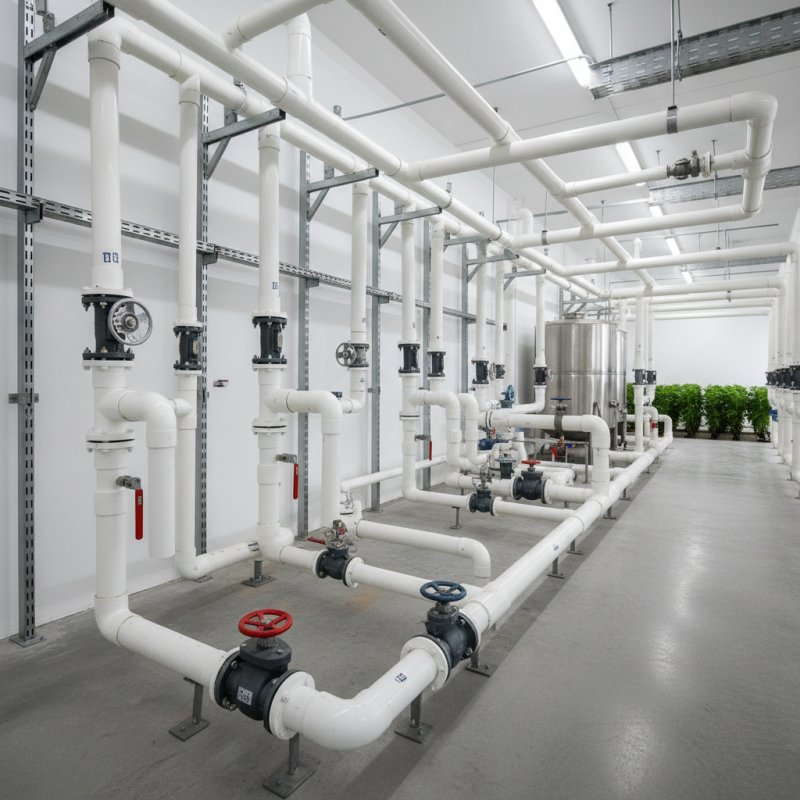
When evaluating different types of PVC valves, it’s essential to understand their specific applications. PVC ball valves are popular for their durability and resistance to corrosion. They work well for shutting off flow in irrigation systems or chemical processes. On the other hand, PVC check valves permit fluid to flow in one direction, making them ideal for preventing backflow in drainage systems.

Tips: Consider your system's pressure and temperature when choosing valves. This information is crucial for optimal performance and longevity. Always inspect fittings for compatibility with your existing structure to avoid leaks.

Another common type is the PVC gate valve, which is excellent for regulating flow. They can be found in pools or water treatment plants, where precise flow control is necessary. However, they can be more challenging to maneuver than ball valves. Checking for signs of wear and tear regularly is advisable, as neglect can lead to failures.

Tips: Always refer to PVC specifications when selecting fittings. This adherence helps maintain the integrity of your system. A small oversight in valve selection can result in significant issues later on.

Choosing the Right Fitting Size and Configuration for Your Needs

How to Choose PVC Valves and Fittings for Your Project?

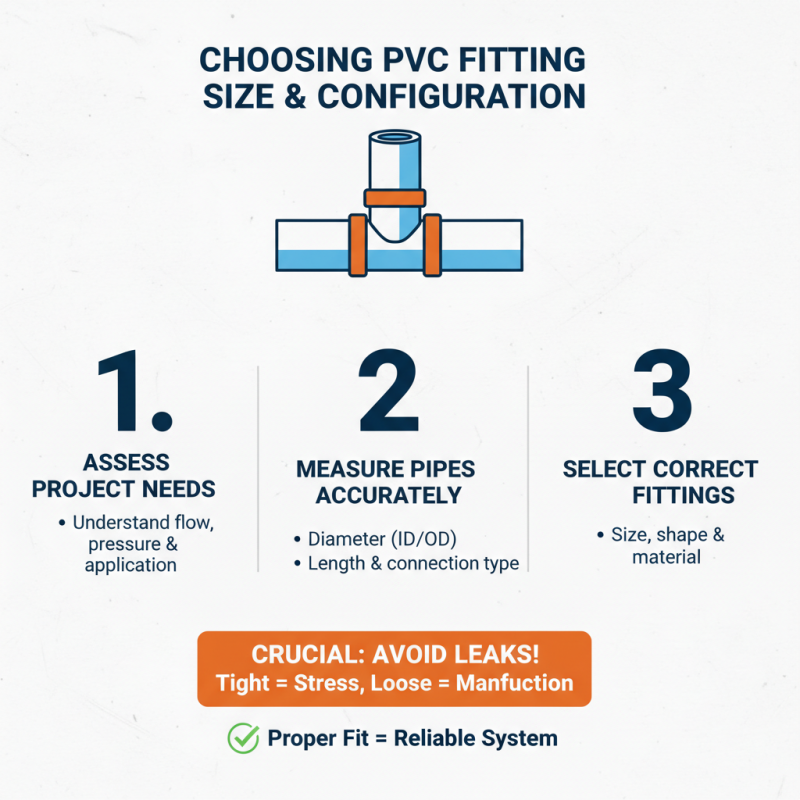
When selecting PVC valves and fittings, size and configuration are crucial. Understand your project's requirements first. Take measurements of the pipes to ensure a proper fit. Overly tight or loose fittings can lead to leaks or malfunctions.

Choosing the right fitting also involves understanding flow direction and pressure ratings. Ensure your fittings can handle the required pressure without failure. It’s important to consider the specific environment too, such as temperature and exposure to chemicals.

**Tip:** Always test a small section of your project. This practice helps identify potential issues early on.

Don’t overlook the need for flexible configurations. Often, projects demand custom setups. Reflect on traditional methods and consider new angles to optimize your plumbing system. Flexibility in design can save time and costs in the long run.

**Tip:** Document your choices. Keeping track of what works and what doesn’t can guide future projects. This way, you can build on past experiences.

Tips for Installation and Maintenance of PVC Valves and Fittings

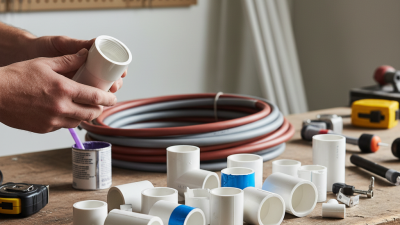
When installing PVC valves and fittings, the right tools make all the difference. Use a pipe cutter for clean edges, ensuring a precise fit. Deburring the cut edges is essential. It prevents leaks and eases the assembly process. Pay attention to the joining method, whether solvent welding or threaded fittings. Each requires different techniques for a strong seal.

Regular maintenance can prolong the lifespan of PVC components. Inspect connections for signs of wear or leakage. It's easy to overlook minor issues, but they can lead to bigger problems. Replacing worn parts promptly can save time and costs later. Clean fittings periodically to prevent buildup that affects flow rates. Remember, over-tightening can lead to cracks. Finding that balance is key.

Copyright 2025 Fluidra S.A. | Created by BCM Marketing Agencia Privacy Policy Legal note | Cookie policy |

Technical cookies are strictly necessary for our website to work and you can navigate through it. These types of cookies are those that, for example, allow us to identify you, give you access to certain restricted parts of the page if necessary, or remember different options or services already selected by you, such as your privacy preferences. Therefore, they are activated by default, your authorization not being necessary in this regard. Through the configuration of your browser, you can block or alert the presence of this type of cookies, although such blocking will affect the proper functioning of the different functionalities of our website.


The analysis cookies allow us to study the navigation of the users of our website in general (for example, which sections of the page are the most visited, which services are used most and if they work correctly, etc.). From the statistical information on navigation on our website, we can improve both the operation of the page itself and the different services it offers. Therefore, these cookies do not have an advertising purpose, but only serve to make our website work better, adapting to our users in general. By activating them you will contribute to this continuous improvement. You can enable or disable these cookies by checking the corresponding box, being disabled by default.


Functionality cookies allow us to remember your preferences, to personalize certain characteristics and general options of our website, every time you access it (for example, the language in which the information is presented to you, the sections marked as favorites, your browser type, etc.) Therefore, this type of cookies does not have an advertising purpose, but by activating them you will improve the functionality of the website (for example, adapting to your type of browser) and the customization of it based on your preferences (for example, by presenting the information in the language that you have chosen in previous occasions), which will contribute to the ease, usability and comfort of our page during your navigation. You can enable or disable these cookies by checking the corresponding box, being disabled by default.


Advertising cookies allow us to manage the advertising spaces included in our website based on criteria such as the content shown or the frequency in which the ads are displayed. For example, if you have been shown the same ad several times on our website, and you have not shown a personal interest by clicking on it, it will not appear again. In summary, by activating this type of cookies, the advertising shown on our website will be more useful and diverse, and less repetitive. You can enable or disable these cookies by checking the corresponding box, being disabled by default.


Behavioral advertising cookies allow us to obtain information based on the observation of your browsing habits and behaviors on the web, in order to show you advertising content that best suits your personal tastes and interests. To understand it in a very simple way, we will give you a fictitious example: if your last searches on the web were related to suspense literature, we would show you advertising about suspense books. Therefore, activating this type of cookies, the advertising that we show you on our website will not be generic, but will be oriented to your searches, tastes and interests, therefore adjusting exclusively to you. You can enable or disable these cookies by checking the corresponding box, being disabled by default.
To understand it in a very simple way, we will give you a fictitious example: if your last searches on the web were related to suspense literature, we would show you advertising about suspense books. Therefore, activating this type of cookies, the advertising that we show you on our website will not be generic, but will be oriented to your searches, tastes and interests, therefore adjusting exclusively to you. You can enable or disable these cookies by checking the corresponding box, being disabled by default.

SAVE

We use our own and third-party cookies to ensure the proper functioning of the website and to analyse our services, improve your experience on our website and show you advertisements related to your interests according to profiling based on your browsing habits (e.g. websites visited). You can accept all cookies by clicking "ACCEPT" or set or reject them by clicking here. If you would like to know more about the use of cookies, please see our COOKIE POLICY.


ACCEPT ALL
Reject no essentials