
How to Choose Laminated Safety Glass in 2026?
FLUID HANDLING EXPERTS

Blog, all our news

How to Choose Laminated Safety Glass in 2026?

Choosing Laminated Safety Glass in 2026 means matching tested performance to the actual risk, not simply selecting the thickest panel. Laminated glass bonds two or more glass sheets with an interlayer, commonly polyvinyl butyral. After breakage, fragments can remain attached to that layer. Useful—but not invincible.

The World Health Organization’s Global Status Report on Road Safety 2023 estimates that 1.19 million people die in road crashes each year. That figure describes a global road-safety burden; it does not prove that any particular glazing product prevents injuries. It does explain why vehicle glazing decisions deserve careful review. For buildings, the priorities may differ: human impact, overhead glazing, noise control, security, or weather exposure can each shape the specification.

A practical comparison starts with the application, then checks glass build-up, interlayer type, thickness, dimensions, edge support, and required test results. Ask suppliers for traceable product data and certificates tied to the exact assembly—not just a brochure claim. Standards such as ANSI Z97.1, CPSC 16 CFR 1201, and EN 12600 provide relevant testing frameworks, but requirements vary by location and use. A passing result for one configuration should not be assumed to cover another. Details matter.

In this guide, we’ll examine how to read specifications, compare performance claims, and spot common selection gaps in 2026. One caveat remains: real-world installation can undermine a sound product choice. The glass is only part of the system.
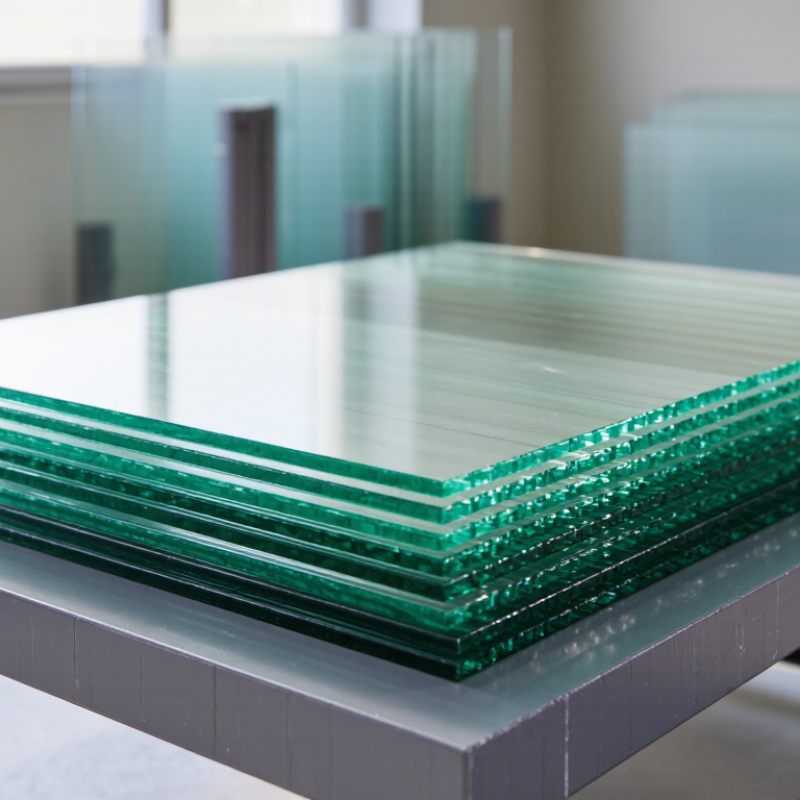
How to Choose Laminated Safety Glass in 2026?

Define the Hazard and Code: ANSI Z97.1 Class A Uses a 48-in. Drop Test

Define the hazard before comparing glass thicknesses. A door beside a busy corridor faces repeated human impact; a low panel near a play area may face a different risk. ANSI Z97.1 Class A uses a 48-inch drop test, a demanding impact benchmark for safety glazing. The standard’s impact test evaluates whether the glass breaks safely, not whether every installed panel suits every opening. The U.S. Consumer Product Safety Commission’s 16 CFR Part 1201 also sets impact requirements for specified architectural glazing products. Check the product category and the applicable local building code, rather than treating the two standards as interchangeable.

That distinction matters. A Class A label does not establish the correct glass make-up, support details, or installation method for a specific hazard. Ask for the test report and confirm that its specimen matches the proposed laminated construction, including interlayer and glass thickness. Then check the opening’s size, framing, and edge support with a qualified glazing professional. Small details matter. A hard floor beneath a panel, for example, may change the consequences of breakage. I would not rely on one rating alone; a test result is useful, but it is not the whole design answer.

Compare Impact Ratings: EN 12600 Class 1 Uses a 1,200-mm Pendulum Drop

How to Choose Laminated Safety Glass in 2026?

When comparing impact ratings, check the test method, not just the word “safety.” Under EN 12600, Class 1 corresponds to a pendulum impact from a 1,200-mm drop height. The test assesses how glazing behaves under impact and how it breaks. It does not mean the glass cannot crack or that every installation will perform identically. Frame design, fixing details, and glass size matter too.

Laminated glass holds broken pieces together with an interlayer, which can help reduce falling fragments. Still, an impact class alone cannot tell you whether a panel suits a door, partition, or overhead application. Confirm the complete classification and match it to the project’s risk, dimensions, and installation conditions. Ask for test documentation tied to the specified glass build-up. Small specification differences can matter; this part is easy to overlook.

Tips: Verify that the quoted Class 1 rating refers to EN 12600 and the 1,200-mm pendulum drop. Check the frame and edge support requirements with the supplier or project professional. Don’t guess. A rating is useful evidence, not a substitute for a site-specific assessment.

Choose Interlayers and Build-Up: 0.38-mm PVB Plies Are Common

How to Choose Laminated Safety Glass in 2026?

A common laminated build-up places one 0.38-mm PVB interlayer between two glass lites. It is a useful starting point, not a universal safety rating. The glass thickness, heat treatment, panel size, edge support, and intended use all affect performance. A thicker or multi-ply interlayer may suit some designs, but more material alone does not guarantee a better result. Check tested assembly details, not just the interlayer label.

Tips: Confirm the specified PVB thickness and number of plies. Ask whether the tested build-up matches your glass, frame, and panel dimensions. Note exposed edges and expected moisture. Small details matter.

For a doorway or low-level window, clarify the required impact performance before choosing the lay-up. For overhead glazing, ask a qualified supplier or designer to assess retention after breakage and the complete support system. Acoustic needs may also affect the interlayer choice. Get the glass and interlayer configuration in writing. One detail is easy to overlook: a familiar 0.38-mm ply can appear in different assemblies, so do not assume two products perform alike. Check project requirements and applicable local standards; specifications can vary.

Size Panels for Design Loads and Specify Glass to ASTM C1172

How to Choose Laminated Safety Glass in 2026?

Size each panel for its actual design loads, not a generic thickness chart. ASTM E1300 provides procedures for assessing glass resistance to uniform loads, considering panel dimensions, support conditions, load duration, and breakage probability. For a 1.2 × 2.4 m panel, a 2.0 kPa pressure represents 5.76 kN across its 2.88 m² area. This is an illustration, not a project design value. A structural professional should confirm site-specific wind, snow, and other applicable loads.

Then specify the product clearly. ASTM C1172 covers laminated architectural flat glass, including construction and quality requirements; it does not replace structural sizing. State glass plies, interlayer type and thickness, overall build-up, edge finish, and required impact or post-breakage performance. Make sure the selected construction suits its supports and remains retained after breakage where required. A polished schedule can still miss a detail: edge exposure may affect durability.

Tips: Give the fabricator the panel dimensions, support details, and governing loads. Ask for calculations against ASTM E1300 and product documentation showing ASTM C1172 compliance. Check tolerances before ordering; small discrepancies can complicate installation.

Verify Edge Conditions, Durability, and Post-Breakage Retention Requirements

How to Choose Laminated Safety Glass in 2026?

Inspect the edges before comparing glass thickness. A polished edge, exposed laminate, or poorly drained frame can change how a panel weathers. Check whether edges are sealed, exposed to standing water, or in contact with sealants. Confirm chemical compatibility with the glass supplier. A neat drawing can still miss a wet sill.

Durability depends on more than the interlayer name. Review the expected heat, humidity, cleaning chemicals, and edge exposure, then ask for test evidence relevant to those conditions.

For impact benchmarks, U.S. CPSC 16 CFR Part 1201 sets levels of 150 ft·lbf for Category I and 400 ft·lbf for Category II glazing. These thresholds help classify impact performance; they do not prove a broken panel will remain safely supported in every installation.

ASTM E1300 provides a method for evaluating glass load resistance, but post-breakage retention needs its own review. Consider panel size, support type, interlayer, and whether the glass is overhead or vertical. Ask for a documented post-breakage assessment or representative testing.

One uncomfortable detail: project teams sometimes specify impact resistance but leave retention undefined.

That gap matters. A cracked panel may stay in place briefly, then sag or detach as its supports and interlayer carry load. Verify the required retention time and load with a qualified façade or structural professional.

Copyright 2025 Fluidra S.A. | Created by BCM Marketing Agencia Privacy Policy Legal note | Cookie policy |

Technical cookies are strictly necessary for our website to work and you can navigate through it. These types of cookies are those that, for example, allow us to identify you, give you access to certain restricted parts of the page if necessary, or remember different options or services already selected by you, such as your privacy preferences. Therefore, they are activated by default, your authorization not being necessary in this regard. Through the configuration of your browser, you can block or alert the presence of this type of cookies, although such blocking will affect the proper functioning of the different functionalities of our website.


The analysis cookies allow us to study the navigation of the users of our website in general (for example, which sections of the page are the most visited, which services are used most and if they work correctly, etc.). From the statistical information on navigation on our website, we can improve both the operation of the page itself and the different services it offers. Therefore, these cookies do not have an advertising purpose, but only serve to make our website work better, adapting to our users in general. By activating them you will contribute to this continuous improvement. You can enable or disable these cookies by checking the corresponding box, being disabled by default.


Functionality cookies allow us to remember your preferences, to personalize certain characteristics and general options of our website, every time you access it (for example, the language in which the information is presented to you, the sections marked as favorites, your browser type, etc.) Therefore, this type of cookies does not have an advertising purpose, but by activating them you will improve the functionality of the website (for example, adapting to your type of browser) and the customization of it based on your preferences (for example, by presenting the information in the language that you have chosen in previous occasions), which will contribute to the ease, usability and comfort of our page during your navigation. You can enable or disable these cookies by checking the corresponding box, being disabled by default.


Advertising cookies allow us to manage the advertising spaces included in our website based on criteria such as the content shown or the frequency in which the ads are displayed. For example, if you have been shown the same ad several times on our website, and you have not shown a personal interest by clicking on it, it will not appear again. In summary, by activating this type of cookies, the advertising shown on our website will be more useful and diverse, and less repetitive. You can enable or disable these cookies by checking the corresponding box, being disabled by default.


Behavioral advertising cookies allow us to obtain information based on the observation of your browsing habits and behaviors on the web, in order to show you advertising content that best suits your personal tastes and interests. To understand it in a very simple way, we will give you a fictitious example: if your last searches on the web were related to suspense literature, we would show you advertising about suspense books. Therefore, activating this type of cookies, the advertising that we show you on our website will not be generic, but will be oriented to your searches, tastes and interests, therefore adjusting exclusively to you. You can enable or disable these cookies by checking the corresponding box, being disabled by default.
To understand it in a very simple way, we will give you a fictitious example: if your last searches on the web were related to suspense literature, we would show you advertising about suspense books. Therefore, activating this type of cookies, the advertising that we show you on our website will not be generic, but will be oriented to your searches, tastes and interests, therefore adjusting exclusively to you. You can enable or disable these cookies by checking the corresponding box, being disabled by default.

SAVE

We use our own and third-party cookies to ensure the proper functioning of the website and to analyse our services, improve your experience on our website and show you advertisements related to your interests according to profiling based on your browsing habits (e.g. websites visited). You can accept all cookies by clicking "ACCEPT" or set or reject them by clicking here. If you would like to know more about the use of cookies, please see our COOKIE POLICY.


ACCEPT ALL
Reject no essentials


