
How to Choose Insulated Floor Tile Panels in 2026?
FLUID HANDLING EXPERTS

Blog, all our news

How to Choose Insulated Floor Tile Panels in 2026?

Choosing Insulated Floor Tile Panels in 2026 requires more than comparing prices and decorative finishes. These panels must manage heat loss, moisture, load, and daily wear beneath your feet. A warm-looking surface can still perform poorly if its insulation layer is thin or its joints admit damp air.

Building-science expert Joseph Lstiburek often states, “The building enclosure is a system.” That principle matters here. Insulated Floor Tile Panels should work with the subfloor, vapor-control layer, underfloor heating, adhesives, and room ventilation. Check the panel’s thermal resistance, compressive strength, moisture behavior, fire rating, and declared test standards. Do not rely on attractive product photographs.

Feel the difference.

In a cold room, a well-selected panel can reduce the chill rising from a concrete slab. In a busy hallway, it must resist concentrated loads from furniture legs and repeated foot traffic. Measure the substrate flatness before ordering. A panel may be excellent, yet fail over an uneven base. Installation quality still matters.

Experience also exposes uncertainty. Manufacturer data can differ between laboratory testing and occupied homes. Long-term moisture performance may deserve more attention than a slightly higher insulation value. I might favor thicker panels too quickly, while a thinner, stronger system could suit a low-clearance renovation better. This guide examines those trade-offs, helping readers choose Insulated Floor Tile Panels with practical evidence, technical judgment, and realistic expectations for 2026.
How to Choose Insulated Floor Tile Panels in 2026?

Understanding Insulated Floor Tile Panels and Their Core Functions

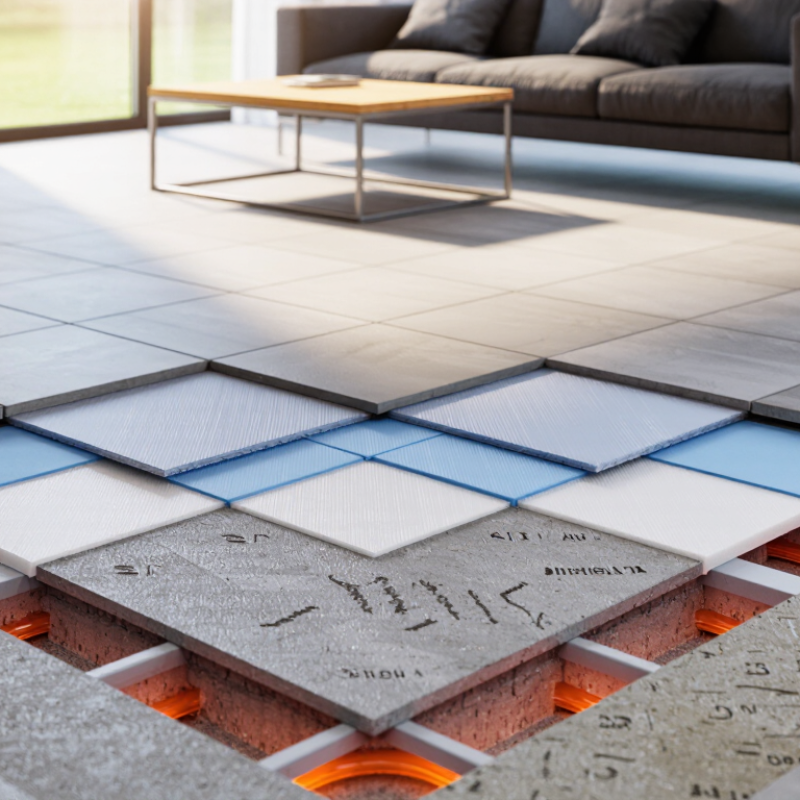
Insulated floor tile panels combine a tiled surface, a rigid insulation core, and a supporting layer. They limit heat transfer through floors and help rooms retain warmth. That matters in bathrooms, kitchens, and rooms above unheated spaces. Some panels also reduce minor surface temperature changes, making tiled floors feel less harsh underfoot.

Their core functions extend beyond thermal insulation. A reliable panel should resist compression, tolerate expected moisture, and support the tile without excessive movement. Check the declared thermal conductivity, thickness, load rating, and water-resistance data. Installation also matters. Uneven subfloors can create weak points, while poorly sealed joints may allow moisture into the panel system. In wet areas, compatible membranes and carefully treated edges are essential. Small gaps can become expensive problems.

During evaluation, compare the panel with the actual floor structure, not only its advertised insulation value. A thin panel may suit a renovation, but it may provide limited thermal improvement. A thicker system can perform better, yet it may affect doors, steps, and drainage levels. I would also inspect test reports, installation guidance, and temperature limits before choosing. I have seen specifications look convincing while the site conditions told a different story. No panel solves every issue. Thermal bridges, poor adhesive coverage, and careless cutting can still reduce performance. A practical choice balances warmth, strength, moisture control, and installation tolerance.

How to Choose Insulated Floor Tile Panels in 2026?

Typical Thermal Resistance of 50 mm Insulation Cores

Thermal resistance indicates how effectively an insulated floor tile panel slows heat transfer. The values shown are calculated from typical insulation thermal-conductivity ranges using R = thickness ÷ thermal conductivity. Higher R-values generally provide better insulation, but final panel selection should also consider compressive strength, moisture resistance, fire performance, tile compatibility, and installation conditions.

Identifying Thermal, Structural, Moisture, and Fire-Resistance Requirements

How to Choose Insulated Floor Tile Panels in 2026?

Choosing an insulated floor tile panel begins with the building’s thermal demands. Measure indoor temperatures, subfloor conditions, and expected foot traffic before comparing products. A panel with a low thermal conductivity value can reduce heat loss through cold floors. However, performance depends on installation quality, joints, and edge sealing. Small gaps can create uncomfortable cold strips beside walls.

Structural capacity deserves equal attention. Check compressive strength, point-load resistance, and long-term creep under furniture or equipment. A residential bedroom needs different support than a workshop or commercial corridor. During site inspections, I look for uneven subfloors, weak transitions, and concentrated loads near doorways. Ratings can look impressive on paper. Poor preparation still causes movement and cracked tiles.

Moisture and fire resistance require practical judgment. In bathrooms, basements, and ground-level rooms, examine water absorption, vapor behavior, and drainage details. A moisture-resistant surface may still fail when water reaches unsealed joints. Fire performance should be verified through current test reports and local building requirements, not marketing language. Ask whether the full assembly was tested, including adhesive, insulation, tile, and backing. I once underestimated moisture near a threshold, and the repair was more disruptive than expected. That mistake changed my inspection checklist. Consult a qualified building professional when conditions are unusual or loads are difficult to calculate.

Comparing Panel Materials, Thicknesses, Sizes, and Installation Systems

How to Choose Insulated Floor Tile Panels in 2026?

Choosing insulated floor tile panels starts with the material beneath the tile. Cement-faced panels resist moisture and provide a firm surface. Foam-core panels are lighter and usually offer better thermal insulation. Some composite panels combine both benefits, but their edge strength varies. Check technical data, fire performance, moisture resistance, and compressive strength before buying. A low price can hide weak joints or poor dimensional stability.

Thickness should match the room, floor height, and expected loads. A thin panel may suit a bathroom renovation with limited clearance. Thicker panels can improve insulation, but they may interfere with doors and thresholds. Panel size also affects installation speed. Large sheets create fewer joints, while smaller panels fit around drains and awkward corners. Measure the floor twice. Small errors become expensive near walls.

Installation systems deserve equal attention. Tongue-and-groove edges can reduce movement between panels. Mechanical fasteners, compatible adhesive, or both may be required by the installation guide. Keep joints staggered, seal wet-area penetrations, and leave expansion space where specified. On one renovation, I underestimated a floor drain’s slope and needed to adjust several panels. That mistake was avoidable. Follow current building requirements, use verified test reports, and ask a qualified installer to inspect the substrate before tiling.

Checking Energy Performance, Compatibility, Durability, and Safety Standards

How to Choose Insulated Floor Tile Panels in 2026?

Checking Energy Performance, Compatibility, Durability, and Safety Standards

When I assess insulated floor tile panels, I begin with measured thermal resistance, not marketing language. Check the declared R-value or U-value, test method, thickness, and temperature range. A cold garage conversion may need different performance from a heated bathroom. Small gaps matter. Ask for independent test reports and current technical sheets. Values can change after moisture exposure, so dry-lab figures deserve caution.

Compatibility is practical. Confirm panel dimensions, compression strength, adhesive requirements, and underfloor-heating limits. Place a straightedge across the subfloor; uneven spots can create hollow tiles and cracked grout. Check moisture readings before installation. Some panels tolerate damp conditions, but none should hide a leaking slab. That mistake is expensive. Leave movement joints where the floor design requires them, especially beside sunlit glazing and heated zones.

Durability means more than a strong first impression. Review impact, abrasion, water absorption, dimensional stability, and expected traffic. For kitchens or entrances, choose a surface with suitable slip resistance under wet conditions. Safety documents should identify fire performance, emissions, and installation limits. Compare these claims with applicable local standards and request traceable laboratory evidence. I also inspect cut edges and transitions, because failures often begin there. My own checklist is not perfect; site conditions can defeat a good specification. Rechecking after installation is worthwhile.

Selecting the Best Insulated Floor Tile Panels for Your Project and Budget

Selecting insulated floor tile panels starts with the room, not the brochure. Measure finished-floor height, substrate flatness, moisture exposure, and expected point loads. UNEP and GlobalABC’s 2024 Global Status Report states that buildings used 32% of global energy in 2023. Small thermal losses still deserve attention. For living areas, prioritize stable compression, low water absorption, and reliable tile adhesion. Bathrooms need more than a high R-value. Specify sealed joints, compatible cementitious layers, and a tested wet-area assembly.

Ask for thermal testing under ASTM C518 and compressive data under ASTM C165. Use the declared design value, not a flattering laboratory headline. U.S. Department of Energy guidance supports insulating floors above unconditioned spaces, while local codes determine required performance. A higher R-value may improve comfort, but extra thickness can create door-clearance and transition problems. Measure twice.

Budget comparisons should include panels, adhesive, leveling materials, edge insulation, fasteners, labor, and possible demolition. Then compare cost per square metre against delivered R-value and compressive capacity. The cheapest panel can become expensive after cracked grout or remedial work. Conversely, the thickest option may waste money in a mild climate. The cost worksheet is rarely final; local labor can overturn a neat calculation. A practical site lesson is simple: inspect the subfloor before ordering. Dampness, unevenness, and poor perimeter detailing can defeat excellent insulation. Choose the assembly you can install correctly, not merely the specification that looks strongest.

Copyright 2025 Fluidra S.A. | Created by BCM Marketing Agencia Privacy Policy Legal note | Cookie policy |

Technical cookies are strictly necessary for our website to work and you can navigate through it. These types of cookies are those that, for example, allow us to identify you, give you access to certain restricted parts of the page if necessary, or remember different options or services already selected by you, such as your privacy preferences. Therefore, they are activated by default, your authorization not being necessary in this regard. Through the configuration of your browser, you can block or alert the presence of this type of cookies, although such blocking will affect the proper functioning of the different functionalities of our website.


The analysis cookies allow us to study the navigation of the users of our website in general (for example, which sections of the page are the most visited, which services are used most and if they work correctly, etc.). From the statistical information on navigation on our website, we can improve both the operation of the page itself and the different services it offers. Therefore, these cookies do not have an advertising purpose, but only serve to make our website work better, adapting to our users in general. By activating them you will contribute to this continuous improvement. You can enable or disable these cookies by checking the corresponding box, being disabled by default.


Functionality cookies allow us to remember your preferences, to personalize certain characteristics and general options of our website, every time you access it (for example, the language in which the information is presented to you, the sections marked as favorites, your browser type, etc.) Therefore, this type of cookies does not have an advertising purpose, but by activating them you will improve the functionality of the website (for example, adapting to your type of browser) and the customization of it based on your preferences (for example, by presenting the information in the language that you have chosen in previous occasions), which will contribute to the ease, usability and comfort of our page during your navigation. You can enable or disable these cookies by checking the corresponding box, being disabled by default.


Advertising cookies allow us to manage the advertising spaces included in our website based on criteria such as the content shown or the frequency in which the ads are displayed. For example, if you have been shown the same ad several times on our website, and you have not shown a personal interest by clicking on it, it will not appear again. In summary, by activating this type of cookies, the advertising shown on our website will be more useful and diverse, and less repetitive. You can enable or disable these cookies by checking the corresponding box, being disabled by default.


Behavioral advertising cookies allow us to obtain information based on the observation of your browsing habits and behaviors on the web, in order to show you advertising content that best suits your personal tastes and interests. To understand it in a very simple way, we will give you a fictitious example: if your last searches on the web were related to suspense literature, we would show you advertising about suspense books. Therefore, activating this type of cookies, the advertising that we show you on our website will not be generic, but will be oriented to your searches, tastes and interests, therefore adjusting exclusively to you. You can enable or disable these cookies by checking the corresponding box, being disabled by default.
To understand it in a very simple way, we will give you a fictitious example: if your last searches on the web were related to suspense literature, we would show you advertising about suspense books. Therefore, activating this type of cookies, the advertising that we show you on our website will not be generic, but will be oriented to your searches, tastes and interests, therefore adjusting exclusively to you. You can enable or disable these cookies by checking the corresponding box, being disabled by default.

SAVE

We use our own and third-party cookies to ensure the proper functioning of the website and to analyse our services, improve your experience on our website and show you advertisements related to your interests according to profiling based on your browsing habits (e.g. websites visited). You can accept all cookies by clicking "ACCEPT" or set or reject them by clicking here. If you would like to know more about the use of cookies, please see our COOKIE POLICY.


ACCEPT ALL
Reject no essentials


