
How to Choose Fire Retardant Nonwoven for Global Sourcing
FLUID HANDLING EXPERTS

Blog, all our news

How to Choose Fire Retardant Nonwoven for Global Sourcing

Choosing the right Fire Retardant Nonwoven for global sourcing requires more than comparing prices or product photographs. Buyers must examine fiber composition, fabric weight, flame performance, smoke behavior, and end-use conditions. A material suitable for protective curtains may fail in automotive interiors or building insulation. The difference can be critical.

Experienced sourcing teams usually request technical data sheets, laboratory reports, traceability records, and production samples. They also check whether testing follows recognized standards required in the destination market. Certifications should be verified independently, not accepted from a supplier without review. A small sample may look impressive under a flame, yet perform differently after washing, compression, or prolonged heat exposure. Real performance matters.

Supplier evaluation should include factory capability, quality controls, batch consistency, and response speed when defects appear. Ask how the supplier controls basis weight across a 1.6-meter production roll. Ask whether the flame-retardant treatment can migrate, weaken fibers, or change after storage. These details reveal practical expertise. They also reduce costly surprises during customs clearance or product certification.

Global sourcing is rarely perfect. Test methods can differ, and documentation may contain gaps. That uncertainty deserves attention. A reliable purchasing decision combines independent testing, clear specifications, pilot orders, and regular inspections. Cost still matters, but the cheapest Fire Retardant Nonwoven may create higher replacement, compliance, and safety costs later. The strongest choice balances verified performance, stable supply, responsible manufacturing, and the actual risks of the finished product.
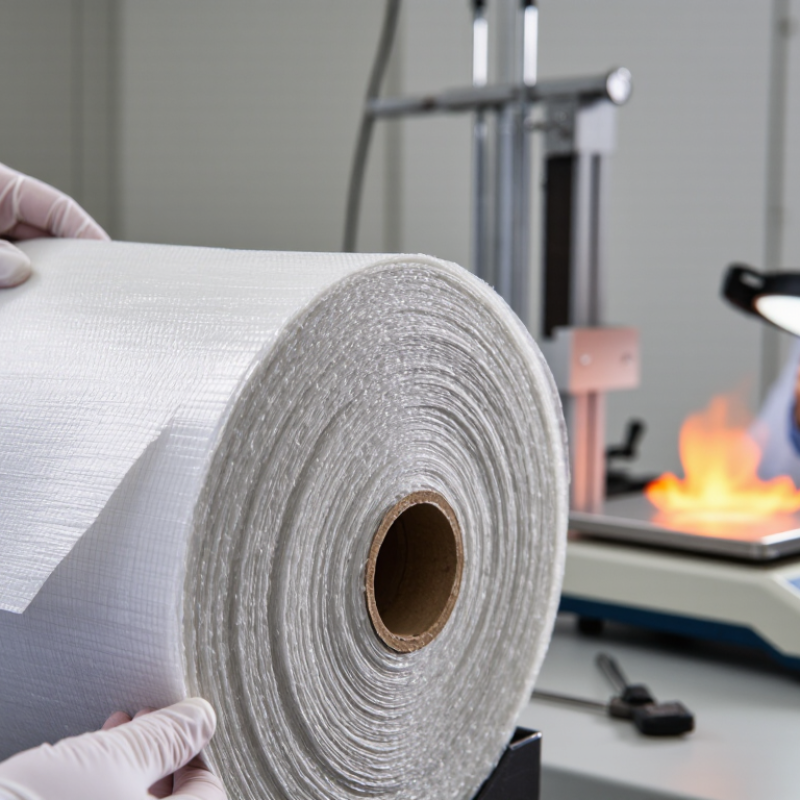
How to Choose Fire Retardant Nonwoven for Global Sourcing

Define Fire-Retardant Nonwoven Materials and Their Global Uses

Fire-retardant nonwoven materials are engineered fiber webs that resist ignition, slow flame spread, or reduce heat release. They are not completely fireproof. Fibers may include polyester, viscose, aramid, mineral blends, or other technical combinations. Some fibers provide inherent resistance, while others receive chemical treatment during production. The bonding method also matters. Thermal bonding, needle punching, and resin bonding can change strength, thickness, and smoke behavior.

Global applications vary by climate, industry, and safety requirements. These materials appear in wall insulation, ceiling panels, furniture interiors, vehicle linings, mattresses, and protective industrial covers. A sourcing team should review the end use before selecting a material. European projects may reference EN 13501, while other markets may use ASTM or ISO-based testing. Test reports must match the final product, not only the raw fiber. This detail is often overlooked. A higher rating does not automatically mean better performance.

Tips: Ask for fiber content, basis weight, thickness, treatment details, and full laboratory reports. Confirm whether performance changes after washing, aging, compression, or humidity exposure. Request samples from different production lots. Small variations can affect results. It is also wise to check smoke generation and melting behavior, not flame resistance alone. Specifications can still miss practical problems, so independent verification remains valuable before large-volume purchasing.

Identify Key Fire Safety Standards Across Target Export Markets

Choosing fire-retardant nonwoven for global sourcing begins with the destination, not the supplier’s product label.

Fire performance rules vary by application, construction, and market. In the United States, fabrics may require NFPA 701 testing, while mattresses can fall under 16 CFR Part 1633. European projects often reference EN 13501-1 classification and EN ISO 11925-2 ignition testing. These are not interchangeable certificates. A material passing one test may fail another.

Ask for the exact end-use standard, test method, specimen thickness, and conditioning procedure. Request reports from an ISO/IEC 17025-accredited laboratory. Check the production lot, fiber blend, basis weight, and chemical treatment against the tested sample. I have seen small weight changes affect flame spread and afterglow. That detail is easy to miss. For marine exports, the IMO FTP Code may apply. Transportation and protective interiors may follow different local rules. Confirm whether the importer needs a declaration, technical file, or market-specific certification. Requirements can change, and online summaries are sometimes outdated.

Tips: Build a compliance matrix for every target market. Record the standard, test date, sample identity, laboratory, and renewal needs. Keep retained samples and batch records for traceability. Do not choose the lowest-cost nonwoven before checking smoke, dripping, wash durability, and odor requirements. A practical trial is valuable. Yet one trial cannot represent every production batch. Re-test after changing suppliers, coatings, or machinery settings.

Compare Fiber Types, Treatments, and Performance Requirements

How to Choose Fire Retardant Nonwoven for Global Sourcing

Compare Fiber Types, Treatments, and Performance Requirements

Fiber selection shapes both fire performance and production stability. Polyester is economical, consistent, and suitable for many interior applications. Viscose can offer a softer hand, but moisture may affect processing and durability. Aramid provides strong heat resistance, although its cost and limited softness need careful evaluation. Polypropylene is lightweight, yet its thermal behavior may restrict certain uses.

Treatments create another important difference. Inherently flame-resistant fibers retain protection more reliably after washing or abrasion. Topical finishes may reduce costs, but their effectiveness can decline during repeated cleaning. Ask suppliers for basis weight, fiber blend, treatment chemistry, and test results from the finished nonwoven. Check relevant methods for ignition, afterflame, smoke, and heat release. Requirements vary by market and end use. A transport panel, mattress layer, and building insulation should never share one specification.

Tips: Test the finished fabric. Request samples from several production lots. Compare performance after washing, compression, and aging. Confirm whether laboratory results match the target market’s required standard. Small details matter. I have seen attractive samples fail when stitching, adhesives, or backing materials changed the assembly. Do not judge fire resistance by touch alone. Review traceability, batch controls, and technical data with an independent testing laboratory. Some supplier documents may look complete, but missing conditioning details deserve questions.

Evaluate Suppliers, Certifications, Testing, and Production Consistency

How to Choose Fire Retardant Nonwoven for Global Sourcing

Global sourcing begins with the finished product, not the supplier catalogue. Define the fabric’s use, thickness, weight, washing exposure, and contact with heat. Ask suppliers which flame-retardant chemistry they use and whether it suits your application.

Request recent test reports, not scanned certificates with unclear dates. Check standards such as EN 13501-1, ASTM E84, or NFPA 701 when they match the destination market. Standards change. Verify the required edition.

Evaluate the supplier’s technical team, laboratory access, and production records. A quality-management certificate can show process control, but it cannot prove fire performance by itself. Request samples from several production lots.

Compare basis weight, thickness, tensile strength, and flame spread. Ask for testing before and after washing, aging, or humidity exposure. These details often reveal weaknesses hidden by one perfect laboratory sample.

Production consistency deserves close attention. Review incoming-fiber controls, coating or bonding settings, curing temperatures, and inspection frequency. Ask how workers handle roll changes and rejected material. Keep retained samples from each shipment.

Test them independently when the application carries serious fire risk. A clean report can still hide uneven treatment across a wide roll. I have seen specifications look precise while sampling remained too narrow.

That is a useful warning. Supplier claims need evidence, repeat testing, and practical factory observation.

Plan Cost, Logistics, Compliance, and Quality Control for Sourcing

Global sourcing starts with a landed-cost sheet, not a factory quote. Record fiber blend, fabric weight, width, finish, packaging, tooling, testing, freight, duties, and inspection fees. A low kilogram price can become expensive after expedited shipping or failed tests. Request samples from the same production route used for bulk orders. Check basis weight with a calibrated scale, and inspect edges, color, odor, and surface damage. Small details matter.

Fire performance depends on end use, thickness, construction, and test method. Write the required test method and acceptance limits into the purchase specification. Independent laboratory reports should match the exact fabric construction. Compliance also includes destination rules, customs classification, chemical declarations, and worker-safety documentation. Have a qualified local advisor verify current requirements. Rules and interpretations change. Confirm roll diameter, core size, pallet limits, carton labels, moisture protection, and container loading plans. Nonwoven rolls may deform under heat or compression during long transit. Keep buffer stock for port delays and retesting.

Use staged controls: pre-production approval, in-process checks, pre-shipment inspection, and retained samples. Measure weight, width, tensile strength, shrinkage, color, and flame performance where applicable. Photograph each roll label and seal samples for traceability. Define what happens when results disagree. Hold payment or release? That decision should be documented before pressure arrives. A practical weakness is over-relying on certificates. They can be authentic yet unrelated to the shipped lot. Batch-specific evidence costs more, but it reduces uncertainty.

Copyright 2025 Fluidra S.A. | Created by BCM Marketing Agencia Privacy Policy Legal note | Cookie policy |

Technical cookies are strictly necessary for our website to work and you can navigate through it. These types of cookies are those that, for example, allow us to identify you, give you access to certain restricted parts of the page if necessary, or remember different options or services already selected by you, such as your privacy preferences. Therefore, they are activated by default, your authorization not being necessary in this regard. Through the configuration of your browser, you can block or alert the presence of this type of cookies, although such blocking will affect the proper functioning of the different functionalities of our website.


The analysis cookies allow us to study the navigation of the users of our website in general (for example, which sections of the page are the most visited, which services are used most and if they work correctly, etc.). From the statistical information on navigation on our website, we can improve both the operation of the page itself and the different services it offers. Therefore, these cookies do not have an advertising purpose, but only serve to make our website work better, adapting to our users in general. By activating them you will contribute to this continuous improvement. You can enable or disable these cookies by checking the corresponding box, being disabled by default.


Functionality cookies allow us to remember your preferences, to personalize certain characteristics and general options of our website, every time you access it (for example, the language in which the information is presented to you, the sections marked as favorites, your browser type, etc.) Therefore, this type of cookies does not have an advertising purpose, but by activating them you will improve the functionality of the website (for example, adapting to your type of browser) and the customization of it based on your preferences (for example, by presenting the information in the language that you have chosen in previous occasions), which will contribute to the ease, usability and comfort of our page during your navigation. You can enable or disable these cookies by checking the corresponding box, being disabled by default.


Advertising cookies allow us to manage the advertising spaces included in our website based on criteria such as the content shown or the frequency in which the ads are displayed. For example, if you have been shown the same ad several times on our website, and you have not shown a personal interest by clicking on it, it will not appear again. In summary, by activating this type of cookies, the advertising shown on our website will be more useful and diverse, and less repetitive. You can enable or disable these cookies by checking the corresponding box, being disabled by default.


Behavioral advertising cookies allow us to obtain information based on the observation of your browsing habits and behaviors on the web, in order to show you advertising content that best suits your personal tastes and interests. To understand it in a very simple way, we will give you a fictitious example: if your last searches on the web were related to suspense literature, we would show you advertising about suspense books. Therefore, activating this type of cookies, the advertising that we show you on our website will not be generic, but will be oriented to your searches, tastes and interests, therefore adjusting exclusively to you. You can enable or disable these cookies by checking the corresponding box, being disabled by default.
To understand it in a very simple way, we will give you a fictitious example: if your last searches on the web were related to suspense literature, we would show you advertising about suspense books. Therefore, activating this type of cookies, the advertising that we show you on our website will not be generic, but will be oriented to your searches, tastes and interests, therefore adjusting exclusively to you. You can enable or disable these cookies by checking the corresponding box, being disabled by default.

SAVE

We use our own and third-party cookies to ensure the proper functioning of the website and to analyse our services, improve your experience on our website and show you advertisements related to your interests according to profiling based on your browsing habits (e.g. websites visited). You can accept all cookies by clicking "ACCEPT" or set or reject them by clicking here. If you would like to know more about the use of cookies, please see our COOKIE POLICY.


ACCEPT ALL
Reject no essentials


