
How to Choose China Top Heparin Tubes Suppliers?
FLUID HANDLING EXPERTS

Blog, all our news

How to Choose China Top Heparin Tubes Suppliers?

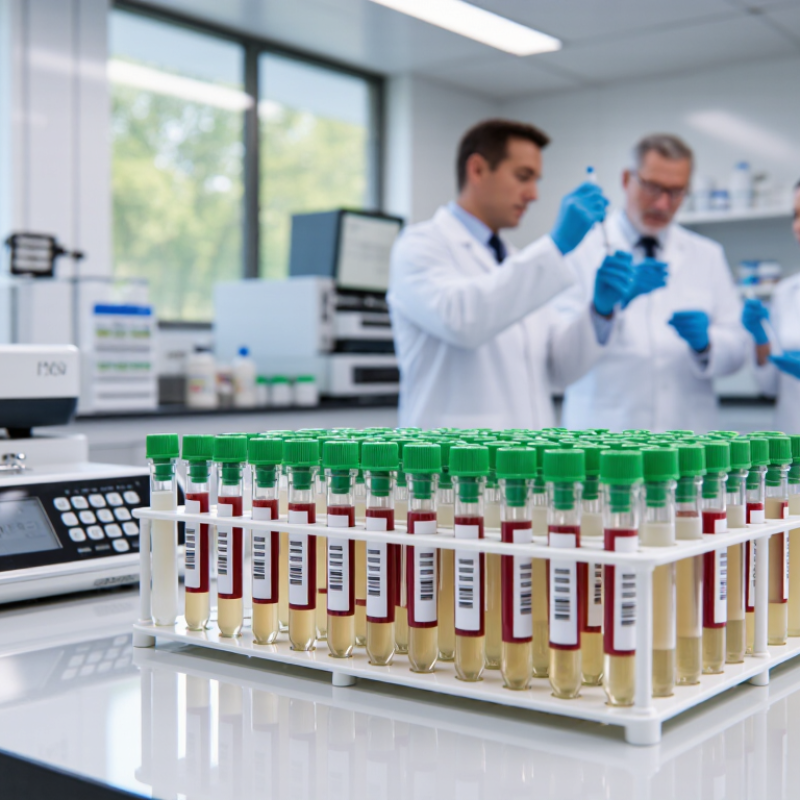
Choosing China’s top Heparin Tubes suppliers requires more than comparing prices or reviewing attractive catalogs. These tubes directly influence plasma quality, testing consistency, and laboratory confidence. A reliable supplier should demonstrate stable heparin coating, accurate vacuum performance, secure closures, and clear lot traceability. Small details matter. A loose cap or uneven additive distribution can affect a valuable blood sample.

Dr. Mario Laposata, a recognized expert in laboratory medicine, has emphasized, “Laboratory testing is the most important part of the healthcare system.” His statement highlights why supplier evaluation must focus on clinical reliability, not only manufacturing capacity. Buyers should examine ISO 13485 certification, quality-control records, material specifications, sterilization processes, and regulatory documentation. Product samples should also be tested under realistic transport and storage conditions. A supplier that answers technical questions clearly usually inspires greater confidence.

Look beyond the lowest quotation. Ask whether the manufacturer controls production internally, supports private labeling, and maintains consistent batch performance. Review the tube’s compatibility with planned analyzers and laboratory procedures. Communication speed matters too, especially when samples, certificates, or corrective actions are needed. Still, no supplier is perfect. Even experienced buyers can overlook packaging damage, incomplete validation data, or unclear expiration policies. That is where careful audits and independent verification become valuable. This guide explores practical methods for identifying dependable Heparin Tubes manufacturers in China, while recognizing that quality decisions often require both evidence and professional judgment.
How to Choose China Top Heparin Tubes Suppliers?

Classify Lithium and Sodium Heparin Tubes by Test Use and IU Levels

How to Choose China Top Heparin Tubes Suppliers?

Classify Lithium and Sodium Heparin Tubes by Test Use and IU Levels

Supplier evaluation should begin with test purpose, not price. Lithium heparin tubes are widely used for plasma chemistry, electrolytes, enzymes, and selected immunoassays. Sodium heparin tubes suit blood-gas testing, cytogenetics, and some specialized cellular analyses. Avoid sodium heparin when sodium measurement is sensitive to additive contamination. Small errors matter.

Common commercial specifications range from about 10 to 30 IU/mL, but no universal IU level fits every application. Higher activity may reduce clot formation, yet excess heparin can affect coagulation-sensitive or cellular tests. Liquid and spray-dried formats also behave differently. Ask suppliers for nominal IU/mL, fill volume, additive uniformity, and lot-specific certificates. A neat IU number can mislead.

CLSI GP41 and ISO 6710:2017 emphasize correct blood-to-additive ratios, tube integrity, and validated collection procedures. Published laboratory-quality studies place preanalytical errors at roughly 46–68% of total laboratory errors, according to reviews in Clinical Chemistry and Laboratory Medicine. That figure deserves attention. During supplier audits, compare tube inversion guidance, centrifugation instructions, hemolysis data, and stability evidence. A capable supplier should provide ISO 13485 certification and independent performance records. I would still request side-by-side validation, because printed specifications do not always predict local instrument performance.

Verify ISO 6710 Compliance and Standard 13×75 mm Tube Dimensions

Choosing China’s top heparin tube suppliers requires more than comparing prices or polished catalogs. ISO 6710 compliance should be verified through current certificates, test reports, and clearly defined product scopes. Check whether the documents cover the exact tube type, not just the supplier’s general factory operations. The manufacturing site, certificate holder, and product description should match.

The standard 13×75 mm dimension is equally important for routine laboratory compatibility. Ask for controlled drawings and production samples. Measure the tube with calibrated equipment, including length, outer diameter, and closure fit. Small variations can affect racks, centrifuges, and automated instruments. Confirm the stated blood volume and heparin concentration. A tube may look correct but perform poorly if its vacuum is inconsistent.

I also review lot records, sterilization controls, packaging integrity, and traceability procedures. Request recent inspection data rather than relying on one old sample. In purchasing work, a clean certificate once seemed convincing to me. It was not enough. Supplier audits, batch consistency, and responsive technical support reveal more. Some specifications remain unclear, and that deserves a written answer before approval. Good suppliers should explain deviations openly, even when the explanation is uncomfortable.

How to Choose China Top Heparin Tube Suppliers?

Verify ISO 6710 compliance evidence and confirm the nominal 13 × 75 mm tube format before evaluating supplier capability. The chart shows the two nominal external dimensions in millimetres; it is a technical reference, not a supplier ranking.

A 13 × 75 mm tube has a nominal outside diameter of 13 mm and a nominal length of 75 mm. During supplier qualification, request current ISO 6710 conformity documentation, dimensional inspection records, vacuum or fill-volume validation, and lot traceability. Confirm that the supplier’s actual production tolerances and labeling match the approved specification.

Assess 2–10 mL Draw Volumes, Additive Ratios, and 8–10 Inversions

When choosing China’s top heparin tube suppliers, inspect draw volumes from 2 to 10 mL. A larger tube is not automatically better. Each size should maintain stable anticoagulant distribution and plasma yield. Request batch records showing nominal fill volume, tolerance limits, and heparin concentration in IU per tube. The additive ratio must be validated for the intended specimen volume, not copied across every size. CLSI GP41 emphasizes correct tube selection, filling, and immediate mixing for reliable laboratory results.

Watch the inversion instructions closely. The WHO Guidelines on Drawing Blood recommends 8–10 gentle inversions for heparin tubes. This prevents microclots without creating excessive foam. Rolling the tube slowly matters. Shaking is a poor shortcut. Suppliers should provide real-time stability data after collection, including clot detection, hemolysis observations, and analyte recovery. Ask whether testing covered both 2 mL and 10 mL formats. It often does not.

A practical audit should compare additive uniformity, cap security, label adhesion, and tube breakage during transport. ISO 6710 also supports standardized requirements for evacuated blood collection containers. Still, published data can look cleaner than daily hospital handling. I would request independent laboratory verification, not only factory certificates. Some specifications remain vague. That is where procurement teams should pause, question the tolerance, and test again.

Audit ISO 13485, GMP, NMPA Registration, and Sterilization Records

How to Choose China Top Heparin Tubes Suppliers?

A reliable heparin tube supplier should provide more than attractive pricing. During an audit, request a current ISO 13485 certificate and verify its issuing body. Review the quality manual, complaint records, batch release procedures, and change-control history. GMP compliance should appear in daily operations, not only in presentation documents. Walk through production areas if possible. Check cleanroom garments, material identification, and traceability labels. Small gaps often reveal larger weaknesses.

Tips: Ask for the NMPA registration certificate, product specification, and registration status. Confirm that the registered model matches the tube you will purchase. Review sterilization records for cycle parameters, biological indicators, residual limits, and release approval. Records should identify the lot, date, equipment, and responsible reviewer. Do not accept scanned pages with missing signatures. That happens more often than expected.

Experienced buyers also compare anticoagulant concentration, tube volume, closure performance, and specimen stability data. Request representative samples from normal production lots, not specially prepared samples. Check leakage after transport simulation and inspect the tube interior for visible residue. Supplier audits can still miss practical problems. I have seen documents look complete while labeling controls remained unclear. Leave room for re-audit, corrective actions, and independent testing before approving a long-term supplier.

Compare Fill Accuracy, Batch CV, Shelf Life, COA Data, and Defect Rates

How to Choose China Top Heparin Tubes Suppliers?

Reliable sourcing starts with measurable production evidence, not attractive catalog photos. Ask suppliers to report fill accuracy by lot, including target volume, tolerance, and testing method. A tube marked 2 mL should not vary widely during routine collection. Small volume errors can affect anticoagulant ratios and test reliability. Review batch CV values across several production lots. One excellent batch proves very little. Request recent inspection records, not only standard specifications.

Tips: Compare at least three lots from the same product. Check whether CV calculations include outliers. Ask for sample testing by an independent laboratory when results seem unusually perfect. Also inspect the certificate of analysis, or COA. It should identify batch number, production date, expiry date, heparin specification, sterility status, and release results. Vague COA data deserves questions. Missing test methods are a warning sign.

Shelf life should be verified under stated storage conditions, especially temperature and humidity ranges. Request stability evidence near the expiry date, rather than relying on a printed claim. Defect rates also need definition. Does “defect” include cracked tubes, weak caps, incorrect labels, and underfilled tubes? Experienced buyers should request defect data from final inspection and customer complaints. No supplier data is perfect. I would still record assumptions, because comparison methods can quietly distort the result. Ask for retained samples and inspect tube walls, caps, labels, and vacuum performance before approving a larger order.

How to Choose China Top Heparin Tubes Suppliers? — Compare Fill Accuracy, Batch CV, Shelf Life, COA Data, and Defect Rates

Anonymous supplier comparison based on common quality-audit indicators for disposable blood collection tubes. All figures should be confirmed against current batch records, inspection reports, and signed supplier documentation before purchasing.

Anonymous Supplier Heparin Tube Type Nominal Fill Volume Observed Fill Accuracy Batch CV Shelf Life COA Data Completeness Observed Defect Rate Traceability Overall Quality Signal
Supplier A Green-top plasma tube with lithium heparin 4.0 mL ±1.2% 2.1% 24 months 100% of reviewed parameters reported 0.18% Lot, production date, sterilization, and raw-material records Strong
Supplier B Green-top plasma tube with lithium heparin 5.0 mL ±1.5% 2.8% 24 months 96% of reviewed parameters reported 0.27% Lot and production-date traceability; partial raw-material linkage Strong
Supplier C Green-top plasma tube with sodium heparin 4.0 mL ±2.0% 3.6% 36 months 92% of reviewed parameters reported 0.41% Lot and expiry traceability; electronic records available on request Acceptable
Supplier D Micro-collection tube with lithium heparin 0.5 mL ±1.7% 3.0% 24 months 88% of reviewed parameters reported 0.36% Lot and expiry traceability; limited process-history detail Acceptable
Supplier E Green-top plasma tube with lithium heparin 3.0 mL ±2.3% 4.2% 24 months 84% of reviewed parameters reported 0.55% Lot and expiry traceability; supplier declaration required for some materials Conditional
Supplier F Green-top plasma tube with sodium heparin 5.0 mL ±2.8% 5.1% 18 months 76% of reviewed parameters reported 0.62% Basic lot identification; limited batch-document availability Higher Risk

Recommended purchasing rule: prioritize suppliers that can provide batch-specific COAs, validated fill-volume records, low batch CV, documented shelf-life verification, complete traceability, and defect-rate data from a defined inspection sample. Confirm acceptance criteria against the applicable product specification, quality agreement, and relevant medical-device requirements.

Copyright 2025 Fluidra S.A. | Created by BCM Marketing Agencia Privacy Policy Legal note | Cookie policy |

Technical cookies are strictly necessary for our website to work and you can navigate through it. These types of cookies are those that, for example, allow us to identify you, give you access to certain restricted parts of the page if necessary, or remember different options or services already selected by you, such as your privacy preferences. Therefore, they are activated by default, your authorization not being necessary in this regard. Through the configuration of your browser, you can block or alert the presence of this type of cookies, although such blocking will affect the proper functioning of the different functionalities of our website.


The analysis cookies allow us to study the navigation of the users of our website in general (for example, which sections of the page are the most visited, which services are used most and if they work correctly, etc.). From the statistical information on navigation on our website, we can improve both the operation of the page itself and the different services it offers. Therefore, these cookies do not have an advertising purpose, but only serve to make our website work better, adapting to our users in general. By activating them you will contribute to this continuous improvement. You can enable or disable these cookies by checking the corresponding box, being disabled by default.


Functionality cookies allow us to remember your preferences, to personalize certain characteristics and general options of our website, every time you access it (for example, the language in which the information is presented to you, the sections marked as favorites, your browser type, etc.) Therefore, this type of cookies does not have an advertising purpose, but by activating them you will improve the functionality of the website (for example, adapting to your type of browser) and the customization of it based on your preferences (for example, by presenting the information in the language that you have chosen in previous occasions), which will contribute to the ease, usability and comfort of our page during your navigation. You can enable or disable these cookies by checking the corresponding box, being disabled by default.


Advertising cookies allow us to manage the advertising spaces included in our website based on criteria such as the content shown or the frequency in which the ads are displayed. For example, if you have been shown the same ad several times on our website, and you have not shown a personal interest by clicking on it, it will not appear again. In summary, by activating this type of cookies, the advertising shown on our website will be more useful and diverse, and less repetitive. You can enable or disable these cookies by checking the corresponding box, being disabled by default.


Behavioral advertising cookies allow us to obtain information based on the observation of your browsing habits and behaviors on the web, in order to show you advertising content that best suits your personal tastes and interests. To understand it in a very simple way, we will give you a fictitious example: if your last searches on the web were related to suspense literature, we would show you advertising about suspense books. Therefore, activating this type of cookies, the advertising that we show you on our website will not be generic, but will be oriented to your searches, tastes and interests, therefore adjusting exclusively to you. You can enable or disable these cookies by checking the corresponding box, being disabled by default.
To understand it in a very simple way, we will give you a fictitious example: if your last searches on the web were related to suspense literature, we would show you advertising about suspense books. Therefore, activating this type of cookies, the advertising that we show you on our website will not be generic, but will be oriented to your searches, tastes and interests, therefore adjusting exclusively to you. You can enable or disable these cookies by checking the corresponding box, being disabled by default.

SAVE

We use our own and third-party cookies to ensure the proper functioning of the website and to analyse our services, improve your experience on our website and show you advertisements related to your interests according to profiling based on your browsing habits (e.g. websites visited). You can accept all cookies by clicking "ACCEPT" or set or reject them by clicking here. If you would like to know more about the use of cookies, please see our COOKIE POLICY.


ACCEPT ALL
Reject no essentials


