
How to Choose Carbon Steel Split Spring Pins for Your Needs?
FLUID HANDLING EXPERTS

Blog, all our news

How to Choose Carbon Steel Split Spring Pins for Your Needs?

Choosing the right Carbon Steel Split Spring Pins is crucial for your projects. These pins provide reliable fastening solutions in many applications. Understanding their specifications and features can enhance your work's quality and efficiency.

When selecting Carbon Steel Split Spring Pins, consider factors like size, tolerances, and load-bearing capacities. The right choice ensures durability and performance. However, many users overlook these details, leading to potential failures.

Remember, not all pins are created equal. Researching reputable manufacturers can lead to better choices. Analyze your needs thoroughly to avoid costly mistakes. Ultimately, informed decisions will boost your project’s success.
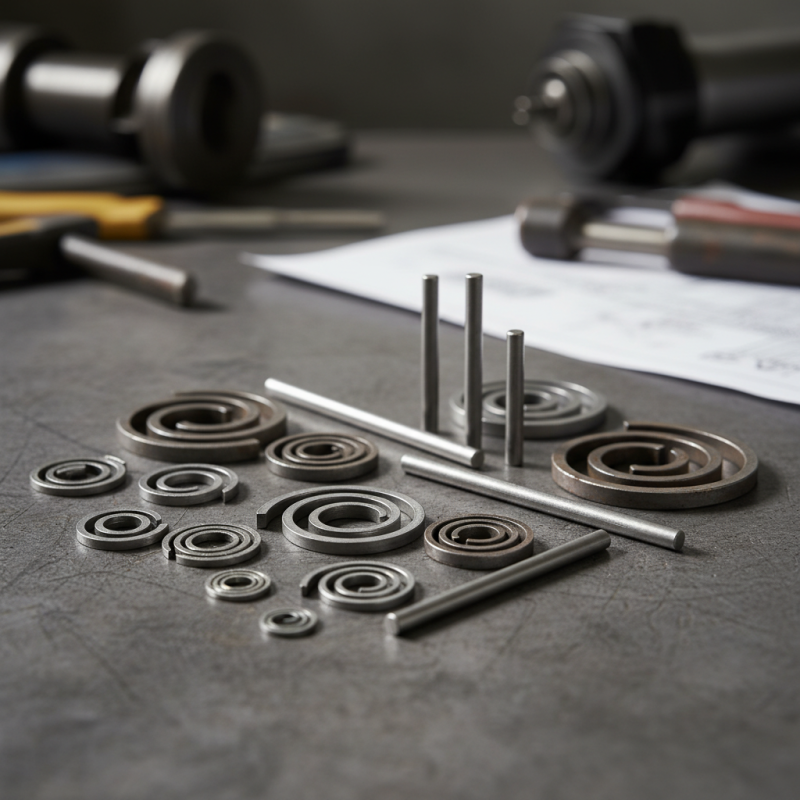
How to Choose Carbon Steel Split Spring Pins for Your Needs?

Understanding Carbon Steel Split Spring Pins: Materials and Properties

When choosing carbon steel split spring pins, understanding their materials and properties is crucial. Carbon steel is known for its strength and durability. It is often chosen for applications that require high tensile strength. These pins are made from a mixture of iron and carbon, which significantly enhances their toughness. The levels of carbon in the steel affect hardness and elasticity. High carbon content produces harder pins, while lower content allows for more flexibility.

One unique aspect of carbon steel is its propensity for rust. While offering great strength, it must be protected from moisture and corrosive environments. Coatings or treatments can enhance its resistance to corrosion. Users should consider environmental factors when selecting these pins. However, more coatings may reduce the pin’s strength. Finding a balance is essential for optimal performance.

Despite their advantages, carbon steel pins may not suit every application. Users need to assess the specific requirements of their projects. Sometimes, a different material or pin type might be more suitable. Thorough research and consultation with industry experts can prevent costly mistakes. Taking into account the pros and cons is key to making an informed choice.

Analyzing Load Capacity and Performance Specifications for Spring Pins

When selecting carbon steel split spring pins, understanding load capacity and performance specifications is crucial. The load capacity of these pins can vary significantly. According to industry reports, a standard split spring pin may withstand loads ranging from 200 to 600 pounds per square inch (psi), depending on its diameter and material composition. This variability makes it essential to analyze the specific requirements of your application before making a decision.

Performance specifications also play a vital role in these components. For instance, the pin's yield strength typically falls between 40,000 to 80,000 psi. However, the specifics can differ based on the manufacturing process and carbon content. It's imperative to consider these factors to avoid operational failures. Users must critically evaluate whether a pin rated for lower psi will suffice in high-stress environments. The consequences of choosing the wrong pin can result in mechanical failures or decreased lifespan.

Understanding these metrics allows engineers to make informed selections that enhance reliability. In practice, many factors impact performance. An over-reliance on general specifications may lead to suboptimal choices. A detailed assessment of your load conditions and application environment is necessary. Balancing between specifications and real-world demands ensures optimal performance.

How to Choose Carbon Steel Split Spring Pins for Your Needs?

Pin Size (Diameter x Length) Load Capacity (lbs) Material Surface Treatment Performance Specification
1/8" x 1" 200 Carbon Steel Zinc Plated Standard ANSI
3/16" x 1.5" 300 Carbon Steel Black Oxide High Tensile
1/4" x 2" 500 Carbon Steel Phosphate Coated Corrosion Resistant
5/16" x 2.5" 700 Carbon Steel Chrome Plated Heavy Duty
3/8" x 3" 900 Carbon Steel Galvanized Extreme Load

Evaluating Dimensions and Tolerances in Carbon Steel Split Pins

When selecting carbon steel split spring pins, evaluating dimensions and tolerances is crucial. Accurate dimensions ensure the pins fit securely in their designated applications. A common mistake is assuming a standard size will work for every project. Each application might demand specific measurements, which can affect performance.

Tolerances play a significant role in pin effectiveness. Improper tolerances can lead to excessive wear or failure. Manufacturers often provide tolerance specifications for their pins. It’s essential to compare these with your project requirements. A simple error in tolerance can compromise the entire assembly. Many overlook this aspect, thinking one size fits all. However, rigorous attention to detail can prevent costly mistakes.

Pay careful attention to hole diameter and pin length. Even small variations can impact functionality. In some cases, opting for a slightly larger pin can enhance reliability, but this is not universally true. Sometimes, you will face the issue of a too-tight fit. This can lead to difficulties during installation or, worse, pin breakage. Understanding the balance between tightness and ease of installation is key for successful use.

Choosing the Right Carbon Steel Split Spring Pins

Assessing Corrosion Resistance and Coating Options for Durability

When selecting carbon steel split spring pins, corrosion resistance is critical. According to a report by ASTM International, carbon steel is prone to rust, especially in humid environments. Choosing the right coating can enhance the pin's durability significantly. Coatings like zinc plating and phosphate are popular choices. Zinc plating offers a barrier to moisture and oxygen, extending the pin's life in corrosive environments. In contrast, phosphate coatings provide a textured surface for better lubrication and reduced wear.

Examining industry data reveals that pins without coating show a failure rate of over 30% within the first year in corrosive conditions. This illustrates the importance of assessing coating options. It is vital to consider the operating environment.

For marine applications, a more robust coating is required. In some cases, even high-grade coatings can wear out, leading to potential failures. No single solution fits all applications, which makes meticulous assessment necessary.

Selecting the Right Installation Techniques and Tools for Spring Pins

When selecting installation techniques for carbon steel split spring pins, understanding their unique properties is essential. Split spring pins are favored for their resilience under stress. They provide superior flexibility and retention in various applications. A 2022 industry report highlights that improper installation can lead to a failure rate of over 30%. Hence, choosing the right installation techniques is crucial.

Manual or drill installation methods are common. For manual insertion, ensure proper alignment with the hole. Forceful or misaligned application could result in pin deformation. Using a hammer shows simplicity but can damage fragile components. The report recommends tools like pin punches for controlled installation. Such tools minimize risk and ensure secure placement in assemblies.

Equipping crews with trained professionals is critical. Installation errors often arise from inexperience. Regular workshops on pin handling can decrease failure rates significantly. Maintaining a feedback loop is essential. Gather data on repeated issues for ongoing training improvements. This streamlined approach emphasizes the importance of competency in technical installations.

Copyright 2025 Fluidra S.A. | Created by BCM Marketing Agencia Privacy Policy Legal note | Cookie policy |

Technical cookies are strictly necessary for our website to work and you can navigate through it. These types of cookies are those that, for example, allow us to identify you, give you access to certain restricted parts of the page if necessary, or remember different options or services already selected by you, such as your privacy preferences. Therefore, they are activated by default, your authorization not being necessary in this regard. Through the configuration of your browser, you can block or alert the presence of this type of cookies, although such blocking will affect the proper functioning of the different functionalities of our website.


The analysis cookies allow us to study the navigation of the users of our website in general (for example, which sections of the page are the most visited, which services are used most and if they work correctly, etc.). From the statistical information on navigation on our website, we can improve both the operation of the page itself and the different services it offers. Therefore, these cookies do not have an advertising purpose, but only serve to make our website work better, adapting to our users in general. By activating them you will contribute to this continuous improvement. You can enable or disable these cookies by checking the corresponding box, being disabled by default.


Functionality cookies allow us to remember your preferences, to personalize certain characteristics and general options of our website, every time you access it (for example, the language in which the information is presented to you, the sections marked as favorites, your browser type, etc.) Therefore, this type of cookies does not have an advertising purpose, but by activating them you will improve the functionality of the website (for example, adapting to your type of browser) and the customization of it based on your preferences (for example, by presenting the information in the language that you have chosen in previous occasions), which will contribute to the ease, usability and comfort of our page during your navigation. You can enable or disable these cookies by checking the corresponding box, being disabled by default.


Advertising cookies allow us to manage the advertising spaces included in our website based on criteria such as the content shown or the frequency in which the ads are displayed. For example, if you have been shown the same ad several times on our website, and you have not shown a personal interest by clicking on it, it will not appear again. In summary, by activating this type of cookies, the advertising shown on our website will be more useful and diverse, and less repetitive. You can enable or disable these cookies by checking the corresponding box, being disabled by default.


Behavioral advertising cookies allow us to obtain information based on the observation of your browsing habits and behaviors on the web, in order to show you advertising content that best suits your personal tastes and interests. To understand it in a very simple way, we will give you a fictitious example: if your last searches on the web were related to suspense literature, we would show you advertising about suspense books. Therefore, activating this type of cookies, the advertising that we show you on our website will not be generic, but will be oriented to your searches, tastes and interests, therefore adjusting exclusively to you. You can enable or disable these cookies by checking the corresponding box, being disabled by default.
To understand it in a very simple way, we will give you a fictitious example: if your last searches on the web were related to suspense literature, we would show you advertising about suspense books. Therefore, activating this type of cookies, the advertising that we show you on our website will not be generic, but will be oriented to your searches, tastes and interests, therefore adjusting exclusively to you. You can enable or disable these cookies by checking the corresponding box, being disabled by default.

SAVE

We use our own and third-party cookies to ensure the proper functioning of the website and to analyse our services, improve your experience on our website and show you advertisements related to your interests according to profiling based on your browsing habits (e.g. websites visited). You can accept all cookies by clicking "ACCEPT" or set or reject them by clicking here. If you would like to know more about the use of cookies, please see our COOKIE POLICY.


ACCEPT ALL
Reject no essentials


