
How to Choose the Best Temperature Sensor for Your Needs?
FLUID HANDLING EXPERTS

Blog, all our news

How to Choose the Best Temperature Sensor for Your Needs?

Choosing the right Temperature Sensor is essential for various applications. Experts warn that selecting a sensor without understanding your specific needs can lead to inaccurate readings and inefficiencies. Dr. Emily Carter, a leading authority in temperature sensing technology, emphasizes, "The right sensor can make or break your measurement accuracy."

Temperature sensors vary in type, features, and performance. You must consider your project’s requirements carefully. This includes the environment where the sensor will operate. Whether you need a precise digital sensor or a robust thermocouple, each option has specific applications.

Many users overlook calibration and integration issues. These factors can significantly impact the sensor's reliability. Taking the time to research and consult with experts will help guide your decision-making process. A good choice today will save you from costly mistakes later.
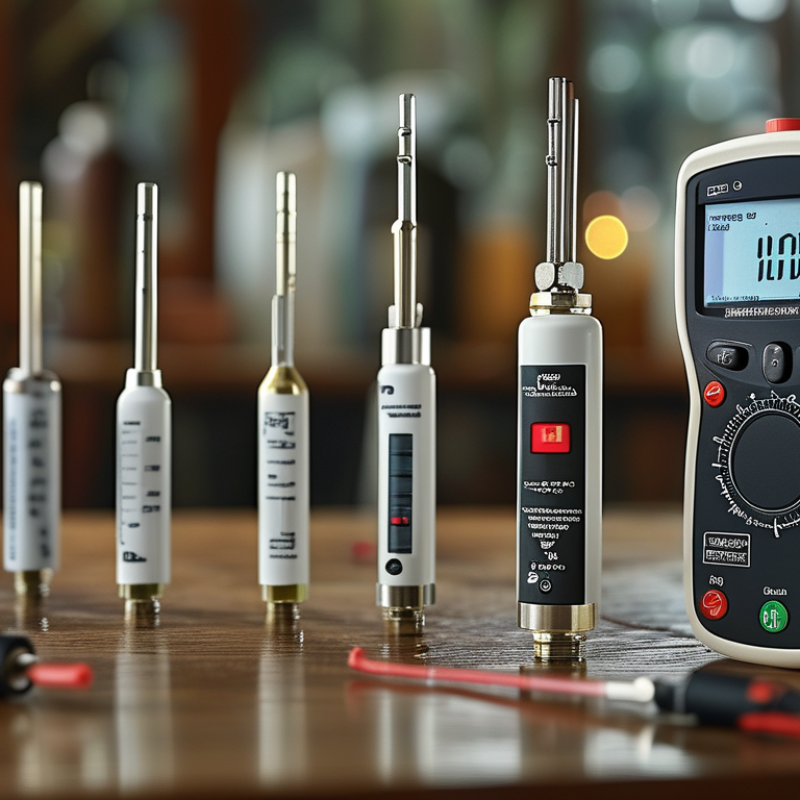
How to Choose the Best Temperature Sensor for Your Needs?

Understanding the Different Types of Temperature Sensors Available

When selecting a temperature sensor, understanding the various types available is crucial. The main types include thermocouples, resistance temperature detectors (RTDs), thermistors, and infrared sensors. Each type has specific applications and benefits. For example, thermocouples are known for their wide temperature range, suitable for extreme conditions. According to industry data, over 50% of industrial temperature measurements use thermocouples. This indicates their popularity and reliability in harsh environments.

RTDs provide high accuracy and stability. They are often preferred in laboratory settings where precision matters. A recent report indicated that RTDs can have an accuracy of ±0.1°C, making them ideal for scientific research. Thermistors, while limited in range, are sensitive and fast, which makes them perfect for consumer devices. Infrared sensors, on the other hand, offer non-contact measurement, beneficial for moving objects. However, their readings can be influenced by environmental factors, necessitating careful calibration.

Choosing the right sensor involves evaluating these traits against your needs. Each option has trade-offs. Understanding your application is key. A sensor that excels in one area may underperform in another. This critical analysis helps in making an informed decision, ensuring reliability in temperature measurement across various industries.

Factors to Consider When Selecting a Temperature Sensor

Choosing the right temperature sensor requires careful consideration of various factors. Precision is crucial. Sensors should provide accurate readings for the specific temperature range you need. For example, industrial applications may need sensors that can endure extreme conditions. Lightweight sensors might be suitable for portable devices but may lack durability.

Response time is another important factor. Some applications require quick readings to ensure safety or efficiency. Look for sensors with fast response times if immediate feedback is essential. Additionally, consider the environment where the sensor will be used. Exposure to moisture or vibrations can affect performance. Sensor materials should withstand these conditions.

Calibration and maintenance are often overlooked. Regular calibration ensures ongoing accuracy, particularly in critical environments. It can be easy to neglect but is necessary for reliability. Assess whether you have the resources for maintenance. Lastly, budget constraints often play a role. Finding a balance between cost and functionality is vital. Take your time to research and reflect on these aspects. The right sensor should meet both your immediate needs and long-term goals.

Evaluating Accuracy and Range of Temperature Sensors

When selecting a temperature sensor, accuracy and range are critical factors to consider. Accuracy is often defined as the degree to which a sensor's output matches the actual temperature. According to a report from the American National Standards Institute, certain industrial-grade sensors can achieve an accuracy of ±0.1°C, making them suitable for precise applications. However, achieving high accuracy may come at a higher cost, which can be a concern for many projects.

The range of a temperature sensor refers to the spectrum of temperatures it can measure reliably. For example, some sensors can operate effectively from -200°C to 500°C, while others may only be suitable for a narrower range of temperatures, such as -40°C to 125°C. Selecting a sensor with an appropriate range is essential to ensuring optimal functionality in your application. If the range is too limited, it could lead to inaccurate readings or sensor failure.

Users often overlook the importance of environmental factors. Humidity, pressure, and exposure to chemicals can impact sensor performance. A study published by the Institute of Electrical and Electronics Engineers highlights that even small variations can affect accuracy, particularly in extreme conditions. Understanding these nuances is vital when evaluating potential sensors for specific applications. Establishing a balance between accuracy, range, and environmental resilience helps achieve the best overall sensor choice.

Assessing Compatibility with Existing Systems

When selecting a temperature sensor, assessing compatibility with your existing systems is crucial. Many industries rely on accurate temperature readings for optimal performance. A 2022 report by MarketsandMarkets indicates that the global temperature sensor market is projected to reach $6.8 billion by 2025, emphasizing the need for reliable and compatible technology.

To ensure compatibility, first, evaluate the sensor's output signal types. Common output signals include analog (like 4-20 mA) and digital (such as I2C and SPI). Compatibility issues can arise if the existing systems are designed for a specific signal type. Additionally, verify the temperature ranges. For instance, some industrial processes may require sensors that operate within extreme ranges, while others need precision at lower temperatures.

Another crucial aspect is the physical connection. Sensors come in various forms and sizes, like thermocouples and RTDs. It's vital to ensure that the selected sensor can be easily integrated into your current setup. Failure to consider these factors can lead to inconsistent measurements or costly recalibrations. Reflections on past choices may highlight the importance of thorough compatibility assessments in avoiding such pitfalls.

Application-Specific Considerations for Temperature Sensors

When selecting a temperature sensor, application-specific considerations matter immensely. Sensors can be used in various environments, from industrial settings to home automation. Each context demands different features. For instance, some applications require sensors that can withstand extreme temperatures, while others focus on precision within narrow ranges. Understanding the operational environment is crucial.

Another factor to consider is response time. In processes where temperature changes rapidly, a slower sensor might not provide relevant data. It's vital to analyze your need for real-time monitoring versus overall accuracy. Additionally, consider the required durability. Sensors in harsh conditions must resist chemicals, moisture, and mechanical stress. Choosing a sensor that's not rugged enough can lead to inaccurate readings over time.

Moreover, the choice of material and form factor plays a significant role. Some materials may not be suitable for specific industrial applications due to corrosive elements. Equally, size matters. A bulky sensor may not fit in tight spaces, affecting installation and efficiency. This complexity can be overwhelming, demanding thorough research and expert input. Failing to address these considerations can lead to costly mistakes and inefficiencies in operations.

How to Choose the Best Temperature Sensor for Your Needs? - Application-Specific Considerations for Temperature Sensors

Sensor Type Temperature Range (°C) Accuracy (%) Response Time (s) Best Uses
Thermocouple -200 to 1260 ±0.75 0.1 Industrial applications, HVAC
RTD (Resistance Temperature Detector) -200 to 850 ±0.1 1 Laboratories, food processing
Thermistor -55 to 125 ±0.2 0.5 Consumer electronics, medical devices
Infrared Sensor -40 to 300 ±1 <1 Non-contact applications, HVAC
Bimetallic Sensor -50 to 500 ±2 2 Mechanical systems, HVAC
Copyright 2025 Fluidra S.A. | Created by BCM Marketing Agencia Privacy Policy Legal note | Cookie policy |

Technical cookies are strictly necessary for our website to work and you can navigate through it. These types of cookies are those that, for example, allow us to identify you, give you access to certain restricted parts of the page if necessary, or remember different options or services already selected by you, such as your privacy preferences. Therefore, they are activated by default, your authorization not being necessary in this regard. Through the configuration of your browser, you can block or alert the presence of this type of cookies, although such blocking will affect the proper functioning of the different functionalities of our website.


The analysis cookies allow us to study the navigation of the users of our website in general (for example, which sections of the page are the most visited, which services are used most and if they work correctly, etc.). From the statistical information on navigation on our website, we can improve both the operation of the page itself and the different services it offers. Therefore, these cookies do not have an advertising purpose, but only serve to make our website work better, adapting to our users in general. By activating them you will contribute to this continuous improvement. You can enable or disable these cookies by checking the corresponding box, being disabled by default.


Functionality cookies allow us to remember your preferences, to personalize certain characteristics and general options of our website, every time you access it (for example, the language in which the information is presented to you, the sections marked as favorites, your browser type, etc.) Therefore, this type of cookies does not have an advertising purpose, but by activating them you will improve the functionality of the website (for example, adapting to your type of browser) and the customization of it based on your preferences (for example, by presenting the information in the language that you have chosen in previous occasions), which will contribute to the ease, usability and comfort of our page during your navigation. You can enable or disable these cookies by checking the corresponding box, being disabled by default.


Advertising cookies allow us to manage the advertising spaces included in our website based on criteria such as the content shown or the frequency in which the ads are displayed. For example, if you have been shown the same ad several times on our website, and you have not shown a personal interest by clicking on it, it will not appear again. In summary, by activating this type of cookies, the advertising shown on our website will be more useful and diverse, and less repetitive. You can enable or disable these cookies by checking the corresponding box, being disabled by default.


Behavioral advertising cookies allow us to obtain information based on the observation of your browsing habits and behaviors on the web, in order to show you advertising content that best suits your personal tastes and interests. To understand it in a very simple way, we will give you a fictitious example: if your last searches on the web were related to suspense literature, we would show you advertising about suspense books. Therefore, activating this type of cookies, the advertising that we show you on our website will not be generic, but will be oriented to your searches, tastes and interests, therefore adjusting exclusively to you. You can enable or disable these cookies by checking the corresponding box, being disabled by default.
To understand it in a very simple way, we will give you a fictitious example: if your last searches on the web were related to suspense literature, we would show you advertising about suspense books. Therefore, activating this type of cookies, the advertising that we show you on our website will not be generic, but will be oriented to your searches, tastes and interests, therefore adjusting exclusively to you. You can enable or disable these cookies by checking the corresponding box, being disabled by default.

SAVE

We use our own and third-party cookies to ensure the proper functioning of the website and to analyse our services, improve your experience on our website and show you advertisements related to your interests according to profiling based on your browsing habits (e.g. websites visited). You can accept all cookies by clicking "ACCEPT" or set or reject them by clicking here. If you would like to know more about the use of cookies, please see our COOKIE POLICY.


ACCEPT ALL
Reject no essentials


