
How to Choose the Best Roof Drains for Your Project?
FLUID HANDLING EXPERTS

Blog, all our news

How to Choose the Best Roof Drains for Your Project?

Choosing the right Roof Drains for your project is essential for effective water management. Roof drains play a critical role in preventing water accumulation and potential damage. Proper drainage can enhance the lifespan of your roof and maintain structural integrity.

When selecting roof drains, consider factors such as the roof type, drainage capacity, and installation requirements. Different roofs have unique drainage needs. For instance, flat roofs often require specific drain designs to optimize water flow. Understanding these nuances requires expertise and careful planning.

Many overlook the importance of maintaining roof drains. Regular inspections are vital to ensure functionality. Clogs can lead to costly repairs and water damage. Therefore, investing in high-quality roof drains is a decision that demands reflection and thorough research.
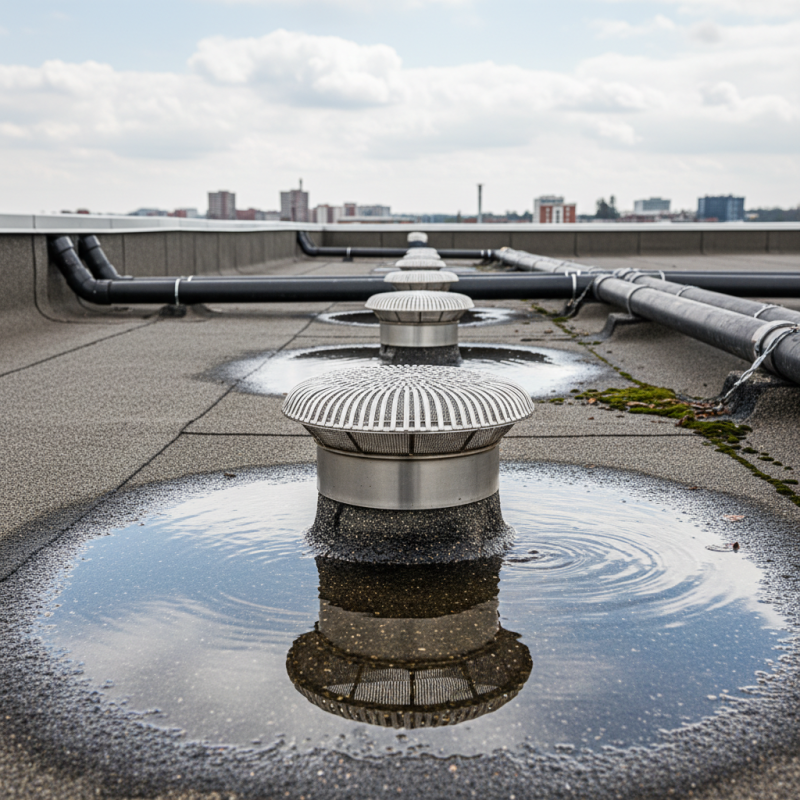
How to Choose the Best Roof Drains for Your Project?

Understanding the Importance of Choosing the Right Roof Drains

Choosing the right roof drains is crucial for any construction project. Proper drainage prevents water pooling, which can lead to structural damage over time. When making your selection, consider the climate and roof design. Different environments can influence the efficiency of certain drains. For example, flat roofs require specific drainage solutions to mitigate water accumulation due to their design.

Another key aspect is understanding local building codes. Compliance with these regulations ensures safety and longevity. Sometimes, these codes demand specific materials or installation methods. If overlooked, it can lead to costly modifications later. It's also vital to think about the maintenance of the chosen system. Some drains require frequent checks, while others may offer a more hands-off experience.

Don't underestimate the impact of roof drains on a building's lifespan. A poor choice can compromise water management and increase repair costs. Engaging with experts in this field can provide invaluable insights. They can offer guidance tailored to your project's needs, saving time and money in the long run. Engaging with these professionals can help navigate the complexities of drain systems.

Types of Roof Drains: Pros and Cons of Common Options

When selecting roof drains, understanding the types available can guide your decision. Common types include internal, external, and scupper drains. Each option comes with advantages and disadvantages that merit consideration.

Internal roof drains are often chosen for their efficiency. They help manage water flow by directing it to a central plumbing system. Data indicates that with proper installation, they can handle high volumes of water, reducing overflow risks. However, maintenance can be challenging. Clogs may occur unexpectedly, leading to costly repairs.

External roof drains, while simpler in design, have their own issues. They are easy to access for maintenance, but without proper slopes, water can pool around them. This can lead to ice dams in colder climates.

A challenging reality is that scupper drains also depend heavily on slope and roof design. If not aligned properly, they may become ineffective during heavy rains, which can compromise the roof's integrity over time.

Ultimately, the choice of roof drain depends on specific project requirements. Assess existing conditions and professional insights to identify the best solution for your needs.

Key Considerations: Sizing and Capacity in Roof Drain Selection

When selecting roof drains, sizing and capacity are critical factors. Proper sizing ensures efficient water removal during heavy rainfall. A standard guideline suggests that commercial roof drains can handle 1 inch of rain per hour per 1,000 square feet of roof area. This means that careful calculation is essential to avoid overloading drainage systems.

Capacity also refers to the drain's ability to manage stormwater. Reports show that roofs with a slope of 1% to 2% are optimal for drain performance. An inadequately sized drain can lead to ponding water, which can increase roof deterioration. It's important to review local codes and regulations as they often dictate minimum capacity requirements.

Moreover, factors such as local rainfall intensity and roof layout play significant roles in determining drain needs. Each project may reveal its own challenges. A common oversight is underestimating the impact of obstructions on drainage flow. This often results in inadequate drainage and costly repairs later. Consistent evaluation of drainage performance is advisable to ensure long-term effectiveness.

How to Choose the Best Roof Drains for Your Project? - Key Considerations: Sizing and Capacity in Roof Drain Selection

Drain Type Flow Capacity (GPM) Diameter (inches) Installation Location Notes
Roof Drain 20 6 Flat Roof Standard choice for most commercial roofs.
Floor Drain 15 4 Interior Spaces Useful for areas prone to water accumulation.
Scupper Drain 25 8 Edge of Roof Ideal for sloped roofs to direct water off the edge.
Gutter Drain 10 5 Gutter Systems Used to manage runoff in gutter systems.
Downspout Drain 30 6 Connected to Roof Drains Directs water from the roof to the ground.

Material Choices: Evaluating Durability and Cost of Roof Drain Materials

Selecting the right materials for roof drains is crucial for any construction project. Durability and cost are often at the forefront of such decisions. Metal drains, typically made from aluminum or stainless steel, are known for their strength. They resist corrosion and can last decades. However, they come with a higher price tag that might not fit every budget.

On the other hand, plastic drains, like PVC, offer a lighter and more affordable alternative. They resist chemicals and are less prone to rust. But, they might not withstand heavy impacts as well as metal. This raises questions about their long-term reliability. Some contractors prioritize cost over durability, leading to unexpected repairs down the line. Others might invest in high-quality materials only to find them mismatched with local climate conditions or building codes.

In short, the choices made can significantly affect a project’s lifespan and maintenance needs. Careful evaluation of both material options and their environmental fit is essential. Understanding the project's specific requirements will yield the best results.

Regulatory Standards and Codes for Roof Drain Installation and Safety

When selecting roof drains, compliance with regulatory standards is crucial. Local building codes often dictate specific requirements for drain installation. These codes aim to ensure the safety and efficiency of drainage systems. For example, many areas require drains to handle peak rainfall effectively. Understanding these guidelines can prevent costly errors during installation.

Another important aspect is the material used for the drains. Different materials have varying lifespans and performance capabilities. Some regulations may specify the use of corrosion-resistant materials, especially in environments with harsh weather conditions. Reflection on past projects reveals that overlooking material properties often leads to failures.

It is essential to consult local authorities and experienced professionals before finalizing your choices. They provide valuable insights into compliance and potential challenges. The process can seem overwhelming, but breaking it down into small steps can make it manageable. Always remember that rushing this phase can result in issues later on. Proper planning and adherence to regulations lay the foundation for a successful installation.

Roof Drain Types and Their Regulating Codes

This chart illustrates the compliance percentages of various roof drain types with regulatory standards. Type A (Standard) drains are the most compliant, while Type D (High Capacity) drains have the lowest compliance rate. Understanding these metrics is crucial for selecting the appropriate roof drainage solution for your project.

Article Source:

Copyright 2025 Fluidra S.A. | Created by BCM Marketing Agencia Privacy Policy Legal note | Cookie policy |

Technical cookies are strictly necessary for our website to work and you can navigate through it. These types of cookies are those that, for example, allow us to identify you, give you access to certain restricted parts of the page if necessary, or remember different options or services already selected by you, such as your privacy preferences. Therefore, they are activated by default, your authorization not being necessary in this regard. Through the configuration of your browser, you can block or alert the presence of this type of cookies, although such blocking will affect the proper functioning of the different functionalities of our website.


The analysis cookies allow us to study the navigation of the users of our website in general (for example, which sections of the page are the most visited, which services are used most and if they work correctly, etc.). From the statistical information on navigation on our website, we can improve both the operation of the page itself and the different services it offers. Therefore, these cookies do not have an advertising purpose, but only serve to make our website work better, adapting to our users in general. By activating them you will contribute to this continuous improvement. You can enable or disable these cookies by checking the corresponding box, being disabled by default.


Functionality cookies allow us to remember your preferences, to personalize certain characteristics and general options of our website, every time you access it (for example, the language in which the information is presented to you, the sections marked as favorites, your browser type, etc.) Therefore, this type of cookies does not have an advertising purpose, but by activating them you will improve the functionality of the website (for example, adapting to your type of browser) and the customization of it based on your preferences (for example, by presenting the information in the language that you have chosen in previous occasions), which will contribute to the ease, usability and comfort of our page during your navigation. You can enable or disable these cookies by checking the corresponding box, being disabled by default.


Advertising cookies allow us to manage the advertising spaces included in our website based on criteria such as the content shown or the frequency in which the ads are displayed. For example, if you have been shown the same ad several times on our website, and you have not shown a personal interest by clicking on it, it will not appear again. In summary, by activating this type of cookies, the advertising shown on our website will be more useful and diverse, and less repetitive. You can enable or disable these cookies by checking the corresponding box, being disabled by default.


Behavioral advertising cookies allow us to obtain information based on the observation of your browsing habits and behaviors on the web, in order to show you advertising content that best suits your personal tastes and interests. To understand it in a very simple way, we will give you a fictitious example: if your last searches on the web were related to suspense literature, we would show you advertising about suspense books. Therefore, activating this type of cookies, the advertising that we show you on our website will not be generic, but will be oriented to your searches, tastes and interests, therefore adjusting exclusively to you. You can enable or disable these cookies by checking the corresponding box, being disabled by default.
To understand it in a very simple way, we will give you a fictitious example: if your last searches on the web were related to suspense literature, we would show you advertising about suspense books. Therefore, activating this type of cookies, the advertising that we show you on our website will not be generic, but will be oriented to your searches, tastes and interests, therefore adjusting exclusively to you. You can enable or disable these cookies by checking the corresponding box, being disabled by default.

SAVE

We use our own and third-party cookies to ensure the proper functioning of the website and to analyse our services, improve your experience on our website and show you advertisements related to your interests according to profiling based on your browsing habits (e.g. websites visited). You can accept all cookies by clicking "ACCEPT" or set or reject them by clicking here. If you would like to know more about the use of cookies, please see our COOKIE POLICY.


ACCEPT ALL
Reject no essentials


