
How to Choose the Best PT1000 RTD Sensor for Your Needs?
FLUID HANDLING EXPERTS

Blog, all our news

How to Choose the Best PT1000 RTD Sensor for Your Needs?

Choosing the right PT1000 RTD Sensor can be challenging. Renowned expert Dr. Emily Carter once stated, "A good sensor balances accuracy, cost, and durability." This highlights the key considerations when selecting a PT1000 RTD Sensor.

PT1000 sensors are known for their precision and reliability. However, not all applications require the same specifications. Understanding your particular needs is crucial. For instance, industrial environments often demand sensors that withstand harsh conditions. In contrast, laboratory applications may prioritize sensitivity and quick response times.

Assessing the performance characteristics is essential. Look at factors such as temperature range, material compatibility, and connector types. Each application presents unique challenges, necessitating a thoughtful approach. Choosing the ideal PT1000 RTD Sensor is not just about finding the cheapest option. It's about finding the best fit for your specific application, which can sometimes be a trial-and-error process.
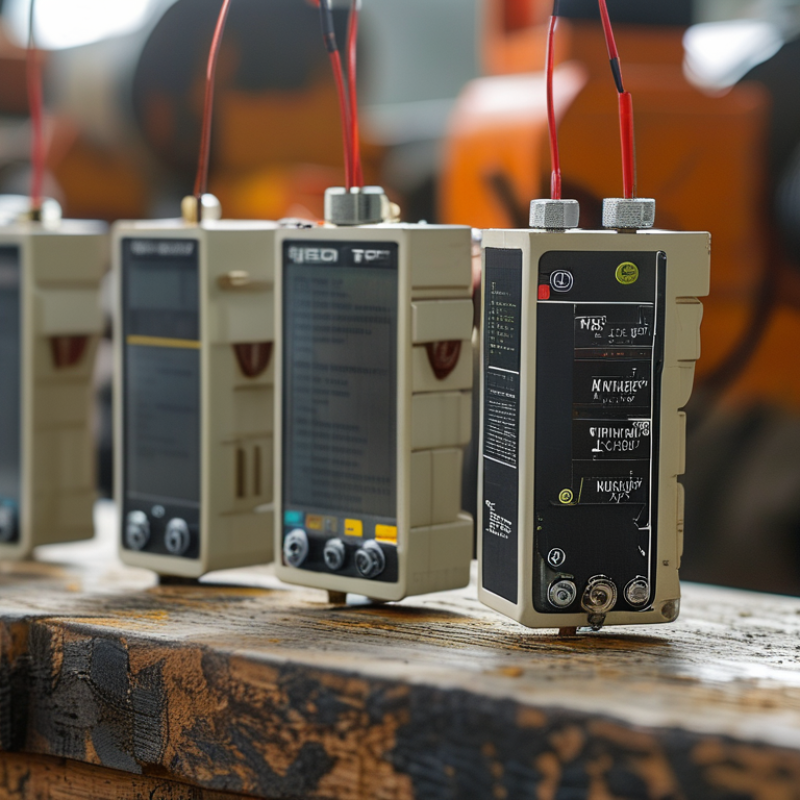
How to Choose the Best PT1000 RTD Sensor for Your Needs?

Understanding the Basics of PT1000 RTD Sensors

When considering a PT1000 RTD sensor, it's crucial to grasp the fundamentals of how they operate. RTD stands for Resistance Temperature Detector, a device that measures temperature by correlating the resistance of the sensor to temperature variations. The PT1000 specifically uses a resistance of 1000 ohms at 0 degrees Celsius. This high sensitivity allows for precise temperature readings, making it suitable for various applications in industrial settings.

Selecting the right PT1000 sensor can be challenging. Key factors include temperature range, accuracy, and environmental conditions. For instance, high humidity or corrosive environments might require specialized materials for the sensor. Also, the sensor's calibration is critical. A poorly calibrated sensor can lead to inaccurate readings, which can disrupt processes or lead to costly errors. It's worth assessing the specific requirements of your application to avoid potential pitfalls.

Additionally, ensure that the installation is conducted correctly. A misaligned sensor can produce erroneous data. Always consider the physical dimensions and how the sensor will integrate with existing systems. Although choosing a PT1000 may seem straightforward, these details can significantly impact performance and reliability. Without careful consideration, what seems like a simple choice can turn into a complex issue.

Key Specifications to Consider When Selecting PT1000 Sensors

When selecting a PT1000 RTD sensor, there are several key specifications to consider. One important factor is the temperature range. Different applications require varying temperature capacities. Ensure the sensor can handle the expected extremes in your environment. Operating outside the recommended range can lead to inaccurate readings or sensor failure.

Another critical specification is the resistance tolerance. PT1000 sensors have a nominal resistance of 1000 ohms at 0°C. However, tolerances can vary significantly. A tighter tolerance can provide more accurate measurements, while a wider tolerance may suffice for less precise applications. Assess your accuracy needs carefully.

Additionally, consider the sensor's construction and materials. Different sensors may use various types of protective sheaths. Stainless steel sheaths offer durability, while glass bodies enhance sensitivity. The choice of materials directly impacts the sensor's longevity and reliability in specific environments. Regular maintenance of sensors can improve performance. Recognizing these specifications can simplify your selection process and lead to better results in your projects.

Evaluating Accuracy and Response Time for Your Application

When choosing a PT1000 RTD sensor, accuracy and response time are crucial factors to consider. The accuracy of the sensor affects the reliability of your measurements. A sensor with high accuracy minimizes errors and ensures that your data reflects true conditions. It's essential to understand the precision specifications provided by the manufacturer. Sometimes, even minor discrepancies can lead to significant issues in sensitive applications.

Response time is equally important. It indicates how quickly the sensor can react to temperature changes. In critical processes, a slow response can cause delays and increase risks. When selecting your sensor, inquire about its thermal time constant. A lower time constant usually means faster responses. This can be key in environments with fluctuating temperatures.

Here are some practical considerations. Assess your application’s specific requirements. Evaluate the environment where the sensor will operate. Pay attention to the insulation type and the installation method. Each factor can influence performance. Lastly, always test the sensor in real-world conditions before making a final decision. This can reveal potential weaknesses you might not have anticipated.

Environmental Considerations for PT1000 Sensor Deployment

When deploying PT1000 RTD sensors, environmental factors are critical. These sensors excel in applications involving temperature measurement, yet their performance can be impacted by their surroundings. For instance, high humidity can lead to condensation, affecting readings. In a report by the International Society for Measurement and Control, it was noted that sensors exposed to moisture environments required protective coatings to maintain accuracy.

Another interesting finding relates to vibration. Research indicates that PT1000 sensors might experience performance degradation when subjected to consistent vibrations. Industrial settings often involve machinery that emits vibrations. This can distort temperature readings, making it vital to consider mounting techniques that mitigate these effects.

Additionally, operating temperature ranges must align with the sensor specifications. Environments exceeding recommended limits can lead to sensor failure or inaccurate data over time. A study from the Sensor Technology Forum highlighted that 30% of sensor failures are attributed to operating outside specified parameters. Understanding these environmental considerations can significantly enhance the reliability of PT1000 sensors in your applications.

Comparing Different Manufacturers and Models of PT1000 Sensors

When selecting a PT1000 RTD sensor, comparing different manufacturers and models is essential. Each sensor comes with unique specifications, response times, and accuracy levels. For instance, a recent industry analysis highlighted that some models maintain an accuracy of ±0.1°C, while others may vary up to ±1.0°C. This difference can significantly impact precision-sensitive applications, such as research laboratory environments.

Consider the sensor's temperature range. Some PT1000 sensors work well in extreme conditions, extending from -200°C to 850°C. This versatility caters to various industries, from food processing to pharmaceuticals. Pay attention to the materials used, as they affect durability and resistance to harsh environments. Copper wires in some designs seem less reliable than those with stainless steel sheaths.

Details matter when selecting a model. Look for elements like wire configuration and junction type. These features influence installation complexity and sensor response. Additionally, review datasheets to find real-world performance data. Relying on comparisons from independent sources can help clarify inconsistencies.

Choosing wisely is crucial. Mistakes in selection can lead to inaccurate measurements and costly errors in product development or production. Evaluate your specific needs and review comprehensive user feedback on various models. This diligence ensures that you invest in technology that meets your requirements without compromise.

Copyright 2025 Fluidra S.A. | Created by BCM Marketing Agencia Privacy Policy Legal note | Cookie policy |

Technical cookies are strictly necessary for our website to work and you can navigate through it. These types of cookies are those that, for example, allow us to identify you, give you access to certain restricted parts of the page if necessary, or remember different options or services already selected by you, such as your privacy preferences. Therefore, they are activated by default, your authorization not being necessary in this regard. Through the configuration of your browser, you can block or alert the presence of this type of cookies, although such blocking will affect the proper functioning of the different functionalities of our website.


The analysis cookies allow us to study the navigation of the users of our website in general (for example, which sections of the page are the most visited, which services are used most and if they work correctly, etc.). From the statistical information on navigation on our website, we can improve both the operation of the page itself and the different services it offers. Therefore, these cookies do not have an advertising purpose, but only serve to make our website work better, adapting to our users in general. By activating them you will contribute to this continuous improvement. You can enable or disable these cookies by checking the corresponding box, being disabled by default.


Functionality cookies allow us to remember your preferences, to personalize certain characteristics and general options of our website, every time you access it (for example, the language in which the information is presented to you, the sections marked as favorites, your browser type, etc.) Therefore, this type of cookies does not have an advertising purpose, but by activating them you will improve the functionality of the website (for example, adapting to your type of browser) and the customization of it based on your preferences (for example, by presenting the information in the language that you have chosen in previous occasions), which will contribute to the ease, usability and comfort of our page during your navigation. You can enable or disable these cookies by checking the corresponding box, being disabled by default.


Advertising cookies allow us to manage the advertising spaces included in our website based on criteria such as the content shown or the frequency in which the ads are displayed. For example, if you have been shown the same ad several times on our website, and you have not shown a personal interest by clicking on it, it will not appear again. In summary, by activating this type of cookies, the advertising shown on our website will be more useful and diverse, and less repetitive. You can enable or disable these cookies by checking the corresponding box, being disabled by default.


Behavioral advertising cookies allow us to obtain information based on the observation of your browsing habits and behaviors on the web, in order to show you advertising content that best suits your personal tastes and interests. To understand it in a very simple way, we will give you a fictitious example: if your last searches on the web were related to suspense literature, we would show you advertising about suspense books. Therefore, activating this type of cookies, the advertising that we show you on our website will not be generic, but will be oriented to your searches, tastes and interests, therefore adjusting exclusively to you. You can enable or disable these cookies by checking the corresponding box, being disabled by default.
To understand it in a very simple way, we will give you a fictitious example: if your last searches on the web were related to suspense literature, we would show you advertising about suspense books. Therefore, activating this type of cookies, the advertising that we show you on our website will not be generic, but will be oriented to your searches, tastes and interests, therefore adjusting exclusively to you. You can enable or disable these cookies by checking the corresponding box, being disabled by default.

SAVE

We use our own and third-party cookies to ensure the proper functioning of the website and to analyse our services, improve your experience on our website and show you advertisements related to your interests according to profiling based on your browsing habits (e.g. websites visited). You can accept all cookies by clicking "ACCEPT" or set or reject them by clicking here. If you would like to know more about the use of cookies, please see our COOKIE POLICY.


ACCEPT ALL
Reject no essentials


