
How to Choose an Automatic Feeding Gluing Machine?
FLUID HANDLING EXPERTS

Blog, all our news

How to Choose an Automatic Feeding Gluing Machine?

Choosing an Automatic Feeding Gluing Machine is not simply a matter of selecting the highest production speed. The right machine must match your carton design, material thickness, adhesive type, workshop space, and daily workload. A line that runs smoothly during a short demonstration may struggle after eight hours of continuous production. That difference matters.

Michael R. Wilson, a veteran packaging machinery engineer, says, “A dependable gluing line is measured by consistent output, not its fastest cycle.” This principle deserves attention. Buyers should inspect feeder stability, belt alignment, folding accuracy, glue application, and sensor response. Ask for a live trial using your own cartons and paperboard. Watch the machine handle small blanks, curled sheets, and uneven stacks. Those details reveal more than a brochure.

Maintenance access also affects long-term value. Can operators clean the glue wheels without awkward tools? Are replacement belts and sensors locally available? Does the supplier provide training, installation support, and clear technical documentation? These questions may feel less exciting than speed figures. They often prevent expensive interruptions.

There is no perfect machine.

A small factory may need flexibility more than maximum output. A large packaging plant may prioritize automation, data tracking, and stable feeding across multiple shifts. Energy use, noise, operator safety, and future product changes deserve equal attention. It is easy to focus on the purchase price and overlook downtime. That is a common mistake. A careful comparison of performance, service, compatibility, and total operating cost will lead to a more reliable Automatic Feeding Gluing Machine choice.
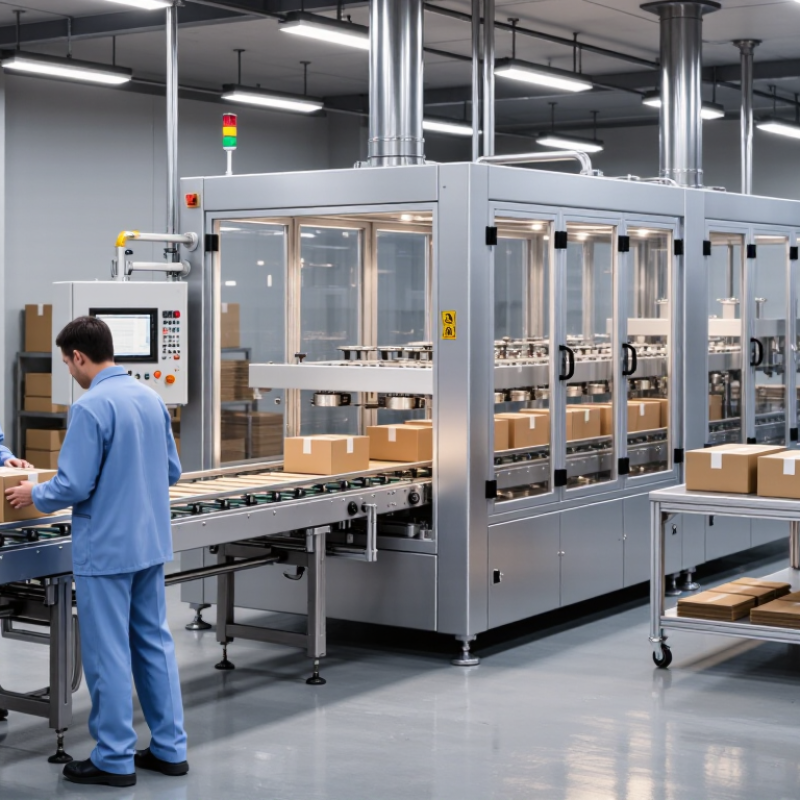
How to Choose an Automatic Feeding Gluing Machine?

Define the Materials and Products the Machine Must Handle

How to Choose an Automatic Feeding Gluing Machine?

Define the Materials and Products the Machine Must Handle

Start with the substrate, not the machine speed. Record board type, thickness, coating, moisture, grain direction, and sheet size. Typical materials include folding carton board, corrugated board, kraft paper, recycled fiberboard, and laminated stock. Each behaves differently under feeding pressure. Porous recycled board may absorb adhesive quickly, while coated board can resist bonding. A trial run is essential.

According to Smithers, the global packaging market reached approximately US$1.17 trillion in 2023. This scale reflects growing material variety, not just higher output. FEFCO reported European corrugated packaging production of about 50 billion square meters in 2023. That volume includes many flute profiles and box designs. Your machine must match the actual product range, including caliper, fold depth, blank dimensions, and compression strength.

Measure the finished products carefully. Are they straight-line cartons, crash-lock boxes, sleeves, envelopes, or multi-point cartons? Note the smallest blank, largest blank, narrowest glue flap, and required folding accuracy. Water-based adhesive may suit absorbent paper, while hot-melt adhesive may fit faster bonding needs. Compatibility depends on viscosity, open time, and drying conditions. Do not trust one successful sample.

A clean specification can still be wrong.

Leave room for imperfect sheets, warped blanks, dust, and seasonal humidity. In practice, these details often cause feeding faults before the gluing unit becomes the problem.

How to Choose an Automatic Feeding Gluing Machine?

Define the materials and products the machine must handle before comparing feeder design, glue application, folding accuracy, and maximum production speed.

The chart shows typical substrate thickness ranges used for common glued products. Paperboard and solid board are often used for folding cartons, while E-flute and B-flute corrugated board are common for small shipping boxes and protective packaging. Always confirm the machine’s minimum and maximum sheet thickness, feeder format, board stiffness, and glue compatibility with your actual samples.

Compare Feeding Systems, Gluing Methods, and Machine Configurations

How to Choose an Automatic Feeding Gluing Machine?

Compare Feeding Systems, Gluing Methods, and Machine Configurations

Feeding Systems

Choosing an automatic feeding gluing machine starts with the product, not the machine’s advertised speed. Measure the material’s length, width, thickness, surface, and fold design. Sheet feeders suit flat cartons and steady production. Friction feeders are simple and economical for consistent materials. Vacuum feeders handle dusty surfaces, uneven stacks, and delicate sheets with better control. However, vacuum systems may require more maintenance and compressed air.

Gluing Methods

The gluing method must match the application. Cold glue works well on porous paperboard and offers a longer adjustment window. Hot-melt glue sets quickly, which helps high-speed lines and short conveyor sections. It can fail when temperature control is poor. Spray or bead application should be selected according to seam width and required bond strength. Always check nozzle access, glue viscosity, cleaning procedures, and curing time before approval.

Machine Configuration

Machine configuration affects daily reliability. Look for adjustable guides, accessible sensors, guarded moving parts, and clear fault alarms. A modular layout makes future upgrades easier, but extra modules increase cost and setup time. In practice, operators often value quick changeovers more than maximum speed.

I have seen machines rated for fast output lose production because feeding alignment needed constant correction. That detail is easy to overlook.

Request a material trial using your real stock, including warped sheets and low-volume orders. The best choice is not always the most powerful one. It is the configuration that feeds consistently, applies the correct glue, and remains practical for the people running it.

Evaluate Speed, Accuracy, Automation, and Production Capacity

Choosing an automatic feeding gluing machine requires more than checking its maximum speed. Speed is only one variable. A model rated at 8,000 cartons per hour may deliver less under real conditions. Short runs, frequent size changes, and paperboard warping can reduce usable output. Measure finished cartons, not the display number. PMMI’s 2024 State of the Industry report valued U.S. packaging machinery shipments at approximately $10.3 billion in 2023, showing strong investment in production efficiency.

Accuracy protects both materials and customer trust. Check feeding stability, fold alignment, glue placement, and waste rates during a live trial. A practical test should include thin stock, recycled board, and your most difficult carton size. Glue sensors and automatic correction can reduce stoppages, but they cannot fix poor board quality. This is often overlooked. I would request samples from several production shifts, not only one successful demonstration.

Automation should also match production capacity. Deloitte’s 2024 Smart Manufacturing and Operations Survey found that 86% of manufacturers consider smart manufacturing important for competitiveness. Useful features include recipe storage, automatic setup, fault alerts, and production data tracking. However, excessive automation may increase training and maintenance demands. Smithers’ Future of Global Packaging to 2028 forecasts continued global packaging growth, making scalable equipment valuable. Choose a machine that supports today’s volume and tomorrow’s expansion. Leave room for human judgment.

Check Adhesive Compatibility, Maintenance, Safety, and Energy Use

How to Choose an Automatic Feeding Gluing Machine?

Adhesive compatibility should guide the purchase. Check viscosity, open time, curing temperature, and substrate requirements. Water-based, hot-melt, and reactive adhesives need different pumps, hoses, and nozzles. Ask for a controlled trial using your actual carton stock. Record bead width, transfer rate, and curing time. A clean test sheet reveals problems faster than a sales demonstration. FEICA guidance also stresses correct storage and safe handling for adhesive systems.

Maintenance is more than wiping the nozzle. Request tool-free access to filters, glue tanks, sensors, and feeding belts. Ask how quickly operators can remove cured residue. A five-minute cleaning delay can become a production stoppage. Keep spare seals and nozzles nearby. That sounds obvious, but many plants overlook it. A documented preventive-maintenance schedule improves traceability, even when operators occasionally miss a check.

Safety and energy use deserve equal attention. Guarding, emergency stops, interlocks, and safe chemical access should be verified during a live inspection. OSHA’s FY 2024 enforcement data still lists machine guarding among frequently cited standards. Energy measurement should include heaters, pumps, conveyors, and compressed air. The U.S. Department of Energy reports that compressed-air leaks can waste 20–30% of compressor output. Choose variable-speed drives and automatic standby modes where practical. However, lower rated power does not always mean lower energy consumption. Measure a complete production cycle, including warm-up and cleaning.

Assess Supplier Support, Total Cost, and Long-Term Reliability

Choosing an automatic feeding gluing machine requires more than comparing purchase prices. Supplier support can determine whether production recovers in hours or remains idle for days. Deloitte and the Manufacturing Institute estimate that 3.8 million U.S. manufacturing jobs may remain unfilled by 2033. Skilled maintenance staff will stay limited. Therefore, request remote diagnostics, operator training, installation guidance, and response-time commitments. A supplier with clear spare-parts availability is usually more valuable than a cheaper quotation.

Tips: Calculate the five-year cost. Include electricity, glue use, tooling, maintenance, training, downtime, and rejected cartons. Ask for written service rates. Request two customer references with similar carton sizes and output speeds. A spreadsheet often reveals uncomfortable surprises.

Long-term reliability depends on practical evidence, not polished demonstrations. PMMI’s 2024 State of the Industry research highlights continuing concerns about labor, supply chains, and technical service in packaging machinery. Ask for mean time between failures, recommended maintenance intervals, and the expected life of feeding belts, pumps, sensors, and nozzles. Examine accessible panels and cleaning procedures on the factory floor. Small design details matter. I once underestimated changeover time because the demonstration used one carton format. That was a poor assumption. Demand a test with your materials, glue, speed, and operators. Also confirm software updates, safety documentation, and parts compatibility for at least five years. Reliability is partly mechanical. It is also a service promise.

Copyright 2025 Fluidra S.A. | Created by BCM Marketing Agencia Privacy Policy Legal note | Cookie policy |

Technical cookies are strictly necessary for our website to work and you can navigate through it. These types of cookies are those that, for example, allow us to identify you, give you access to certain restricted parts of the page if necessary, or remember different options or services already selected by you, such as your privacy preferences. Therefore, they are activated by default, your authorization not being necessary in this regard. Through the configuration of your browser, you can block or alert the presence of this type of cookies, although such blocking will affect the proper functioning of the different functionalities of our website.


The analysis cookies allow us to study the navigation of the users of our website in general (for example, which sections of the page are the most visited, which services are used most and if they work correctly, etc.). From the statistical information on navigation on our website, we can improve both the operation of the page itself and the different services it offers. Therefore, these cookies do not have an advertising purpose, but only serve to make our website work better, adapting to our users in general. By activating them you will contribute to this continuous improvement. You can enable or disable these cookies by checking the corresponding box, being disabled by default.


Functionality cookies allow us to remember your preferences, to personalize certain characteristics and general options of our website, every time you access it (for example, the language in which the information is presented to you, the sections marked as favorites, your browser type, etc.) Therefore, this type of cookies does not have an advertising purpose, but by activating them you will improve the functionality of the website (for example, adapting to your type of browser) and the customization of it based on your preferences (for example, by presenting the information in the language that you have chosen in previous occasions), which will contribute to the ease, usability and comfort of our page during your navigation. You can enable or disable these cookies by checking the corresponding box, being disabled by default.


Advertising cookies allow us to manage the advertising spaces included in our website based on criteria such as the content shown or the frequency in which the ads are displayed. For example, if you have been shown the same ad several times on our website, and you have not shown a personal interest by clicking on it, it will not appear again. In summary, by activating this type of cookies, the advertising shown on our website will be more useful and diverse, and less repetitive. You can enable or disable these cookies by checking the corresponding box, being disabled by default.


Behavioral advertising cookies allow us to obtain information based on the observation of your browsing habits and behaviors on the web, in order to show you advertising content that best suits your personal tastes and interests. To understand it in a very simple way, we will give you a fictitious example: if your last searches on the web were related to suspense literature, we would show you advertising about suspense books. Therefore, activating this type of cookies, the advertising that we show you on our website will not be generic, but will be oriented to your searches, tastes and interests, therefore adjusting exclusively to you. You can enable or disable these cookies by checking the corresponding box, being disabled by default.
To understand it in a very simple way, we will give you a fictitious example: if your last searches on the web were related to suspense literature, we would show you advertising about suspense books. Therefore, activating this type of cookies, the advertising that we show you on our website will not be generic, but will be oriented to your searches, tastes and interests, therefore adjusting exclusively to you. You can enable or disable these cookies by checking the corresponding box, being disabled by default.

SAVE

We use our own and third-party cookies to ensure the proper functioning of the website and to analyse our services, improve your experience on our website and show you advertisements related to your interests according to profiling based on your browsing habits (e.g. websites visited). You can accept all cookies by clicking "ACCEPT" or set or reject them by clicking here. If you would like to know more about the use of cookies, please see our COOKIE POLICY.


ACCEPT ALL
Reject no essentials


