
How to Choose Air Pollution Detection Drones in 2026
FLUID HANDLING EXPERTS

Blog, all our news

How to Choose Air Pollution Detection Drones in 2026

Choosing Air Pollution Detection Drones in 2026 is not simply a matter of selecting a flight platform. The sensor, sampling method, and mission design determine whether readings are useful. The World Health Organization reported that 99% of the global population lived in places where air quality exceeded its guideline limits in 2019. The Health Effects Institute’s State of Global Air 2024 estimated that air pollution contributed to 8.1 million deaths worldwide in 2021. The stakes are real. Yet a drone is not a complete air-quality monitoring system.

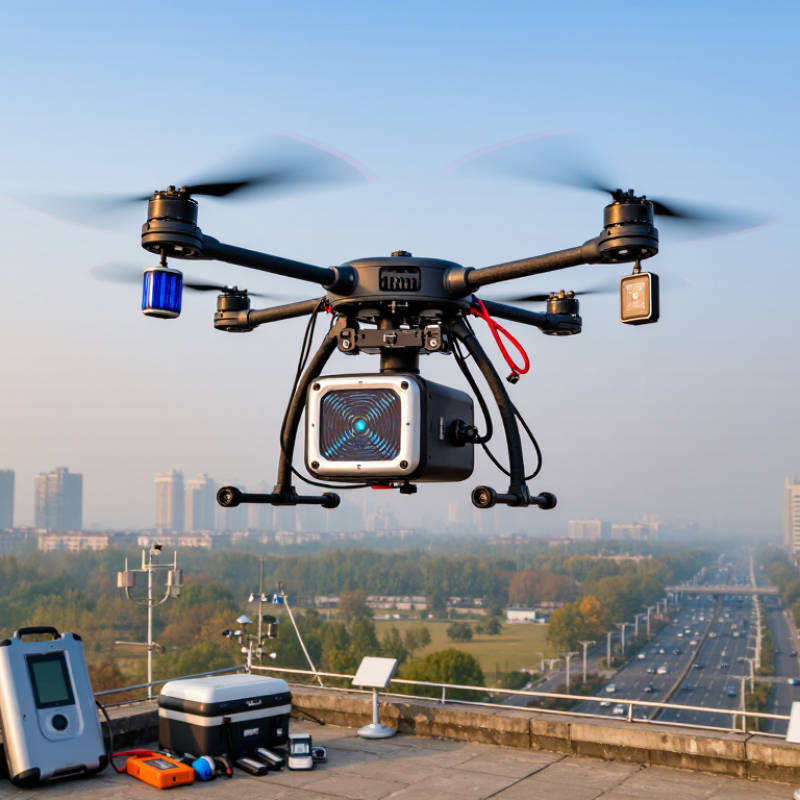
For buyers, the practical question is whether a drone can collect reliable, location-specific measurements safely and repeatably. Compare payload weight, flight time, sensor detection limits, calibration requirements, and data handling. A compact optical particle sensor may map changing PM2.5 levels, while gaseous pollutants can require different instruments. Wind, rotor wash, humidity, and sensor placement can affect results. Small details matter. Ask vendors for calibration records, field-validation results, and clear explanations of measurement uncertainty. Compare drone readings with suitable reference instruments where possible; a striking map is not proof of accuracy. Regulatory requirements and flight permissions also vary by location, so verify local rules before planning operations. One caveat deserves attention: specifications rarely show how a system performs after months of field use. That gap should prompt careful questions, not blind confidence. This guide outlines how to assess platforms, sensors, and support in 2026, while recognizing that the best setup depends on the pollutant, site, and purpose. A careful choice can improve coverage. It cannot remove every uncertainty.
How to Choose Air Pollution Detection Drones in 2026

Define Monitoring Goals with WHO’s 5 µg/m³ Annual PM2.5 Guideline

Choosing an air pollution detection drone starts with a clear monitoring goal. The World Health Organization’s guideline for annual mean PM2.5 is 5 µg/m³. It is a long-term benchmark, not a limit that one brief flight can confirm or rule out. Plan for repeated measurements across seasons and locations.

A drone can map how fine particles vary near roads, rooftops, or industrial areas. But sensor readings need context. Temperature and humidity can affect low-cost particle sensors, and rotor airflow may disturb sampling. Look for a payload that records PM2.5 alongside time, location, and humidity. Check whether its data can be compared with a ground reference monitor. Small differences matter. A reading of 6 µg/m³ on one flight does not establish an annual average above the guideline.

Before selecting a platform, decide how often it must fly, how much sensor weight it can carry, and whether its routes can be repeated safely. Keep a written calibration and maintenance log. Dust on an inlet can quietly change results. The map may look precise, but uncertainty remains; I would report it rather than smooth it away. A drone is most useful as part of a wider monitoring plan, not a substitute for long-term measurements.

Select Sensors for PM2.5, NO₂, O₃, CO, and VOCs

How to Choose Air Pollution Detection Drones in 2026

A useful drone payload starts with the pollutants you need to measure, not the number of sensors it can carry. For PM2.5, optical particle sensors estimate fine-particle levels from scattered light. Dust, humidity, and rotor wash can distort readings. Keep the inlet clear of propellers and record weather conditions during each flight.

For NO₂ and O₃, check the sensor’s measurement range, response time, and cross-sensitivity to other gases. Electrochemical cells can be compact, but temperature changes may affect their output. CO sensors often use the same technology and need regular calibration checks. Small differences matter. A zero check before launch can reveal drift, though it cannot replace comparison with a trusted reference instrument.

VOCs need special care. A photoionization detector can indicate the presence of many volatile compounds, but it usually cannot identify each one. That distinction matters when interpreting a map. Match the sensor to the question, then test it at ground level before flying. Rotor airflow, vibration, and rapid altitude changes can complicate sampling. Log the drone’s position, height, and time alongside every reading. A neat chart may still hide messy data; review outliers before treating them as evidence.

Match Payload and Flight Time to the FAA’s 120 m (400 ft) Limit

How to Choose Air Pollution Detection Drones in 2026

Match Payload and Flight Time to the FAA’s 120 m (400 ft) Limit

The FAA’s 14 CFR §107.51(b) generally limits small-drone flight to 400 feet above ground level, with a defined exception near structures. That ceiling shapes sampling plans: a sensor may need to collect useful readings during short, repeatable passes rather than climb higher. Check the operating rules and airspace conditions for each site.

Start with the complete payload: sensor, inlet, mount, cables, and any protective housing. Their combined mass affects endurance, while a poorly placed inlet can sample rotor wash instead of ambient air. EPA’s 2022 Enhanced Air Sensor Guidebook stresses checking sensor performance against reference monitors. A longer flight is not automatically a better measurement.

Ask for flight-time figures with the intended payload installed, then test them in representative wind and temperature. Plan a reserve rather than treating the advertised maximum as usable survey time; a 20 percent allowance is a practical starting point, not a guarantee. That matters. Compare usable minutes at the planned altitude with the time needed for takeoff, sampling, and landing. A payload spreadsheet can still mislead: real endurance changes with batteries, weather, and maneuvering. Record those conditions alongside each sample, so later comparisons have context.

Check Sensor Readings Against EPA’s 9 ppm 8-Hour CO Standard

How to Choose Air Pollution Detection Drones in 2026

EPA’s 9 ppm eight-hour carbon monoxide standard is a useful reference when choosing a detection drone. It is not a pass-or-fail limit for one flight. The standard concerns an eight-hour average, with regulatory monitoring rules that a short drone survey may not reproduce. Keep that distinction clear. A single spike does not establish a violation, and a brief low reading does not prove clean air.

Check whether the sensor measures CO at low concentrations and records time-stamped data. Ask how often it needs calibration, how quickly it responds, and whether temperature or humidity can affect results. During a flight, propeller airflow may also disturb sampling. Sensor placement matters. Compare readings averaged over suitable periods, not isolated peaks, and document flight height, route, weather, and calibration status. These details make comparisons more useful, though they do not turn drone data into official compliance measurements.

One flight log may look messy. That can happen near traffic, vents, or shifting wind. Treat unusual readings as prompts for a repeat measurement with a suitable reference instrument. Choose a system that preserves raw data and explains uncertainty; a neat dashboard is not enough.

Plan Calibration, Data Validation, and Flight-Regulation Compliance

For air-pollution detection drones in 2026, calibration must be part of every flight plan. Check sensor zero readings in filtered air and perform span checks according to the instrument’s procedure. Log calibration time, temperature, humidity, and sensor age. Repeat checks after landing; a changed reading may reveal drift, not a sudden pollution event. The US EPA’s 2022 Enhanced Air Sensor Guidebook recommends comparing sensor performance with reference monitors. A tidy plot can still be wrong.

Validate timestamps, GPS positions, and sensor response before mapping results. Keep the inlet clear of propeller wash, and note rain, nearby exhaust, and rapid altitude changes. Compare selected flight readings with a ground station or reference instrument. The World Health Organization’s 2021 air-quality guidelines set annual PM2.5 at 5 μg/m³, making small measurement biases important near that level. No protocol removes every bias. Humidity remains a stubborn one.

Flight rules need their own checklist. In the United States, standard FAA Part 107 operations generally require visual line of sight and limit altitude to 400 feet above ground level, subject to applicable exceptions and authorizations. Requirements differ elsewhere, so verify local airspace, pilot, and aircraft rules before each mission. Save approvals, route plans, calibration records, and validation notes together. An incomplete log can undermine otherwise useful data.

Copyright 2025 Fluidra S.A. | Created by BCM Marketing Agencia Privacy Policy Legal note | Cookie policy |

Technical cookies are strictly necessary for our website to work and you can navigate through it. These types of cookies are those that, for example, allow us to identify you, give you access to certain restricted parts of the page if necessary, or remember different options or services already selected by you, such as your privacy preferences. Therefore, they are activated by default, your authorization not being necessary in this regard. Through the configuration of your browser, you can block or alert the presence of this type of cookies, although such blocking will affect the proper functioning of the different functionalities of our website.


The analysis cookies allow us to study the navigation of the users of our website in general (for example, which sections of the page are the most visited, which services are used most and if they work correctly, etc.). From the statistical information on navigation on our website, we can improve both the operation of the page itself and the different services it offers. Therefore, these cookies do not have an advertising purpose, but only serve to make our website work better, adapting to our users in general. By activating them you will contribute to this continuous improvement. You can enable or disable these cookies by checking the corresponding box, being disabled by default.


Functionality cookies allow us to remember your preferences, to personalize certain characteristics and general options of our website, every time you access it (for example, the language in which the information is presented to you, the sections marked as favorites, your browser type, etc.) Therefore, this type of cookies does not have an advertising purpose, but by activating them you will improve the functionality of the website (for example, adapting to your type of browser) and the customization of it based on your preferences (for example, by presenting the information in the language that you have chosen in previous occasions), which will contribute to the ease, usability and comfort of our page during your navigation. You can enable or disable these cookies by checking the corresponding box, being disabled by default.


Advertising cookies allow us to manage the advertising spaces included in our website based on criteria such as the content shown or the frequency in which the ads are displayed. For example, if you have been shown the same ad several times on our website, and you have not shown a personal interest by clicking on it, it will not appear again. In summary, by activating this type of cookies, the advertising shown on our website will be more useful and diverse, and less repetitive. You can enable or disable these cookies by checking the corresponding box, being disabled by default.


Behavioral advertising cookies allow us to obtain information based on the observation of your browsing habits and behaviors on the web, in order to show you advertising content that best suits your personal tastes and interests. To understand it in a very simple way, we will give you a fictitious example: if your last searches on the web were related to suspense literature, we would show you advertising about suspense books. Therefore, activating this type of cookies, the advertising that we show you on our website will not be generic, but will be oriented to your searches, tastes and interests, therefore adjusting exclusively to you. You can enable or disable these cookies by checking the corresponding box, being disabled by default.
To understand it in a very simple way, we will give you a fictitious example: if your last searches on the web were related to suspense literature, we would show you advertising about suspense books. Therefore, activating this type of cookies, the advertising that we show you on our website will not be generic, but will be oriented to your searches, tastes and interests, therefore adjusting exclusively to you. You can enable or disable these cookies by checking the corresponding box, being disabled by default.

SAVE

We use our own and third-party cookies to ensure the proper functioning of the website and to analyse our services, improve your experience on our website and show you advertisements related to your interests according to profiling based on your browsing habits (e.g. websites visited). You can accept all cookies by clicking "ACCEPT" or set or reject them by clicking here. If you would like to know more about the use of cookies, please see our COOKIE POLICY.


ACCEPT ALL
Reject no essentials


