
How to Choose a VTOL Fixed Wing Drone in 2026
FLUID HANDLING EXPERTS

Blog, all our news

How to Choose a VTOL Fixed Wing Drone in 2026

Choosing a Vtol Fixed Wing Drone in 2026 is less about chasing the longest range and more about matching the aircraft to real work. A runway-free launch can save time, but the mission still depends on endurance, payload, wind tolerance, and a safe landing area. A camera, battery, and sensor package add weight quickly. Small details matter.

NASA aerospace engineer Mark Moore’s work on advanced vertical-takeoff aircraft offers a useful design perspective. In paraphrase, the guiding principle is to match aircraft capability to the mission, not the other way around. This is not a verified verbatim quotation. It is a practical lens for comparing specifications without treating promotional figures as guarantees.

Before selecting a model, define the route, expected flight time, payload, and conditions at the operating site. Check how the aircraft transitions between vertical lift and forward flight. Ask how it performs in gusts, how long batteries take to recharge, and what maintenance the propulsion system needs. A quoted range may assume ideal weather and minimal payload. Your results may differ.

Look beyond the datasheet. Review flight logs, warranty terms, training, spare-part access, and support response times. If possible, observe a demonstration with a payload similar to yours. That sounds obvious. It is not always done.

No aircraft is perfect. A design that excels at covering distance may be awkward to transport or slow to set up. This guide explains how to compare those trade-offs and choose a Vtol Fixed Wing Drone that fits your operation, not just your shortlist.
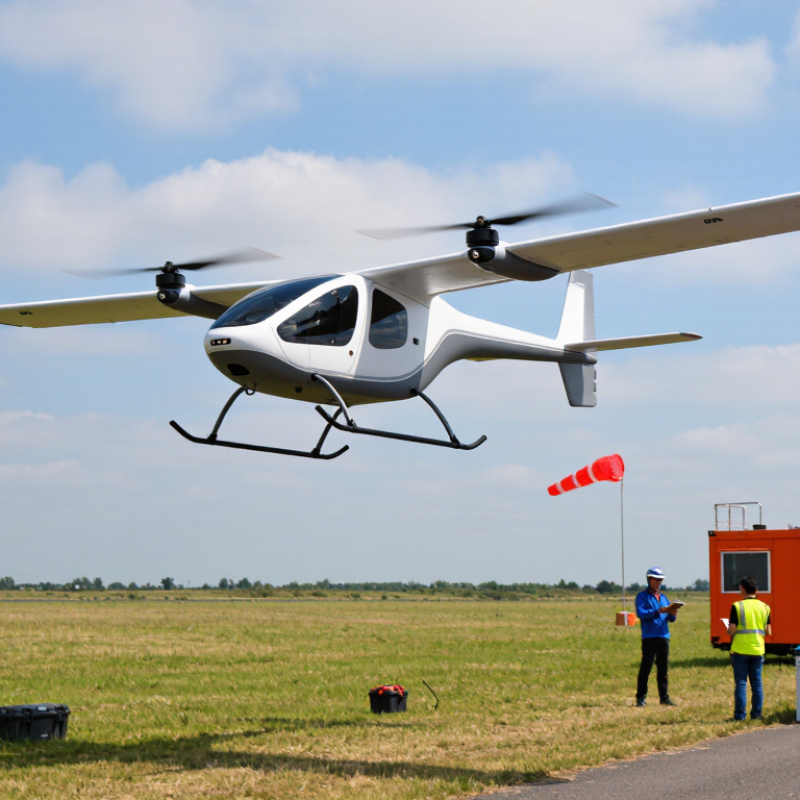
How to Choose a VTOL Fixed Wing Drone in 2026

Define Mission Needs: Route Length, Flight Time, and Payload Mass

Before choosing an airframe, map the longest planned route, not the average one. Include outbound and return distance, turns, climbs, and repositioning between sites. A route that looks short on a screen may demand extra energy in wind. Sketch it over real terrain. Check launch and recovery areas too.

Treat flight time as usable mission time, not the advertised maximum. Allow for takeoff, transition, holding, and a safe return. Cold batteries, gusts, and heavier payloads can reduce endurance. If the mission needs 90 minutes airborne, planning for exactly 90 leaves no practical margin. Use logs from similar conditions where possible, then test progressively in a controlled area. I would not trust one perfect-day test.

Payload mass includes more than the sensor. Count the mount, cables, onboard computing equipment, and protective housing. Then check how the total affects balance, power draw, and flight time. A heavier camera may improve data quality, but only if the route remains feasible. Compare options against actual collection needs, not maximum lift figures alone. Write down assumptions. Some estimates will be wrong; update them after each flight and record the weather, route, and load.

Compare VTOL Designs: Lift-and-Cruise vs. Tiltrotor Configurations

Lift-and-cruise designs use separate rotors for vertical lift and a propeller for forward flight. This division keeps the transition mechanism relatively simple. It can also make field maintenance more straightforward: a technician can inspect lift motors and cruise propulsion separately. The trade-off is extra motors, wiring, and drag from lift rotors during cruise. For long survey routes, that unused hardware matters.

Tiltrotor aircraft use tilting propellers for both takeoff and forward flight. They can avoid carrying dedicated lift rotors, but hinges and actuators add mechanical complexity. Transition performance depends on control tuning, wind, and payload placement—not just brochure endurance. Test with the actual camera or sensor installed. A small center-of-gravity shift can change handling. Easy to overlook.

FAA’s 2024 Aerospace Forecast estimates the U.S. commercial small-drone fleet at about 1.1 million aircraft in 2023, rising to roughly 1.5 million by 2028. The forecast tracks fleet growth, not VTOL architecture performance, so it cannot identify a universal winner. (FAA, Aerospace Forecast FY 2024–2044.) Compare both configurations using your route length, landing-site space, gust conditions, and maintenance capacity. One uncomfortable question: can your team diagnose a failed tilt actuator in the field? If not, a simpler lift-and-cruise layout may be the more dependable choice, even if it carries a cruise-efficiency penalty.

Assess Performance: Cruise Speed, Wind Limits, and Energy Reserves

A VTOL fixed-wing drone should cruise efficiently at the speed your survey or inspection requires, not merely at its advertised maximum. Compare usable cruise speed with the area you need to cover and the camera’s required overlap. Airspeed matters for flight control; groundspeed determines how quickly the aircraft crosses a site. A headwind can make the same route take longer. Check both figures in flight logs, if available.

Wind limits need close attention. A calm-weather demonstration tells you little about gusts near a ridge, rooftop, or open shoreline. Compare the aircraft’s stated limits with the conditions you actually expect, including crosswinds during vertical takeoff and landing. Leave a margin below those limits. Gusts change quickly. If the manual does not clearly distinguish steady wind from gust limits, ask the supplier before relying on a single number.

Energy reserves are easy to underestimate. The battery must support takeoff, climb, transition, cruise, and a controlled landing, with enough remaining for a delayed approach or route change. Payload weight, low temperatures, and repeated hovering can reduce usable flight time. Treat advertised endurance as a starting point, not a promise. A short test flight may still mislead; repeat tests with the real payload and realistic wind. Don’t plan to land at zero.

How to Choose a VTOL Fixed Wing Drone in 2026 — Assess Performance: Cruise Speed, Wind Limits, and Energy Reserves

The ranges below are indicative planning benchmarks, not universal aircraft specifications. Actual limits depend on aircraft design, payload, battery condition, altitude, and the manufacturer's operating manual.

Performance dimension Indicative planning benchmark What to assess Selection guidance
Efficient cruise speed Approximately 15–25 m/s (54–90 km/h) as an initial comparison band for many small-to-mid-size mapping aircraft Compare the published efficient cruise speed with the speed needed for image overlap, ground sampling distance, and daily coverage. Use the manufacturer's recommended cruise speed, not maximum speed, for endurance estimates. Check whether the aircraft can maintain the required airspeed in headwinds.
Ground speed in headwind Ground speed is approximately airspeed minus headwind speed; for example, 20 m/s airspeed in a 5 m/s headwind gives about 15 m/s over the ground. Estimate flight time and coverage using expected wind direction and speed, rather than cruise airspeed alone. Allow for slower outbound legs and faster return legs. Confirm that the aircraft can safely return against the forecast wind with the planned energy reserve.
Wind limits for VTOL launch and landing No single reliable limit applies across aircraft; use the specific published sustained-wind and gust limits for each flight mode. Check separate limits for hover, transition, fixed-wing flight, and recovery. Gusts and turbulence near obstacles can be more critical than steady wind. Choose an aircraft whose documented limits exceed the site's expected conditions with an operational margin. Do not treat cruise wind tolerance as a VTOL landing limit.
Energy reserve at landing A 20–30% usable-energy reserve is a practical initial planning target, not a universal regulatory or manufacturer requirement. Budget energy for takeoff, transition, mission flight, return, approach, landing, and foreseeable delays. Increase the reserve for cold batteries, aging packs, strong winds, high payloads, long transit legs, or uncertain recovery conditions. Follow the aircraft manual and local rules.
Payload and energy impact There is no universal percentage loss; payload mass and drag can reduce endurance and change stall, cruise, and transition performance. Compare flight-test or manufacturer endurance figures at the intended payload, not only at the lightest configuration. Evaluate the complete sensor installation, including mounting, cabling, and any aerodynamic effects. Keep payload within approved limits.
Usable mission endurance Calculate usable mission time as demonstrated flight time minus the planned reserve and non-mission energy use. Distinguish advertised maximum endurance from repeatable mission endurance under the chosen payload, weather, and battery condition. Request test conditions and plan from conservative, representative flight data. Validate estimates with controlled flights before operational deployment.
Battery and environmental margin Capacity and voltage performance vary with temperature, battery age, discharge rate, and storage history. Review battery temperature limits, cycle-life guidance, voltage warnings, and the system's return-to-home or low-energy behavior. Base planning on the actual battery pack's condition and the day's temperature. Do not assume nominal battery capacity is fully usable in every condition.

Check U.S. FAA Part 107 Weight Limit: Less Than 55 lb (25 kg)

How to Choose a VTOL Fixed Wing Drone in 2026

When comparing VTOL fixed-wing drones, check the complete takeoff weight against the FAA Part 107 limit. A small unmanned aircraft must weigh less than 55 pounds, or about 25 kilograms, including everything onboard or attached at takeoff. The airframe’s advertised weight alone does not tell you whether your working setup meets that threshold.

Weigh the aircraft with its flight batteries, camera, sensors, landing gear, and planned payload installed. A few extra pounds can change the answer. That margin matters. Use a suitable scale, record the configuration, and recheck after swapping equipment. If the listed weight is close to 55 pounds, ask the manufacturer for clarification and verify your own loaded aircraft; rounded specifications can hide meaningful differences.

Weight is only one part of choosing a platform. Payload capacity, battery endurance, launch conditions, and recovery space also affect practical use. I would leave room below the limit rather than design around the final ounce. It may reduce payload options, and that trade-off deserves a real test with your intended equipment. Meeting the weight threshold does not, by itself, confirm that every planned operation complies with applicable FAA requirements.

Verify Operating Rules: 400-ft AGL Ceiling, Sensors, and Support

Before choosing a VTOL fixed-wing drone, check the operating rules for the exact location and mission. In the United States, many small-drone operations are generally limited to 400 feet above ground level unless an exception applies. Other jurisdictions may set different limits. Verify current requirements with the relevant aviation authority, and check controlled airspace, local restrictions, and permission requirements before flight. A high-resolution map is not approval.

Altitude sensors deserve close attention. A barometric altimeter can drift with changing pressure, while satellite positioning may be less reliable near buildings or steep terrain. Compare readings during preflight checks, and plan a margin below any applicable ceiling. The 400-foot figure is not a target. Keep terrain changes in mind, too: a route that looks flat on a screen may cross a ridge. Obstacle sensors can help, but they may miss thin wires, branches, or fast-moving objects.

Ask what support is available after delivery. Can technicians inspect a damaged wing, explain sensor calibration, or provide replacement parts promptly? Clear maintenance records and practical training matter. A polished flight demo tells you little about repair delays. I learned that the hard way. Check response times and service terms before committing, then match them to how often the aircraft must fly.

Copyright 2025 Fluidra S.A. | Created by BCM Marketing Agencia Privacy Policy Legal note | Cookie policy |

Technical cookies are strictly necessary for our website to work and you can navigate through it. These types of cookies are those that, for example, allow us to identify you, give you access to certain restricted parts of the page if necessary, or remember different options or services already selected by you, such as your privacy preferences. Therefore, they are activated by default, your authorization not being necessary in this regard. Through the configuration of your browser, you can block or alert the presence of this type of cookies, although such blocking will affect the proper functioning of the different functionalities of our website.


The analysis cookies allow us to study the navigation of the users of our website in general (for example, which sections of the page are the most visited, which services are used most and if they work correctly, etc.). From the statistical information on navigation on our website, we can improve both the operation of the page itself and the different services it offers. Therefore, these cookies do not have an advertising purpose, but only serve to make our website work better, adapting to our users in general. By activating them you will contribute to this continuous improvement. You can enable or disable these cookies by checking the corresponding box, being disabled by default.


Functionality cookies allow us to remember your preferences, to personalize certain characteristics and general options of our website, every time you access it (for example, the language in which the information is presented to you, the sections marked as favorites, your browser type, etc.) Therefore, this type of cookies does not have an advertising purpose, but by activating them you will improve the functionality of the website (for example, adapting to your type of browser) and the customization of it based on your preferences (for example, by presenting the information in the language that you have chosen in previous occasions), which will contribute to the ease, usability and comfort of our page during your navigation. You can enable or disable these cookies by checking the corresponding box, being disabled by default.


Advertising cookies allow us to manage the advertising spaces included in our website based on criteria such as the content shown or the frequency in which the ads are displayed. For example, if you have been shown the same ad several times on our website, and you have not shown a personal interest by clicking on it, it will not appear again. In summary, by activating this type of cookies, the advertising shown on our website will be more useful and diverse, and less repetitive. You can enable or disable these cookies by checking the corresponding box, being disabled by default.


Behavioral advertising cookies allow us to obtain information based on the observation of your browsing habits and behaviors on the web, in order to show you advertising content that best suits your personal tastes and interests. To understand it in a very simple way, we will give you a fictitious example: if your last searches on the web were related to suspense literature, we would show you advertising about suspense books. Therefore, activating this type of cookies, the advertising that we show you on our website will not be generic, but will be oriented to your searches, tastes and interests, therefore adjusting exclusively to you. You can enable or disable these cookies by checking the corresponding box, being disabled by default.
To understand it in a very simple way, we will give you a fictitious example: if your last searches on the web were related to suspense literature, we would show you advertising about suspense books. Therefore, activating this type of cookies, the advertising that we show you on our website will not be generic, but will be oriented to your searches, tastes and interests, therefore adjusting exclusively to you. You can enable or disable these cookies by checking the corresponding box, being disabled by default.

SAVE

We use our own and third-party cookies to ensure the proper functioning of the website and to analyse our services, improve your experience on our website and show you advertisements related to your interests according to profiling based on your browsing habits (e.g. websites visited). You can accept all cookies by clicking "ACCEPT" or set or reject them by clicking here. If you would like to know more about the use of cookies, please see our COOKIE POLICY.


ACCEPT ALL
Reject no essentials


