
How to Choose a Gel Packing Machine in 2026?
FLUID HANDLING EXPERTS

Blog, all our news

How to Choose a Gel Packing Machine in 2026?

Choosing a Gel Packing Machine in 2026 is less about chasing the newest model and more about matching equipment to your product, output, and working conditions. A thick aloe gel behaves differently from a thin hand wash. Even small differences in viscosity, temperature, or container shape can affect filling accuracy and line speed. Details matter.

This guide explains how to compare machines by practical criteria: product compatibility, filling range, accuracy, changeover time, cleaning access, and service support. Ask suppliers how their equipment performs with a sample of your actual gel, not only with water or a standard test liquid. Review the proposed filling method, contact materials, seals, and nozzle design. Request a demonstration when possible. A brochure cannot show every production challenge.

Budget deserves a closer look, too. The purchase price is only part of the cost; installation, spare parts, operator training, and maintenance also shape long-term value. Yet the most automated option is not always the best fit. A smaller operation may gain more from simple controls and dependable local support. Some comparisons remain uncertain until the machine is tested on your line. That is worth admitting. Use the sections ahead to build a clear shortlist, verify claims, and choose a Gel Packing Machine that suits today’s needs without making tomorrow’s production harder.
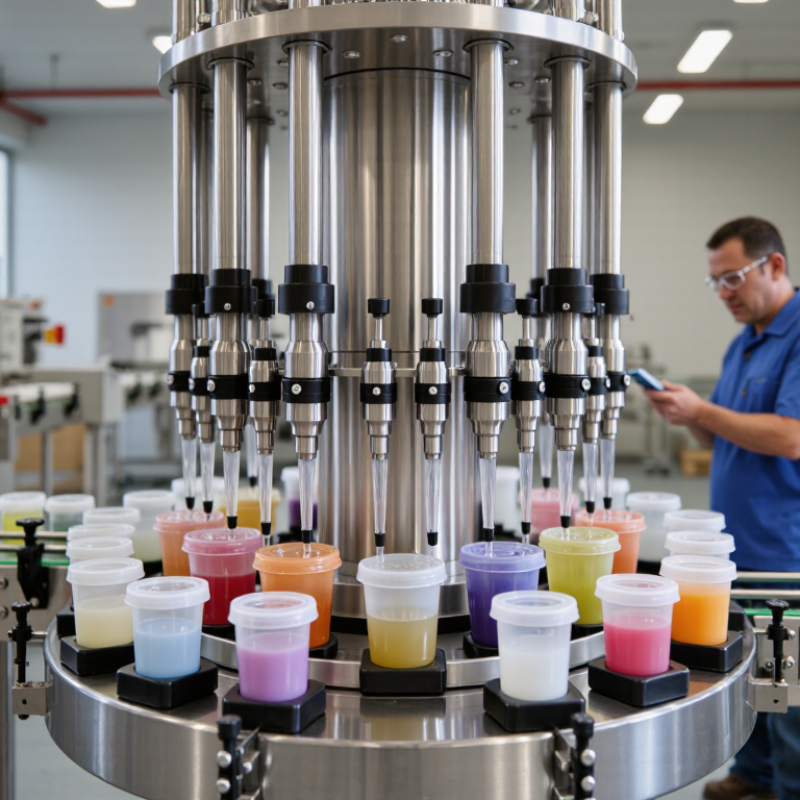
How to Choose a Gel Packing Machine in 2026?

Define Gel Types, Viscosity, and Packaging Requirements

How to Choose a Gel Packing Machine in 2026?

Define the gel before comparing machines. A thin hand sanitizer gel behaves differently from a dense cosmetic gel or a gel with suspended particles. Check the product at its actual filling temperature, not only at room temperature. Viscosity can change with heat, time, and mixing. Small details matter.

Ask for the viscosity range, whether the gel is shear-sensitive, and whether it contains bubbles or solids. Then test representative samples on the filling system. Observe whether the gel strings, drips, traps air, or leaves residue around the nozzle. A pump that handles one formula neatly may struggle with another. That part is easy to underestimate.

Packaging requirements narrow the choice. Specify container size, opening diameter, material, and target fill accuracy. A narrow-neck bottle may need a different nozzle than a wide-mouth jar. Consider changeover time, cleaning access, and how often operators switch products. Request a trial using your own containers, with the intended speed and fill volume. Record spills and weight variation, not just the best run. One trial is not perfect evidence, but it can reveal practical problems before installation.

Match Machine Design to Gel Properties and Container Formats

How to Choose a Gel Packing Machine in 2026?

Match the machine to the gel before comparing speed or floor space. A thin, pourable gel may suit a gravity or piston filler, while a thick formula often needs positive displacement. Check the product at its actual filling temperature; viscosity can shift noticeably between a cool storeroom and a warm production line. Observe whether the gel traps air, forms strings, or changes texture under pressure. Small tests matter.

Then match the filling system to the container. Narrow-neck bottles need a nozzle that reaches cleanly without scraping the opening. Wide-mouth jars may allow faster filling, but a poorly controlled shutoff can leave gel on the rim. For tubes or flexible pouches, confirm how the package is held, opened, filled, and sealed. Bring samples of every intended container to a machine trial. A drawing is not enough.

Ask operators to test start-up, pauses, and product changeovers, not just steady running. Watch for dripping after the nozzle lifts and uneven fills near the end of a batch. These details affect waste and cleanup. Request documented accuracy results with your gel and containers, plus guidance on parts that contact the product. One trade-off is easy to miss: a machine built for maximum speed may be harder to clean or adjust. Choose a setup your team can run consistently, even when the formula or package changes slightly.

Compare Filling Accuracy, Speed, and Production Capacity

Choosing a gel packing machine in 2026 means matching its performance to your product, pack size, and daily output. Start with filling accuracy. A small dose variation can become significant across thousands of sachets, especially when gel viscosity changes with temperature. Ask suppliers how accuracy is tested, and request results using a gel similar to yours. Check whether the machine uses piston, pump, or other metering methods, then confirm how quickly operators can adjust settings and clean product-contact parts. A precise machine is useful only if the settings stay stable during a full production run.

Speed figures need context. A quoted rate may describe ideal conditions, not real production with film changes, checks, and brief stops. Compare expected packs per minute with your actual shift output. Then consider capacity: can the machine handle today’s volume and a reasonable increase without forcing constant overtime? Look at hopper size, refill frequency, changeover time, and available floor space. Fast, but not always better. A high-speed line can create more rejects if filling accuracy or sealing performance suffers. Ask for a practical trial, record output and waste, and involve the operators who will run the equipment. Their feedback may reveal awkward controls or cleaning steps that a specification sheet misses. I would not trust one impressive number alone; production conditions are rarely that tidy.

Evaluate Automation, Cleaning, Maintenance, and Safety Features

How to Choose a Gel Packing Machine in 2026?

Evaluate Automation, Cleaning, Maintenance, and Safety Features

A gel packing machine should match your product’s viscosity, container shape, and daily changeover schedule. Test it with your actual gel: watch for dripping at the nozzle, uneven fills, and residue around seals. Automation can reduce repetitive operator tasks, but it also adds sensors and controls that require skilled support. Deloitte’s 2024 Smart Manufacturing survey found that 86% of surveyed leaders expect smart manufacturing to be a key competitiveness driver within five years. Treat that as a direction, not a guarantee of savings. Ask suppliers to demonstrate fault recovery, fill-weight checks, and accessible maintenance points.

Cleaning matters. Inspect product-contact surfaces, drain paths, and nozzle removal without tools. A narrow crevice may hold gel after a rinse. Request documented cleaning instructions and verify them during a timed changeover. Check whether maintenance staff can reach belts, pumps, and seals without removing unrelated guards. Safety deserves the same scrutiny: OSHA identifies inadequate control of hazardous energy as a cause of serious workplace injuries and deaths. Confirm that isolation points are clear, guards are interlocked where appropriate, and emergency stops are easy to reach.

Tips: Bring a sample product and container to the factory test. Time cleaning and a routine seal replacement, not just production. Compare the results with your own shift conditions; a polished demonstration can miss awkward realities. That is a useful—and sometimes uncomfortable—part of selection.

Assess Total Cost, Supplier Support, and Future Expansion Needs

How to Choose a Gel Packing Machine in 2026?

A purchase price is only the starting point. Compare the machine’s total cost over several years, including installation, operator training, routine maintenance, and expected energy use. Ask for a written estimate of replacement parts, such as seals, nozzles, and product-contact tubing. Small items add up. A low quote can become expensive if common parts take weeks to arrive.

Supplier support deserves the same scrutiny as machine performance. Ask who will commission the equipment, how quickly technicians typically respond, and whether troubleshooting is available remotely. Request practical training that covers changeovers, cleaning, and basic fault checks—not just a handover manual. If possible, speak with a current user about service after installation. References are useful, though one person’s experience is not the whole picture.

Plan for the production line you may need, not only the one you run today. Check whether the machine can accommodate different container sizes, additional filling heads, or a conveyor connection without major rebuilding. Leave enough floor space for access and maintenance; a compact layout may look efficient until a technician needs to reach a pump. I have seen expansion plans change quickly, so avoid paying for every possible option upfront. Still, choosing a machine with clear upgrade paths can prevent an early replacement. The trade-off is not always obvious. Compare written quotes, support terms, and realistic output figures before deciding.

Copyright 2025 Fluidra S.A. | Created by BCM Marketing Agencia Privacy Policy Legal note | Cookie policy |

Technical cookies are strictly necessary for our website to work and you can navigate through it. These types of cookies are those that, for example, allow us to identify you, give you access to certain restricted parts of the page if necessary, or remember different options or services already selected by you, such as your privacy preferences. Therefore, they are activated by default, your authorization not being necessary in this regard. Through the configuration of your browser, you can block or alert the presence of this type of cookies, although such blocking will affect the proper functioning of the different functionalities of our website.


The analysis cookies allow us to study the navigation of the users of our website in general (for example, which sections of the page are the most visited, which services are used most and if they work correctly, etc.). From the statistical information on navigation on our website, we can improve both the operation of the page itself and the different services it offers. Therefore, these cookies do not have an advertising purpose, but only serve to make our website work better, adapting to our users in general. By activating them you will contribute to this continuous improvement. You can enable or disable these cookies by checking the corresponding box, being disabled by default.


Functionality cookies allow us to remember your preferences, to personalize certain characteristics and general options of our website, every time you access it (for example, the language in which the information is presented to you, the sections marked as favorites, your browser type, etc.) Therefore, this type of cookies does not have an advertising purpose, but by activating them you will improve the functionality of the website (for example, adapting to your type of browser) and the customization of it based on your preferences (for example, by presenting the information in the language that you have chosen in previous occasions), which will contribute to the ease, usability and comfort of our page during your navigation. You can enable or disable these cookies by checking the corresponding box, being disabled by default.


Advertising cookies allow us to manage the advertising spaces included in our website based on criteria such as the content shown or the frequency in which the ads are displayed. For example, if you have been shown the same ad several times on our website, and you have not shown a personal interest by clicking on it, it will not appear again. In summary, by activating this type of cookies, the advertising shown on our website will be more useful and diverse, and less repetitive. You can enable or disable these cookies by checking the corresponding box, being disabled by default.


Behavioral advertising cookies allow us to obtain information based on the observation of your browsing habits and behaviors on the web, in order to show you advertising content that best suits your personal tastes and interests. To understand it in a very simple way, we will give you a fictitious example: if your last searches on the web were related to suspense literature, we would show you advertising about suspense books. Therefore, activating this type of cookies, the advertising that we show you on our website will not be generic, but will be oriented to your searches, tastes and interests, therefore adjusting exclusively to you. You can enable or disable these cookies by checking the corresponding box, being disabled by default.
To understand it in a very simple way, we will give you a fictitious example: if your last searches on the web were related to suspense literature, we would show you advertising about suspense books. Therefore, activating this type of cookies, the advertising that we show you on our website will not be generic, but will be oriented to your searches, tastes and interests, therefore adjusting exclusively to you. You can enable or disable these cookies by checking the corresponding box, being disabled by default.

SAVE

We use our own and third-party cookies to ensure the proper functioning of the website and to analyse our services, improve your experience on our website and show you advertisements related to your interests according to profiling based on your browsing habits (e.g. websites visited). You can accept all cookies by clicking "ACCEPT" or set or reject them by clicking here. If you would like to know more about the use of cookies, please see our COOKIE POLICY.


ACCEPT ALL
Reject no essentials


